

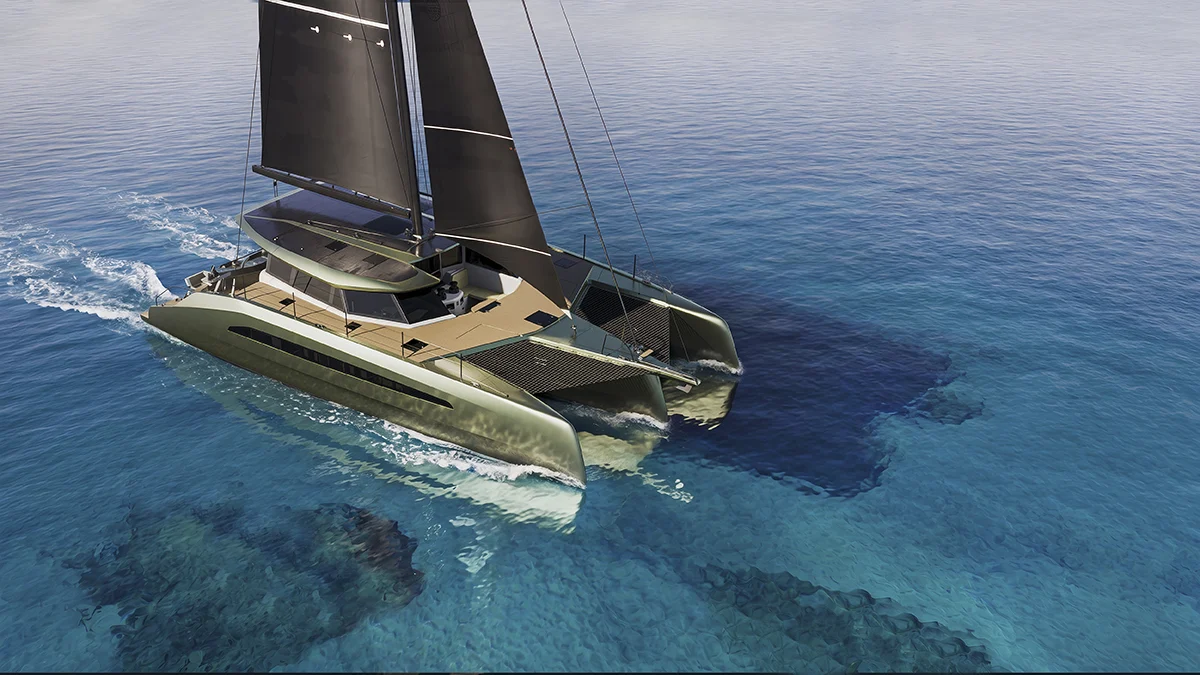
The nautical world is rarely shaken by the emergence of a new shipyard, yet Velocity Made Good (VMG) has managed to do exactly that with its maiden offering. Founded in New York by lifelong sailors and visionaries Michael Schwartz and Karl Reed, VMG has stepped into the high-performance arena not with a tentative entry, but with a bold, disruptive philosophy. At the center of this launch is the VMG 53, an offshore trimaran that aims to dismantle the long-standing dichotomy between the adrenaline-fueled speed of an ocean racer and the creature comforts of a long-range cruiser.
The Genesis of a New Philosophy: Main Facts
The VMG 53 represents a fundamental rethink of what a performance multihull should be. Developed alongside an elite team of international maritime specialists, the 53-foot vessel is designed to be the "Swiss Army knife" of the high seas. It promises the stability and living space typical of modern luxury multihulls, while maintaining the aggressive agility and velocity potential usually reserved for racing circuits.
The yacht’s design language is unmistakably modern. It features a sculpted, low-profile silhouette that emphasizes fluid, aerodynamic lines stretching from bow to stern. Perhaps most striking is the aesthetic finish: the first unit utilizes a dynamic, light-reactive paint scheme. The hulls transition from a deep, meditative green to a shimmering golden bronze, depending on the angle of the sun. This color palette is carried into the interior, where sustainable materials like cork and eucalyptus wood are paired with industrial-grade bronze hardware, creating a space that feels both avant-garde and grounded.
Chronology of Development
The trajectory of Velocity Made Good has been characterized by a quiet, methodical development phase. While the brand has only recently entered the public consciousness, the engineering behind the VMG 53 has been years in the making.
- Foundation: Michael Schwartz and Karl Reed established VMG in New York with the goal of creating a "no-compromise" sailing experience.
- Engineering Phase: The design team spent months conducting CFD (Computational Fluid Dynamics) simulations to optimize the trimaran’s stability under various sea states.
- Collaborative Design: By integrating international experts, the yard moved from conceptual sketches to technical blueprints, focusing on weight reduction and structural integrity.
- Construction Milestone: The first VMG 53 entered production following the completion of the hull molds.
- Anticipated Launch: The first unit is currently in the advanced stages of construction, with an official handover and maiden voyage scheduled for January 2027.
Engineering Excellence: Supporting Data
The VMG 53 is not merely a pretty face; its technical architecture is designed to challenge the status quo. One of the most significant departures from traditional yacht design is the removal of the heavy, centralized inboard engine. In its place, VMG has installed a dual-engine configuration, with a 57 hp motor mounted in each of the outer hulls.

Propulsion and Efficiency
This dual-engine setup provides several distinct advantages. By separating the propulsion units, the yacht gains superior maneuverability in tight marinas and improved handling under power. VMG reports that this configuration enhances fuel efficiency significantly compared to traditional center-hull layouts. For the ecologically conscious sailor, the yard offers a hybrid propulsion option. In this mode, one engine can be retracted to reduce drag while the vessel is under sail, allowing the other to function as a hydro-generator or secondary propulsion unit.
Deck Layout and Control
The cockpit is organized around a "sail pit," a centralized command center that consolidates all rigging controls. This ergonomic design ensures that the VMG 53 can be safely and efficiently handled by a solo sailor or a skeleton crew, eliminating the need for a large deck crew to manage high-performance maneuvers.
For the owner who prefers a more tactile experience, the yacht features a secondary helm station located aft. This position allows the captain to experience the thrill of the windward hull lifting, providing a sensory connection to the boat that is often lost on larger, more detached luxury cruisers. Navigation, trim, and speed data are instantly accessible via an integrated electronics suite that bridges the gap between the sail pit and the helms.
The "Adventure" Ecosystem: Amenities and Utility
Despite its focus on speed, the VMG 53 does not sacrifice the comforts of home. The interior layout centers on an owner’s suite that maximizes volume without encroaching on the structural stiffness of the hulls.
The stern of the central hull is perhaps the most innovative aspect of the vessel’s utility. It houses a fully enclosed tender garage—a feature rarely seen on a 53-foot sailboat. The garage is accessed via a pickup-truck-style transom door that lowers to provide a launching ramp for the carbon-fiber tender. This tender, which sports its own custom cork bumpers to match the mothership, can be deployed in minutes. Furthermore, a dedicated "adventure locker" has been integrated into the deck layout, ensuring that paddleboards, diving gear, and water toys remain stowed away, preserving the boat’s clean, purposeful aesthetic.

Official Responses and Strategic Vision
In a recent statement regarding the vessel’s design philosophy, co-founder Michael Schwartz emphasized the intent behind the project. "The VMG 53 was designed to eliminate the traditional compromises between performance, luxury, and dynamic stability," Schwartz noted. "It presents an exterior that is disruptive, purposeful, and timeless, underpinned by an innovative deck and propulsion layout engineered for confident, short-handed sailing."
The implication of this statement is clear: VMG is targeting a new demographic of sailors—individuals who are wealthy enough to afford luxury but skilled enough to appreciate, and desire, genuine performance. By focusing on "short-handed" capability, VMG is positioning itself to appeal to owners who want to sail their own boats rather than relying on professional captains for every excursion.
Implications for the Marine Industry
The arrival of the VMG 53 could signal a shift in the multihull market. For decades, the sector has been split into two distinct camps: the high-speed racing trimarans that are often Spartan and difficult to live on, and the heavy, spacious cruising catamarans that prioritize volume over velocity.
VMG is attempting to bridge this divide. If the VMG 53 succeeds, it will likely force established shipyards to re-evaluate their design priorities. The use of advanced materials, such as carbon fiber for the tender and sustainable cork for interior finishing, also points toward a future where luxury and environmental consciousness are no longer mutually exclusive.
The Competitive Landscape
While brands like Gunboat have long held the crown for "performance luxury" multihulls, the VMG 53 brings a different sensibility to the market—one that feels slightly more industrial, highly focused on the ease of short-handed operation, and deeply invested in the "adventure" aspect of sailing.

The choice of New York as a home base for the shipyard is also telling. It suggests an ambition to serve a global clientele of East Coast sailors who frequent both the sophisticated waters of the Atlantic and the rugged coastlines of the Caribbean. By integrating a tender garage and a high-performance sailing rig, VMG is selling not just a boat, but a lifestyle of rapid, long-distance transit followed by active exploration.
Conclusion: A Future in Motion
As January 2027 approaches, the maritime community will be watching closely to see if the VMG 53 lives up to the lofty promises made by its creators. The engineering seems sound, the aesthetic is undoubtedly striking, and the market for high-performance, short-handed cruisers is currently underserved.
Velocity Made Good has certainly achieved its goal of making a "good first impression." Whether this translates into a lasting legacy in the shipyard world remains to be seen, but for now, the VMG 53 stands as a beacon of innovation in an industry that often favors tradition over progress. For those seeking the perfect blend of speed, luxury, and utility, the horizon has just become a lot more interesting.
 Ali Ikhwan
 Laily UPN
 Raul Delapena Setiawan
