

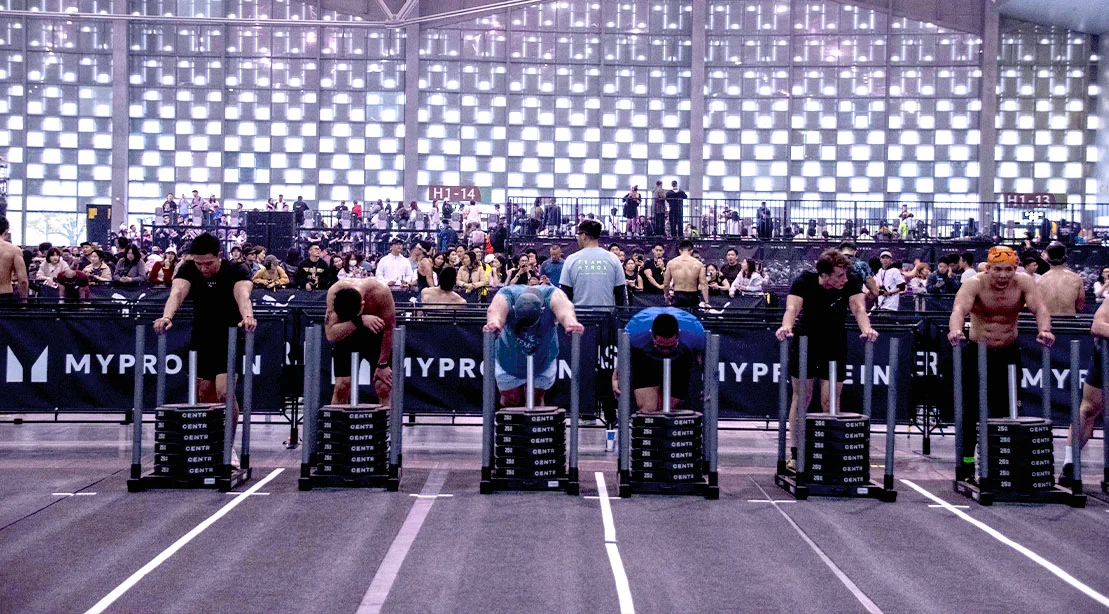
The world of competitive fitness is undergoing a seismic shift. Once a niche pursuit for endurance enthusiasts and CrossFit aficionados, "fitness racing" has exploded into a global phenomenon, and at the epicenter of this movement is HYROX. With the official release of the 2026/27 season calendar, the organization has signaled an era of unprecedented growth, further cementing its position as the premier international standard for strength-and-endurance hybrid competition.
As HYROX gears up for its most expansive year yet, the numbers paint a picture of a sport that has transcended its roots. More than two million athletes are projected to cross the start line during the 2026/27 season—a staggering increase from the 1.5 million participants recorded in the previous cycle. To accommodate this surge in demand, the series is scaling its infrastructure, spanning 107 race weekends across six continents and introducing innovative event formats to ensure the global community remains engaged.
A New Frontier: The 2027 Calendar and Global Expansion
The 2027 schedule is not merely a list of dates; it is a declaration of maturity for the sport. HYROX has spent the past few years optimizing its logistics to handle the growing crowds, and the latest announcement highlights a strategic move toward "long-form residencies." In high-demand markets, select events will expand into 10-day festivals, allowing for a higher volume of heat starts and a more inclusive environment for athletes of all ability levels.
Key Highlights of the Expansion
- Global Reach: The series now blankets six continents, with significant infrastructure investment in Asia and South America.
- New Host Cities: The calendar adds key international hubs to the roster, including Bari, Italy; Nagoya, Japan; and major U.S. markets such as San Diego and Portland.
- The Crown Jewel: The season is anchored by the highly anticipated World Championships, slated to take place in Hong Kong in June 2027.
For the average competitor, this expansion provides more than just a place to race; it offers a year-round structure. With major competitions strategically spread across the first half of the year, athletes can now curate their personal race calendar, allowing for strategic "peak" and "taper" periods that were previously impossible in a more sparse schedule.
U.S. Market Dynamics: New Venues, New Challenges
The United States remains a primary engine of growth for the HYROX machine. With the addition of San Diego and Portland, the domestic circuit now offers a wider geographic spread, reducing travel barriers for West Coast athletes and providing new challenges in diverse climates.
The inclusion of these cities is a direct response to the community’s demand for more accessible race entry points. Ticket sales, which are scheduled to open by region at the end of July, are expected to move at record speeds. Industry analysts suggest that this geographic diversification is a calculated move to capture the massive, untapped potential of the U.S. hybrid-athlete market, which has seen an explosion in interest over the last 24 months.
Training for the Long Game: A Physiological Perspective
The nature of HYROX—a blend of 8 kilometers of running interspersed with 8 distinct functional strength stations—demands a unique physiological profile. It is not enough to be a fast runner, nor is it enough to be a strong lifter. The sport requires a high degree of "work capacity," defined as the ability to maintain a high power output despite accumulating systemic fatigue.
The Foundation Phase: Building the Engine
For athletes looking at the 2027 calendar, the most significant advantage is the "lead time." With months of training available, there is no need to rush into high-intensity simulations. Instead, the focus should be on building a robust aerobic foundation.
Aerobic capacity is the primary determinant of recovery between the functional stations. If an athlete’s cardiovascular base is not sufficient, they will find themselves gasping for air during the sled push, which in turn leads to a breakdown in form and a drastic reduction in intensity during the final kilometers. Coaches recommend a training block dedicated to "Zone 2" endurance—steady-state running that builds the capillaries and mitochondria necessary for sustained performance.
Strength as a Catalyst
Strength training for HYROX is not about building maximal one-rep-maxes; it is about "durability under tension." The goal is to ensure that the muscles responsible for sled pushes, wall balls, and lunges can perform at 70-80% capacity even after 5 kilometers of running.
Athletes should prioritize:
- Posterior Chain Development: Exercises like deadlifts and kettlebell swings are vital for the rigors of the sled pull.
- Unilateral Stability: Single-leg work is non-negotiable, given the high-volume lunge requirement of the race.
- Core Endurance: The ability to keep the torso rigid during heavy carries is the difference between a smooth transition and a race-halting cramp.
Mastering "Compromised Running"
As race day approaches, the training must evolve into what experts call "compromised running." This refers to the act of running immediately after a high-output station, such as the burpee broad jump or the sled push.
The mechanics of running change when the legs are flooded with lactic acid. Training sessions should incorporate these transitions systematically. For instance, performing a set of 50 wall balls followed by an 800-meter run at race pace helps the body learn how to recover while in motion. By practicing this "rhythm-shifting," athletes can prevent the psychological panic that often sets in when they hit the running track feeling heavy and fatigued.
Managing the Season: Strategic Pacing and Burnout Prevention
With so many race opportunities in 2027, the biggest danger to the modern athlete is not under-training, but over-racing. Professional athletes and serious amateurs alike must learn to prioritize their events.
The Priority-Race Framework
A successful season plan usually involves one or two "A-tier" events—the races you are specifically peaking for. These are the dates where you aim for a personal best. Other races on the calendar should be treated as "B-tier" or "C-tier" events, used as training simulations or practice runs to test gear, pacing, and transition strategies.
Recovery Protocols
The physical toll of a HYROX race is significant. The combination of eccentric loading from the lunges and the metabolic demand of the running can result in lingering inflammation and nervous system fatigue. Following a race, athletes should:
- Prioritize Active Recovery: Low-impact movement like swimming or cycling is superior to total rest for flushing out metabolic byproducts.
- Monitor Resting Heart Rate (RHR): A spike in RHR is a clinical indicator that the central nervous system has not fully recovered.
- Gradual Re-entry: Never jump back into high-intensity intervals within 72 hours of a race. Allow at least one full week of reduced volume before resuming specific race-pace work.
Implications for the Future of Fitness
The 2027 HYROX calendar is more than just a list of events; it is a barometer for the health of the fitness industry. The transition from a "fitness hobby" to a "fitness sport" is now complete. The professionalization of the race circuit, the increase in global participation, and the move toward longer, more inclusive residencies suggest that HYROX is well-positioned to become the definitive endurance challenge of the decade.
For the participants, the message is clear: success in 2027 will not be found in a last-minute sprint. It will be found in the months of disciplined, aerobic-focused base building, the strategic selection of events, and the maturity to manage recovery as effectively as the training itself. As we look toward the Hong Kong World Championships, one thing is certain: the bar for what it means to be a "fit" human being has officially been raised.
Athletes who start their preparation now, leveraging the time provided by the new calendar, will not just be competing—they will be part of a global movement that is redefining the limits of human performance.
 Lina Irawan
 Jia Lissa
 Reynand Wu
