

Introduction: The Comedy of Grievance
Larry David has long occupied a unique space in American culture, serving as the curmudgeonly conscience of the elite while simultaneously lampooning their most egregious hypocrisies. With the premiere of his latest HBO project, Life, Larry, and the Pursuit of Unhappiness, David has signaled that his transition from the fictionalized version of himself in Curb Your Enthusiasm to this new anthology-style comedy has not dulled his political bite.
In the series’ fourth episode, titled “Deepthroat,” David opted to address the elephant in the room—or rather, the political figure currently occupying the personal life of his longtime friend and former co-star, Cheryl Hines. The episode features a pointed, unflinching parody of U.S. Department of Health and Human Services (HHS) Secretary Robert F. Kennedy Jr., directly confronting the controversial anti-vaccine rhetoric that has defined Kennedy’s public career.
The Sketch: Deconstructing the "Deepthroat" Episode
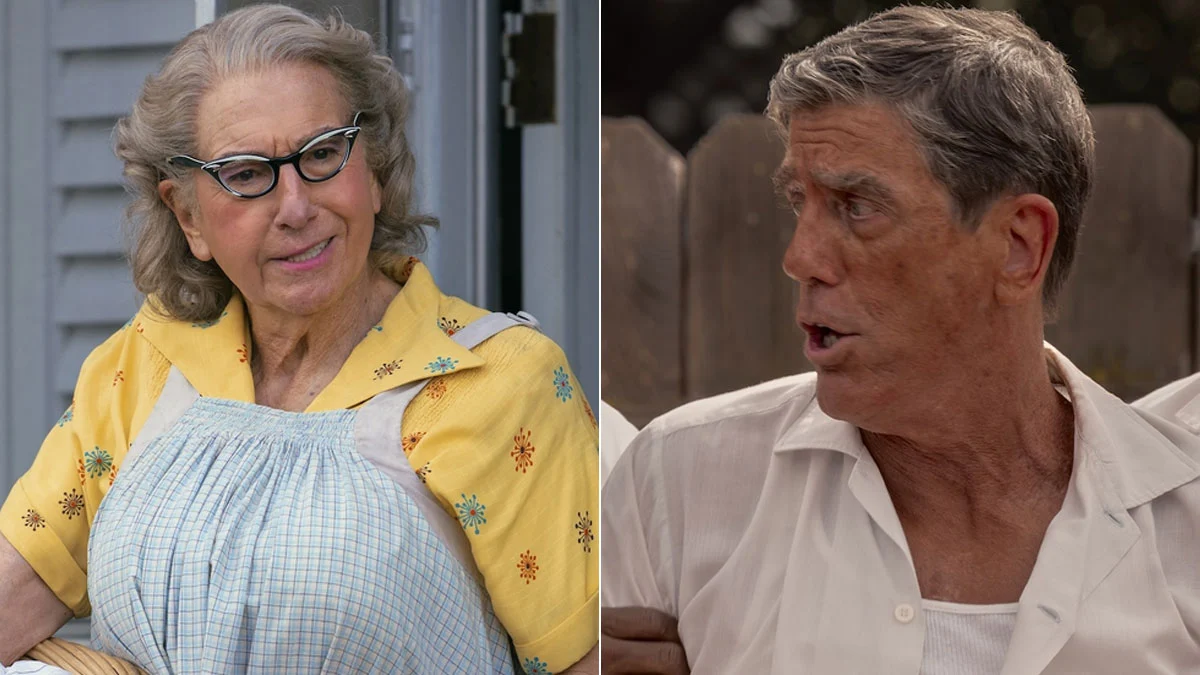
The centerpiece of the controversy—and the comedic highlight of the episode—is a historical sketch that blends the absurd with the biting. In the sequence, Larry David appears in drag as the mother of Jonas Salk, the virologist who famously developed the polio vaccine.
As the character brags to her neighbor, played by comedian Judy Gold, about her son’s monumental achievement in medical history, the scene descends into chaotic farce. A character named “Bobby,” portrayed by Gregg “Jeep” Perrie, disrupts the domestic tranquility by shouting alarmist warnings. The dialogue is a direct mimicry of the sentiments frequently expressed by the real-life Kennedy: “That vaccine’s gonna kill people. It’s gonna give them heart attacks!”
The sketch culminates in a moment of meta-commentary that feels deeply personal. David’s character, exasperated by the misinformation, cries out: “If some idiot, some moron, ever put you in charge, that would be a dark day for humanity.” The sketch ends with “Bobby” being hauled away to a psychiatric ward, a visual punchline that underscores David’s perspective on the dangerous intersection of public health and fringe conspiracy theories.
Chronology of a Fractured Friendship
To understand the vitriol in the sketch, one must look at the history between David and Kennedy. The two men were once friends, moving in the same high-profile circles. In fact, it was Larry David who initially introduced Cheryl Hines to Robert F. Kennedy Jr., unknowingly setting the stage for a marriage that would eventually place the actress in the crosshairs of David’s social satire.
The Turning Point
The degradation of the relationship tracks with Kennedy’s political evolution. As Kennedy transitioned from an environmental lawyer to a prominent voice in the anti-vaccine movement—and eventually to a key figure in the current presidential administration—the divide between him and David became insurmountable.
- The Introduction: Years prior, David facilitated the meeting between Hines and Kennedy, a gesture of friendship that now serves as a source of irony given the current state of their estrangement.
- The Political Pivot: As Kennedy’s rhetoric regarding public health policies became increasingly polarized and widely debunked by the medical community, public tension began to mount.
- The Final Break: Sources close to the production suggest that David’s decision to satirize Kennedy was not a spur-of-the-moment choice but a culmination of years of frustration regarding the impact of misinformation on public discourse.
Supporting Data: The Impact of Misinformation
The parody in Life, Larry, and the Pursuit of Unhappiness is not merely an exercise in personal grievance; it serves as a broader commentary on the danger of celebrity-fueled medical misinformation.
Public Health Consequences
The claims mocked by David—specifically the unfounded link between vaccines and cardiac issues—have been extensively studied and refuted by global health organizations, including the CDC and the World Health Organization.
- The Salk Legacy: By framing the sketch around Jonas Salk, David highlights the historical gravity of immunization. The polio vaccine is widely considered one of the greatest achievements of the 20th century, having saved millions of children from paralysis and death.
- The Cost of Skepticism: Studies from the Kaiser Family Foundation and other public policy institutes have demonstrated a direct correlation between the proliferation of anti-vaccine content and the resurgence of preventable diseases. By using comedy to dismantle these claims, David is engaging in a form of "cultural inoculation," using satire to neutralize narratives that he perceives as harmful to the collective well-being.
Official Responses and Industry Context
As of this writing, representatives for Robert F. Kennedy Jr. have not issued an official statement regarding the episode. However, the move has sent shockwaves through the industry, with critics noting that Life, Larry, and the Pursuit of Unhappiness is carving out a niche as the most aggressive political satire currently on television.
The Reiner Precedent
This is not the first time the show has tackled sensitive political figures. In Episode 2, a sketch featuring Rob Reiner as George Washington provided a scathing critique of President Donald Trump. This pattern of "hitting from all sides" suggests that the show is positioning itself as a platform for David to vent his frustrations with the contemporary political landscape, regardless of partisan affiliation.
Industry analysts suggest that HBO’s willingness to air these sketches reflects a broader trend in streaming television: the "unfiltered creator" model. By giving David total creative control, the network has allowed for a level of biting, personal satire that is rarely seen in modern comedy.
Implications: Where Comedy Meets Policy
The implications of this sketch extend beyond the immediate reaction from the Kennedy camp. It poses a significant question about the role of the comedian in a post-truth era.
The Satirist as Fact-Checker
In an age where misinformation travels faster than traditional reporting, comedians like Larry David are increasingly becoming the "fact-checkers of last resort." By condensing complex medical arguments into a 30-second sketch, David effectively strips away the veneer of credibility from fringe theories, exposing them to the ridicule of a mass audience.
However, this approach is not without its risks. The alienation of friends and colleagues is a steep price to pay for creative expression. Yet, for David, the "Pursuit of Unhappiness" seems to be a tongue-in-cheek title for a show that is deeply concerned with the state of the world.
Future Episodes and the Tone of the Series
As the series progresses, viewers can likely expect more of the same. The show’s structure—an anthology of sketches—allows David to remain nimble, responding to current events in real-time. Whether or not this will lead to further legal challenges or personal conflicts remains to be seen, but it is clear that Larry David has no intention of retreating from the fray.
The decision to feature Cheryl Hines’ husband in such a negative light is a bold, perhaps even reckless, move in the context of Hollywood politics. But as David has demonstrated throughout his career, he is rarely concerned with the social norms of the elite. Instead, he remains focused on the inherent absurdity of human behavior—a pursuit that, while it may lead to individual unhappiness, continues to provide the gold standard for American satire.
Conclusion
Life, Larry, and the Pursuit of Unhappiness has proven that Larry David remains the master of the "cringe-worthy" truth. By tackling the RFK Jr. controversy head-on, he has successfully integrated personal conflict with broader social critique. As the series continues to unfold on HBO and Max, it stands as a testament to the idea that, in the face of widespread disinformation, the most effective weapon may just be a well-timed, brutal laugh.
With new episodes dropping every Friday, the audience is left wondering: Who will be next? Given the show’s trajectory, no figure, regardless of their political standing or personal connections, appears to be safe from the unrelenting, hilarious, and deeply personal gaze of Larry David.
 Ammar Sabilarrohman
 Lina Irawan
 Nana Muazin
