

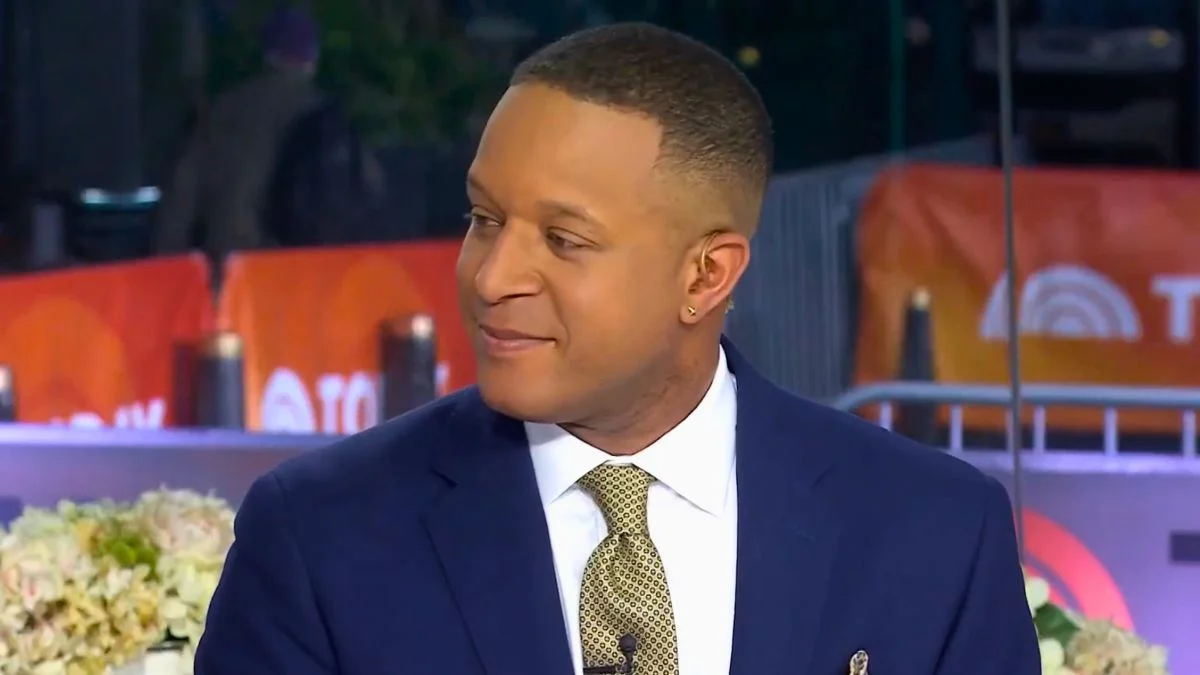
The vibrant, glass-walled environment of Today’s Studio 1A in Rockefeller Center is designed to be an inviting window into the heart of American morning television. However, on Thursday, July 16, that openness became a point of vulnerability. An unauthorized individual successfully bypassed security protocols, encroaching upon the set and confronting co-anchor Craig Melvin in an incident that has sent shockwaves through the broadcast industry.
The aftermath of the breach has been swift and severe, with reports confirming that a member of the security detail responsible for the area was terminated the same day. As law enforcement officials move forward with serious hate-crime charges against the intruder, NBC is left to grapple with questions regarding the efficacy of its high-profile security apparatus and the evolving nature of threats against media personalities.
Chronology: A Morning Disrupted
The incident began in the mid-morning hours on Thursday, a time typically defined by lighthearted segments and daily news briefings. According to multiple reports and police accounts, 41-year-old Andrew Truelove managed to navigate the complex security layers surrounding NBC’s Manhattan headquarters.
Witnesses and subsequent reports suggest that Truelove’s initial intent was to locate veteran meteorologist Al Roker. Upon gaining access to an unauthorized vestibule area near Studio 1A—the iconic set that sits at the street level of 30 Rockefeller Plaza—the situation escalated rapidly.
As the broadcast was underway, Truelove allegedly lunged toward the stage area, coming into close proximity with Craig Melvin. The encounter was not merely a case of an overzealous fan; reports indicate that the intruder shouted a racial slur at the anchor during the confrontation. Melvin, displaying professional composure, immediately alerted the security team on duty. Staff members acted quickly to intervene, preventing a physical altercation and ensuring that the disruption was contained before the safety of the talent or the production team was further compromised.
Law enforcement officers from the New York Police Department (NYPD) arrived on the scene shortly thereafter, taking Truelove into custody without further incident.
The Legal Aftermath: Hate Crime Charges
The gravity of the incident is reflected in the charges filed by the New York authorities. Andrew Truelove faces a suite of serious criminal accusations, signaling that the justice system is treating the breach as a targeted, bias-motivated act.
The charges filed against Truelove include:
- Hate Crime Criminal Trespass: Reflecting the unauthorized entry into a secured media facility.
- Hate Crime Menacing: Stemming from the aggressive approach toward the anchor.
- Hate Crime Burglary: A significant escalation that implies intent to commit a crime within the premises.
- Harassment: Accounting for the verbal abuse directed at the staff.
These charges underscore a growing trend of "hate-motivated" incidents involving public figures. The inclusion of hate crime enhancements suggests that the state has gathered evidence indicating the intruder’s actions were motivated, at least in part, by racial animus. The case is currently moving through the Manhattan court system, where prosecutors will be tasked with demonstrating the specific intent behind Truelove’s actions.
Official Responses: Balancing Transparency and Safety
NBC and the Today show management have faced the delicate task of addressing a high-profile security failure while maintaining the confidence of their audience and staff.
In a statement provided to Us Weekly, a spokesperson for the Today show offered a measured account of the day’s events: "There was a security incident this morning at the Today Show studio. An individual entered an unauthorized area in a vestibule near Studio 1A. The person approached anchor Craig Melvin, who alerted security. The individual was detained and taken into custody by law enforcement without further incident."
The statement was careful to emphasize that the broadcast remained largely undisturbed and that no physical injuries were sustained. However, the internal response tells a more rigorous story. The decision to terminate the security guard on duty within hours of the incident serves as a clear signal that the network holds its security contractors to an exacting standard.
The network’s broader statement on the matter acknowledged the need for a total assessment of their safety infrastructure: "NBC and Today take the safety and security of our employees, talent, staff, and guests extremely seriously. We are reviewing the incident and our security protocols and remain committed to providing a safe and secure environment for everyone who works at and visits our studios."
Craig Melvin himself took to social media to reassure his followers and colleagues. In an Instagram post published on the evening of the incident, he wrote: "Hey everyone. I’ve heard from so many of you over the last few hours. I’m doing just fine. Thanks for reaching out. I’m looking forward to seeing you tomorrow morning on @todayshow." His message served to deflate the tension surrounding the event, emphasizing his resilience and his commitment to returning to his post the following morning.
Implications: The Vulnerability of Public Media
The Today show incident serves as a stark reminder of the challenges inherent in "street-level" broadcasting. Unlike many news organizations that operate from behind high-walled, gated campuses, the Today show’s brand identity is built on its proximity to the public. The glass windows of Studio 1A are an architectural invitation for the public to participate in the morning ritual, but they also create a unique security paradox.
The Evolution of Security Protocols
For decades, morning television shows have operated with a degree of openness that would be unthinkable for other corporate entities. The "plaza" culture—where fans gather to hold signs and catch a glimpse of their favorite hosts—is a core part of the Today show experience. However, the rise of heightened political tensions and the increasing frequency of threats against journalists have forced networks to reconsider how they manage this access.
The firing of the security guard indicates that NBC’s internal investigation likely revealed a lapse in adherence to established protocols. In a high-traffic environment like Rockefeller Center, even a momentary lapse in vigilance can lead to a breach. Security experts note that for major broadcast networks, the primary challenge is maintaining an atmosphere of "welcoming transparency" while simultaneously hardening the facility against individuals who may be experiencing mental health crises or harbor extremist ideologies.
Media Personalities as Targets
The incident also highlights the increased visibility of media personalities. In the current media landscape, news anchors are often the targets of parasocial relationships—where viewers develop an intense, one-sided emotional bond with a television personality. When these relationships turn sour, or when individuals begin to conflate their own personal frustrations with a public figure, the result can be dangerous.
The fact that the intruder was reportedly searching for Al Roker—a beloved and long-tenured member of the Today family—suggests a fixation that had been building before the individual ever reached the studio. This type of "stalking" behavior is a known challenge for major networks, which often employ dedicated threat assessment teams to monitor potential risks to their on-air talent.
Looking Ahead: The Future of Studio 1A
As the legal proceedings against Andrew Truelove continue, NBC is undoubtedly conducting a comprehensive "lessons learned" review. This likely involves a combination of technical upgrades, such as enhanced facial recognition and perimeter monitoring, as well as a more rigorous vetting process for the third-party security firms that staff their buildings.
Furthermore, the industry at large is likely to watch this case closely. The Today show is not the only production that utilizes an open, public-facing set. From Good Morning America in Times Square to various regional news outlets across the country, the blueprint of the "public studio" is under scrutiny.
The incident on July 16 serves as a sobering reminder that while the show must go on, the safety of those behind the camera—and those in front of it—is paramount. For Craig Melvin, the incident was a momentary disruption in a long and distinguished career. For NBC, it is a call to action to ensure that the "window into the world" that Studio 1A provides does not become a door for those who wish to do harm.
As the network moves forward, the focus remains on restoring the normalcy of the morning broadcast while ensuring that the vibrant, accessible energy of the Today show can continue without compromising the safety of its staff. The firing of the guard, while harsh, underscores the network’s zero-tolerance policy regarding the sanctity of their workspace, a stance that will likely define their security strategy in the years to come.
 Neng Nana
 Azzam Bilal Chamdy
 Nana
Nana
