

The landscape of environmental filmmaking has long been defined by its ability to translate abstract scientific data into visceral human stories. Few directors have navigated this terrain with as much impact as Josh Fox. From the flammable tap water of GasLand to the front lines of the Dakota Access Pipeline in Awake, A Dream from Standing Rock, Fox has spent two decades documenting the collision between industrial interests and the natural world.
His latest project, The Welcome Table, set to premiere on HBO on Thursday, July 23, represents a significant evolution in his body of work. Moving beyond the mechanics of extraction, Fox explores the "intersectional" nature of climate change—how environmental catastrophes amplify existing social inequalities, specifically targeting the poor, the marginalized, and the LGBTQ+ community. Centered on the devastating 2023 mudslides in São Sebastião, Brazil, the film serves as both a harrowing account of a "rain bomb" and a philosophical meditation on human resilience and mutual aid.
Main Facts: The Scope of ‘The Welcome Table’ and the São Sebastião Disaster
The Welcome Table is the culmination of a nine-year journey, during which Fox visited ten communities across five continents. However, its emotional core resides in the Brazilian state of São Paulo, following a catastrophic weather event in February 2023. The city of São Sebastião was struck by what meteorologists describe as a "rain bomb"—an extreme precipitation event where 700mm (approximately 27.5 inches) of rain fell in just seven hours. To put this in perspective, this exceeds the annual rainfall of many sovereign nations.
The resulting landslides did not just move earth; they erased entire neighborhoods. The disaster claimed dozens of lives and displaced thousands, leaving a landscape where apartment blocks were buried under millions of tons of mud. Fox’s documentary focuses on the recovery efforts led by Leo Farah, a renowned first responder and author whose organization, Humus, specializes in search and rescue.

Beyond the physical destruction, the film highlights a critical, often overlooked dimension of climate justice: the vulnerability of the LGBTQ+ community during disaster recovery. Through the stories of local leaders like Gabriel and survivors like Jeff, Fox illustrates how systemic bigotry can turn a natural disaster into a prolonged social crisis, as marginalized individuals are often excluded from traditional aid networks, such as those provided by religious institutions.
Chronology: A Career Built on the Front Lines
Josh Fox’s trajectory as a filmmaker is inextricably linked to the history of the modern environmental movement.
- 2010: The GasLand Era: Fox rose to international prominence with GasLand, which premiered at the Sundance Film Festival and won the Special Jury Prize. The film, which famously featured homeowners lighting their tap water on fire due to methane leakage from hydraulic fracturing (fracking), earned an Academy Award nomination and an Emmy for Best Non-Fiction Director.
- 2016: Standing Rock and Climate Philosophy: Fox’s work shifted toward the human spirit in How to Let Go of the World and Love All the Things Climate Can’t Change, which won his third Environmental Media Association award. During this period, he spent significant time at the Standing Rock Sioux Reservation, documenting the Native-led resistance to the Dakota Access Pipeline (DAPL). This resulted in the Netflix-released film Awake, A Dream from Standing Rock.
- 2017–2022: Viral Advocacy: Through the short series Climate Interruptions on the outlet NowThis, Fox reached over 15 million viewers, bridging the gap between traditional documentary and digital-age activism.
- 2023–Present: The Welcome Table: Fox arrived in Brazil in the immediate aftermath of the São Sebastião landslides. Over the following months, he tracked the recovery process, culminating in the production of The Welcome Table, which expands the narrative of climate change from a purely ecological issue to a profound crisis of human rights and social connectivity.
Supporting Data: The Mechanics of a "Rain Bomb" and "Climate Apartheid"
The data surrounding the São Sebastião event provides a terrifying glimpse into the future of the Anthropocene. The 700mm of rain recorded in February 2023 was the highest ever recorded in Brazil’s history for a 24-hour period. These "rain bombs" are a direct consequence of a warming atmosphere; for every degree Celsius of warming, the air can hold approximately 7% more water vapor, leading to more intense and frequent deluges.
The disaster also highlighted the stark economic disparities inherent in Brazilian urban planning—a phenomenon Fox describes as "climate apartheid." In São Sebastião, the geography of risk follows class lines:

- The Shoreline: Wealthy residents and tourists occupy the beach-level properties, similar in luxury to the Hamptons in New York.
- The Favelas: The service workers, the poor, and the middle class live in "favelas" built into the steep mountain slopes.
When the rain bomb struck, the mud descended from the heights. While both rich and poor were affected, the poor were disproportionately decimated. Their homes, often built with fewer structural reinforcements on unstable land, were the first to collapse. Furthermore, the recovery process emphasized this divide; while wealthy areas saw rapid infrastructure restoration, residents of the favelas were often relocated to sterile, "Orwellian" temporary housing complexes in distant towns like Bertioga, stripped of their community ties and cultural vibrancy.
Official Responses and the Failure of Traditional Aid
The response to the São Sebastião disaster was a mix of state intervention, private philanthropy, and grassroots mutual aid.
The Role of Philanthropy and Specialized Rescue
Local philanthropist Maria Antonia Civita and her organization, Verde Scola, became the central hub for aid distribution. Verde Scola, originally an after-school program for disadvantaged children, was transformed into a logistics center. They contracted Leo Farah and his organization, Humus, to manage the transition from rescue to recovery. Farah’s philosophy—"to be the best person a survivor meets on the worst day of their lives"—highlights the psychological component of disaster response that is often missing from official government protocols.
State and Religious Limitations
While the state provided temporary housing, survivors described these environments as isolating and oppressive, lacking the "vibrancy and aliveness" of their original neighborhoods.

A more disturbing trend identified in the film is the failure of religious-based aid to reach all survivors. Brazil, while diverse, still grapples with significant homophobia and transphobia. Survivors like Jeff, a trans man providing for an extended family of 30, reported being harassed and taunted by members of the public after the disaster. Jeff specifically noted his refusal to seek aid from local churches, stating, "I’d rather have nothing than walk in there and receive their hate." This sentiment underscores a critical failure in the social safety net: when the primary distributors of aid hold ideological biases, the most vulnerable survivors are left to fend for themselves.
Implications: Building a "Paradise in Hell"
The final segment of Fox’s documentary moves toward a broader implication for global climate policy. He draws on the work of author Rebecca Solnit, who famously argued in A Paradise Built in Hell that disasters often bring out a "communal generosity" that challenges the status quo of a selfish, individualistic society.
Intersectionality as a Survival Strategy
Fox’s findings suggest that climate change is not a "great equalizer." Instead, it is a "force multiplier" for existing prejudices. If a person is already marginalized due to their race, economic status, or sexual orientation, a climate disaster will exacerbate that marginalization. Therefore, climate policy cannot be separated from social justice policy. True "resilience" requires the dismantling of the biases that prevent aid from reaching every member of a community.
The Symbolism of the Table
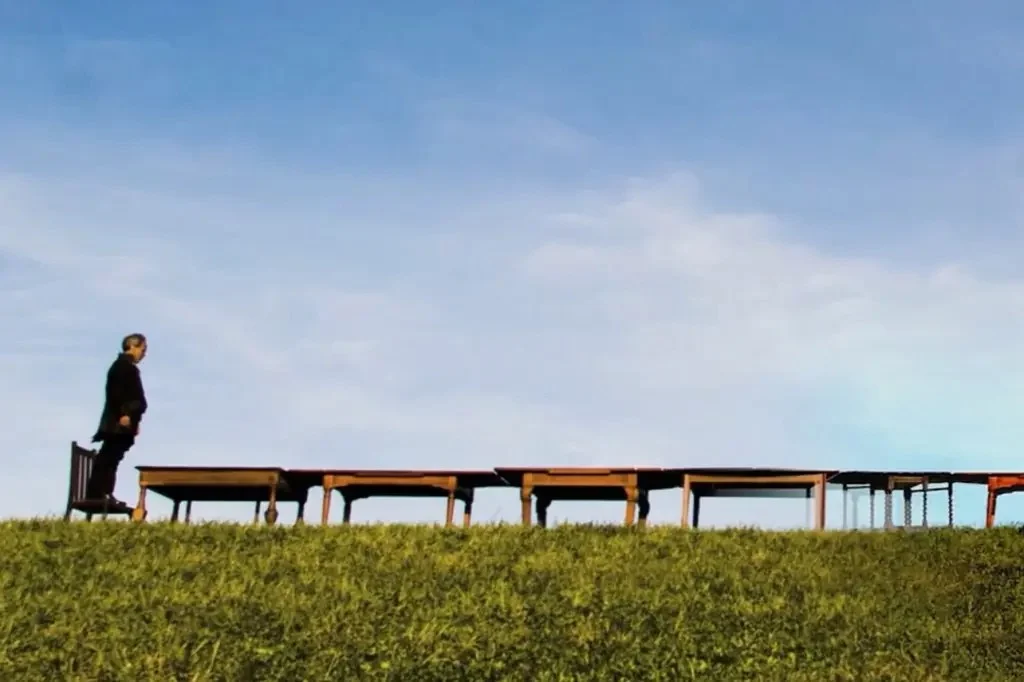
The title, The Welcome Table, serves as a metaphor for a new kind of global diplomacy. Fox argues that the "walls" of xenophobia and bigotry that currently dominate the political landscape—particularly regarding climate-driven migration—must be turned on their sides to become "tables."

"When all the walls come down, we can choose to meet each other," Fox writes. "The film is a journey of nine years… it gave me an enduring faith to see a tapestry based on mutual aid all across the world."
Conclusion
As The Welcome Table prepares for its HBO debut, it challenges viewers to look beyond the "woo woo aphorisms" of "everything happens for a reason." In the face of climate change, Fox argues, there is no divine justice—only the justice we create through human connection and the "instinctual communal generosity" that arises in the wake of tragedy. The film stands as a call to action to document, embrace, and cultivate collective love as a defensive tool against both the warming planet and the coldness of social exclusion.
 Sagoh
Sagoh
 rifanmuazin
 Neng Nana
