

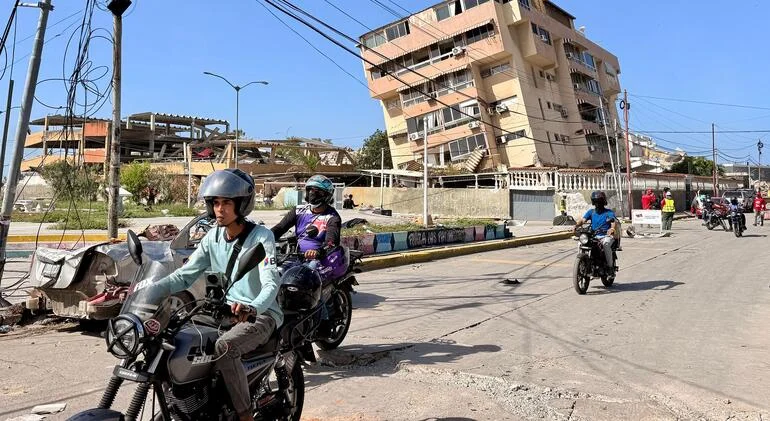
CARACAS, Venezuela – Three weeks after a pair of powerful earthquakes devastated several Venezuelan states, leaving a trail of destruction and a staggering death toll, the nation finds itself at a critical crossroads. While the initial search and rescue operations have largely concluded, the International Organization for Migration (IOM) has issued a stark warning: the humanitarian crisis is far from over, and a brewing, potent El Niño climate pattern threatens to turn an already desperate situation into a protracted catastrophe.
As the international community shifts its focus from immediate emergency life-saving to the long, arduous process of early recovery, aid agencies are racing against time to fortify displacement sites against the potential onset of extreme weather.
The Magnitude of the Disaster: Main Facts
The twin earthquakes that struck on 24 June 2026, have been classified by regional experts as one of the most severe seismic events in Venezuela’s recent history. The tremors caused widespread structural failure, flattening homes, businesses, and essential infrastructure across multiple states.
Official international reports, citing government data, confirm that the death toll has surpassed 4,000 individuals. Thousands more remain displaced, living in makeshift camps or relying on the hospitality of neighbors and family members. The destruction has not only leveled physical structures but has also shattered the socioeconomic fabric of the affected regions. Schools, hospitals, and clean water supplies—the pillars of community stability—have been compromised, leaving the most vulnerable populations, including children, the elderly, and those with pre-existing health conditions, in a precarious state of survival.
Chronology of the Crisis: From Tremor to Transition
To understand the current humanitarian landscape, one must look back at the trajectory of the response efforts over the past twenty-one days:
- 24 June 2026: The twin earthquakes strike, triggering immediate chaos. Local emergency services are overwhelmed as the scale of the damage becomes apparent.
- Late June – Early July 2026: International search and rescue teams arrive, working alongside Venezuelan responders to locate survivors beneath the rubble. Emergency shelters are established in schools and public spaces.
- Second Week of July: The focus begins to pivot. As the window for finding survivors closes, the humanitarian response shifts toward the provision of basic necessities: food, clean water, medical aid, and psychological support.
- 16 July 2026: The IOM issues a formal warning regarding the potential arrival of a severe El Niño climate pattern, urging the international community to integrate disaster risk reduction into their long-term recovery strategies.
The Human Toll: Supporting Data and Displacement
The numbers underscore the sheer scale of the humanitarian requirement. According to the IOM, nearly 7,000 individuals have been directly assisted within formal displacement sites. This assistance has manifested as over 10,000 individual service interventions, ranging from medical triage and psychosocial counseling to the distribution of hygiene kits and temporary housing solutions.
Furthermore, a broader coalition consisting of the Venezuelan government and various UN agencies has provided some form of aid to approximately 20,000 people. Despite these efforts, Leah Poggio, IOM’s Chief of Mission in Venezuela, notes that the demand for support remains vastly higher than the current capacity.
"Many displaced families continue to face uncertainty regarding their housing situation, access to healthcare, and their ability to meet the basic daily needs," Poggio stated during a briefing from Caracas. The transition from "survival mode" to "recovery mode" is hindered by the lack of permanent shelter and the destruction of local livelihoods, which were the primary income sources for thousands of families now dependent on aid.
Official Responses: Shifting Gears for Recovery
The international humanitarian response is undergoing a necessary evolution. As foreign search and rescue teams begin to draw down their presence, specialized agencies like the IOM are scaling up their operations to handle the transition to early recovery.
Lucas Guedes Hackradt, the IOM’s Disaster Risk Reduction Coordinator in Venezuela, emphasized that the withdrawal of rescue teams does not signal an end to the international presence. "Humanitarians remain on the ground and are continuing to scale up their emergency assistance programming," Hackradt said.
This phase of the response is uniquely complex. It requires balancing immediate needs—such as clean water and sanitation—with the long-term work of debris management. The debris itself is a double-edged sword: it poses significant environmental health risks to the communities living amidst the ruins, and, if not cleared efficiently, it acts as a primary obstacle to the reconstruction of roads, power grids, and housing.
The El Niño Threat: A Double Disaster
Perhaps the most alarming development in the post-earthquake landscape is the potential arrival of a strong El Niño event. For the Americas, El Niño is a climatic phenomenon characterized by the warming of surface waters in the Pacific, which historically disrupts weather patterns globally.
For a region already reeling from seismic destruction, El Niño represents a "risk multiplier." Depending on the trajectory of the weather system, Venezuela could face either prolonged, debilitating drought—which would cripple the agricultural recovery and limit water access—or intense, torrential rainfall.
If the latter occurs, the situation for those in temporary housing could become catastrophic. "The concern is that El Niño could hit Venezuela in a moment where people are already displaced," Hackradt explained. The UN is currently conducting stress tests on existing aid infrastructure, questioning whether current shelters, temporary clinics, and supply chains could withstand extreme weather events.
Long-term Implications and the Call for Continued Support
The danger of a disaster of this magnitude is the phenomenon of "attention fatigue." As the global news cycle moves on to the next crisis, the needs of the Venezuelan earthquake survivors will persist. The IOM has launched a comprehensive 12-month appeal, aimed at bridging the gap between immediate life-saving aid and the foundational work required to rebuild communities.
"The needs created by the disaster will not disappear as attention might shift elsewhere," Poggio warned. The strategy for the coming year is holistic:
- Shelter and Protection: Moving families from temporary tents and classrooms into stable, weather-resistant temporary housing.
- Livelihood Restoration: Providing seed funding and resources for small businesses and farmers to restart their economic activities.
- Community Reconnection: Focusing on social cohesion programs to help rebuild the networks of support that were destroyed along with the houses.
- Sustainable Future: Integrating climate-resilient construction standards into all rebuilding efforts to ensure that the next tremor or flood does not result in a similar level of loss.
Conclusion: A Moral Imperative
The earthquake in Venezuela has left a deep scar on the nation. While the bravery of the local communities and the dedication of humanitarian workers have prevented an even higher loss of life, the situation remains fragile. The potential for an El Niño event serves as a stark reminder that in the modern era, humanitarian aid must be as adaptable as the climate itself.
As the international community considers its role in the reconstruction of Venezuela, the message from the IOM is clear: support cannot be intermittent. To truly help families reconnect with their communities, rebuild their homes, and restore their dignity, the global response must be sustained, robust, and forward-looking. The path to recovery will be long, but with consistent commitment, it remains possible to create the conditions for a safer, more sustainable future for those whose lives were upturned on that fateful day in June.
 Lina Hope
 Asro
Asro
 Layla Zulfa
