

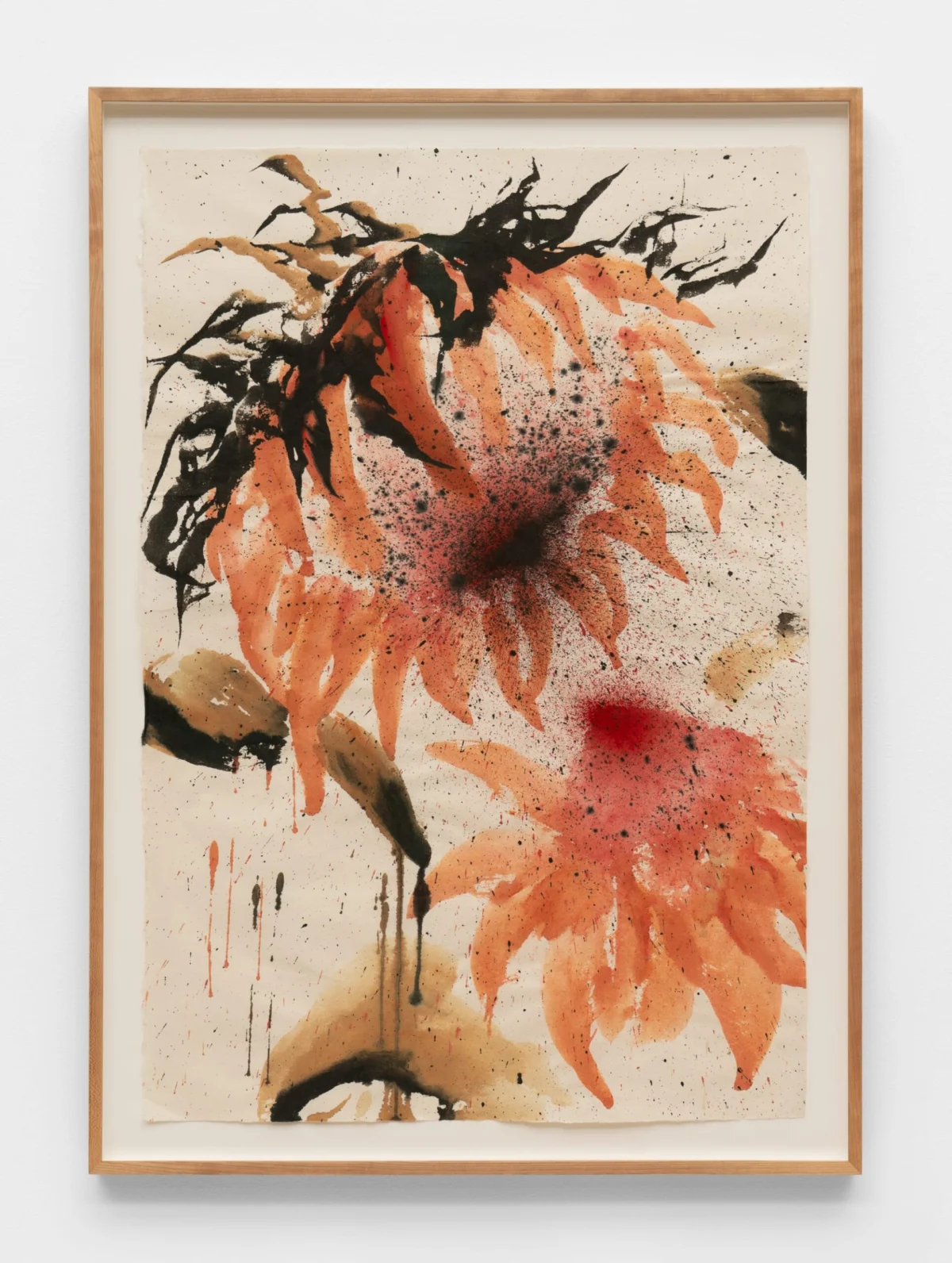
In the landscape of contemporary art, few practitioners possess the audacity to dismantle their own established visual language at the height of their success. Kyung-Me, the mid-career artist currently commanding attention in New York’s Tribeca art scene, has done exactly that. Her latest exhibition, I, Sunflower, hosted at Bureau, represents a profound departure from the meticulous, claustrophobic interiors that defined her earlier work. It is a pivot toward the ephemeral, the fluid, and the improvisational—a series that mirrors the biological inevitability of a sunflower’s life cycle.
Main Facts: A Radical Pivot
Kyung-Me’s exhibition at Bureau is not merely a display of new paintings; it is a conceptual reset. For over a decade, her reputation was built upon a foundation of hyper-controlled linework and narrative introspection. With I, Sunflower, she has abandoned the safety of her signature pen-and-pencil precision in favor of ink and watercolor on mulberry paper.
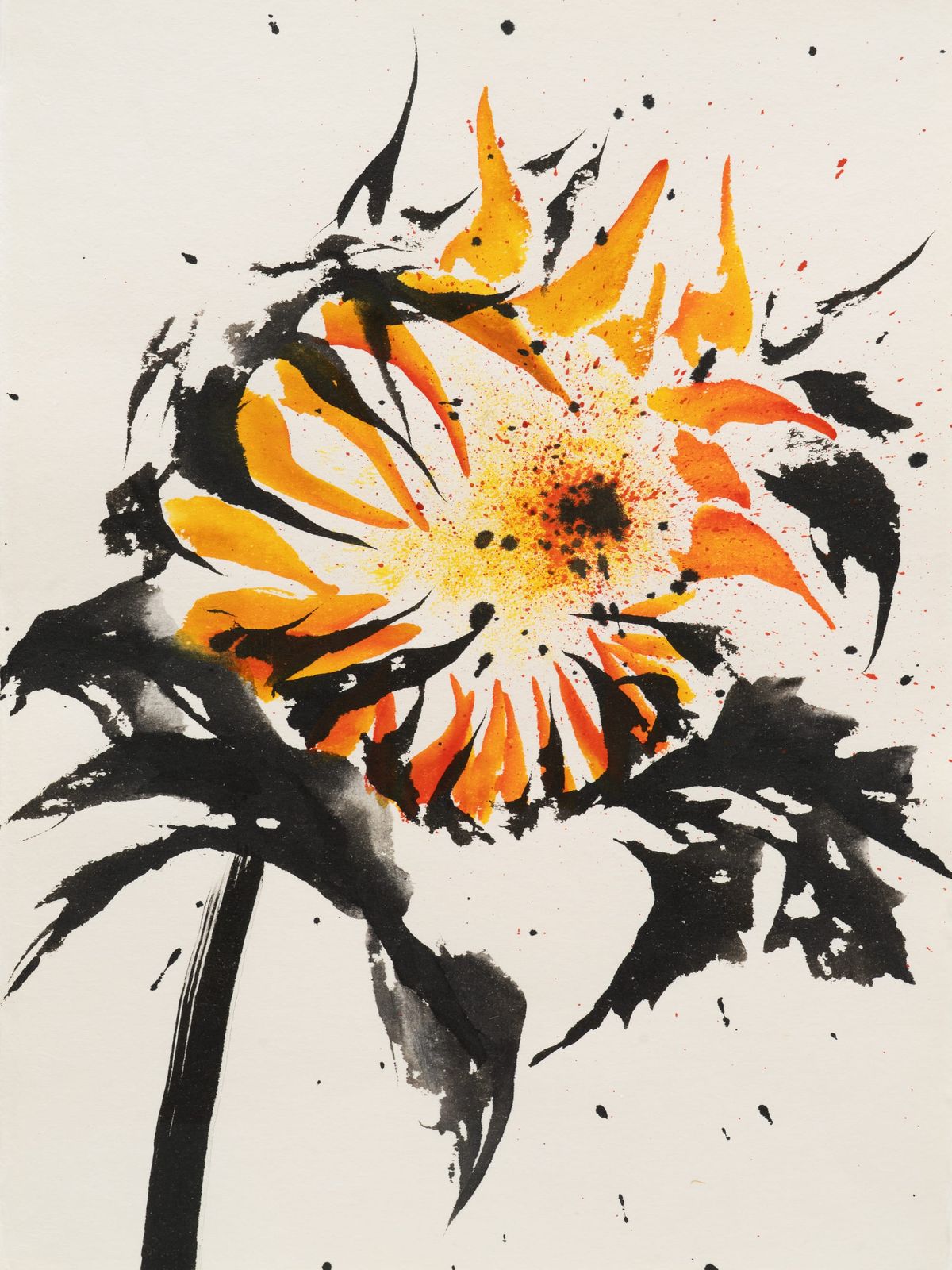
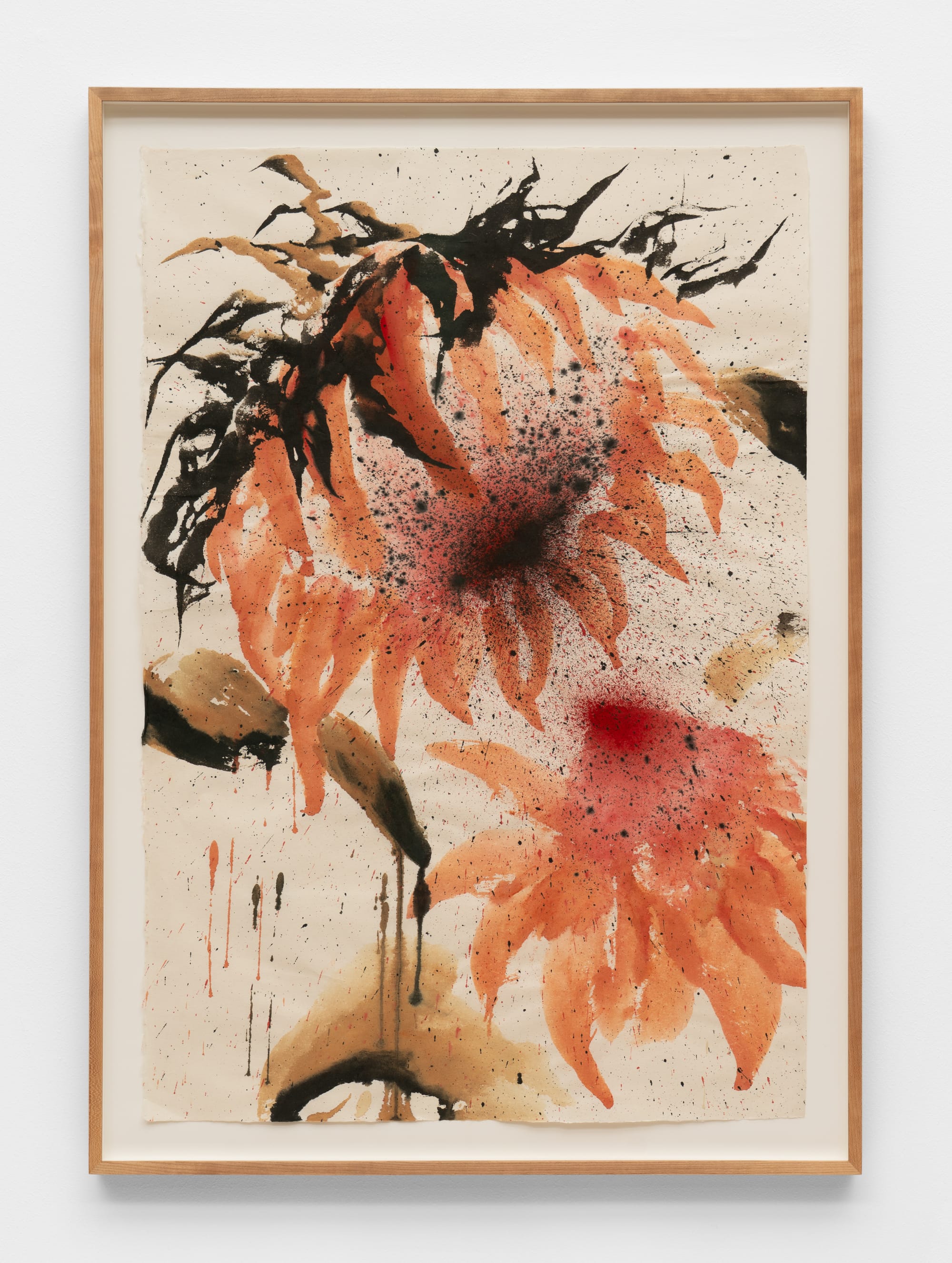
The works are characterized by their "in-between" nature: they hover precariously between figurative representation and pure abstraction. The sunflowers depicted are rarely static; they are shown in various states of decay, blooming, and, most notably, dissolution. By embracing the unpredictability of ink wash and the absorbent quality of mulberry paper, Kyung-Me has exchanged the cold, razor-sharp certainty of her previous "dream house" drawings for a raw, visceral vulnerability.
Chronology: The Evolution of a Practice
To understand the significance of this shift, one must trace the arc of Kyung-Me’s career, which has unfolded in four distinct, transformative chapters.
The Graphic Novel Era (2016)
Kyung-Me first entered the cultural consciousness with Bad Korean (2016). This pictorial diary, rendered in pastel and colored pencil, introduced a protagonist defined by her alienation. The work captured the plight of a young woman navigating the urban sprawl of New York, desperately seeking intimacy and validation through food, sex, and social performance. The narrative was characterized by a blunt, self-deprecating humor and a sense of "quiet desperation." It was a work of high relatability, rooted in the specific anxieties of the diaspora.
The Search for Identity (2020)
Four years later, with Copy Kitty, Kyung-Me transitioned from the verbal to the silent. Utilizing graphite, she crafted an intricate, wordless narrative centered on a feline protagonist who perpetually shifts her identity in a futile quest for the affection of a young man. While the medium was different, the thematic thread remained consistent: the struggle to belong and the loss of self in the pursuit of love.
The Architectural Interior (2022)
Her 2022 solo exhibition at Bureau marked a startling technical maturation. Kyung-Me turned her focus toward eight highly detailed, nested rooms. The protagonist’s face remained obscured, an intentional choice that forced the viewer to focus on the suffocating, architectural precision of the surroundings. Critics noted that the lines appeared drawn with "a razor blade that cuts deep but draws no blood," reflecting an unsettling, mesmerizing control.
The Present: I, Sunflower (2026)
With her current exhibition, the "perfectionist" has let go. The transition to ink and watercolor represents a rejection of the static, controlled environments of her past. She is no longer drawing the cage; she is painting the wilted flower. This shift is a bold commentary on the inevitability of change and the necessity of artistic risk.
Supporting Data: The Materiality of Decay
The technical shift in I, Sunflower is as much about chemistry as it is about aesthetic choice. Working on mulberry paper—a material that is inherently unforgiving and highly absorbent—Kyung-Me has allowed the medium to dictate the form.
- The Aesthetics of Liquefaction: The four largest works in the exhibition showcase a distinct movement toward "liquefaction." The dripping ink is not a mistake; it is the subject. It creates a visual metaphor for the human condition, where figures are seen dissolving into the background, effectively merging the subject with the environment.
- Color Palette: By limiting her palette primarily to black and green against vibrant yellow and orange grounds, Kyung-Me creates a high-contrast visual experience that mimics the organic vibrancy of a flower, punctuated by the dark, ink-heavy realities of grief and decline.
- Mark-Making: Unlike her previous work, which required deliberate, slow-motion execution, these pieces rely on speed. The artist has noted that only the works that meet her immediate satisfaction survive, creating an intense, high-stakes selection process that underscores her commitment to spontaneity.
Official Responses and Curatorial Context
The exhibition at Bureau has been met with critical acclaim for its bravery. By moving away from the "perfected" aesthetic that garnered her early recognition, Kyung-Me has challenged the art market’s tendency to demand stylistic consistency.

Curators and critics alike have pointed to the title of the work, Growing, Changing, Regressing, Raging (2025), as a key to understanding the emotional landscape of the exhibition. The gallery, in its organization of the show, has emphasized the diary-like quality of the pieces. These are not merely studies of flora; they are atmospheric recordings of the artist’s internal state—her moods, her conflicts, and her evolution.
The artist herself has remained largely enigmatic, letting the work speak to her own "re-invention." There is a distinct sense of liberation in the installation, which avoids the rigid categorization of her earlier gallery shows in favor of a more fluid, organic arrangement.
Implications: A Fearless Trajectory
The implications of I, Sunflower reach far beyond the walls of the Bureau gallery. In an art world that often incentivizes artists to produce a "signature style" and replicate it until it becomes a brand, Kyung-Me’s trajectory is an act of rebellion.
The Death of the "I"
Kyung-Me’s work has always been autobiographical, yet she has consistently resisted the temptation to anchor her art in a singular, identifiable "I." By shifting the subject from the human form—hiding behind architecture or cat personas—to the sunflower, she has achieved a universal, yet deeply personal, expression of mortality. The "I" in I, Sunflower is not the artist; it is the state of being.
The Cost of Evolution
The risk in such a radical shift is, of course, the potential alienation of an audience that became attached to her previous stylistic markers. However, Kyung-Me’s willingness to risk "regression" (as hinted in her 2025 work) suggests that she values the pursuit of truth over the comfort of recognition.
Future Outlook
As she moves into the latter half of her 30s, Kyung-Me is positioning herself as an artist who refuses to be categorized. Her career serves as a case study in the power of vulnerability. By forsaking the "razor-blade" precision of her past, she has opened a door to a more expansive, unpredictable, and ultimately more human way of creating.
I, Sunflower is a reminder that the most compelling art often occurs at the point where the artist stops trying to control the narrative and begins, instead, to let it bloom, wilt, and eventually dissolve into the page.
Exhibition Details:
- Kyung-Me: I, Sunflower
- Venue: Bureau, 112 Duane Street, Tribeca, Manhattan
- Dates: Through July 31, 2026
- Medium: Ink and watercolor on mulberry paper
 Asro
Asro
 Jia Lissa
 Nana Wu
