

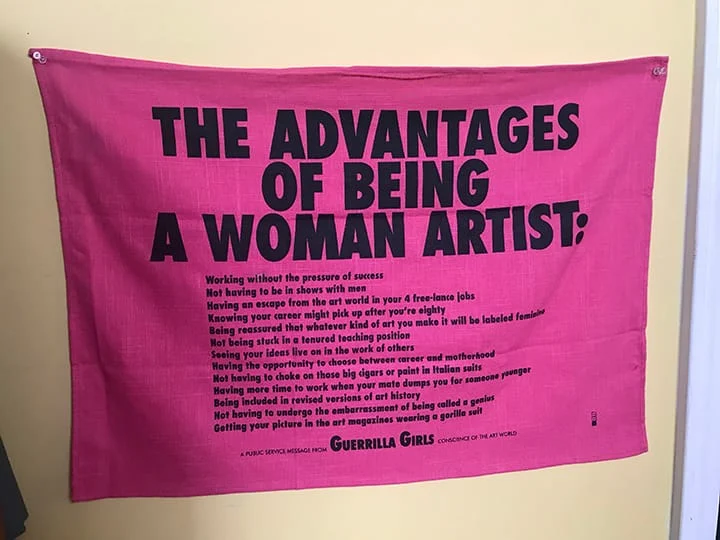
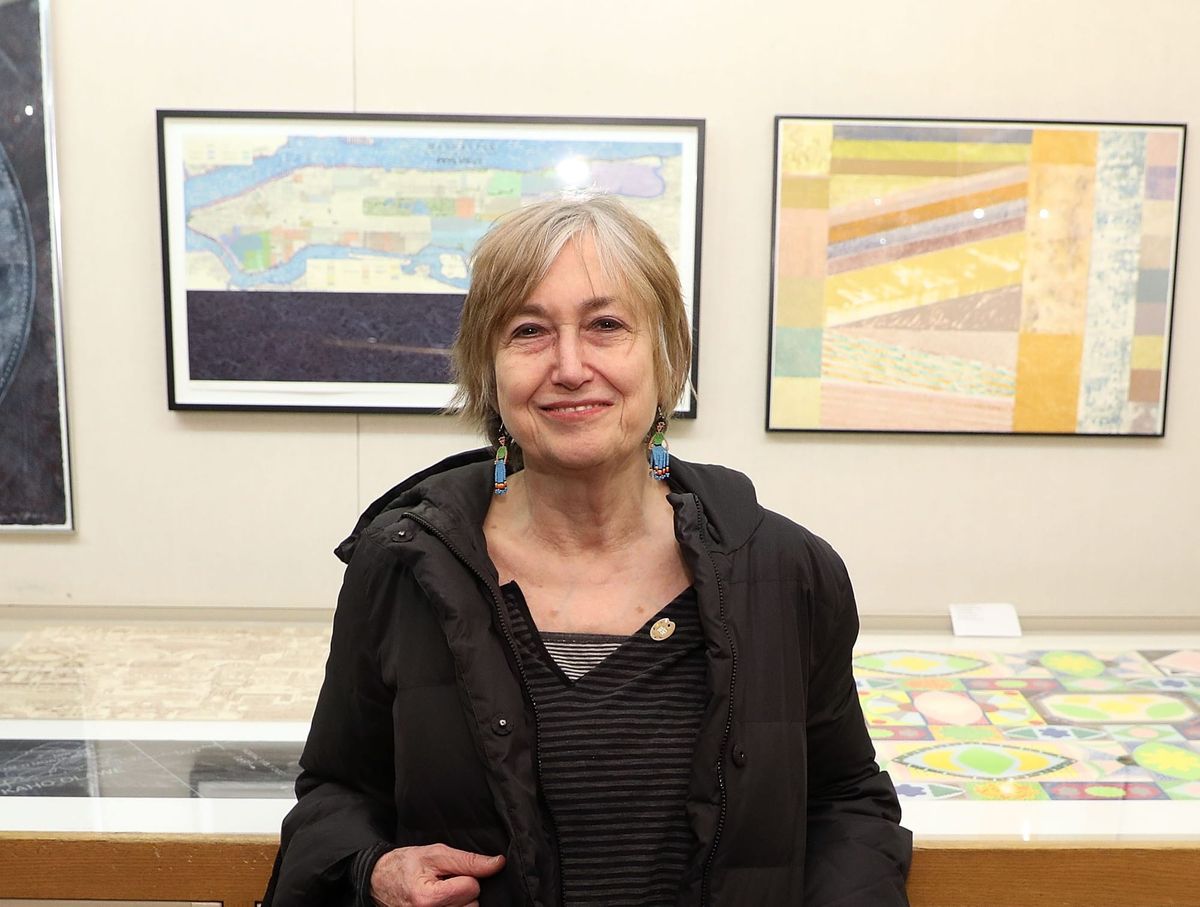
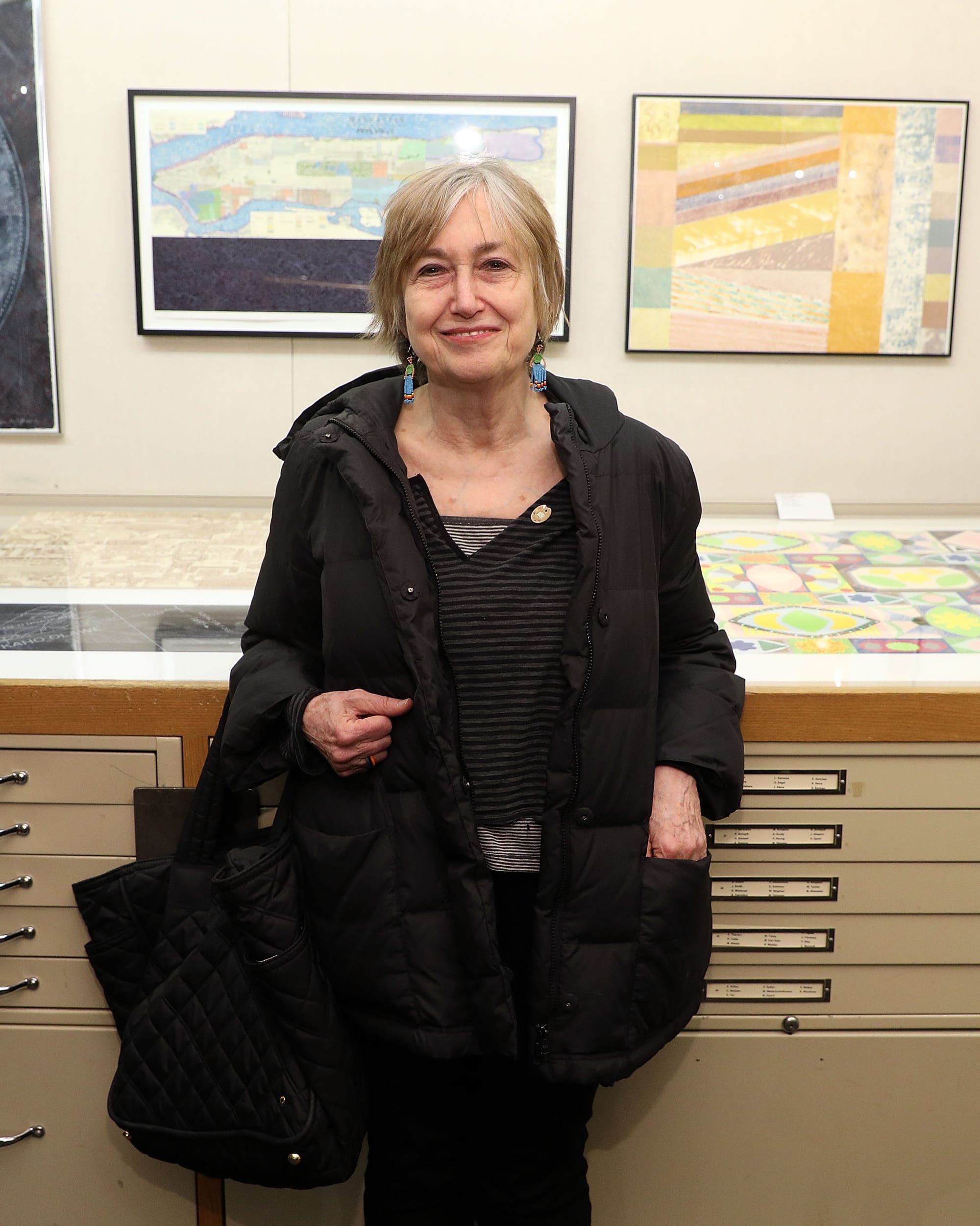
After forty-one years of operating in the shadows of one of the art world’s most influential activist collectives, artist Joyce Kozloff has finally stepped into the light. In a candid, wide-ranging interview for Art Journal Open’s "Feminist Interview Project," the celebrated pioneer of the Pattern and Decoration movement disclosed that she was a founding member of the Guerrilla Girls, the anonymous group of feminist agitators who famously donned gorilla masks to challenge the systemic sexism and racism embedded in the art establishment.
For four decades, Kozloff maintained her anonymity under the pseudonym “Liubov Popova,” a name borrowed from the trailblazing Russian Constructivist artist. Her revelation marks a significant moment in art history, closing a long chapter of mystery surrounding the identities of the women who used data-driven protest to hold the world’s most prestigious institutions to account.
The Genesis of an Activist: A Chronology of Resistance
To understand Kozloff’s role in the Guerrilla Girls, one must trace the trajectory of her activism, which began long before the collective’s inception in 1985.
1971: The Radicalization in Los Angeles
Kozloff’s journey toward radical feminism began in 1971, shortly after relocating to Los Angeles when her husband, the art critic Max Kozloff, accepted a teaching position at the California Institute of the Arts. During this period, she joined a "consciousness-raising" group—a staple of second-wave feminism—that proved to be a turning point in her life.
This radicalization led to her co-founding the Los Angeles Council of Women Artists (LACWA). The organization became a formidable force, meticulously gathering data to protest the glaring lack of female representation at the Los Angeles County Museum of Art (LACMA). This focus on cold, hard statistics—the "paucity of female representation"—would later become the DNA of the Guerrilla Girls’ methodology.
The New York Return and the Heresies Collective
Returning to New York in the early 1970s, Kozloff deepened her commitment to feminist discourse. She became an inaugural member of the Heresies Collective, a group of artists and intellectuals who produced a seminal journal focusing on art and politics. Simultaneously, she was instrumental in the rise of the Pattern and Decoration (P&D) movement, which sought to elevate traditional "women’s work"—textiles, ceramics, and ornamentation—to the status of high art.
1985: The Birth of the Guerrilla Girls
The formation of the Guerrilla Girls was an organic response to the persistent marginalization of women in the art world. Kozloff notes that she was one of seven inaugural members who brought years of experience from the 1970s women’s movement into the fold. The group’s name was famously an accident: a member misheard a proposed title during a meeting and arrived wearing a gorilla mask, creating an iconic, albeit unintended, brand identity.
Methodology: Data as a Weapon
The Guerrilla Girls are renowned for their confrontational, wheat-pasted posters that "named and shamed" major museums, galleries, and collectors. Their strategy was never about individual fame; it was about exposing the structural biases of the art world.
Kozloff explained to curators Maura Reilly and Helena Reckitt that her insistence on anonymity was never about personal safety or avoiding professional reprisal. "I argued for anonymity because I didn’t want attention to be on us as individuals," she stated. "I wanted it to remain on the issues."
This commitment to the cause over the ego was what allowed the collective to operate with such ferocity. By removing their personal identities, the "Girls" made themselves interchangeable, ensuring that no single person could be singled out as the face of the movement. This created a sense of omnipresence—anyone could be a Guerrilla Girl, and therefore, every institution was potentially being watched.
Anatomy of an Icon: "The Advantages of Being a Woman Artist"
Among the most recognizable works in the history of institutional critique is the 1988 poster, The Advantages of Being a Woman Artist. The piece uses biting, satirical wit to list the "benefits" of being female in the art world, such as "not having to be in shows with men who pimp art" or "having the opportunity to choose between career and motherhood."
Kozloff revealed that the inspiration for this poster came from a personal experience at an artist’s residency. She observed married male artists who brought along their younger partners, who functioned not as peers, but as unpaid homemakers and studio assistants.

"When I got back, I wrote a rough draft, ‘The Disadvantages of Being a Woman Artist,’" Kozloff recounted. While the group usually relied on verifiable statistics, this project was a departure into satire. "Our clever members turned it around to ‘Advantages,’ and it worked!" The result became a global phenomenon, appearing in exhibitions and archives worldwide as a quintessential critique of the gendered labor dynamics in creative industries.
Implications: The Evolution of Feminist Critique
Kozloff remained an active member of the collective until 1991. Reflecting on her time with the group and the current state of the art world, she acknowledges that progress has been made. Statistics regarding the inclusion of women in museum collections have improved, and the conversation surrounding gender parity has moved from the margins to the mainstream.
However, Kozloff is quick to pivot from the art world to the broader political landscape. She expresses profound concern over the erosion of women’s rights, pointing to the reversal of Roe v. Wade in the United States and the resurgence of traditionalist, patriarchal pressures on women.
"I’m very much more concerned about the current threats to women’s progress in the larger political realm," she noted. She highlighted the far-right’s push to domesticate women and the toxic influence of the beauty industry, which she believes enforces a superficial standard of femininity that contradicts the intellectual and artistic autonomy women have fought to achieve.
A Legacy of Collective Action
Kozloff’s decision to reveal her identity is not an attempt to reclaim individual credit, but rather a reflection on the longevity of the movement. By speaking out, she provides a historical link between the radical organizing of the 1970s and the institutional challenges of the 21st century.
Her life’s work—spanning the Pattern and Decoration movement, her public art, and her anonymous activism—serves as a template for how artists can engage with power. She maintains that the power of the Guerrilla Girls lay in their ability to strip away the "great man" myth of the art world, replacing it with a collective, faceless, and therefore unassailable, voice.
As for the next generation of activists, Kozloff is characteristically humble. She recognizes that the tactics of the 1980s may not be the tactics of the 2020s, nor should they be. "We can’t tell the next generation what to do; they will find their own ways," she concluded.
Her disclosure serves as a reminder that the "mask" was never a prison; it was a tool. Now that the mask has been removed, what remains is not just the face of a pioneering feminist, but the enduring evidence of a struggle that continues to evolve. For those who have long wondered about the voices behind the posters, Kozloff’s interview provides not just a name, but a vital piece of the puzzle that defines how we understand institutional resistance today.
In the end, Joyce Kozloff’s reveal does not diminish the myth of the Guerrilla Girls—it humanizes the mechanism of change itself. By stepping forward, she invites us to look closer at the history we think we know, and to realize that the most powerful movements are often those where the individual ego is sacrificed for the sake of the collective voice.
 Muslim
 Evan Lee Salim
 Jia Lissa
