

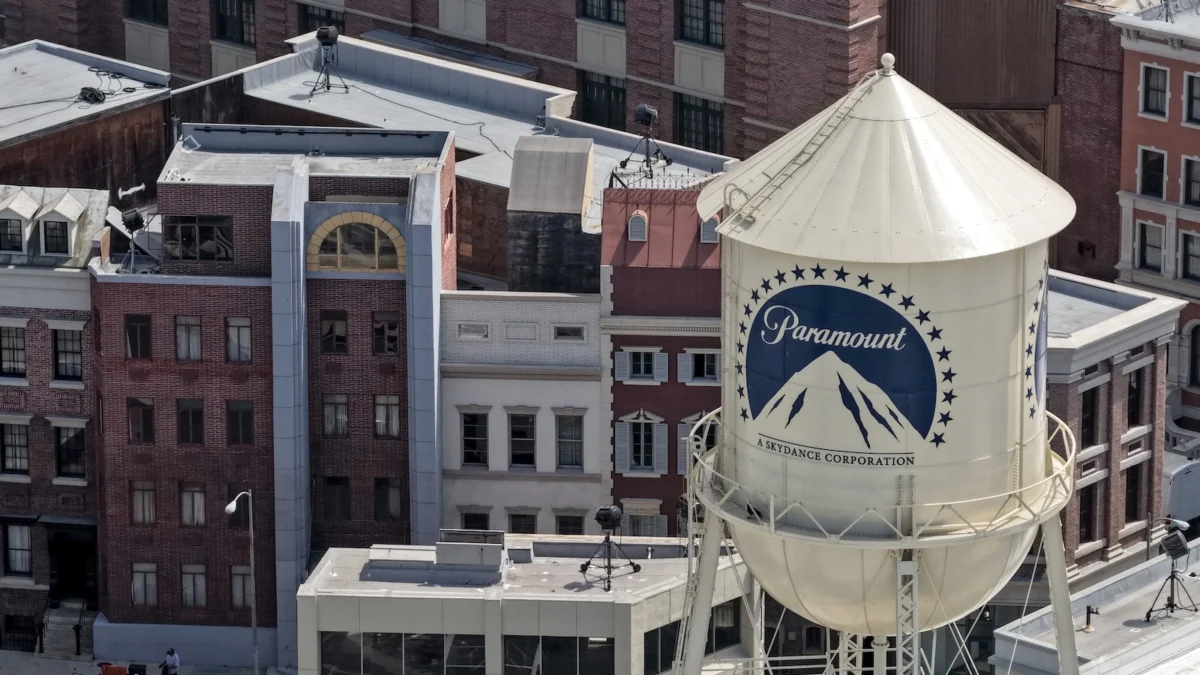
The landscape of American media stands at a precarious crossroads following a landmark judicial intervention that has sent shockwaves through Hollywood and Wall Street alike. In a move that underscores the intensifying scrutiny of media consolidation, Judge Araceli Martínez-Olguín has granted a temporary restraining order (TRO) to halt the proposed $110 billion merger between Paramount and Warner Bros. Discovery (WBD).
The ruling, delivered on Friday, July 17, imposes a 14-day moratorium on the transaction, effectively freezing what would be the largest media merger in history. The injunction comes in response to a high-stakes antitrust lawsuit filed by a coalition of 12 states, led by California Attorney General Rob Bonta. As the two-week clock begins, the industry watches a legal battle that pits the survival of legacy media against the principles of market competition.
Main Facts: A Seismic Shift Put on Ice
The core of the dispute lies in the sheer scale of the combined entity. Paramount’s acquisition of Warner Bros. Discovery is not merely a corporate marriage; it is an amalgamation of two of the "Big Five" film studios, two global streaming platforms, and a massive portfolio of cable and news networks.
Judge Martínez-Olguín’s decision to grant the TRO followed a contentious hearing where she pressed both legal teams on the long-term implications of market concentration. The states’ legal representatives argued that allowing the merger to proceed, even while litigation is ongoing, would cause "irreparable harm" to the competitive fabric of the industry. Their mantra throughout the proceedings was clear: “Once the competition is lost, the harms begin.”
Conversely, Paramount’s lead counsel, Jeffrey Kessler, attempted to minimize the permanence of the deal, suggesting that the merger would not be “impossible to unscramble” should the courts eventually rule against it. This argument failed to sway the judge, who opted to preserve the status quo while the court considers the request for a more permanent preliminary injunction.
The stakes are exacerbated by a ticking financial clock. Paramount had originally aimed to close the transaction by July 22. Furthermore, the company faces a September 30 deadline, after which it must pay significant quarterly fees to shareholders for every period the deal remains unconsummated.
Chronology: The Road to the Restraining Order
The path to this judicial standstill has been marked by rapid consolidation efforts and escalating legal resistance.

- The Initial Proposal: Paramount moved to absorb the entirety of Warner Bros. Discovery in a $110 billion deal. This followed an earlier phase where Netflix had attempted to purchase only the studio side of WBD, an offer that was ultimately bypassed in favor of Paramount’s holistic acquisition of the company’s studio, cable, and news assets.
- Monday, July 13: A coalition of 12 states, spearheaded by California, filed a formal antitrust lawsuit. The suit alleged that the merger would "extinguish competition" and inflict "substantial harm" on movie theaters, cable distributors, and the American viewing public.
- The DOJ’s Pass: In a surprising turn, the Department of Justice (DOJ) announced it would not challenge the merger. This federal green light emboldened Paramount but served as a catalyst for state-level attorneys general to take independent action.
- Tuesday, July 14: The Writers Guild of America (WGA) filed its own lawsuit to block the merger, citing concerns that a combined company would create a monopsony, limiting the avenues for writers to sell scripts and suppressing fair compensation.
- Friday, July 17: Judge Martínez-Olguín issued the 14-day TRO, officially pausing the merger and setting the stage for a more comprehensive hearing on the merits of the antitrust claims.
Supporting Data: Market Concentration and Economic Impact
The states’ lawsuit focuses on three primary sectors where they believe the Paramount-WBD entity would wield "monopolistic power":
1. Theatrical Film Distribution
The combined company would control two of the world’s most storied film lots. While Paramount executives have promised to release 30 films theatrically each year to appease theater owners, Attorney General Bonta’s office argues this promise is unenforceable and "unrealistic" given the $80 billion in debt the new company would carry. The states argue that reducing the number of major studios from five to four (or effectively three in terms of high-grossing "tentpole" capacity) would lead to fewer choices for exhibitors and higher ticket prices for consumers.
2. The Cable Market Lever
The most significant economic concern involves the cable television sector. The combined portfolio would include HBO, CNN, CBS, MTV, HGTV, Food Network, Comedy Central, TNT, and TBS. Estimates suggest the new entity would control roughly one-third of the entire U.S. cable market. This concentration would grant the company unprecedented leverage when negotiating carriage fees with cable providers like Comcast and Charter. The lawsuit argues that these increased costs would inevitably be passed down to consumers in the form of higher monthly bills.
3. The Talent Pipeline
The WGA’s involvement highlights a labor-side concern. By merging the two entities, the number of major buyers for high-end television and film scripts is drastically reduced. The union argues this would lead to a "race to the bottom" regarding residuals, creative control, and contract terms for the thousands of writers who fuel the industry.
Official Responses: A War of Words
The rhetoric surrounding the TRO reflects the deep ideological divide between the regulators and the corporations.
California Attorney General Rob Bonta hailed the order as a victory for the public interest. “This is a critical first win in our case to ensure this megamerger never sees the light of day,” Bonta stated. He emphasized that history warns against the concentration of power in markets central to American life, promising that his office has a “full tank of gas” to continue the legal fight.
Paramount’s Corporate Statement remained defiant, though it acknowledged the court’s authority. The company characterized the TRO as a procedural step to maintain the status quo rather than a reflection of the case’s merits. “We are confident the evidence will demonstrate that the State AGs’ antitrust arguments are without merit,” the statement read. Paramount argued that the lawsuit “defies evidence” and serves only to benefit “Big Tech” competitors like Netflix, Amazon, and Apple, who are not subject to the same legacy costs and regulatory hurdles.

Implications: The Future of Hollywood and Beyond
The 14-day pause is more than a delay; it is a period of intense vulnerability for the merger. Several factors could determine whether the deal survives or collapses under its own weight.
The "Big Tech" Defense
Paramount’s strategy hinges on the "legacy media survival" narrative. They argue that in an era dominated by trillion-dollar tech giants, a $110 billion merger is a defensive necessity, not an offensive monopoly. They contend that by blocking the merger, regulators are inadvertently handing the keys of the entertainment industry to Silicon Valley, which could lead to even less transparency and competition in the long run.
The CNN Controversy and Political Complications
Adding a layer of intrigue is a fourth lawsuit from shareholders. This suit alleges that CEO David Ellison and his father, tech billionaire Larry Ellison, engaged in a "side deal" involving former President Donald Trump. The allegation suggests a promise to overhaul CNN’s editorial direction in exchange for political or regulatory favor. While Paramount has vehemently denied these claims, the optics of such an allegation complicate the merger’s path, particularly in a politically charged environment.
International Hurdles
The U.S. states are not the only entities watching the clock. Regulatory bodies in the United Kingdom are also reviewing the transaction. If the UK’s Competition and Markets Authority (CMA) issues its own set of demands or blocks, Paramount may find itself fighting a multi-front war that exceeds its financial capacity, especially given the $80 billion debt load.
The Supreme Court Prospect
Lawyers for Paramount have already signaled that they are prepared to escalate this case to the Supreme Court. They argue that the state-level intervention, following the DOJ’s decision not to challenge, creates a fractured regulatory environment that harms interstate commerce. A Supreme Court battle would be lengthy and costly, potentially pushing the closing date well past the point of financial viability.
Conclusion
As the 14-day restraining order takes effect, the entertainment industry remains in a state of suspended animation. The outcome of this legal confrontation will define the boundaries of media ownership for the next generation. Whether the court views the Paramount-Warner Bros. Discovery merger as a necessary evolution for survival or an illegal grab for market dominance, the decision will resonate far beyond the studio lots of Hollywood and Burbank. For now, the "seismic shift" has been halted, leaving two of the world’s most powerful media companies waiting for a judge’s next word.
 Jia Lissa
 Lina Irawan
 Iffa Jayyana
