

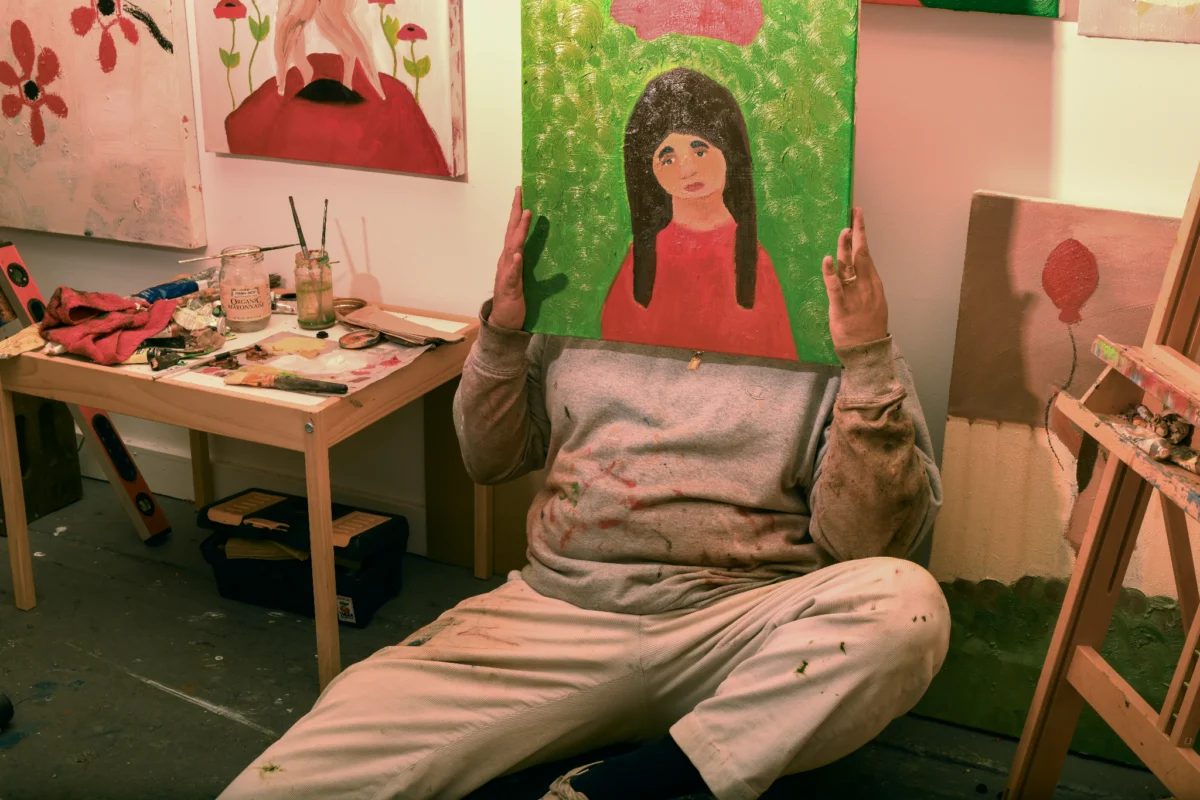
In the quiet corners of his studio in Greenpoint, Brooklyn, Palestinian-American artist Sabri Sundos engages in a practice that feels less like production and more like excavation. Surrounded by vibrant canvases and delicate, hand-embroidered textiles, Sundos is currently garnering national attention for his solo exhibition, Chasing Flowers, hosted at the Fisk Gallery in Portland, Oregon. Through a lexicon of floral motifs, rhythmic dancing figures, and poignant, intentional color palettes, Sundos explores the complex intersection of diasporic identity, the inherent human desire for beauty, and the crushing weight of displacement.
“It’s the one thing in the world that is just there to make things beautiful,” Sundos says of his fascination with flowers. Yet, in his hands, beauty is never merely decorative. It is a radical act of resistance, a vessel for collective memory, and a bridge between the trauma of the past and the possibilities of the future.
Chronology: From Melodies to Masterpieces
The trajectory of Sabri Sundos’ creative life is marked by a profound pivot. Before the world of fine art claimed him, Sundos was firmly entrenched in the music industry. For years, he operated as a musician and performer, navigating the collaborative, often chaotic life of a touring artist.
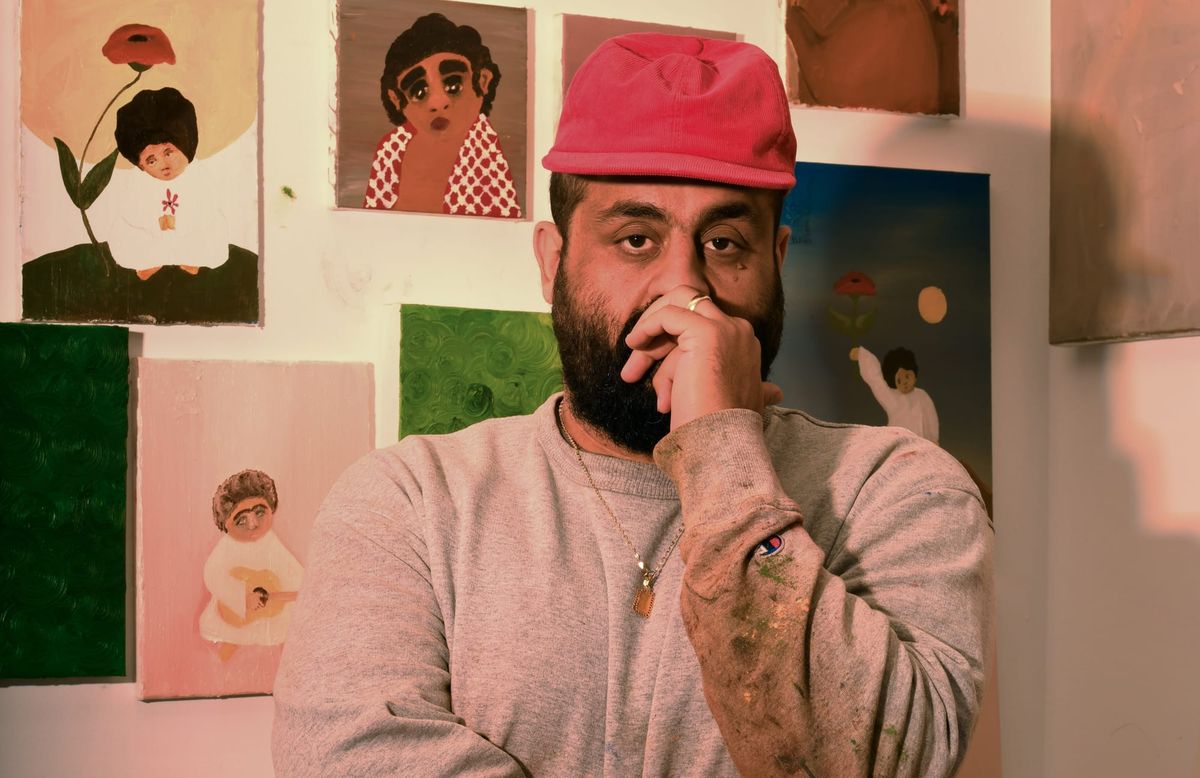
The transition to visual art did not occur until 2018, and even then, it was an accidental discovery. While designing cover art for one of his own albums, Sundos found himself holding a paintbrush for the first time. The experience was transformative. “The first time I painted, I remember how good it made me feel,” he recalls. Unlike music, which often necessitates a committee of collaborators and the complexities of production, painting offered an unfiltered, visceral connection between his internal monologue and the physical world.
By 2024, Sundos had fully integrated his design background into his activism. Alongside his collective, Unibrow Sun, he launched the "Somebody I Love is Palestinian" t-shirt campaign. The initiative was not merely a fundraising effort for Gaza Mutual Aid Solidarity; it was a psychological intervention. By grounding a political demand in the universal language of love, Sundos sought to challenge the apathy of the public. He demonstrated that art and design are not passive pursuits but active tools for building solidarity and translating empathy into tangible, life-saving support for displaced families in Gaza.
The Cultural Architecture of Identity
Sundos’ upbringing in San Diego was a study in cultural synthesis. Raised in a landscape dominated by surf culture, skateboarding, and the eclectic subcultures of Southern California, he often found himself as one of the few people of color in his immediate social circle.

His home life, however, existed in a different geography. While his parents navigated the difficult path of assimilation, his teta (grandmother) ensured that Palestine remained the focal point of his consciousness. Through long, immersive visits and stories passed down through generations—specifically narratives surrounding the Nakba—his grandmother instilled in him a permanent connection to his homeland. “She put Palestine in me,” he notes. This duality—the surfer-skater kid from California and the grandson of refugees carrying the weight of a nation—forms the bedrock of his current artistic philosophy.
Supporting Data: The Duality of Practice
Sundos divides his studio time between two distinct methodologies, each serving a different purpose in his creative ecosystem:
1. The Discipline of Tatreez
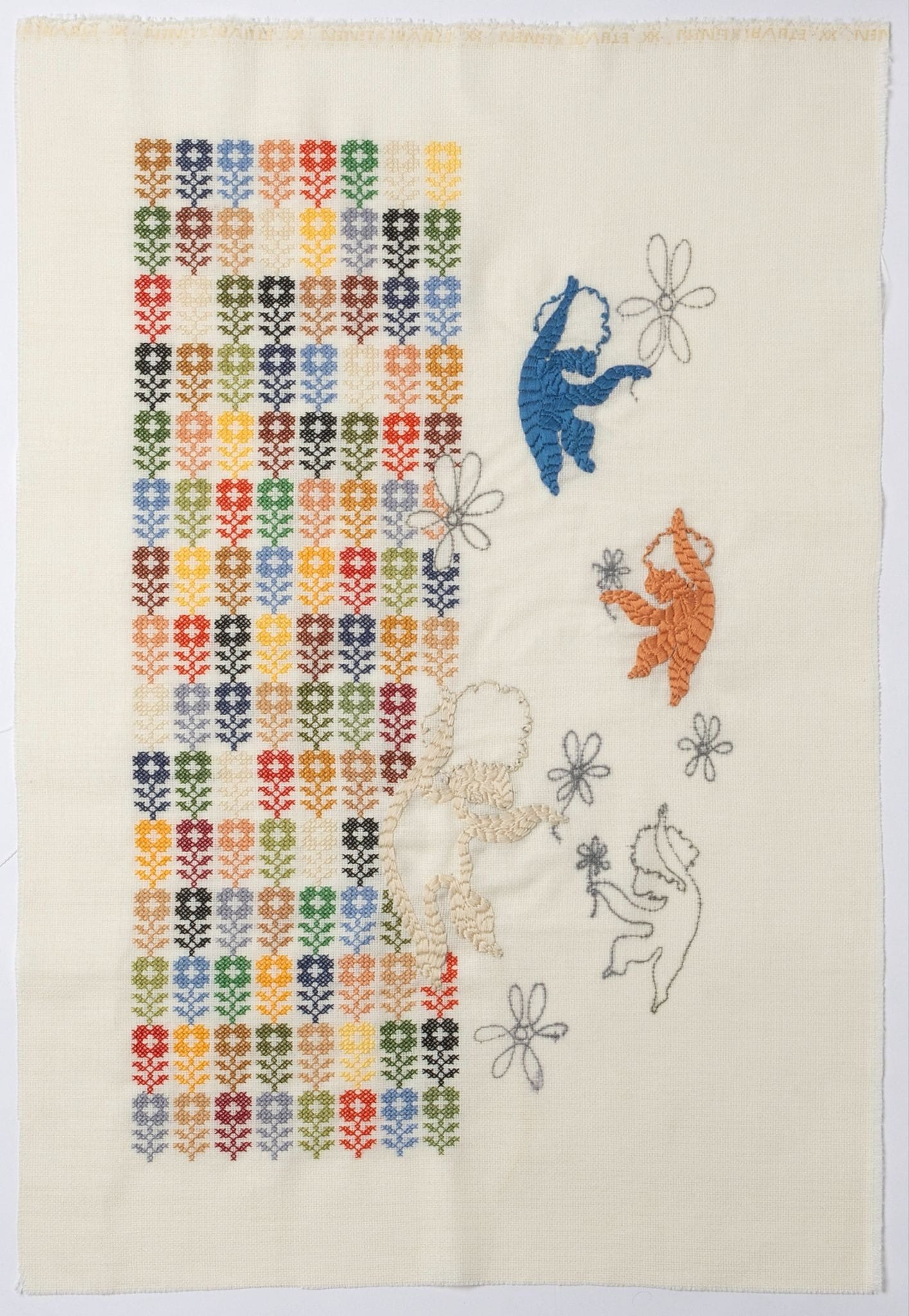
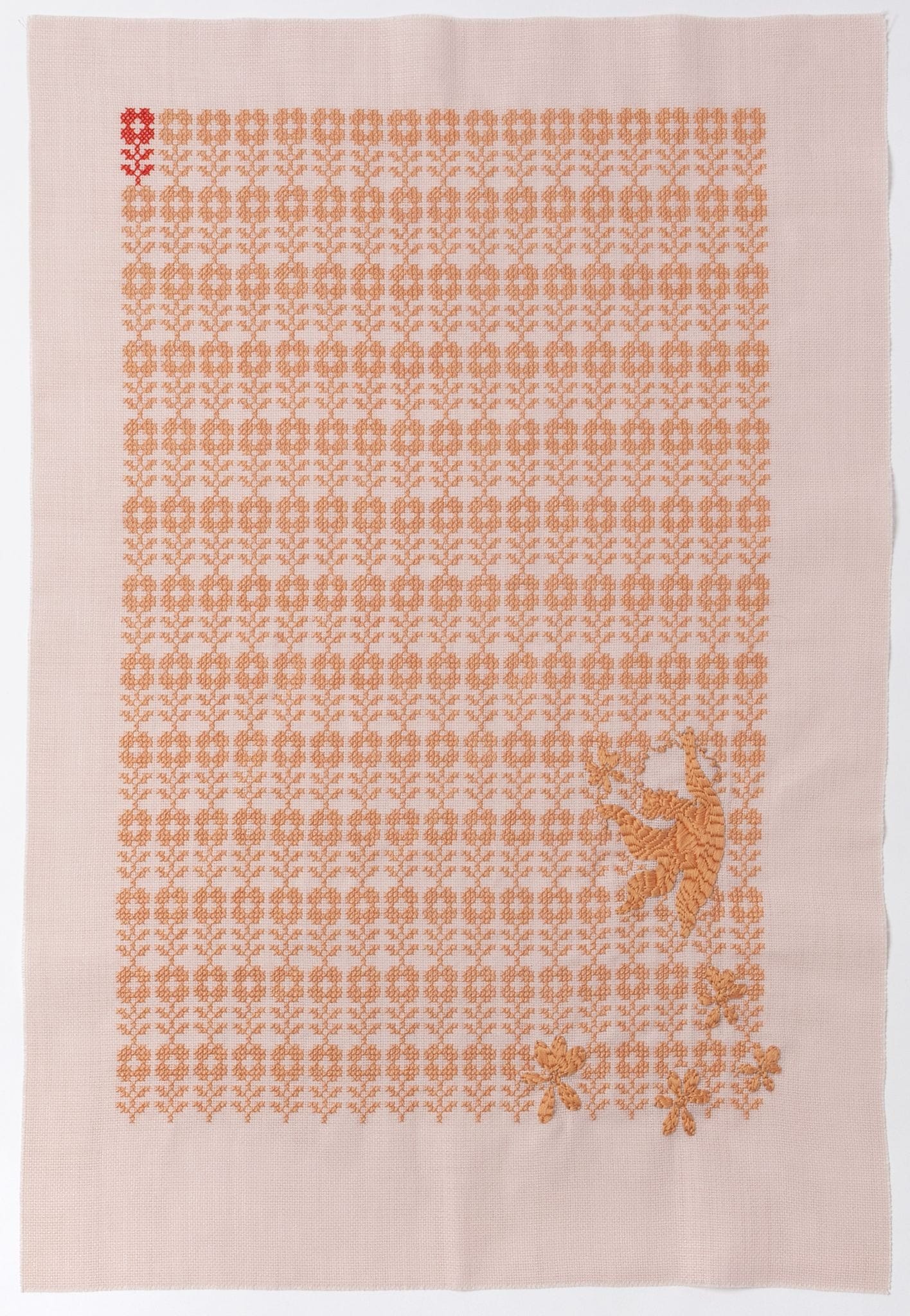
His embroidery pieces are the result of meticulous planning. These works are deliberate and conceptual, requiring him to map out colors and compositions long before the first stitch is made. For Sundos, tatreez—traditional Palestinian embroidery—is not just an aesthetic choice; it is an act of historical stewardship. By engaging with this centuries-old practice, he seeks to ensure its place within the contemporary art history canon, transforming a domestic tradition into a formal fine art statement.
2. The Spontaneity of Painting
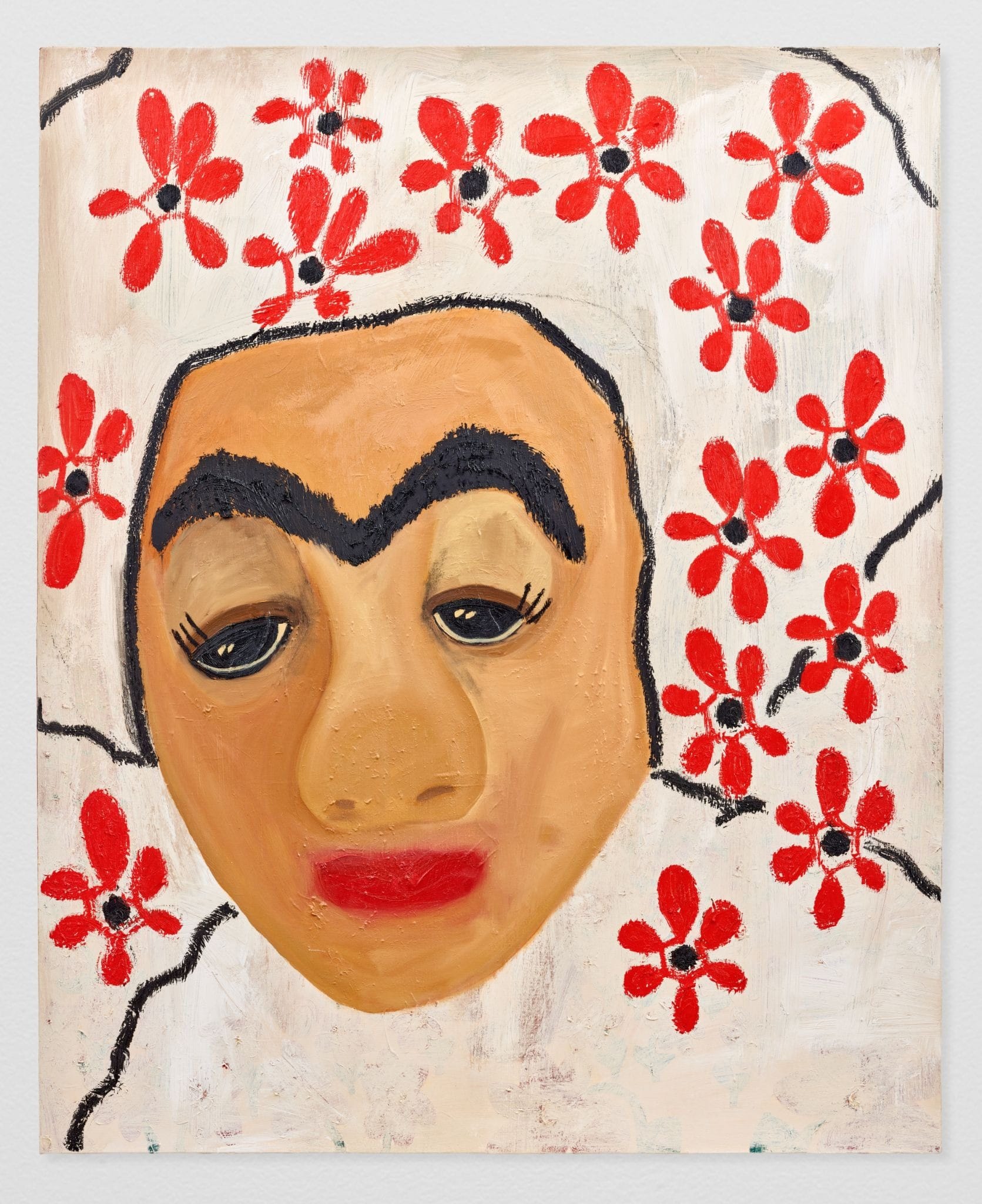
In stark contrast, his painting process is rooted in intuition. He describes his approach as "finding" a figure rather than creating one. He rarely starts with a blueprint, preferring to let the brush move until a face or a posture emerges from the canvas. He views this as a form of play, a way to tap into a childlike sense of discovery that he believes is essential for creative longevity.
The Recurring Motif: The Dancing Figure
Central to his work is a recurring, ambiguous figure. Originally derived from continuous-line drawings inspired by photographs of Alvin Ailey dancers, the character has evolved to include a unibrow and curly hair, becoming a semi-autobiographical avatar.
The figure remains intentionally fluid. It is neither exclusively male nor female, young nor old. It is a vessel for the viewer’s own projections. Sundos traces the movement of these figures back to his childhood, where his father’s singing and his mother’s dancing were the heartbeat of family gatherings. For an artist who has spent his life grappling with the reality of borders and the enforced stillness of the displaced, the act of painting movement is a radical reclamation of autonomy. “I am obsessed with autonomy and movement,” he explains. “Freedom of movement.”
Official Perspectives and Critical Implications
Chasing Flowers has prompted a broader conversation about the role of the artist in times of global crisis. The exhibition text notes that the work explores “the tension between escape and engagement, attraction and apathy.”
Critics have observed that while the figures in Sundos’ paintings are often interpreted as melancholic, the artist himself views them as inherently hopeful. They are "waiting" figures. In the context of the Palestinian experience, where wait times at checkpoints, wait times for justice, and wait times for home are normalized, these figures represent a quiet, stubborn resilience.
The inclusion of animations and original piano compositions in his current exhibition highlights the synthesis of his past and present. By weaving sound and movement into the static world of the gallery, he creates a multi-sensory experience that reinforces the idea that Palestinian identity cannot be flattened into a single narrative of suffering.
Conclusion: A Future Built on Hope
Sabri Sundos’ work is an invitation to witness the complexity of being. He rejects the binary that demands he choose between his heritage and his individuality. He offers a vision where one can be deeply, undeniably Palestinian while also being a product of Californian skate culture, a musician, a father, and a husband.
As he continues to build his life in New York, his practice remains a testament to the Levantine tradition of moving fluidly between joy and grief. He does not center his work on trauma; instead, he makes space for beauty. In a world that often demands that the marginalized remain victims, Sundos insists on the presence of celebration, endurance, and the unyielding pursuit of freedom. His work serves as a reminder that even when the world feels as if it is falling apart, the act of painting a flower or drawing a dancer is a necessary defiance—a way of saying that we are still here, we are still moving, and we are still capable of dreaming.
 Asro
Asro
 Jia Lissa
 Nana Wu
