

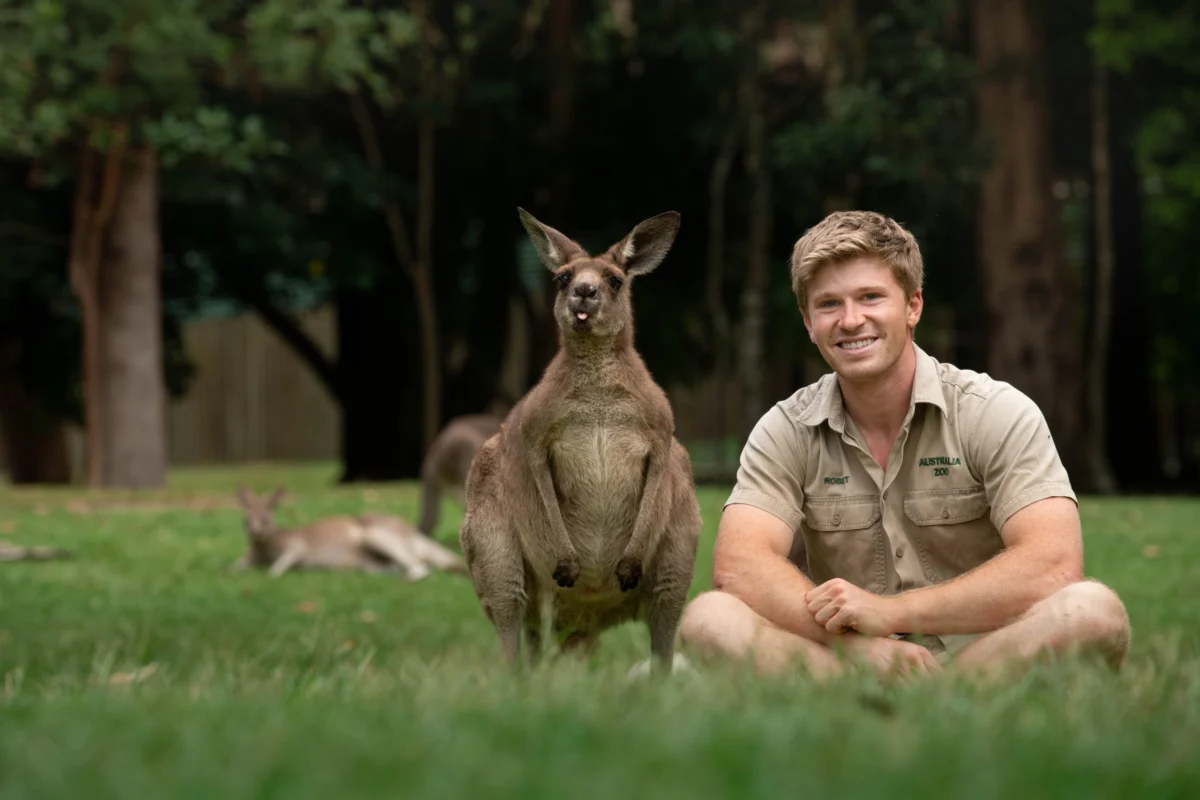
For most, the name "Irwin" is synonymous with a khaki uniform, a boundless passion for wildlife, and the enduring legacy of the "Crocodile Hunter." For Robert Irwin, however, those associations are not just a brand; they are the bedrock of his identity. Born and raised within the 700-acre confines of Australia Zoo on Queensland’s Sunshine Coast, the 20-year-old television personality and conservationist describes his childhood as a "free-range" education in the wild.
In an exclusive interview, Irwin peels back the curtain on his life at the world-famous wildlife sanctuary, offering an intimate look at the region he calls home. Far from the typical suburban upbringing, his early years were marked by the roar of tigers at dawn and the quiet companionship of giraffes and elephants. As he navigates a career that takes him across the globe, his magnetic pull back to the Sunshine Coast remains the defining constant of his life.
A Legacy Written in the Wild: The Main Facts
The Sunshine Coast is more than just a tourist destination for the Irwin family; it is a laboratory for conservation and a sanctuary for human spirit. Robert Irwin, currently hosting the new Disney+ series Dancing with the Stars: The Next Pro, maintains that his primary vocation—beyond the cameras—is to act as a steward and ambassador for the region.

"I feel like my job is to share the beauty of where I live with the world," Irwin says. "It is a life-changing experience to come to connect with nature."
The Australia Zoo, which has served as the centerpiece of the region for over 55 years, acts as the hub for this mission. It is a state-of-the-art facility that balances high-level conservation efforts with public engagement. For Irwin, the zoo is the "jewel in the crown" of a landscape defined by an unusual geological harmony: the proximity of rugged volcanic hinterlands to pristine, white-sand beaches.
Chronology of a "Free-Range" Childhood
Robert’s life has been a literal evolution within the zoo’s fences. His recollections of childhood are not framed by school buses or playgrounds, but by the natural rhythms of the savanna and the dense Australian bush.

- Early Years (The Formative Stage): Raised in the heart of Australia Zoo, Irwin spent 99 percent of his time outdoors. His daily life involved tasks ranging from riding horses to assisting in the care of some of the world’s most dangerous predators.
- The Adolescent Development: As he grew, the focus shifted from simple interaction to deep-seated conservation work. This period cemented his understanding of the fragile balance between human activity and wildlife protection.
- The Global Ambassador Phase: Transitioning into adulthood, Irwin began using his platform to bridge the gap between global audiences and the Australian environment. His current media career serves as a vehicle to promote the Sunshine Coast as a global destination for eco-conscious travelers.
Supporting Data: Why the Sunshine Coast Matters
The Sunshine Coast is unique in its geographical diversity, a feature Irwin is quick to highlight. The region offers a rare transition from sub-tropical rainforests to oceanic coastlines within a 20-minute drive.
The Ecological Diversity
The region’s biodiversity is a significant draw for researchers and tourists alike.
- Marine Life: The coastline near Mooloolaba serves as a critical migratory corridor for humpback whales. Furthermore, the offshore reef systems are home to sea turtles, rays, and sharks, offering a glimpse into the health of the broader Pacific ecosystem.
- Hinterland Sanctuaries: Places like Mary Cairncross Scenic Reserve offer remnants of ancient, subtropical rainforests. These pockets of biodiversity are essential for the survival of species such as the pademelon and various wallaby populations.
- The Zoo Effect: The Crocodile Hunter Lodge, located on zoo property, provides a unique model for "integrated tourism." By allowing visitors to stay in a habitat shared by kangaroos, koalas, and cockatoos, the facility promotes a form of passive, respectful observation that is becoming the gold standard for wildlife tourism.
Official Perspectives: The Philosophy of Connection
When discussing his hometown, Irwin speaks with a fervor that suggests he views the Sunshine Coast as an extension of his own family’s legacy. He argues that the modern world’s disconnect from the natural environment is a crisis that can be solved by simple immersion.
%2520(1).jpg)
"When I’m home, I just feel like I’m reconnected to what is most important to me," he explains. "I’m connected with my purpose, which is really to continue this amazing family business, to continue a legacy of conservation."
Irwin’s perspective on tourism is rooted in "reconnection." He suggests that the "life-changing" nature of the Sunshine Coast comes from the ease of access to wild spaces. Whether it is a sunrise hike up the Glass House Mountains or a late-night campfire session at the zoo, these experiences are designed to remind visitors of their place within the broader natural order.
Implications for Future Conservation and Tourism
The promotion of the Sunshine Coast by high-profile figures like Irwin has significant implications for how the region is managed. There is an increasing emphasis on sustainable tourism—a delicate dance between inviting the world to witness the region’s beauty and ensuring that the influx of people does not degrade the very wilderness that draws them in.

The "Noosa Effect" and Sustainable Growth
Irwin highlights Noosa as a primary example of how surfing culture and environmental preservation can coexist. However, he warns that as spots become more popular, the "hidden gems" of the surf community must be protected. The implication for local government and tourism boards is clear: as the region gains global recognition, the infrastructure must lean heavily toward conservation-led development.
The Role of the Modern Zoo
Australia Zoo itself is evolving. It is no longer just a place to see animals; it is a center for rehabilitation and education. By diversifying into high-end, eco-friendly accommodation like the Crocodile Hunter Lodge, the Irwins are proving that wildlife sanctuaries can be financially sustainable without sacrificing their ethical core.
A Personal Guide: Robert’s "Sunshine Coast" Blueprint
For those inspired to follow in his footsteps, Irwin provides a curated itinerary for experiencing the best of the coast:

- The Morning Routine: Start at the Glass House Mountains for a sunrise hike. By mid-morning, head to Mooloolaba to catch the waves. Spend the afternoon engaging with the diverse habitats of Australia Zoo.
- The Culinary Scene: Irwin recommends the Warrior Restaurant and Bar for a taste of the zoo’s hospitality, but encourages explorers to venture into the mountains for the Long Apron or the Asian-influenced Tamarind.
- The Unwinding Point: For a true local experience, find a spot at "Hell’s Gates" in Noosa. It is here, overlooking the expanse of the ocean, that one can best appreciate the sheer scale and beauty of the Australian coastline.
- The Nightlife: Eschew the traditional club scene for a backyard campfire or the bustling atmosphere of Rice Boi in Mooloolaba. As Irwin notes, the "Sunshine Coast version of late" is a more relaxed, community-focused affair.
Conclusion: The Enduring Call of Home
Ultimately, Robert Irwin’s narrative is one of gratitude. Despite his status as a global icon, his feet remain firmly planted in the soil of the Sunshine Coast. He views his work not as a job, but as an ongoing tribute to the environment that raised him.
"I feel like I’m wrapped up in a big hug when I go to the local café, go for a surf, or am back with all of my animals," he says. This sentiment—the idea of a landscape providing comfort and purpose—is the essence of his message to the world. As he prepares to continue his work on the international stage, his heart remains firmly in the Queensland bush, forever watching the sunset over the savanna, waiting for the next opportunity to return home.
 Lina Hope
 rifanmuazin
 Layla Zulfa
