

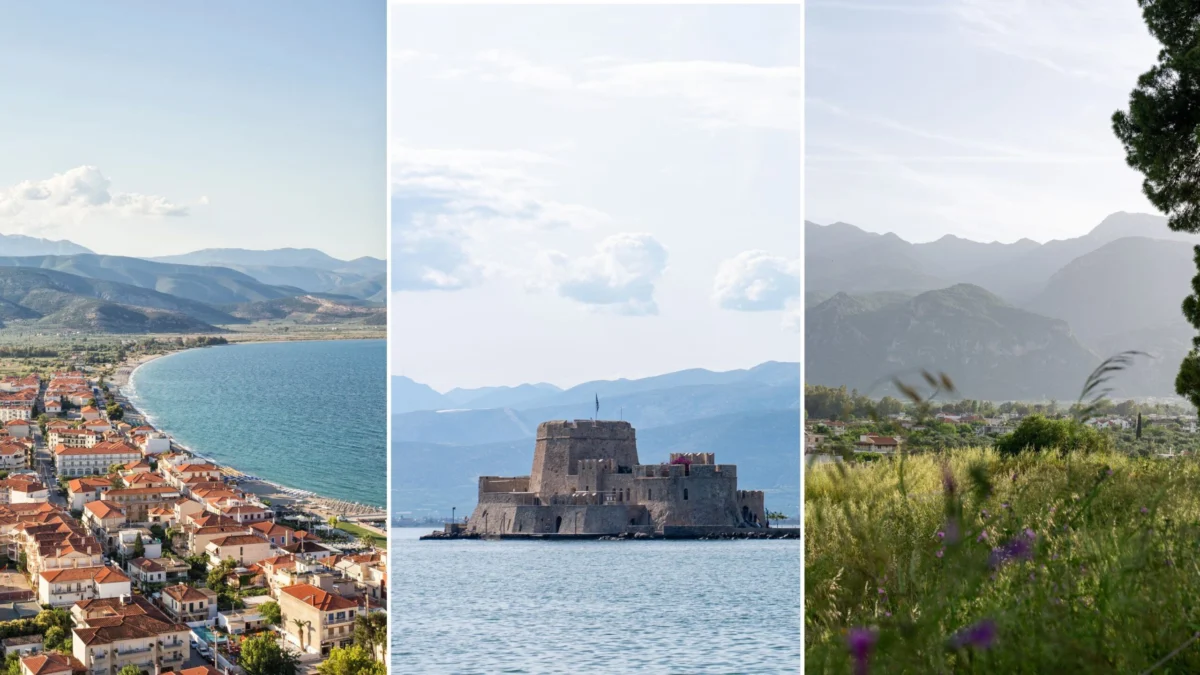
The Peloponnese has long existed in the periphery of the modern Greek travel narrative—a massive, rugged expanse that serves as a backdrop for the country’s ancient legends but often struggles to retain its own living, breathing population. Roughly the size of Slovenia, this jagged, thumb-shaped peninsula, cradled by the Ionian, Mediterranean, and Aegean seas, has remained a well-kept secret, with only three percent of foreign travelers venturing beyond the popular Aegean islands to its shores in 2025.
However, a profound transformation is underway. Driven by a confluence of cinematic exposure, infrastructure development, and a grassroots movement of "re-rooting," the Peloponnese is experiencing a modern-day nostos—a homecoming of both its diaspora and its status as a premier global destination.

The Mythic Landscape: Where Legend Meets Reality
The peninsula’s cultural weight is anchored in the antiquity that permeates its soil. From the premier wine region of Nemea, where Hercules performed his first labor, to the Arcadian mountains, the birthplace of Zeus and Hermes, the land is a palimpsest of human achievement.
This year, the spotlight has intensified thanks to Christopher Nolan’s blockbuster, The Odyssey. By filming on location in Messinia—utilizing the haunting depths of Nestor’s Cave and the fortress walls of Methoni—the production has reignited global interest in the geography of Homer’s epic. As the film explores the core Greek concept of xenia (the sacred bond of hospitality) and nostos (the yearning for home), it mirrors the very real struggle of the peninsula’s modern inhabitants to balance preservation with progress.

Chronology of a Revival
The trajectory of the Peloponnese is not a sudden trend but the culmination of a multi-decade effort to stem the tide of rural flight.
- The 1980s–2000s: The late ship captain Vassilis Constantakopoulos envisions a sustainable future for his birthplace in Messinia. His dream evolves into the Costa Navarino eco-retreat, a project that would eventually lure high-end brands like W Hotels and Mandarin Oriental.
- Early 2000s: Modern highways and tunnel systems significantly reduce travel time from Athens, making the peninsula accessible for the first time to weekend commuters and tourists.
- 2022–2023: High-end hospitality expansion continues with the arrival of major global hotel groups, shifting the region’s perception from a remote wilderness to a luxury hub.
- 2025–2026: The launch of the Peloponnese Trail Network—a massive 1,200-mile project connecting ancient footpaths—marks a shift toward experiential and sustainable tourism, targeting the "slow travel" demographic.
- Future: Major brands including Four Seasons and Six Senses are slated to enter the Porto Heli region in 2026, signaling a multibillion-euro commitment to the area’s development.
Supporting Data: The Demographic Pivot
The economic history of the Peloponnese is a cycle of boom, bust, and resilience. Post-WWII devastation and the subsequent civil war triggered waves of emigration that emptied villages. The 2008 financial crisis further exacerbated this "brain drain," as young professionals fled for opportunities in Northern Europe and Australia.

Recent data, however, indicates a reversal. In the village of Vamvakou, for instance, a revival project led by young entrepreneurs has grown the year-round population from a handful of elderly residents to over 30. While some regions remain "ghost villages," the integration of agro-tourism and the preservation of intangible heritage—such as the Tsakonian dialect and ancient weaving techniques—are creating economic incentives for the youth to return.
Voices of the Land: The Guardians of Culture
The human element of the Peloponnese remains its most compelling asset. In the town of Leonidio, nestled between the red limestone cliffs of Arcadia, educator Eleni Manou is leading a crusade to save the Tsakonian language. As a direct descendant of the ancient Spartans, she views language as a living organism. "Language is not just words, it’s a culture alive," she notes. Her efforts, alongside the annual Melitzazz festival, ensure that a dialect dating back three millennia remains part of the modern lexicon.

Similarly, in Geraki, Chrysoula Stamatopoulou of Geraki Weaving is keeping a 5,000-year-old tradition alive. Her looms, which produce kilims featuring symbols of fertility and the tree of life, have become a focal point for international students. Five years ago, Stamatopoulou was the sole practitioner; today, her workshop is a hub of education, proving that cultural heritage is a viable pillar for a sustainable future.
Implications: The Duality of Development
The current rush to develop the Peloponnese brings with it a complex set of implications. On one hand, the investment in the Peloponnese Trail Network and the restoration of Byzantine strongholds like Mystras provide a necessary economic lifeline to remote villages. It allows the peninsula to define itself not just as a sun-and-sand destination, but as a center for history, hiking, and gastronomy.

However, the rapid influx of luxury investment—evidenced by the €2 billion projected for the "Riviera" of Porto Heli—risks the homogenization of the landscape. The challenge for local administrators and planners is to ensure that the "unwritten hospitality contract" of xenia remains at the heart of the tourist experience, rather than becoming a commodified performance.
The Future of the Peninsula
As travelers move away from the saturated landscapes of Santorini and Mykonos, the Peloponnese offers an alternative that feels both ancient and newly discovered. Whether it is a quiet lunch on the uninhabited island of Daskalio, where the local history is told through the songs of Stelios Kazantzidis, or a hike along the Argolis Trail, the peninsula is demanding to be seen.

The Acropolis of ancient Sparta, overlooking the Taygetus mountains, serves as the perfect vantage point to observe this change. Just as Helen of Troy eventually returned to this "blessed land," so too is the Peloponnese finding its way back to the center of the Greek narrative. It is a homecoming that is not just about geography, but about reclaiming a heritage that, despite centuries of struggle, has remained remarkably intact.
For the modern traveler, the Peloponnese is no longer a footnote in an ancient epic; it is the stage where the next chapter of Greek history is being written—one stone path at a time.
 Asro
Asro
 Siti Muinah
