

In this week’s edition of Required Reading, we navigate the shifting landscapes of the art world—from the high-security halls of the Louvre to the wild, unkempt front lawns of Texas folk artists. As we analyze the intersection of celebrity, politics, and the preservation of memory, we explore how narratives are constructed, challenged, and ultimately rewritten.
The Louvre’s Apollo Gallery: A Triumphant Return
Main Facts: Security, Memes, and the Return of the Crown Jewels
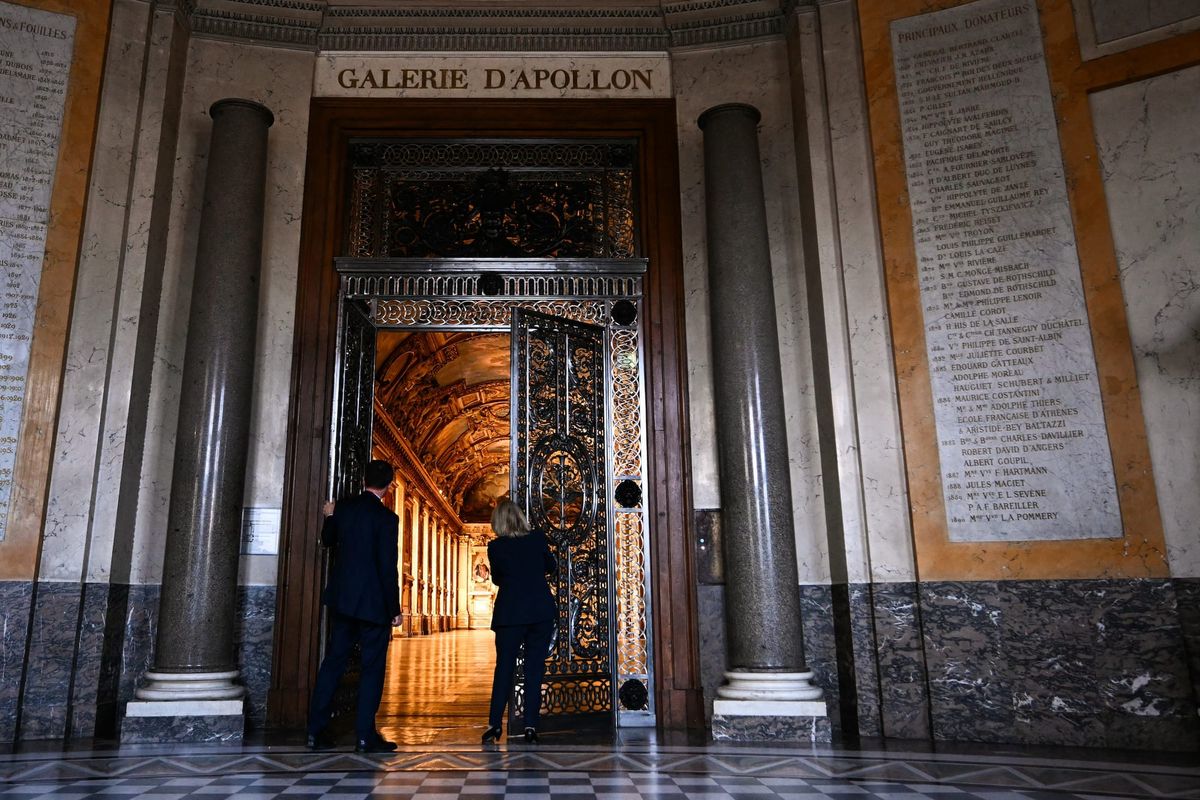
The art world breathed a collective sigh of relief this week as the Louvre officially reopened its hallowed Apollo Gallery. The space had been shuttered since last autumn, following a brazen and infamous heist that resulted in the theft of an estimated $100 million in crown jewels.
The reopening was presided over by Louvre President Christophe Leribault and French Culture Minister Catherine Pegard. For the institution, the return to normalcy is not merely about restoring public access; it is about reclaiming the narrative from a global social media phenomenon. The theft, which dominated headlines for months, inadvertently spawned a cottage industry of memes, viral commentary, and even high-profile Halloween costumes.
Implications: The "Heist" as Pop Culture Currency
Beyond the physical loss of historical artifacts, the incident served as a potent reminder of how the modern internet treats "prestige" institutions. The transition of a criminal act into a digital aesthetic—memetic art—is a subject of ongoing academic inquiry. As a forthcoming feature film on the heist prepares to hit production, the Louvre faces a unique challenge: balancing its role as a steward of history with the reality that it has become a central character in a global, fast-paced entertainment cycle.
Outsider Art: The Untamed Wonder of John Dilandro
Chronology: From Farm Hand to Folk Artist
In a poignant profile for Texas Monthly, Michael Agresta illuminates the life of 75-year-old John Dilandro. Living on a rural Texas plot, Dilandro has spent decades cultivating a "wonderland" of sculptures and bric-a-brac. His work stands as a defiant rejection of the commercialized art world.
Dilandro’s story is one of serendipitous creation. Raised in the 1950s and 60s as a farm kid, he describes his upbringing as one of scarcity. "No," he laughs when asked if his childhood home was decorated with such flair. "We were poor." Today, his farm is a sanctuary for what critics classify as "outsider art"—a term that often fails to capture the raw, unvarnished intent of his labor.
Supporting Data: The Authenticity of the Unseen
Agresta’s visit to Dilandro’s property serves as a meditation on the nature of art itself. Navigating mud, mosquitoes, and red ants, the reporter found an artist who operates entirely outside the ecosystem of websites, emails, or phone numbers. This "profit-eschewing" approach highlights a fundamental truth about creative expression: when art is stripped of its exchange value, what remains is the pure, unmediated voice of the maker.
Narratives of Loss and Systemic Critique
Celeste Dupuy-Spencer: Burning in the Eyes of the Maker
The passing of artist and activist Celeste Dupuy-Spencer earlier this year left a void in the contemporary art scene. Moira Donegan, writing for Bookforum, explores the late artist’s legacy through the lens of a new book, Burning in the Eyes of the Maker.
The work serves as a dual project: a biography of Dupuy-Spencer and an analytical deep dive into her oeuvre. As Donegan notes, the book succeeds because it refuses to be a simple retrospective. Instead, it engages in "moral realism," forcing the viewer to confront their own complicity in the systems of violence and exploitation depicted on Dupuy-Spencer’s canvases. The central theme, according to author MacLaughlin, is "denial"—a piercing critique of the American impulse to look away from uncomfortable truths.
The Human Cost of Migration
In a separate but thematically linked piece for Time, Colombian novelist Ingrid Rojas Contreras offers a harrowing perspective on the human toll of modern immigration policy. By connecting the tragedy of young fathers killed by ICE to her own family’s history of displacement—including her father’s kidnapping by the FARC in the 90s—Contreras humanizes the statistics.
"I often think about the irony of us escaping Colombia only to be seized by the fear of detention in America," she writes. Her account forces a reckoning with the concept of the "American Dream" when the reality involves navigating an atmosphere of institutionalized dread.
The Digital Mirror: Beauty, Surveillance, and the "Looksmax" Lexicon
Analysis of Jia Tolentino’s Latest Inquiry
Jia Tolentino, whose work has long defined the critique of the "Instagram face" era, returns to The New Yorker to examine the darker evolution of self-image. Her latest investigation dives into the "looksmax" subculture—a digital ecosystem where human worth is calculated through the lens of the "golden ratio."
The implications here are staggering. Tolentino reveals a community where women are reduced to "foids" (female humanoids) and dissected with clinical coldness. This digital hierarchy is not merely superficial; it is a manifestation of a new, internet-invented nonsexuality that prioritizes dominance and submission. The community’s obsession with "natural" beauty, even while employing plastic surgery to achieve it, highlights the contradictory and toxic standards governing modern digital interaction.
Cultural Preservation and the Nancy Drew Legacy
Official Perspectives on the Public Domain
The transition of the first four Nancy Drew books and the first Miss Marple novel into the U.S. public domain has triggered a wave of celebration. However, as Ellen O’Connell Whittet argues in the Los Angeles Review of Books, the narrative of "freedom" surrounding these characters is fraught with nuance.
Is a character truly "free" when they enter the public domain, or are they merely being repurposed for the next cycle of corporate intellectual property? The surge of Netflix adaptations and exhibitions suggests a frantic race to capitalize on these icons. O’Connell Whittet asks us to consider who is actually being served by this "freedom"—the audience, the creators, or the machine of cultural consumption?
Oral History: The Great Migration on Cassette
Documenting the Unwritten
Finally, we turn to the efforts of Johnetta Brazzell, as chronicled by April White in JSTOR Daily. In the 1970s, as a researcher at the Urban Affairs Center at Oakland University, Brazzell utilized the then-new technology of portable cassette recorders to capture the oral histories of the Great Migration.
"If we don’t get it from those individuals, then we can’t get it from anyone else," she noted at the time. Her foresight underscores the necessity of oral history as a primary, rather than supplementary, source. By recording the lived experiences of everyday people in Pontiac, Michigan, Brazzell ensured that the intimate details of a massive demographic shift would not be lost to the homogenization of historical record.
Conclusion: The Ongoing Conversation
As this week’s Required Reading demonstrates, the act of observation is rarely passive. Whether it is an artist like Adrianne Wortzel finding new ways to render depth despite her inability to see in 3D, or the ongoing, high-profile friction between novelist Rachel Cusk and her real-life subjects, we are constantly engaged in the process of defining our world.
From the halls of the Louvre to the mud-caked farms of Texas, the stories we tell—and the ones we choose to keep in the dark—define the architecture of our cultural consciousness. As we move into the next week, we invite our readers to consider which of these narratives will persist, and which are destined to be swept away by the next digital tide.
 Nana
Nana
 Iffa Jayyana
 Muslim
