

By Anna Lee
Published: September 29, 2026
NEW YORK — In an announcement eagerly anticipated by the cultural landscape each autumn, the John D. and Catherine T. MacArthur Foundation revealed its prestigious cohort of fellowship recipients for 2026. Among the 20 visionaries selected for the unrestricted, five-year $800,000 award—colloquially and famously known as the “Genius Grant”—are four distinct visual artists whose works interrogate the intersections of identity, systemic inequality, public space, and sensory perception.
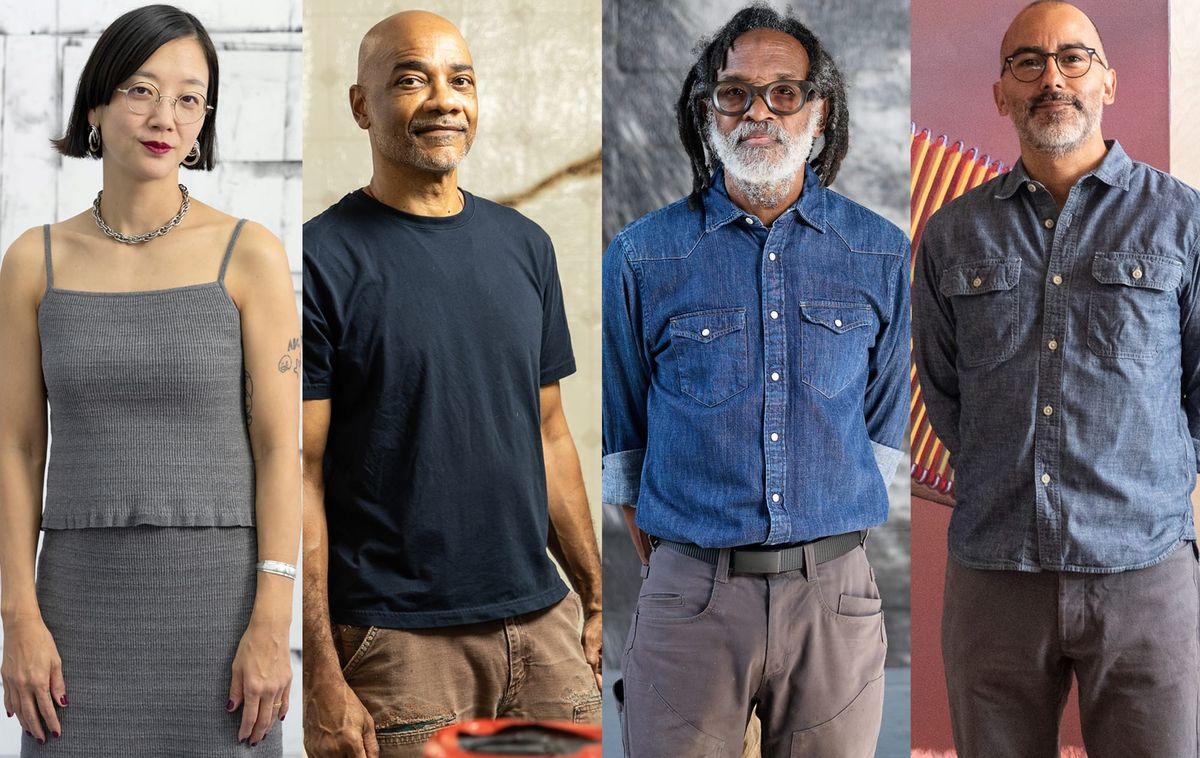
Christine Sun Kim, Rodney McMillian, Vincent Valdez, and Chip Thomas join an elite, multidisciplinary class of 2026 fellows. Their practices span diverse mediums—from multimedia explorations of sound and Deaf politics to monumental Chicano narrative painting, sculpture woven from the fabric of domestic life, and large-scale photography embedded within indigenous landscapes.
While the fellowship is designed to offer recipients absolute financial freedom with no strings attached, the cultural weight of the recognition places these four artists at the vanguard of contemporary American art.
Main Facts: The 2026 MacArthur Fellowship
The MacArthur Fellowship is not a lifetime achievement award, nor is it a grant intended to fund a specific, pre-proposed project. Instead, the John D. and Catherine T. MacArthur Foundation awards the $800,000 stipend—distributed in quarterly installments over five years—to individuals who have demonstrated exceptional creativity and show clear promise for even greater contributions in their fields.
Nominated anonymously by a rotating pool of external evaluators and selected by an independent committee, the fellows are chosen across a vast array of disciplines. Since the inception of the program in 1981, the foundation has awarded 1,195 fellowships, supporting writers, scientists, entrepreneurs, historians, and artists whose work fundamentally alters our understanding of the world.
For the class of 2026, the inclusion of prominent literary figures, performing artists, and scientists highlights a diverse group of thinkers. Alongside visual artists Kim, McMillian, Valdez, and Thomas, this year’s list features acclaimed poet Layli Long Soldier, fiction writer Bryan Washington, choreographer Trajal Harrell, and jazz saxophonist Immanuel Wilkins, alongside researchers in fields ranging from environmental policy and sociology to molecular biology.
Chronology and Evolution of the MacArthur Grants
To understand the magnitude of receiving a MacArthur Fellowship, it is helpful to look at the historical trajectory of the award and how it has evolved since its founding more than four decades ago.
- 1981: The John D. and Catherine T. MacArthur Foundation awards its very first cohort of fellowships, establishing a radically disruptive model of philanthropy that trusts creators to direct their own financial futures.
- Early Decades: The fellowship quickly gains public traction and the media-coined moniker "Genius Grant"—a term the foundation itself politely discourages, preferring to emphasize the rigorous, labor-intensive creative process over innate, mystical brilliance.
- 2010s: The foundation expands its outreach to intentionally capture underrepresented voices, increasingly honoring community-embedded artists, activists, and interdisciplinary practitioners whose work defies traditional gallery or museum boundaries.
- Recent Years (2020–2025): The monetary value of the fellowship is increased to $800,000 per recipient to account for economic shifts and ensure that artists and researchers have ample breathing room to execute ambitious projects.
- September 29, 2026: The foundation announces the 2026 class of 20 fellows, putting a national spotlight on artists like Chip Thomas and Christine Sun Kim, who utilize public art as a catalyst for social discourse.
Supporting Data: Profiles of the Four Visual Artists
The four visual artists named to the 2026 cohort bring vastly different geographies, methodologies, and philosophies to their work, yet they share a profound commitment to holding a mirror up to society.
Christine Sun Kim: The Politics of Sound and Space
Berlin-based artist Christine Sun Kim explores the complex, often overlooked political dimensions of communication, sound, and language. As a sound artist who is Deaf, Kim’s practice challenges audism and redefines how society conceptualizes listening.
Working across billboards, charcoal drawings, murals, and performance art, Kim frequently translates concepts between American Sign Language (ASL) and written or spoken English. Her celebrated 2020 video work, Palm Reader, brilliantly animates the signs for authoritative and structural vocabulary such as "state" and "rule," forcing viewers to confront the power dynamics embedded in everyday lexicon. Her MacArthur Fellowship validates a career spent expanding the sensory parameters of contemporary art.
Rodney McMillian: Sculpting American History and the South
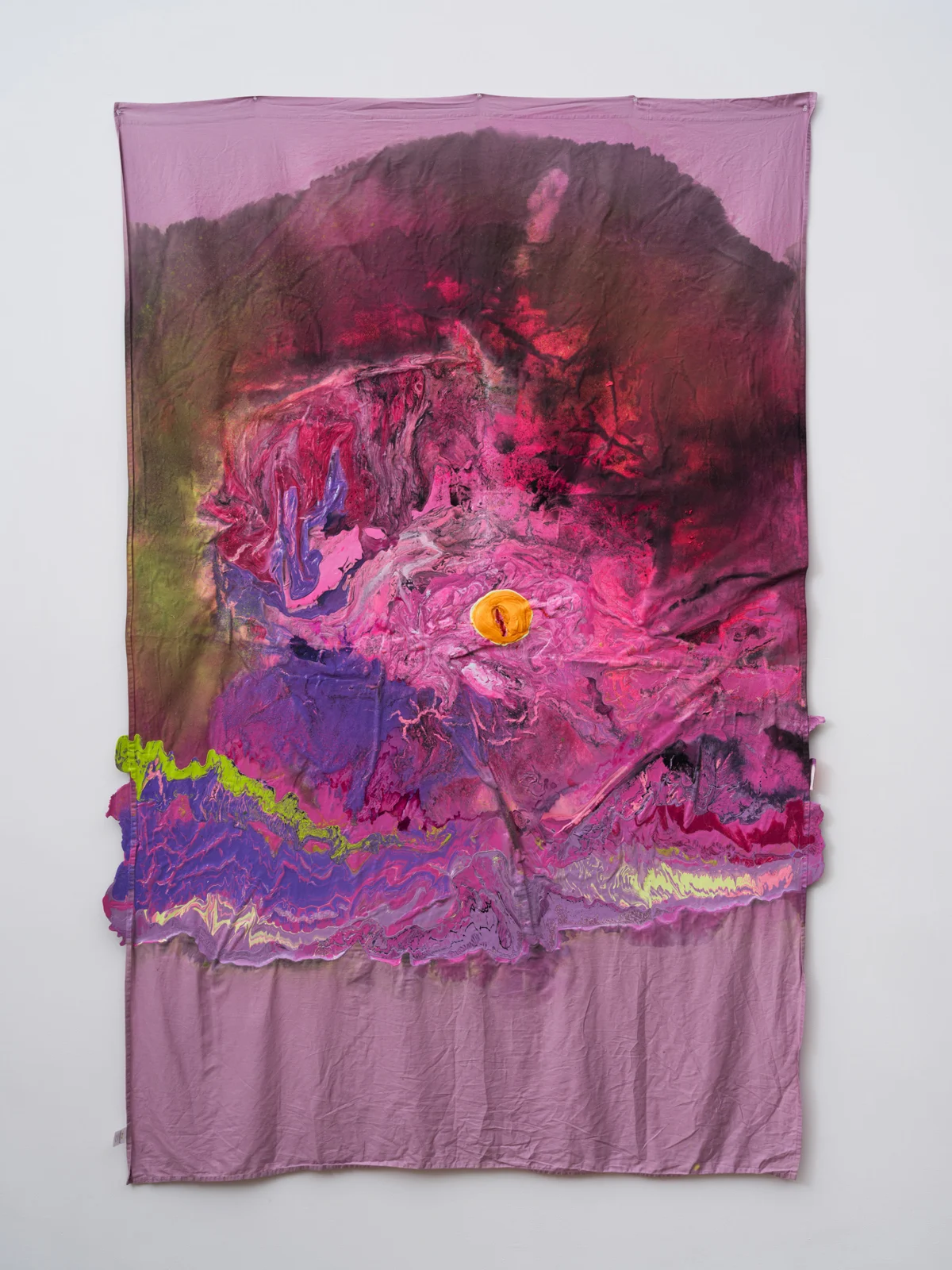
Los Angeles-based artist Rodney McMillian utilizes everyday materials—ranging from secondhand quilts and thrifted household goods to cast-iron piggy banks and painted vinyl—to construct deeply layered political and social critiques.
McMillian’s aesthetic investigations often center on the American South, examining racial trauma, economic disparity, and historical memory. In his recent 2026 exhibition, A Son of the Soil at the Columbia Museum of Art, McMillian returned to his hometown of Columbia, South Carolina. The homecoming exhibition served as a profound meditation on his roots, blending domestic debris with monumental sculpture to interrogate the physical and psychological landscapes of the American body politic.
Vincent Valdez: Confronting Injustice Through Monumental Scale
Operating out of Houston, Texas, Vincent Valdez bridges traditional Chicano art practices with classical narrative painting techniques. Known for canvases rendered at an imposing, mural-like scale, Valdez’s work forces viewers into unavoidable confrontations with systemic injustice, historical erasure, and modern racial stereotypes.
His monumental eight-foot-tall painting, So Long, Mary Ann (2019), captures a heavily tattooed man with his hands clasped in a gesture of introspection. By rendering his subjects with immense physical presence and profound psychological depth, Valdez imbues marginalized figures with an undeniable sense of empathy, dignity, and historical weight.
Chip Thomas: Medicine, Muralism, and the Navajo Nation
Chip Thomas’s artistic career is inextricably linked to his decades-long dedication to public health. Until his retirement in 2023, Thomas worked as a primary care physician serving the Navajo Nation. Operating under the moniker Jetsonorama, he began pasting large-scale, black-and-white photographic murals onto the sides of trading posts, abandoned buildings, and water tanks across the expansive landscape of the reservation.

Collaborating closely with the Diné people, Thomas founded the Painted Desert Project (2012–2022), an initiative that brought public artists from around the world into dialogue with local indigenous communities to create site-specific murals. His fellowship honors an artist-activist who treats the rural landscape not as a blank canvas, but as a living archive of community resilience.
Official Responses and Foundation Perspective
The announcement of the 2026 fellows has drawn widespread praise from arts institutions, cultural critics, and academic communities worldwide.
In its official press release, the MacArthur Foundation emphasized that the selection committee seeks individuals who exhibit a rare combination of originality, dedication, and future potential. "These twenty fellows remind us of the power of human imagination to challenge convention, bridge divides, and illuminate our shared human experience," the foundation noted. "By offering unconditional support, we aim to provide these exceptional minds with the resources necessary to take bold risks in their respective fields."
Fellow recipients and arts leaders have similarly lauded the inclusion of artists working outside traditional commercial art market frameworks. Cultural advocates point out that honoring practitioners like Chip Thomas—whose work exists in remote public spaces—and Christine Sun Kim—whose art critiques institutional accessibility—signals a progressive shift in how American philanthropic organizations define artistic excellence.
Implications: What an $800,000 "Genius" Grant Means for the Arts
The awarding of four MacArthur Fellowships to visual artists carrying heavy social and political messages carries profound implications for the broader art world.
- Validation of Socially Engaged Art: For decades, the commercial art market has favored collectible, easily commodified objects. By directing substantial unrestricted funds to artists like Chip Thomas and Rodney McMillian—whose practices prioritize community collaboration, ephemeral public installations, and systemic critique—the MacArthur Foundation reinforces the critical value of socially engaged art.
- Amplifying Marginalized Narratives: The inclusion of Deaf perspectives through Christine Sun Kim and Chicano historical realities through Vincent Valdez ensures that narratives traditionally sidelined by mainstream Western art history are elevated to national prominence.
- Creative Autonomy: In an economic climate where artists face rising studio rents, institutional censorship, and precarious funding models, an $800,000 safety net offers transformative freedom. Recipients are liberated from the treadmill of commercial production, enabling them to pursue multi-year research, large-scale public installations, or deeply experimental ventures without financial anxiety.
Ultimately, the 2026 MacArthur Fellowships cement the notion that true cultural genius lies not merely in technical mastery, but in the courage to question, disrupt, and reimagine the world around us.
Complete List of 2026 MacArthur Fellows
- Holly Jean Buck
- Felipe De Brigard
- Ellora Derenoncourt
- Elizabeth Ellis
- Kaiyu Guan
- Trajal Harrell
- Marika Holland
- Christine Sun Kim
- Song Lin
- Layli Long Soldier
- Rodney McMillian
- Maaza Mengiste
- Ariel Ron
- Kate Spradley
- Chip Thomas
- Vincent Valdez
- Vincenzo Vitelli
- Bryan Washington
- Immanuel Wilkins
- Liangfang Zhang
 Muslim
 Evan Lee Salim
 Jia Lissa
