

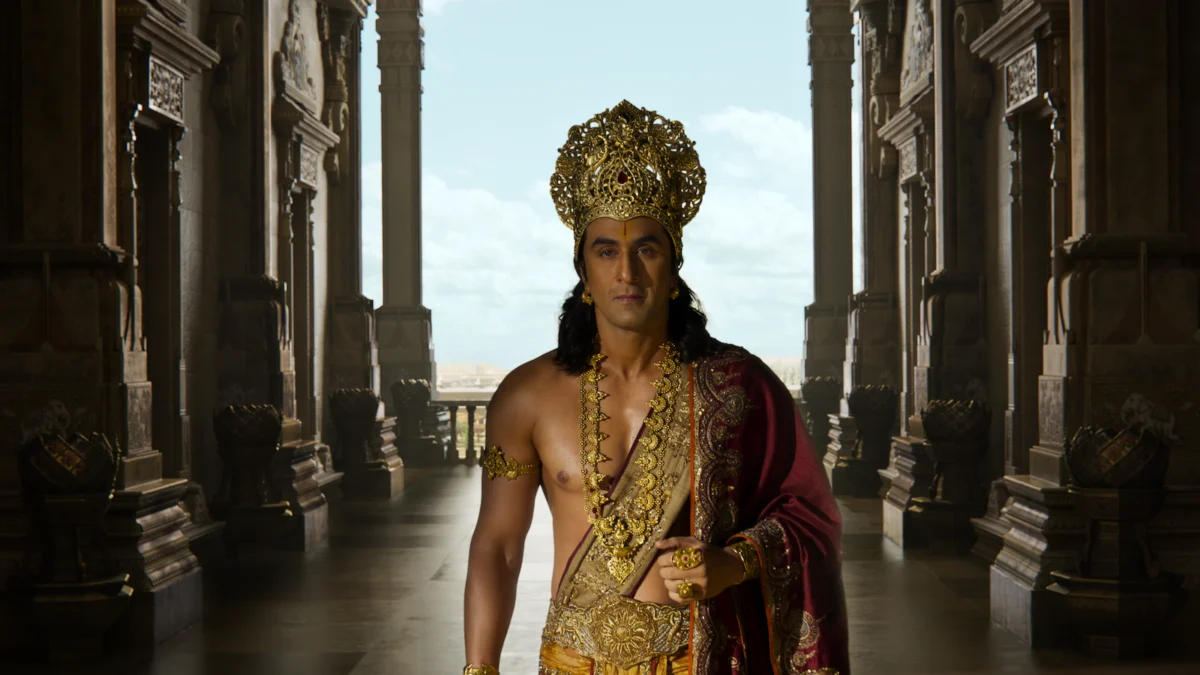
The global cinematic landscape is currently witnessing a paradigm shift as the boundaries between Eastern storytelling and Western production scales continue to dissolve. In a move that signals the arrival of Indian cinema on the absolute highest stage of global blockbuster production, Namit Malhotra’s Prime Focus Studios has unveiled details for its upcoming adaptation of the Hindu epic poem, the Ramayana. With a staggering production and marketing budget of $500 million for a two-part saga, the project is not merely an Indian film; it is being positioned as a global event designed to rival the visual majesty of franchises like Dune, Avatar, and The Lord of the Rings.
Main Facts: A Landmark in Cinematic Investment
The Ramayana adaptation, directed by Nitesh Tiwari (best known for the record-breaking Dangal), represents the most expensive undertaking in the history of Indian cinema. The $500 million budget encompasses the production of two feature films, along with a massive global Print and Advertising (P&A) spend. This financial commitment places the Ramayana in the same echelon as the most expensive Hollywood tentpoles, such as Avengers: Endgame or Gladiator II.
The film is produced by Namit Malhotra, the CEO of the visual effects powerhouse DNEG, under his Prime Focus Studios banner. In a strategic move to ensure the film reaches every corner of the globe, Sony Pictures has come on board as the international distributor for all territories outside of India. This partnership is a testament to the commercial viability of Indian epics in the post-RRR era, where global audiences have shown an increasing appetite for high-octane, culturally rich narratives.
The cast features a "who’s who" of South Asian megastars:
- Ranbir Kapoor stars as Prince Rama, the virtuous heir to the throne.
- Sai Pallavi portrays Sita, the embodiment of grace and strength.
- Yash (of KGF fame) takes on the role of the formidable demon-king Ravana.
Chronology: From Concept to San Diego Comic-Con
The journey of this iteration of the Ramayana has been one of meticulous planning and high-profile industry reveals. While rumors of a large-scale adaptation have circulated in Mumbai’s film circles for years, the project truly began to take shape on the international stage in early 2024.
- April 2024 (CinemaCon, Las Vegas): Industry insiders were given their first glimpse of the project at CinemaCon. Presented in 3D, the footage showcased a "special effects explosion," emphasizing a world of vibrant color and otherworldly spectacle. It was here that the two-part structure of the epic was first confirmed to exhibitors.
- July 2024 (San Diego Comic-Con): Prime Focus Studios took the project to the heart of geek culture. On Thursday of the convention, more footage was unveiled, and the distribution deal with Sony Pictures was officially announced. This appearance was a calculated move to capture the "fanboy" and "fangirl" demographic that sustains global franchises.
- Present Status: While Part 1 is deep into post-production to meet its 2026 release window, Part 2 is currently in active production. The simultaneous or back-to-back filming schedule is a strategy often used by Hollywood (e.g., Mission: Impossible – Dead Reckoning) to manage costs and maintain cast continuity.
- Release Target: The first installment is strategically timed for a global release around Diwali 2026, the Hindu festival of lights which celebrates the return of Lord Rama to Ayodhya.
Supporting Data: The Technical Pedigree and Creative Titans
The $500 million investment is not just allocated to star salaries; it is being funneled into a technical infrastructure that is unparalleled in Asian cinema. The involvement of DNEG, which has won eight Academy Awards for Visual Effects, ensures that the film will meet the "Gold Standard" of CGI and world-building.

A Masterclass in Visual Effects
DNEG’s resume includes the Dune franchise, Interstellar, Blade Runner 2049, and First Man. By utilizing the same proprietary technology and artistic talent that crafted Arrakis and the black holes of Christopher Nolan’s films, Malhotra is aiming to provide a visual experience that transcends the typical "mythological" aesthetic. The goal is a grounded yet fantastical realism.
Behind the Lens: The Global Crew
The production has assembled a "Global Dream Team" to ensure the film resonates with international sensibilities:
- Action Choreography: Terry Notary (Planet of the Apes, The Lion King) and Guy Norris (Mad Max: Fury Road) are overseeing the film’s massive battle sequences and physical performances.
- Production Design: Ramsey Avery (The Lord of the Rings: The Rings of Power, Guardians of the Galaxy Vol. 2) and Ravi Bansal are tasked with creating the ancient cities of Ayodhya and Lanka.
- Musical Score: In a historic collaboration, Academy Award winners Hans Zimmer and A.R. Rahman are joining forces. Zimmer, known for his sweeping, atmospheric scores, and Rahman, the "Mozart of Madras," are expected to create a sonic landscape that blends traditional Indian instruments with modern orchestral grandeur.
Official Responses: Honoring Legacy Through Innovation
Namit Malhotra has been vocal about the weight of responsibility that comes with adapting a text as sacred and culturally significant as the Ramayana. For millions, the poem—attributed to the sage Valmiki—is more than a story; it is a foundational pillar of philosophy and dharma.
In an official statement, Malhotra emphasized the bridge between heritage and technology:
"For generations, the Ramayana has inspired people through its timeless humanity and enduring values. Our ambition has always been to honor that legacy while creating a cinematic experience worthy of audiences everywhere. Through DNEG, we have spent decades helping filmmakers realize some of the world’s most ambitious cinematic visions. With Prime Focus Studios, we are now bringing that same commitment to storytelling to one of the world’s greatest epics."
Regarding the partnership with Sony, Malhotra added:

"Collaborating with Sony Pictures gives ‘Ramayana’ an extraordinary opportunity to connect with international audiences and introduce this timeless story to moviegoers around the world."
The studio has also confirmed that the film will be released in multiple languages, including a "premium English-language version" specifically tailored for Western markets, ensuring that the dialogue and pacing meet the expectations of global cinema-goers who may not be familiar with the original Sanskrit verses.
Implications: A New Era for Indian Cinema and Global Distribution
The scale of this project carries significant implications for the future of the film industry, both in India and Hollywood.
1. The Death of the "Niche" Foreign Film
For decades, Indian films were relegated to "specialty" theaters in the West, catering primarily to the South Asian diaspora. The Ramayana project, backed by Sony’s global machine, signals the end of this era. By treating the film as a $500 million tentpole, Sony is betting that the Ramayana can achieve "crossover" success similar to Crouching Tiger, Hidden Dragon or Parasite, but on a blockbuster scale.
2. Sony’s Strategic Expansion
Sony Pictures’ involvement in the Ramayana coincides with its aggressive expansion into the theatrical experience. Recently, Sony made headlines by announcing it would lead the effort to reopen the iconic Cinerama Dome in Los Angeles. While the Dome is set to reopen in 2028, the Ramayana is exactly the type of "event cinema" that such venues were built for. This move suggests Sony is looking for content that justifies the "Big Screen" experience—films that cannot be replicated by streaming services.
3. The "Dune" Effect for Indian Mythology
Christopher Nolan and Denis Villeneuve have proven that ancient or dense literary epics (like The Odyssey or Dune) can be massive hits if treated with visual gravitas and high-concept direction. Nitesh Tiwari’s Ramayana is an attempt to apply this "prestige blockbuster" template to Indian mythology. If successful, it could open the floodgates for other Sanskrit epics (like the Mahabharata) to receive similar treatment, turning Indian history and mythology into a new "Cinematic Universe" for the world.

4. Competitive Pressure on Hollywood
With Hollywood currently struggling with "superhero fatigue," the Ramayana offers something fresh yet familiar: a classic hero’s journey with a distinct cultural flavor. The massive $500 million budget puts pressure on Western studios to innovate. If an Indian studio can produce a film of this visual caliber, it challenges the traditional Hollywood monopoly on the "Global Blockbuster."
Conclusion: A Cinematic Odyssey
As Part 1 gears up for its Diwali 2026 debut, the stakes could not be higher. Namit Malhotra and Nitesh Tiwari are not just making a movie; they are conducting a $500 million experiment in cultural diplomacy and cinematic scale. With the combined might of DNEG’s Oscars, Sony’s distribution network, and the musical genius of Zimmer and Rahman, the Ramayana is poised to be more than a film—it aims to be the definitive cinematic rendition of a story that has been told for millennia.
Whether global audiences will embrace the saga of Rama, Sita, and Ravana with the same fervor as they did The Lord of the Rings remains to be seen. However, one thing is certain: the era of the $500 million global Indian epic has arrived, and the world of cinema will never be the same.
 Lina Hope
 Azzam Bilal Chamdy
 Pevita Pearce
