

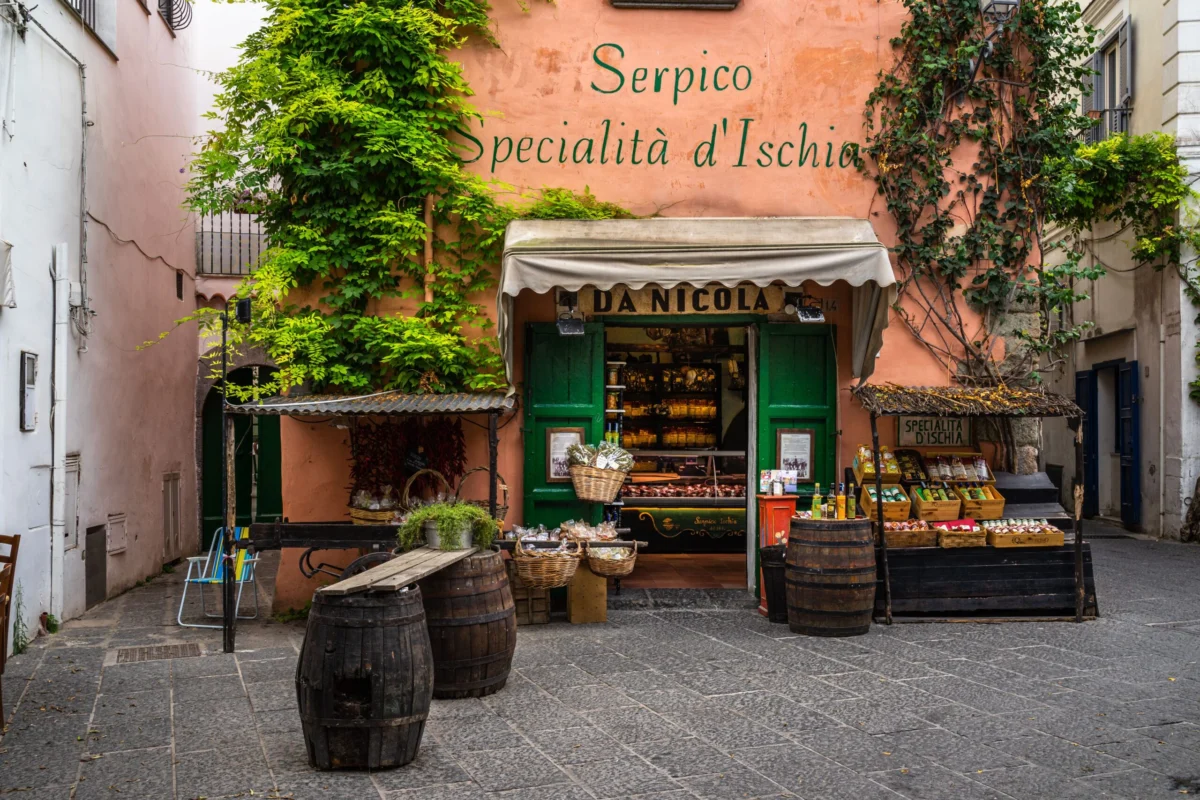
As the ferry from Naples cuts through the Tyrrhenian Sea, the horizon reveals more than just a volcanic landmass. The island of Ischia, a rugged, emerald-hued jewel, rises from the water, its slopes blanketed in vineyards and citrus groves. While the UK’s fascination with Italian cuisine often fixates on the ubiquitous trinity of pizza, pasta, and gelato, a journey to Ischia serves as a necessary correction to that narrow perception. Here, the food is not merely sustenance; it is a ritualistic expression of history, geography, and an uncompromising pride in the land.
The Foundations of Ischian Gastronomy: Volcanic Soil and Ancient Roots
The culinary identity of Ischia is forged in its mineral-rich, volcanic earth. This soil provides the foundation for produce that seems to vibrate with flavor—bloated, fragrant citrus fruits, sweet vine-ripened tomatoes, and wild herbs that perfume the mountain air.
The Story of the Coniglio all’Ischitana
The island’s most iconic dish, Coniglio all’Ischitana (Ischia-style rabbit), is a testament to the island’s unique history. Introduced by the Ancient Romans, the rabbit became the island’s primary source of protein. Unlike the coastal seafood focus one might expect, the inland hills of Ischia tell a different story. Historically, these rabbits thrived in a semi-wild state, roaming through tunnels and grazing on a diverse diet of fava bean stems, wild legumes, and grapevines.
The traditional preparation, which remains a benchmark for local culinary excellence, involves a slow-cooked, rustic method. The rabbit is braised in a clay vessel known as a tegame, accompanied by a whole bulb of garlic, locally sourced herbs, and a generous pour of the island’s crisp white wine. Today, the "da fossa" method—where rabbits are kept in burrow-like environments to mimic their natural habitat—is being championed by restaurants displaying the "Slow Food" seal, ensuring that a millennium of tradition is not lost to industrial farming.

A Vegetarian’s Odyssey: The Bounty of the Land
For the non-meat eater, traveling through Italy can often feel like a diplomatic crisis. Yet, Ischia defies the stereotype that southern Italian cuisine is exclusively built around meat and fish. The island’s produce-first philosophy ensures that the garden is treated with the same reverence as the sea.
The Ubiquity of the Aubergine
Perhaps the most celebrated vegetarian staple on the island is the parmigiana di Melanzane. During an extensive tour of local trattorias, it becomes clear that this dish is the culinary heartbeat of the island. Every iteration tells a slightly different story: some kitchens utilize the smoky depth of mozzarella, while others rely on the aromatic, volcanic-grown basil that seems to grow in every crevice of the island’s farmland.
Equally compelling is melanzane alla funghetto, a rustic preparation where aubergines are cubed and sautéed in high-quality olive oil with garlic, tomatoes, and fresh basil. It is a dish of simple components elevated by the sheer quality of the local harvest. The aubergines possess an earthy, delicate texture, while the tomatoes offer a sweetness that seems almost impossible to find elsewhere.
Chronology of Culinary Influence
To understand the current state of Ischian dining, one must look at the timeline of its development:

- Roman Era (c. 1st Century BC): Introduction of rabbits to the island, establishing the primary land-based protein source.
- The Agrarian Tradition (18th–19th Century): The development of the tegame slow-cooking method, reflecting the island’s transition into a self-sustaining agricultural hub.
- The Post-War Tourist Boom (1950s–1970s): Ischia becomes a destination for the international elite, introducing refined service styles to traditional family trattorias.
- The Modern "Searching for Italy" Era (2020s): Global media coverage, including Stanley Tucci’s visit to Trattoria Il Focolare, shifts the focus from "generic Italian food" to specific, hyper-local island traditions.
Editor’s Picks: A Guide to the Island’s Culinary Landmarks
For the discerning traveler, navigating the dining scene of Ischia requires a blend of historic exploration and casual discovery.
Trattoria Il Focolare: A Family Legacy
Located deep in the hills of Fiaiano, between Casamicciola and the village of Fiaiano, this restaurant is the epicentre of Ischian tradition. Run by the D’Ambra family, the restaurant is as much about hospitality as it is about the plate. The kitchen is led by brothers Agostino and Francesco, while their sisters manage the front-of-house. Since its appearance on Stanley Tucci: Searching for Italy, it has gained international fame, yet it retains its rustic, sprawling charm. The walls are an eclectic gallery of celebrity visits and posters from My Brilliant Friend, capturing the essence of the Neapolitan spirit.
Recommendation: Indulge in the antipasti multi-plate feast; it is a masterclass in local ingredients.
Jack all’Epomeo: People-Watching in Forio
In the historic heart of Forio, set in the bustling Piazza Matteotti, lies Jack all’Epomeo. This is the quintessential spot for the traveler who wants to absorb the island’s rhythm. The menu features classic staples—fat anchovies, spaghetti aglio e olio, and expertly prepared fish of the day—served with an emphasis on simplicity.

Pizzeria di Meglio: Quality Without Pretense
While Ischia is often viewed as a premium destination, Pizzeria di Meglio in Forio proves that authenticity need not break the bank. Here, one can find a world-class Margherita for a modest €7.50. Their calzone napoletano is a standout, rivaling the best kitchens in Naples.
Ristorante O’ Pignattello: The Tasting Experience
For a deeper dive into the island’s culinary landscape, Lacco Ameno’s Ristorante O’ Pignattello offers a blind tasting menu that is nothing short of a revelation. From the delicate, refined rabbit ravioli to an endive salad that acts as a sharp, refreshing palate cleanser, the kitchen demonstrates a high level of technical prowess. Their wine list is a curated map of Ischia’s best viticulture.
La Veranda Restaurant: Indulgence with a View
Perched within the San Montano Resort & Spa, La Veranda offers arguably the most breathtaking view on the island. While primarily a seafood establishment, its commitment to inclusivity—providing ample, thoughtful vegan options—makes it a rare find in the region. Their striped green-and-white parmigiana is a visual and culinary delight.
Supporting Data: The Ischian Economic Context
The culinary landscape of Ischia is deeply linked to the island’s broader economy. According to local agricultural boards, the preservation of the "da fossa" rabbit-rearing method has seen a 15% increase in interest over the last five years, largely driven by the "Slow Food" movement. Furthermore, the reliance on local, short-chain produce (vegetables grown within a 5-mile radius of the kitchens) has insulated many local restaurants from the global food supply chain volatility, ensuring that fresh, seasonal menus remain standard rather than a marketing gimmick.

Implications for the Future of Italian Gastronomy
The success of Ischia’s food scene carries a broader implication for Italian tourism. As travelers become more sophisticated, the "tourist menu" is being replaced by a desire for deep, regional specificity. Ischia proves that even a small island can hold its own against the culinary giants of the mainland by refusing to homogenize its offerings.
The island’s future, however, rests on its ability to balance this newfound international popularity with the preservation of its fragile, volcanic ecosystem. The continued support for family-run businesses like the D’Ambra family and the protection of local agricultural plots against over-development are the primary challenges facing the next decade.
Conclusion
Ischia is a destination that demands you slow down. It is not a place for a quick meal, but for an experience that spans hours, ending with a forkful of cheesecake handed to you by a chef who treats you like an old friend. Whether you are hunting for the perfect parmigiana or simply sitting in a piazza in Forio with a glass of local white wine, the island reminds us that the best travel experiences are those that connect us, bite by bite, to the earth from which they came. In Ischia, the food is the map, and every dish is a story waiting to be told.
 Asro
Asro
 Siti Muinah
