

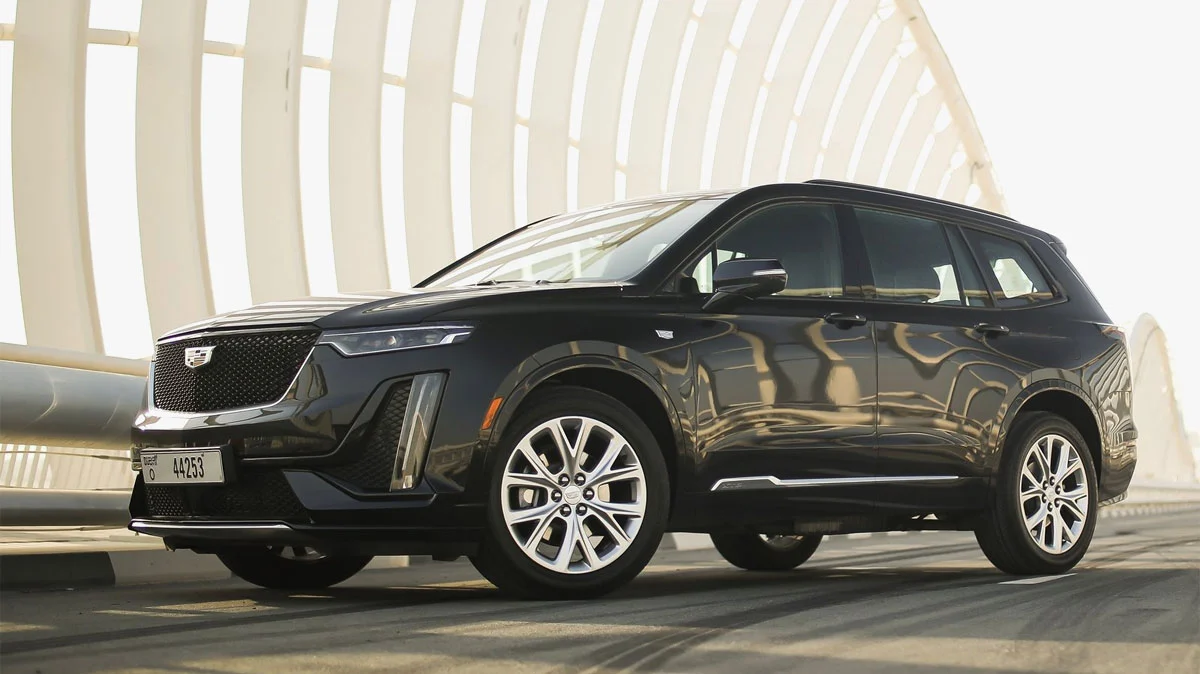
The luxury automotive landscape is undergoing a profound recalibration, and Cadillac is currently serving as the industry’s most prominent case study. In a move that signals a significant departure from the aggressive, all-electric trajectory established just a few years ago, the American luxury icon has confirmed it is breathing new life into its internal combustion engine (ICE) lineup.
The most recent development—the revival of the mid-size XT6 SUV—serves as the latest evidence that the "EV-only" mandate that gripped the auto industry at the start of the decade is being softened by the harsh realities of consumer demand, supply chain complexities, and the enduring loyalty of traditional luxury buyers.
The Strategic Shift: A Summary of Current Events
Cadillac, a 123-year-old brand synonymous with American prestige, has officially pivoted to a "choice-first" strategy. While the company continues to invest heavily in its battery-electric vehicle (BEV) portfolio, it is no longer willing to sacrifice its bread-and-butter combustion models to make room for them.
The announcement that the XT6, which was discontinued in early 2025, will return to production is not an isolated incident. It follows a similar decision to keep the XT5 crossover in the lineup, with a next-generation model slated for 2027. These decisions represent a pragmatic admission: for many Cadillac buyers, the transition to electrification is a bridge too far, at least for the time being.
Chronology of an Evolving Vision
To understand why Cadillac is backtracking, one must examine the timeline of its transformation.
2020–2022: The "All-In" Ambition
At the dawn of the decade, Cadillac—following the lead of global legacy automakers—projected an image of total electrification. The strategy was clear: phase out legacy gas-powered platforms to streamline manufacturing for the modular Ultium battery architecture. This was the era of "EV-first," where the brand signaled that it would cease producing combustion engines by 2030.
2023–2024: The Reality Gap
By mid-2024, the initial fervor surrounding EV adoption began to encounter the "early majority" barrier. While the Lyriq and the ultra-luxury Celestiq garnered headlines, the sales volume failed to replicate the consistent, reliable revenue streams generated by the XT5 and XT6 crossovers.
2025: The Year of the Reversal
In early 2025, the final XT6 rolled off the assembly line, marking what was supposed to be the end of an era. However, internal data—and perhaps external market pressures—led to a rapid reassessment. By August 2025, reports began surfacing that the XT5 would be extended. Now, with the confirmation of the XT6’s return, the "all-electric by 2030" narrative has effectively been replaced by a "multi-powertrain" reality.
Supporting Data: Why the Change?
The shift in strategy is anchored in one primary factor: volume sustainability.
The Volume Discrepancy
While Cadillac celebrated a major milestone in May, reaching 100,000 cumulative EV sales, the figure hides a challenging nuance. To be a dominant luxury player, a brand requires high-volume segments. In its final full model year, the gasoline-powered XT6 moved 20,000 units. Its intended electric successor, the Vistiq, has struggled to reach similar market penetration.
When a brand realizes that its electric offerings are not yet "sticky" enough to replace the sales of a proven combustion-engine SUV, the financial incentive to maintain the gas-powered line becomes impossible to ignore. Cadillac’s leadership is essentially choosing to protect their market share rather than chase a theoretical electric future that the market is not yet ready to fully embrace.
The "Choice Matters" Mandate
The decision is not a rejection of EVs, but an embrace of pragmatism. As noted by Kristian Aquilina, Vice President of Cadillac Global, the brand’s internal data shows that consumers are not monolithic. While some luxury buyers are eager for the silent, instant-torque experience of an electric drivetrain, others are wedded to the familiar refueling ease and mechanical character of a traditional engine.

Official Responses: "Choice Matters"
Kristian Aquilina’s recent LinkedIn post served as the definitive explanation for this shift. His message was crafted to reassure both the environmental-conscious buyer and the traditionalist:
"We’ll continue to invest in a robust EV portfolio across major luxury segments, even as we renew investment in internal combustion entries where demand remains strong, beginning with the next generation of XT5 next year."
The executive’s phrasing—"choice matters"—is a direct address to the consumer. It acknowledges that for a luxury marque, the customer is king. If the customer demands a V6 engine in a three-row SUV, a luxury brand that ignores that demand does so at its own peril. By explicitly promising a "robust" EV portfolio alongside renewed ICE investments, Cadillac is positioning itself as a "both-and" manufacturer rather than an "either-or" one.
Implications for the Industry
Cadillac’s decision carries profound weight for the broader automotive sector.
1. The Death of the Hard Deadline
Cadillac is far from alone. Mercedes-Benz and other luxury stalwarts have similarly walked back their "all-electric by 2030" pledges. This marks the end of the "hard deadline" era in the auto industry. Moving forward, electrification will likely be driven by market demand and regulatory mandates rather than internal company-set expiration dates for combustion engines.
2. The Future of Performance
The news also suggests that Cadillac is leaning into its heritage. With reports indicating that a new iteration of the CT5 sports sedan is in development—complete with a naturally aspirated V-8 and a manual transmission—it is clear that Cadillac understands the emotional connection buyers have with internal combustion. This "enthusiast-first" strategy protects the brand’s performance reputation while the EVs handle the daily-driver segments.
3. Supply Chain and Manufacturing Flexibility
This move forces Cadillac to maintain a complex manufacturing footprint. Maintaining two distinct powertrain architectures is notoriously expensive. However, by continuing the XT5 and XT6, Cadillac is betting that the profit margins on these high-end, gasoline-powered SUVs are more than enough to offset the added operational complexity of a dual-track strategy.
4. Competitive Positioning
In the luxury space, Cadillac is now competing not just against Tesla, but against its own past success. By keeping the XT6, they are effectively blocking competitors who were looking to capture the "gasoline luxury" segment that Cadillac was originally planning to abandon. It is a defensive maneuver that simultaneously bolsters their bottom line.
Conclusion: A More Nuanced Road Ahead
Cadillac is not abandoning the electric future; it is simply slowing down to ensure it brings its customers along for the ride. The return of the XT6 is a tacit admission that the transition to an all-electric lineup is a marathon, not a sprint.
By diversifying its engine offerings, Cadillac is insulating itself from the volatility of the EV market. The brand is betting that in a future of increasing homogenization, the ability to offer a choice—a V-8 sports sedan for the weekend, an electric crossover for the commute, and a proven combustion SUV for the family—is the ultimate luxury.
As we look toward 2027 and beyond, the Cadillac showroom will look quite different than what was imagined in 2020. It will be a showroom of coexistence, where the roar of the V-8 and the silence of the electric motor share the same floor—a reflection of a market that values innovation, but refuses to let go of tradition.
 Sagoh
Sagoh
 Reynand Wu
