

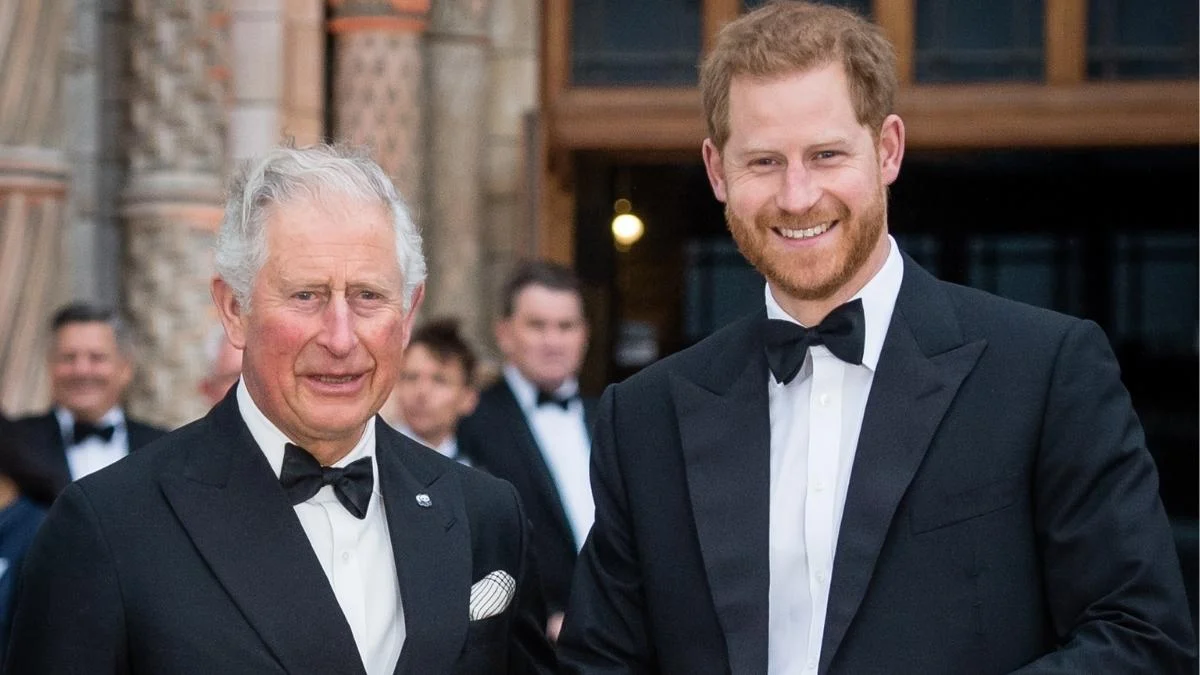
As the international community looks toward the 2027 Invictus Games, the event—originally conceived as a beacon of hope for wounded, injured, and sick service personnel—has become the epicenter of a complex geopolitical and familial drama. At the heart of this unfolding narrative is a potential clash between royal protocol, personal rift, and the integrity of a charity that has defined Prince Harry’s post-monarchy identity. Recent reports suggest that King Charles III may find himself "obliged" to attend the opening ceremonies, a prospect that has been complicated by shifting international alliances and a hardening of the boundaries between the Sussexes and the British Crown.
The Genesis of the Invictus Games
Founded by Prince Harry in 2014, the Invictus Games were established to use the power of sport to inspire recovery, support rehabilitation, and generate a wider understanding and respect for those who serve their country. Over the past decade, the Games have grown from a modest London event into a global phenomenon, drawing support from world leaders, military institutions, and international philanthropists.
For Prince Harry, the Invictus Games represent his most significant professional achievement and his enduring connection to the military community. However, as the countdown to the 2027 Games continues, the event has become increasingly entangled with the fractured relationship between the Duke of Sussex and the royal institution he once represented.
Chronology of a Mounting Diplomatic Crisis
The tension surrounding the 2027 Games did not emerge in a vacuum. To understand the current impasse, one must look at the recent sequence of events that have strained relations between the Sussexes and Buckingham Palace.
- Early 2026: Preparations for the 2027 Games begin, with Prince Harry reportedly extending a discreet invitation for King Charles to participate in the opening ceremonies, seeking a gesture of reconciliation.
- September 2026: Tensions escalate when King Charles issues a formal directive clarifying the status of the Duke and Duchess of Sussex. The communiqué explicitly defines the couple as "private citizens" and reinforces the mandate that they may no longer utilize the style of His/Her Royal Highness (HRH) in any official or public capacity.
- Mid-September 2026: In an unprecedented move, Uganda announces its withdrawal from the Invictus Games. General Muhoozi Kainerugaba, citing the King’s directive, signals that the nation will not participate in events that operate outside the direct sanction or approval of the British monarch.
- Present Day: Royal commentators and political analysts monitor whether other Commonwealth or international partners will follow suit, potentially threatening the participation levels of the 2027 Games.
Supporting Data: The Fragility of Military Diplomacy
The Invictus Games rely heavily on the participation of international military delegations. When a sovereign nation such as Uganda withdraws its support, it sends a ripple effect through the diplomatic community. The justification provided by General Kainerugaba—that the state will not engage in international gatherings that lack the monarch’s blessing—highlights a fundamental misunderstanding, or perhaps a deliberate weaponization, of the King’s recent stance on the Sussexes.
The "private citizen" label applied to Harry and Meghan has stripped away the constitutional armor that once protected the couple’s projects. While the Invictus Games remain a private charity, they are intrinsically linked to the Armed Forces—an institution of which the King is the Commander-in-Chief. This overlap creates a unique paradox: can a charity, once championed by a senior Royal, survive as a neutral entity when its founder is viewed as an outsider by the head of the military?
According to royal expert Richard Fitzwilliams, the situation is becoming increasingly "serious." If the Ugandan withdrawal serves as a bellwether for other nations, the Invictus Games could face a crisis of legitimacy. The event’s success is predicated on military-to-military cooperation; if that cooperation is conditioned upon the personal politics of the British Royal family, the entire mission of the Games is compromised.
Official Responses and Expert Analysis
Buckingham Palace has maintained a policy of "no comment" regarding private correspondence between the King and his son. However, the optics of the situation are undeniable. The King’s recent letter regarding the status of the Sussexes was not merely a administrative housekeeping measure; it was a public demarcation of lines.
Richard Fitzwilliams, speaking to the Daily Express, noted the profound pressure on the King. "Since the King is the Commander-in-Chief of the Armed Forces and Invictus is an important military charity, he may well feel obliged to [attend], whatever his private views," Fitzwilliams stated. This suggests that the King’s duty to the military and the veterans, whose recovery is the Games’ primary goal, may outweigh his personal desire to distance himself from the drama surrounding the Duke of Sussex.
The dilemma for the King is clear: his absence could be perceived as a snub to the veterans themselves, while his presence could be interpreted as an implicit endorsement of the current direction of the Invictus Games or a softening of his stance toward his son.
The Implications: A Legacy at Risk
The potential fallout of this situation is multifaceted.
1. The Politicization of Charity
The most significant danger is the politicization of the Invictus Games. The mission of the Games is to provide a neutral space for healing, regardless of nationality or political affiliation. By allowing the event to become a proxy for the feud between the King and the Prince, there is a risk that the Games lose their status as a non-partisan, veteran-centric endeavor.
2. Impact on Commonwealth Relations
The withdrawal of Uganda is a concerning indicator for the Commonwealth. As the King navigates his role as the head of a changing Commonwealth, he is being forced to mediate between his personal family dynamics and the international perception of the British monarchy. If the "private citizen" status of Prince Harry leads to a cooling of relations between the UK and certain international partners, the King may find his influence over Commonwealth affairs increasingly tenuous.
3. The Future of the Sussexes’ Public Projects
If the King attends the 2027 Games, it may offer a lifeline to the public profile of the Duke and Duchess. If he does not, it will serve as a stark confirmation that the couple’s transition to "private citizens" is total and irreversible. For the Invictus Games, the coming months will be a test of resilience. Can the organization detach itself from the soap opera of the House of Windsor and reclaim its focus on the men and women who have sacrificed for their nations?
Conclusion: A Duty Beyond the Rift
As the July 2027 date approaches, the eyes of the world will remain fixed on Buckingham Palace. While the personal grievances between King Charles and Prince Harry are well-documented, the Invictus Games represent an institution that transcends individual family members.
The King faces a profound test of leadership. He must balance his role as a father—who has been deeply hurt by public revelations—and his role as a Sovereign, whose duty is to uphold the dignity of the Armed Forces. The "obligation" cited by experts is not one of family, but of station. Whether the King chooses to attend the opening ceremony in 2027 will ultimately be determined by his commitment to the veterans he serves, rather than the son he has sidelined.
For Prince Harry, the Games remain his strongest card. Whether he can continue to command the respect of international military delegations while operating outside the royal fold is the central question of his post-monarchy career. As for the Games themselves, their legacy depends on their ability to weather the storm and remain, above all else, a testament to the indomitable spirit of those they were created to honor.
 Dwi Wanna
 Iffa Jayyana
