

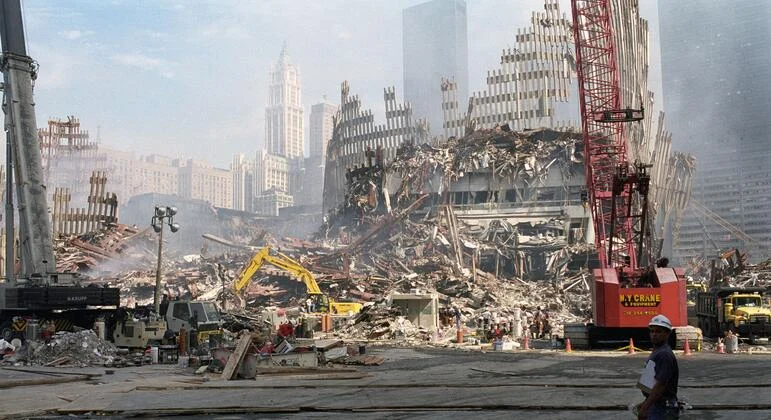
Twenty-five years have passed since the morning of September 11, 2001, when the world stood still in horror as the World Trade Center towers in New York City collapsed, marking a definitive rupture in the timeline of modern history. As the world commemorates this solemn 25th anniversary, the United Nations—an institution located just miles from the site of the devastation—has led global calls for remembrance, solidarity, and a critical reassessment of the "war on terror" that defined the subsequent decades.
UN Secretary-General António Guterres issued a poignant statement, describing the attacks as "an assault on humanity itself." While the world honors the nearly 3,000 victims—individuals hailing from the United States and more than 90 other nations—the anniversary also serves as a stark reminder of the unfinished business of global peace and the complex, often fraught, evolution of international counter-terrorism efforts.
Chronology of a Day That Changed Everything
To understand the weight of the 25th anniversary, one must revisit the atmosphere at UN Headquarters on that fateful Tuesday. The UN was preparing for a day of celebration; it was the scheduled date for the annual ceremony to ring the Peace Bell, a tradition marking the International Day of Peace.
As the first plane struck the North Tower, the reality of the crisis had not yet fully penetrated the bureaucratic halls of the UN. Victor Evans-Harvey, now editor-in-chief of UN News, recalls his commute that morning. "I saw the smoke, but I still went to the train station because I had to go to work," he stated. His resolve was met by the stark reality of the situation when a security guard intercepted him, declaring, "No, you can’t go today."
On the 37th floor of the Secretariat building, Michelle Griffin, then-Director of Electoral Assistance, witnessed the unfolding catastrophe from her vantage point. "As I was leaving for work, I heard my neighbor screaming, ‘That’s my office!’" she recalled. "I went outside and saw that huge gap in the first building."
By the time the second tower was struck, the atmosphere inside the UN transitioned from confusion to a profound sense of panic. Reports circulated that the United Nations itself might be a target, leading to a decision to keep then-Secretary-General Kofi Annan at his nearby residence. The Peace Bell remained silent, a haunting symbol of a world forced to abandon its peaceful aspirations to confront a sudden, violent new reality. The evacuation of the UN headquarters was orderly, but the psychological impact was immediate. As staff fled down the stairwells, the reality that the world had changed forever began to sink in.
Supporting Data and the Global Toll
The tragedy of 9/11 was not merely a New York event; it was a global catastrophe. The nearly 3,000 lives lost represented a cross-section of humanity, with victims originating from over 90 different countries. This universal impact galvanized the international community, leading to the rapid adoption of UN Security Council Resolution 1373, which imposed binding obligations on all states to criminalize the financing of terrorism and share intelligence.
However, the statistical legacy of the post-9/11 era is more complex. The "war on terror" initiated in the wake of the attacks triggered a massive shift in global defense spending, intelligence gathering, and military deployment. According to various reports from the Watson Institute at Brown University, the post-9/11 wars in Afghanistan, Iraq, and beyond have resulted in hundreds of thousands of direct combat deaths and millions of indirect deaths due to the destruction of infrastructure and the collapse of public health systems.
Official Responses: A Renewed Commitment
In his statement marking the 2026 anniversary, Secretary-General Guterres highlighted that this year also commemorates two decades since the adoption of the UN Global Counter-Terrorism Strategy. "As we pay tribute to the victims, let us renew our shared commitment to build a future free from terrorism," Guterres urged.
The UN chief emphasized that the fight against terrorism is a "shared, unfinished task." While international cooperation has led to significant successes in disrupting terrorist financing and operational networks, Guterres’s remarks underscored the necessity of a holistic approach that addresses the root causes of extremism—poverty, marginalization, and the lack of political agency—rather than relying solely on kinetic military force.
The Human Rights Crisis: A Critical Re-evaluation
While the international community remains committed to eradicating terrorism, the methods employed over the last 25 years have come under intense scrutiny. A group of over 30 UN-appointed independent human rights experts released a landmark statement this week, providing a scathing critique of the global response to the 9/11 attacks.
"Wars on terror have stretched foundational rules of international law beyond their breaking point," the experts noted. Their report, which does not represent the official policy of the UN Secretariat but reflects the expert consensus of the Human Rights Council’s special procedures, warns that the pursuit of security has frequently come at the expense of the very values the international community sought to protect.
Key Areas of Concern Identified by Experts:
- The Erosion of Legal Norms: The experts highlighted the use of "targeted killings" as a substitute for due process, effectively normalizing extrajudicial assassinations under the guise of counter-terrorism.
- Torture and Detention: The report pointed to the "disguise" of torture as "interrogation" and the use of secret detention centers, including the long-standing facility at Guantanamo Bay, as significant stains on the global human rights record.
- Aggression and Sovereignty: The experts noted that the global counter-terrorism framework has been used to justify wars of aggression and unlawful occupations, leading to allegations of war crimes and, in some cases, genocide.
- Shrinking Civic Space: Many nations, the experts argue, utilized the 9/11 security paradigm to enact domestic legislation that curtails civil society, suppresses dissent, and undermines the rule of law.
The experts have urged all states to conduct a comprehensive review of their counter-terrorism laws to ensure full compliance with international human rights, humanitarian, and refugee law. They argue that a strategy that sacrifices fundamental rights to achieve security is ultimately self-defeating, as it creates the very grievances that fuel further radicalization.
Implications: The Shockwaves of 9/11
As UN Spokesperson Stéphane Dujarric observed, the events of 2001 were akin to an explosion whose shockwaves are still being felt today. The geopolitical landscape of 2026 is vastly different from that of 2001, yet the ripples of that day remain central to international discourse.
The legacy of 9/11 is twofold: it created a global framework for cooperation that has saved countless lives through information sharing and financial regulation, but it also ushered in an era of executive overreach and the degradation of international legal standards. As the world moves into the next quarter-century, the challenge for the international community is to reconcile these two realities.
The silence of the Peace Bell in 2001 was a tragic necessity, a moment of pause in the face of sudden evil. The task for 2026 and beyond, according to the voices at the United Nations, is to ensure that the "Peace Bell" is not merely a symbolic ornament, but a functional aspiration. This requires a transition from a reactive, security-obsessed paradigm to one rooted in the rule of law, human rights, and a genuine commitment to addressing the systemic issues that continue to threaten the stability of the global community.
In remembering 9/11, the world honors those lost not only by preventing future attacks but by ensuring that the society they left behind remains free, just, and anchored in the principles of international cooperation that the United Nations was founded to uphold. The shadow of the towers may still stretch long across the 25-year history of the 21st century, but the path forward, as the UN leadership suggests, must be one of renewal—not just in security, but in the human rights that define the civilization we seek to protect.
 Nana Muazin
 Azzam Bilal Chamdy
 Layla Zulfa
