

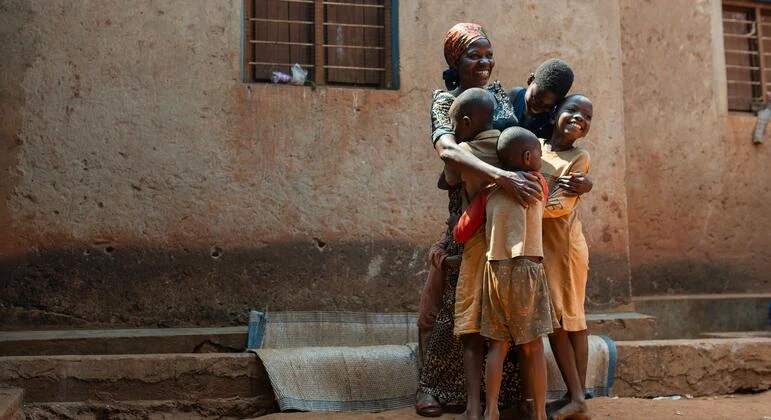
The global humanitarian architecture is teetering on the edge of a systemic breakdown. According to a harrowing new report released by the UN Refugee Agency (UNHCR), titled Protection Eroded: The Human Cost of Underfunding, approximately 8.3 million refugees, stateless persons, and forcibly displaced individuals are currently staring into a void of assistance. As donor fatigue sets in and global geopolitical tensions divert resources, the safety nets designed to prevent violence, exploitation, and death are dissolving, leaving the world’s most vulnerable populations exposed to an uncertain and dangerous future.
The Human Face of Austerity
For individuals like Mr. Shafi, a refugee living in Kabul Province, the statistics are not merely bureaucratic figures—they are a matter of survival. After fleeing his home, Shafi received a modest one-off cash grant from the UNHCR to help him establish a footing. However, crippled by a permanent leg injury and lacking steady employment, he now occupies a makeshift shelter. The walls of his home are crudely patched with loose stones, and the windows are shielded from the biting Afghan elements only by thin, translucent plastic sheets.
"When there is little food, I give it to the children. If they are hungry, they cry," Shafi says, his voice reflecting the desperation of millions. "We have nothing prepared for winter. If someone helps, we can manage. If no one helps, we have nothing."
Shafi’s situation is emblematic of a broader, global erosion of dignity. When humanitarian aid is withdrawn, the immediate impact is a slide into extreme poverty, but the secondary impact is the loss of basic protection from the very harms that forced these people to flee in the first place.
Chronology of a Financial Freefall
The decline in funding has been both rapid and relentless. Over the past 24 months, the financial landscape for refugee protection has shifted from challenging to catastrophic.
- 2022–2023: The UNHCR began signaling concerns regarding the rise of "earmarked" funding—contributions tied to specific geographic projects—which hampered the agency’s ability to pivot resources during emerging crises. At this stage, earmarked funding accounted for 19% of the total, a figure that would more than double in the coming years.
- 2024: The total funding available to the UNHCR stood at $5.178 billion. While significant, it was already failing to keep pace with the historically high number of people under the agency’s mandate.
- 2025: A precipitous drop occurred, with available funding crashing to $3.932 billion. This nearly $1.25 billion reduction effectively crippled the agency’s operational capacity, forcing the closure of offices in 140 locations and a one-third reduction in the global workforce.
- 2026 (Year-to-Date): As of July 2026, the UNHCR has received only 32% of its $8.5 billion requirement for the year. This leaves a massive funding gap that is currently being filled by the cessation of vital programs rather than cash reserves.
Supporting Data: The Erosion of Protection
The report provides a granular look at how the lack of funding is systematically dismantling protection services. Unlike food, which can be rationed into smaller portions, protection systems operate on a threshold; below that threshold, they cease to function entirely.
Regional Case Studies
- Afghanistan: The humanitarian landscape here is particularly grim. Following the return of over one million people in 2026 alone, the UNHCR was forced to slash the cash grant on arrival from $375 per person to a mere $170 per household. Reintegration grants, which provide the seed money for families to start anew, have plummeted: only 175 households have received support this year, a sharp decline from the 5,300 households supported in 2024.
- Chad: The lack of funding is creating a administrative and security crisis. Approximately 319,000 refugees face severe registration delays, leaving them without legal documentation. This lack of status exposes them to arbitrary detention and limits their access to basic rights. Furthermore, 200,000 women and girls are at risk of losing access to "safe spaces," and 233,000 children are facing the total loss of child protection services.
- Ethiopia: The infrastructure for the most vulnerable has been halved. Safe houses for survivors of gender-based violence have dropped from 29 to 13 in a single year. Perhaps most alarmingly, child protection coverage in some regions has suffered an 85% reduction.
- Sudan: In conflict-ravaged regions like Darfur and Kordofan, the situation is life-threatening. More than 50,000 survivors of sexual violence are now in jeopardy of losing access to essential post-rape care, a service that is literally the difference between life, death, and long-term psychological and physical trauma.
Official Responses and Strategic Failures
Dominique Hyde, UNHCR’s Director of External Relations, has been vocal about the implications of these cuts. She argues that the agency is no longer dealing with simple budgetary constraints, but with the active unraveling of humanitarian law and practice.
"When registration stops, safe houses close, or child protection services disappear, the very risks that people fled—violence, exploitation, and abuse—reappear in displacement," Hyde stated.
The UNHCR points to the shift toward "earmarked" funding as a primary culprit in this decline. With 51% of current funding tied to specific, donor-defined projects, the agency has lost the "flexible" liquidity required to address emergencies in real-time. "Flexible funding helps us move the right expertise and funds to where they are needed the most," Hyde added. "Protection cannot be reduced indefinitely without systems collapsing."
The Implications: A System at Its Breaking Point
The fundamental warning contained in the UNHCR report is simple yet terrifying: "Below a certain threshold, the system doesn’t shrink; it fails."
The implications for the international community are profound:
- The Resurgence of Secondary Displacement: When protection systems fail in host countries, refugees are often forced to move again, seeking safety in regions that are already overstretched. This creates a cycle of secondary displacement that is harder to manage and more costly to address.
- Increased Exploitation: Without registration and documentation, refugees become invisible to the state. This leaves them vulnerable to human trafficking, forced labor, and child marriage. As child protection services vanish, the long-term human capital of an entire generation of displaced youth is being compromised.
- Regional Instability: Countries hosting large refugee populations often rely on UNHCR support to maintain social cohesion. As services for refugees disappear, the pressure on local resources intensifies, potentially fueling tensions between host communities and displaced populations.
- Moral and Legal Erosion: The international community committed to the 1951 Refugee Convention and subsequent protocols. The failure to fund the agencies tasked with upholding these commitments represents not just a budgetary issue, but a moral retreat from the foundational principles of post-war humanitarianism.
Conclusion: A Call to Action
The UNHCR is currently appealing to donors and global partners to urgently expand flexible funding. The agency argues that the progress made over the last decade—in health, education, and legal protection for refugees—is being wiped out in a matter of months.
As the winter months approach for families like Mr. Shafi’s in Afghanistan, the clock is ticking. The "human cost of underfunding" is not a future projection; it is a current, unfolding reality. Without an immediate injection of resources and a shift toward more flexible, unconditional support, the global humanitarian system faces a collapse that will be felt for generations, with the world’s most vulnerable paying the ultimate price.
 Lina Hope
 Asro
Asro
