

By Olivia Tauber | Published: September 9, 2026
Apple’s “Surprise and shine” keynote event on September 9, 2026, delivered what the tech giant has spent years quietly perfecting: its entry into the foldable smartphone market. Priced at a staggering $1,999, the newly unveiled iPhone Duo dominated headlines during its initial presentation at Apple Park.
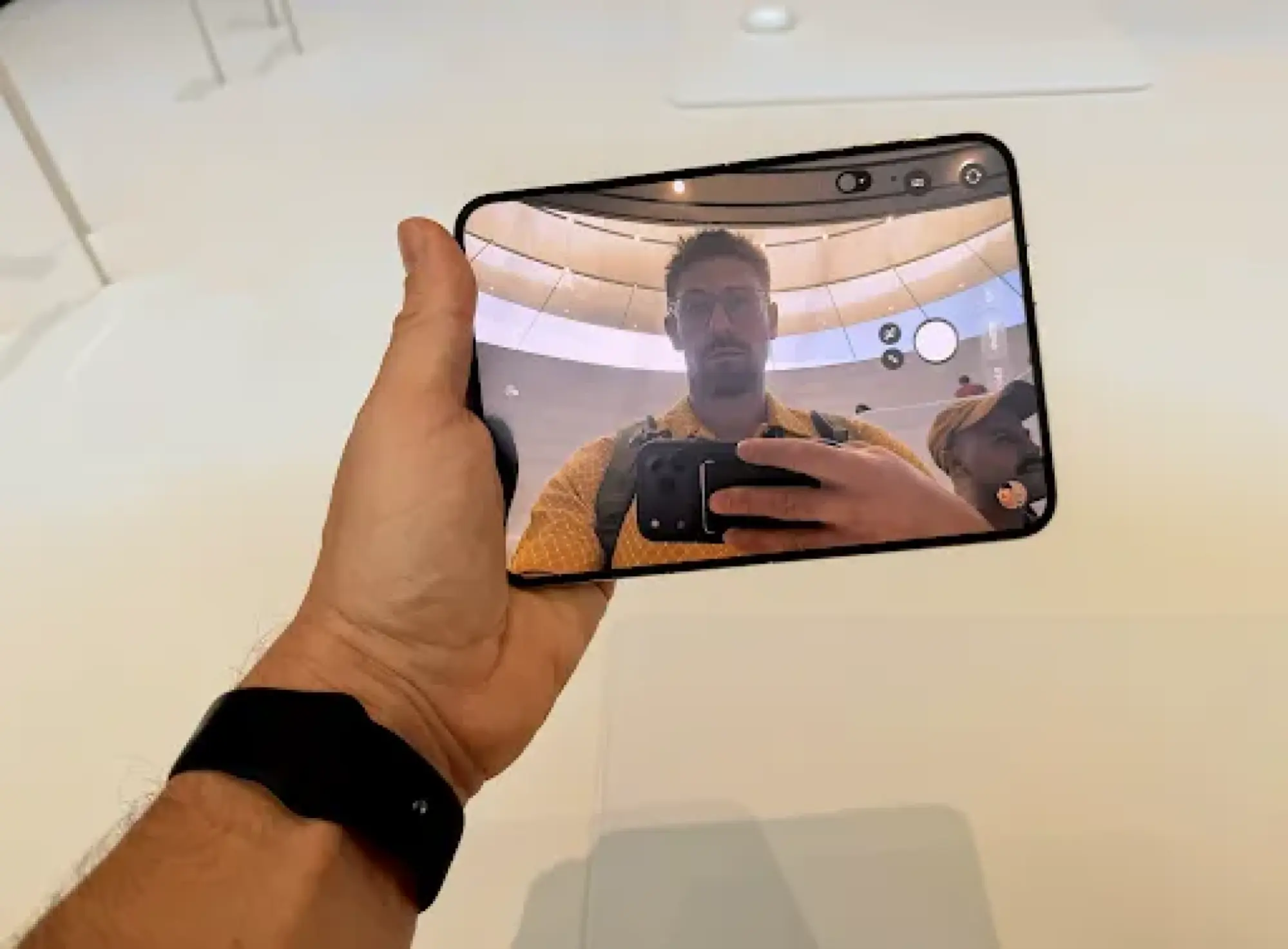
Apple’s polished showcase made the device look impossibly sleek and entirely seamless. However, once the keynote concluded, the doors to the hands-on area opened. For the first time, tech journalists, prominent content creators, and early testers could actually open, close, fold, and game on the device in the real world.
Now, with days of early impressions pouring across social media and livestreams, a clearer picture has emerged. The short version: The iPhone Duo is impressively thin, its software responds rapidly as the device shifts shapes, and—contrary to Apple’s marketing narrative—the center crease is not entirely invisible, though it comes remarkably close depending on the lighting.

Main Facts: What Is the iPhone Duo?
The iPhone Duo represents a massive departure from Apple’s traditional slab-smartphone design language. Key specifications and highlights include:
- Price and Availability: The device starts at $1,999, positioning it squarely at the ultra-premium end of the foldable market alongside competitors like Samsung and Google. It is scheduled to officially reach consumer hands on October 23, 2026.
- Form Factor: A book-style foldable featuring a sweeping 7.6-inch interior display that converts the device from a pocket-sized outer screen into a tablet-like canvas.
- Hinge and Multitasking Mechanics: The device utilizes a sophisticated three-perspective hinge mechanism designed to support simultaneous multitasking—such as composing an email on one half while viewing a message on the other, or running media apps side-by-side.
- Design and Build: Early testers noted an exceptionally slim profile when unfolded, alongside fluid transition animations as content scales seamlessly from the outer display to the expansive inner screen.
Chronology of the Reveal and Hands-On Sessions
The rollout of the iPhone Duo followed a carefully orchestrated timeline, moving from corporate presentation to chaotic real-world testing within a matter of hours:
- The Keynote Presentation (Morning, Sept. 9, 2026): Apple officially announced the iPhone Duo during its "Surprise and shine" event. Executives emphasized the device’s thin chassis, high-end performance, and proprietary display technology, framing it as the definitive foldable device.
- The Hands-On Area Opens (Midday, Sept. 9, 2026): Immediately following the keynote, members of the press and invited creators swarmed the demo tables at Apple Park. Mashable Senior Editor Stan Schroeder and other industry veterans went hands-on to test the device’s physical build quality and software integration.
- Social Media Waves and Creator Testing (Afternoon, Sept. 9, 2026): High-profile creators—including iJustine (Justine Ezarik), Max Weinbach, and streamer IShowSpeed—broadcasted live reactions, putting the device through rigorous folding tests, camera trials, and media playback checks.
- Critical Analysis and Lighting Scrutiny (Late Afternoon, Sept. 9, 2026): Tech reviewers like Gizmodo Senior Editor Ray Wong published detailed angles highlighting how the device’s display behaves under different lighting conditions, initiating a broader debate about screen creases.
Supporting Data and Real-World Observations
While Apple’s promotional materials promised an uninterrupted glass surface, real-world testing provided a nuanced look at the hardware’s capabilities and limitations.
The Crease Debate
One of the most heavily scrutinized aspects of any foldable phone is the center crease. Viewed head-on under standard indoor lighting, the iPhone Duo’s 7.6-inch display appears nearly continuous. However, as Gizmodo’s Ray Wong and other reviewers demonstrated, tilting the phone toward overhead lighting reveals a subtle vertical crease running down the center.

Reactions to this discovery varied widely. Some users expressed mild disappointment, comparing the hardware’s visibility to existing foldables on the market. Others defended Apple’s engineering feat, with one viral reaction summarizing the sentiment: "They are magicians, not Gods!" Another user boldly proclaimed, "Wow, the crease is really seamless."
Performance and Software fluidity
Software optimization often makes or breaks foldable devices. Early testers universally praised Apple’s adaptive software framework. The transition animations—shifting from the compact outer display to the massive inner canvas—functioned smoothly without stuttering or dropping frames.
Journalist Geoff Keighley highlighted the fluid animation during his tests, noting that the physical transition matched the fluid performance promised on stage. Users also praised the multi-window capabilities, noting that running applications like Pokémon Go alongside social media feeds felt natural and responsive.
Official Responses and Creator Reactions
The tech community’s reaction was a mix of awe, skepticism, and internet culture spectacles.

- Max Weinbach called the iPhone Duo the "bar none best foldable" and expressed astonishment at the implementation of the under-display camera, stating, "I wasn’t expecting that."
- Justine Ezarik (iJustine) documented her time testing Netflix features, the device’s compact dual-handed feel, and framing selfies using the outer display as a viewfinder, declaring the hardware "amazingggg."
- IShowSpeed brought viral energy to the event, repeatedly folding and unfolding the device live on stream as his chat room erupted with excitement.
- Skeptics and Comparison-Makers: Not all reactions were glowing. Some online commentators compared the dual-screen configuration to Microsoft’s historic Surface Duo or a modernized Nintendo DS, while others questioned whether prolonged gaming would cause thermal throttling or stuttering as the display shifted configurations.
Implications for the Smartphone Market
The launch of the iPhone Duo marks a watershed moment for the mobile industry. For years, Apple watched from the sidelines as Android manufacturers experimented with folding screens, refining hinges, and tackling durability concerns. By entering the market in late 2026 with a $1,999 price tag, Apple is validating the foldable category for the mainstream consumer base.
1. Mainstream Validation of Foldables
While foldable phones have enjoyed a dedicated enthusiast following for years, they have largely remained a niche product due to high costs, durability fears, and software fragmentation. Apple’s entry changes the narrative. By applying its formidable supply chain and ecosystem influence to the form factor, the iPhone Duo is expected to accelerate mainstream adoption.
2. Pressure on Competitors
Samsung, Google, and OnePlus have established a head start in foldable hardware. However, Apple’s seamless ecosystem integration, powerful custom silicon, and brand loyalty put immense pressure on competitors to elevate their software ecosystems and hardware durability.
3. The Shift in Consumer Expectations
At $2,000, the iPhone Duo is not aimed at budget-conscious buyers. It targets early adopters, enterprise professionals, and power users seeking maximum productivity from a pocketable device. How consumers respond when the device hits retail shelves on October 23 will determine whether foldables transition from a luxury novelty to the standard evolution of the smartphone.
 Neng Nana
 Azzam Bilal Chamdy
 Muslim
