

By Crystal Bell
Published: September 30, 2026
Introduction: The Great Corporate Escape
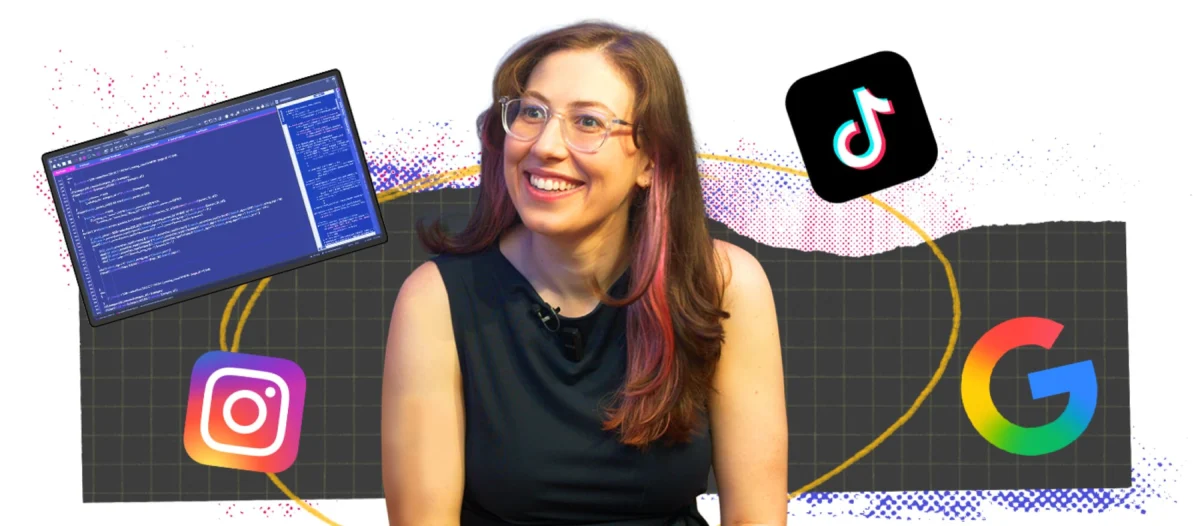
For six and a half years, Alberta Tech lived a dual life. By day, she sat in front of multiple monitors as a software engineer at Google, spending a significant portion of her tenure helping build and refine features for YouTube—one of the most influential video platforms on earth. By night, she transformed into a digital satirist, mining the peculiar absurdities of her tiny New York apartment and the high-stress culture of Silicon Valley for short-form comedy.
She was, in essence, the tech world’s Hannah Montana: a corporate coder hiding a thriving, comedic alter ego.
That double life came to an end earlier this year when Alberta officially walked away from her software engineering career to pursue content creation full-time. In an exclusive interview for Mashable’s Creator Playbook, Alberta opens up about the realities of leaving a stable tech salary, why comedy is secretly the best educational tool for complex software topics, how artificial intelligence is reshaping her creative workflows, and the critical milestone every aspiring creator must hit before they hand in their resignation letter.
Main Facts: The Intersection of Code and Comedy
The shift from software engineering to full-time content creation represents a growing trend of corporate professionals leveraging niche industry expertise to break into the creator economy.
- The Background: Alberta spent over six years in software development, including a stint directly working on YouTube’s infrastructure and user features.
- The Catalyst: Like millions worldwide, Alberta began posting content during the early COVID-19 pandemic simply out of boredom and a desire to engage with short-form video trends.
- The Audience: Her content quickly found a dedicated, highly specific demographic: over half of her current audience consists of software engineers, developers, and tech workers who see their daily struggles reflected in her sketches.
- The Pivot: After successfully balancing her day job and her digital channel for years, she officially left Google to focus on content creation full-time, recognizing that scaling her production quality required undivided attention.
Chronology: From Pandemic Pastime to Full-Time Career
The COVID-19 Lockdown Beginnings
In the early days of 2020, confined to a small New York City apartment, Alberta turned to TikTok and other short-form platforms as an outlet. Initially, her content ranged from lighthearted observations about lockdown life to general observational humor. However, as she leaned into her professional background, her sketches naturally gravitated toward the quirks of the tech industry.

The Balancing Act (2020–2026)
For more than half a decade, Alberta managed a grueling schedule. By day, she wrote code and developed features for YouTube; by night, she brainstormed, filmed, and edited comedy sketches poking fun at the very industry she worked in. While she successfully kept her online persona distinct enough to avoid professional friction, maintaining high bars for both software engineering and content production eventually reached an unsustainable threshold.
The Leap of Faith (2026)
Realizing that her creative ambitions required a professional-grade commitment, Alberta made the decision to leave Google. Telling her manager was a daunting milestone, but it marked the official transition from "tech worker who makes videos" to a full-time digital creator.
Supporting Data & Insights: The Realities of Tech Content Creation
Transitioning from a secure corporate position to the volatile creator economy requires more than just a funny premise. According to Alberta, establishing authenticity is the single most important factor for success in niche verticals.
The Power of Domain Credibility
Audiences with technical backgrounds—such as software developers—are notoriously difficult to fool. Without professional credentials, creators trying to satirize coding culture or artificial intelligence risk alienating the very people they wish to target.
"My audience now is just over half software engineers and developers. To speak to that group of people, you need to have some kind of credential behind you. You need to know what you’re talking about," Alberta explains.
While she rarely discussed her specific employer online while working at Google to avoid professional complications, the accuracy of her technical references instantly signaled to viewers that her insights were authentic.

Comedy as an Educational Tool
Rather than delivering dry tutorials, Alberta uses humor to unpack dizzying technological developments—ranging from generative AI breakthroughs to the internet buzzword "vibe coding." She argues that if a viewer can genuinely laugh at a technical concept, they have inherently grasped its core mechanics. By wrapping complex industry shifts in well-timed punchlines, she bridges the gap between high-level engineering and public comprehension.
Official Perspectives: Navigating the AI Boom
Few industries are experiencing as much turbulence as artificial intelligence, and few people are as uniquely qualified to comment on it as a former Google engineer turned tech comedian.
From Skepticism to Cautious Optimism
When generative large language models (LLMs) first burst into the public consciousness, Alberta was among the skeptics, viewing them largely as "stochastic parrots" generating plausible-sounding garbage. Over time, however, her perspective has evolved.
"I have been really impressed by the progress that I’ve seen. I’ve seen AI used for actually very useful and good things, and now it’s a part of a lot of my workflows."
Where AI Excels—and Where It Fails
- Research and Discovery: Alberta utilizes AI tools heavily during the research phase of content creation. While she stresses the importance of fact-checking, AI acts as an effective map for discovering unexplored backstories and rabbit holes.
- Creative Writing: On the creative front, however, AI still falls short. When asked if she uses ChatGPT to write her scripts, her answer is definitive: "Whenever I say, ‘Generate a funny script’—not quite. It’s not quite there yet."
- The "Vibe Coding" Evolution: Addressing the tech-world pejoration "vibe coding"—originally defined as blindly trusting an LLM to build a website without inspecting the source code—Alberta notes that the terminology has matured. Software engineers no longer use AI blindly; instead, it has integrated safely into standard developer workflows, evolving into a form of "agentic engineering."
To test the capabilities of modern media tools, Alberta recently ran an experiment: she took a previously viral video and completely recreated it using AI video generation tools with the exact same script. The video performed surprisingly well, demonstrating both the supreme importance of a strong conceptual idea and the terrifyingly rapid advancement of generative video technology.
Implications for Aspiring Creators
For professionals eyeing an exit from corporate America to pursue content creation, Alberta’s journey offers both inspiration and a stark warning.

The creator economy is increasingly saturated, and platforms are flooded with automated content, AI-generated influencers, and superficial trend-chasers. In this climate, standing out requires an undeniable core value proposition, a unique voice, and a deep understanding of one’s audience.
Her ultimate piece of advice for anyone contemplating a leap of faith out of the 9-to-5 grind is direct and uncompromising:
"My advice to new creators is that, in a lot of cases, your audience doesn’t really care about you as a person, and so you kind of have to make them care about you. Until you can find that thing that makes them care about you—the value that you’re providing, the entertainment that really hooks—you have to keep trying. Don’t quit your job until you find that thing."
As artificial intelligence continues to level the playing field and redefine how digital media is produced, human-driven original ideas, authentic domain expertise, and sharp cultural satire remain the ultimate competitive advantages. For Alberta Tech, trading code reviews for comedy wasn’t just a career change—it was a masterclass in turning specialized industry knowledge into a thriving independent enterprise.
 Nana Wu
 Reynand Wu
