

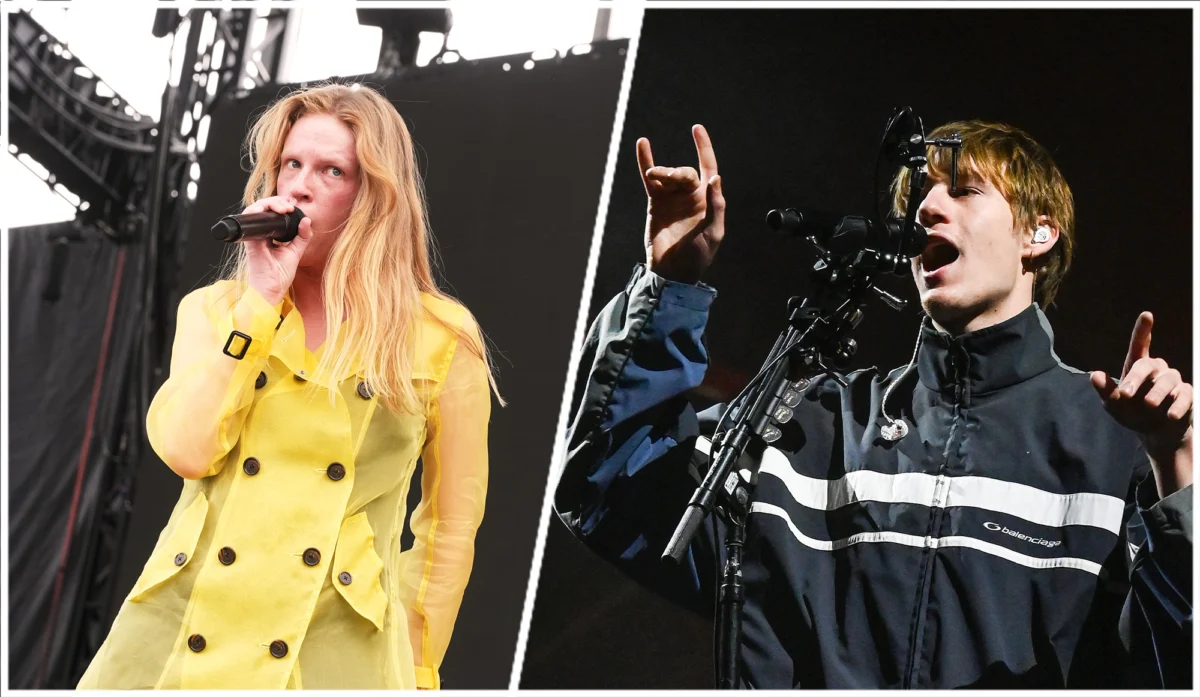
The race for the Grammy Award for Best New Artist is traditionally a battleground defined by individual meteoric rises and genre-defying breakthroughs. However, as the 2026 awards cycle enters its final, most critical stretch, the conversation has shifted toward an unprecedented narrative: a sibling duo poised to make Academy history. Pop singer-songwriter Audrey Hobert and alternative R&B breakout Malcolm Todd are not just dominating the charts; they are potentially on the verge of becoming the first pair of siblings to be nominated for Best New Artist in the same year as separate solo acts.
This convergence of talent within a single family has captivated industry analysts and voters alike. While the music industry has long seen musical families—from the Osmonds to the Jacksons—the specific structural rules of the Best New Artist category have historically acted as a barrier for individual family members, often categorizing them under the umbrella of a single group or forcing them to wait for different eligibility windows. Should Hobert and Todd both secure nominations, it would mark a watershed moment for the Recording Academy, signaling a rare shift in how the industry views the independent growth of kin in an increasingly interconnected musical landscape.

The Ascent: A Tale of Two Breakthroughs
The individual paths of Hobert and Todd are as distinct as their musical styles, yet both have reached a critical mass of popularity simultaneously.
Audrey Hobert’s momentum has been a masterclass in slow-burn success followed by an explosion of industry recognition. Her debut album, Who’s the Clown?, released late last year, initially served as an underground favorite before the lead single "Sue Me" began to dominate the cultural conversation. The track, which balances vulnerability with a sharp, radio-ready edge, has consistently climbed the Billboard Hot 100. Her ascent, however, is not just one of performance but of influence. Hobert has quietly become one of the most sought-after songwriters in modern pop, having penned hits for the likes of Gracie Abrams, including "Risk," "I Love You, I’m Sorry," and the top-10 smash "That’s So True." This dual-threat status—as a charting solo artist and a proven songwriting architect—has provided Hobert with a level of industry credibility that often eludes early-career performers.

Conversely, Malcolm Todd’s trajectory has been characterized by a more aggressive, digital-first explosion. His breakout hit, "Earrings," became a cultural touchstone on social media, rapidly propelling him into the Top 20 of the Billboard Hot 100. His latest project, Do That Again, made a significant statement by debuting at No. 4 on the US albums chart, a feat that solidified his status as a legitimate commercial powerhouse. Where Hobert relies on a foundation of songwriting prestige, Todd utilizes a visceral, genre-fluid approach to R&B that has captured the attention of both the critical press and the streaming-heavy demographic that now dictates much of the Grammy voting pool.
A Chronology of Sibling Precedents
To understand the magnitude of this potential nomination, one must look back at the history of the Grammy Awards. While sibling nominees are not inherently rare, they are almost exclusively categorized as a single entity. The list of previous nominees is a who’s-who of collaborative family acts: The Carpenters, The Black Crowes, Wilson Phillips, The Jonas Brothers, and HAIM are just a few examples of family units that defined their respective eras.

However, the "separate solo" requirement for Best New Artist creates a unique bottleneck. Historically, when siblings pursue solo careers, they often do so in different eligibility windows, or one finds success long after the other has moved past the "new artist" threshold. The closest precedent remains the siblings Billie Eilish and Finneas. Eilish broke out and secured her nomination in 2020, while Finneas, a frequent collaborator, received his own nod in 2022. While they occupied the same space in the cultural zeitgeist, they were separated by two years of eligibility.
Hobert and Todd are currently on an identical timeline. By competing in the same year, they are effectively testing the flexibility of the Academy’s definition of "newness." Their potential nomination would not only be a statistical anomaly but a reflection of the modern artist’s ability to build simultaneous, distinct brands within the same family household.

Data-Driven Odds: The Path to the Ballot
The predictive modeling at Gold Derby provides a clear look at the current state of the race. Malcolm Todd currently sits firmly at No. 5, a position that is widely considered "locked" by industry insiders. His sustained performance on the Billboard charts and his consistent presence atop Spotify’s global charts have made him a primary candidate for voters looking for commercial viability.
Audrey Hobert, currently hovering just outside the top eight at number nine, finds herself in a more precarious but arguably more narrative-rich position. Her campaign is buoyed by the "industry respect" factor—voters who appreciate her songwriting contributions are often more likely to support her solo career. Furthermore, her lack of a top-five spot is currently viewed as a temporary hurdle; as "Sue Me" continues to gain traction, her statistical profile is climbing.

When comparing her to current rivals like Role Model and Miles Caton, Hobert has a distinct advantage: high-profile, high-credibility connections. While others in the pack have solid streaming numbers, Hobert’s ties to the current pop zeitgeist—specifically her collaboration with Gracie Abrams—offer her a "prestige" buffer that could push her into the final eight nominations. Analysts suggest that if she maintains her current trajectory through the final phase of voting, her inclusion would not only be expected but viewed as an essential inclusion for a complete look at the year in music.
Industry Implications and Cross-Promotion
Perhaps the most fascinating aspect of this sibling scenario is the strategic, yet organic, way the two have handled their public personas. Rather than distancing themselves from one another to avoid the "family act" label, they have leaned into their connection.

Their appearances on the Triple J Like a Version series, where they covered each other’s work, served as a masterclass in cross-promotion. By performing each other’s songs, they introduced their respective fanbases to one another, effectively creating a symbiotic marketing machine. When a voter or a fan consumes the content of one, they are algorithmically and culturally nudged toward the other.
From a campaign perspective, this is invaluable. Voters are human; they are susceptible to narrative. The story of "The Siblings Who Conquered the Grammys" is a compelling, feel-good headline that the Recording Academy has historically embraced. It provides a human element to the cold, analytical process of award selection. It also provides a "safety" for voters: if they are unsure which of the two to support, the public link between them encourages the, "why not both?" approach to ballot filling.

Conclusion: A Historic Opportunity
As the industry prepares for the upcoming awards ceremony, the spotlight on Audrey Hobert and Malcolm Todd serves as a microcosm for the evolution of the music industry itself. We are seeing a move toward more transparent, personality-driven artist development, where family ties are no longer hidden but celebrated as part of a larger artistic ecosystem.
Should both artists hear their names called on nomination day, it will be a historic victory for both the Hobert/Todd family and for the Grammy Awards, which would successfully acknowledge the unique, simultaneous rise of two distinct solo artists. Even if only one makes the final cut, their impact on the 2026 cycle is already cemented. They have proven that in an era of hyper-individualized streaming, there is still room for the classic, compelling narrative of shared talent. For now, the music world waits to see if the 2026 Grammys will be defined as the year of the siblings. Given the current trajectory of their careers, it is a safe bet that both artists will be major players in the conversations to come.
 Asep Darmawan
 Reynand Wu
 Layla Zulfa
