

Published: September 12, 2026
Category: Transportation / Electric Vehicles
Main Facts
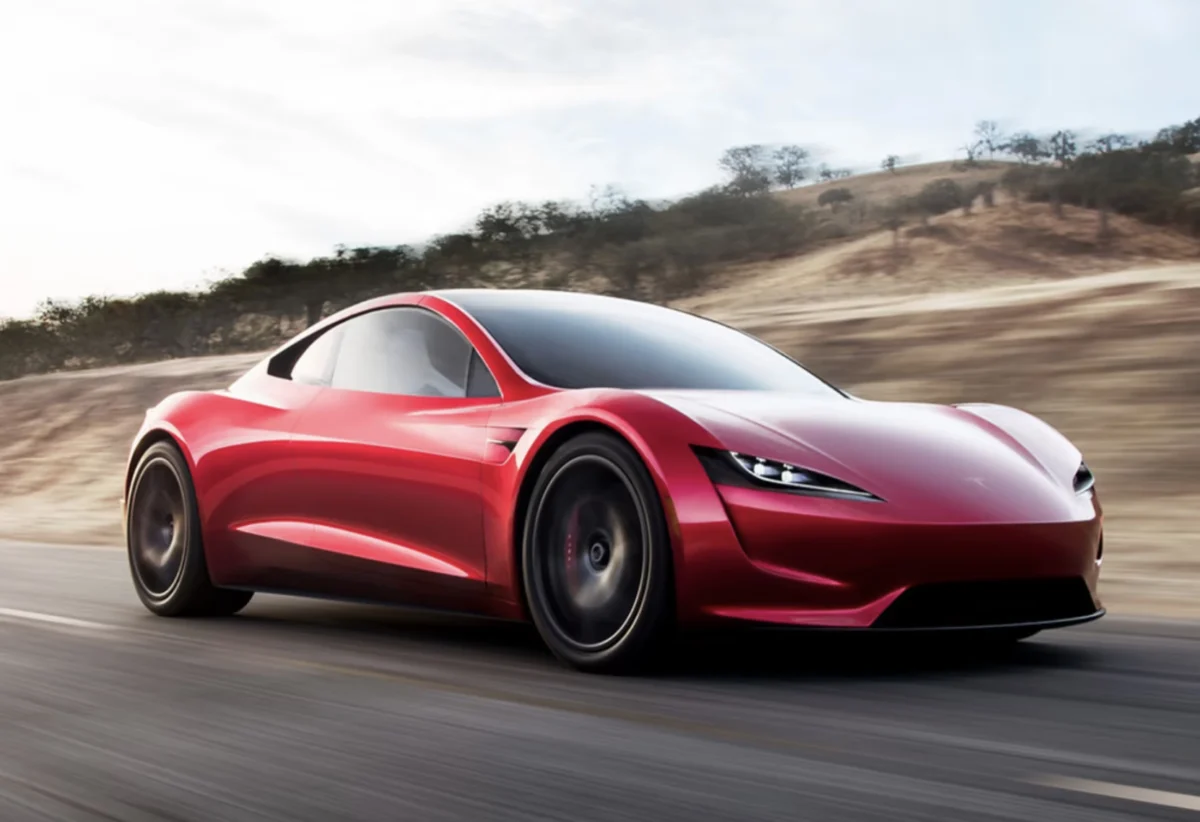
The automotive world is once again bracing for what could be one of the most unconventional vehicle rollouts in history. Tesla has officially signaled that the long-delayed, highly anticipated second-generation Tesla Roadster is finally ready to break cover.
In a characteristically cryptic post shared on X (formerly Twitter) on Saturday, the electric vehicle pioneer published a stark, minimalist graphic accompanied by a definitive three-word declaration: "Go for launch."
The teaser graphic clearly points to an unveiling date of October 1 ("10.01"). Beyond the date itself, enthusiasts and industry analysts immediately seized upon subtle visual hints within the promotional material that appear to reference the vehicle’s most audacious feature: optional cold-gas thrusters. Developed in collaboration with Elon Musk’s aerospace venture, SpaceX, these thrusters are slated to give the electric supercar short bursts of aerial propulsion—a capability that has blurred the lines between terrestrial automobile design and aerospace engineering since it was first teased nearly a decade ago.
The upcoming October 1 reveal represents a pivotal moment for Tesla. Originally unveiled as a surprise concept at the tail end of 2017, the second-generation Roadster has become legendary in the tech and automotive sectors not just for its earth-shattering performance specifications, but for a nearly decade-long cycle of missed deadlines, shifting production timelines, and persistent skepticism from the public and reservation holders alike.
According to recent reports from industry insiders, the vehicle that will roll onto the stage in October bears little resemblance to the prototype shown back in 2017. Tesla has reportedly completely scrapped the original engineering blueprint in favor of a radical, newly redesigned architecture optimized for performance, aerodynamics, and the integration of SpaceX-derived thruster tech.
Chronology: The Nine-Year Odyssey of the Roadster
To understand the magnitude of the October 1 unveiling, one must trace a timeline marked by soaring ambitions, continuous delays, and fierce public discourse.
November 2017: The Shock Unveiling
Tesla held a splashful event in Hawthorne, California, ostensibly to debut its revolutionary Semi truck. As the presentation wrapped up, Elon Musk pulled off a masterclass in "one more thing" showmanship: a low-slung, ultra-sleek, all-electric sports car rolled out of the back of a Semi.
The statistics quoted that night sent shockwaves through the automotive establishment. Tesla claimed the new Roadster would sprint from 0 to 60 mph in a blistering 1.9 seconds, clear the quarter-mile in 8.8 seconds, achieve a top speed exceeding 250 mph, and boast an astonishing 620-mile range powered by a massive 200 kWh battery pack. Base models were priced at $200,000, with the "Founder’s Series" demanding a $50,000 upfront reservation fee.
2018–2021: The Pushing of Goalposts
Initially, Tesla promised customer deliveries would begin by 2020. However, as the global automotive industry navigated supply chain bottlenecks, battery cell supply constraints, and the prioritization of higher-volume vehicles like the Model Y and the Cybertruck, the Roadster timeline began to slip. Musk repeatedly pushed the production date, citing engineering challenges and the need to perfect other components of the Tesla ecosystem.
Late 2025: The Sam Altman Spat and Further Delays
By late 2025, frustration among early adopters reached a boiling point. The delay sparked a public social media altercation between Elon Musk and OpenAI CEO Sam Altman. Altman publicly voiced his exhaustion over the wait, writing on social media that "7.5 years has felt like a long time to wait" after he had shelled out a $50,000 reservation fee back in 2017.
Musk fired back publicly, insisting that Altman had actually canceled his reservation and received a full refund—turning a private customer relations issue into a viral public spectacle that underscored the mounting public fatigue surrounding the vehicle.
Shortly after the spat, Tesla pushed its targeted production-intent reveal from late 2025 to April Fools’ Day 2026, a move that many dismissed as a joke, further muddying the waters regarding the car’s actual development status.

September 2026: The "Go for Launch" Teaser
Now, following a report by The Information indicating that Tesla entirely trashed the 2017 prototype design in favor of a radical new concept, the company has officially locked in October 1 as the definitive reveal date.
Supporting Data & Specifications
While Tesla has kept precise specifications for the redesigned October 1 model under tight wraps, the metrics promised during the initial 2017 announcement set an exceptionally high bar—one that the company must meet or exceed to justify the long wait.
- 0–60 mph Acceleration: 1.9 seconds (Original 2017 target)
- 0–100 mph Acceleration: 4.2 seconds
- Quarter-Mile Time: 8.8 seconds
- Top Speed: Exceeding 250 mph (400 km/h)
- Wheel Torque: 10,000 Nm at the wheels
- Battery Capacity: 200 kWh
- Driving Range: 620 miles (approx. 1,000 km) on a single charge
- Seating Capacity: 2+2 layout
- Base Price: $200,000
- Founder’s Series Price: $250,000 (Full payment required upfront)
Industry experts note that while EV technology has advanced exponentially since 2017—with hypercars like the Rimac Nevera and Lotus Evija setting unprecedented performance benchmarks—Tesla’s integration of cold-gas thrusters could create an entirely new performance category.
However, regulatory hurdles remain a massive question mark. Federal motor vehicle safety standards do not explicitly account for rocket-powered thrusters on consumer vehicles traversing public roads, meaning Tesla may restrict the use of the thruster package to track environments or off-road demonstrations.
Official Responses and Industry Reactions
The automotive community’s reaction to the "Go for launch" teaser has been a mix of electrifying anticipation and deeply rooted skepticism.
Automotive journalists and financial analysts point out that a reveal date does not equate to immediate product availability. Elon Musk himself has previously acknowledged the realities of automotive manufacturing cycles, admitting that even after an official unveiling, a production-ready Roadster will likely not roll off assembly lines for another 12 to 18 months. This places a realistic commercial delivery window somewhere between late 2027 and early 2028—nearly a full decade after initial customer deposits were collected.
Despite the delays, the cult-like devotion of Tesla’s investor and consumer base remains unshaken. On enthusiast forums like Reddit’s r/TeslaMotors and across X, reservation holders have expressed renewed optimism. Many believe that the pivot to a "radical new design" signals that Tesla is no longer just building a fast sports car, but rather an engineering showcase meant to cement its technological dominance over traditional luxury marques and emerging electric hypercar startups.
Competitors, meanwhile, are watching closely. Legacy luxury automakers and dedicated EV startups have spent the last several years claiming market share in the high-end performance sector, filling the void left by the absent Roadster. A market-ready, rocket-assisted Tesla flagship could drastically disrupt the ultra-luxury segment if it delivers on its physics-defying promises.
Implications for Tesla and the EV Market
The impending debut of the second-generation Roadster carries profound implications for Tesla as a corporate entity, its brand equity, and the broader electric vehicle landscape.
1. Restoring Technological Credibility
Over the past few years, Tesla has faced criticism for slowing innovation in its core consumer passenger car lineup (Model 3 and Model Y), while directing massive capital and engineering resources toward autonomous driving software (FSD), Optimus humanoid robots, and the Robotaxi network. A successful, jaw-dropping Roadster reveal serves as a powerful reminder to Wall Street and consumers that Tesla remains capable of pushing the absolute limits of mechanical and electrical engineering.
2. Redefining High-Performance Physics
If the SpaceX-derived cold-gas thrusters make it to the production version—and are cleared for operational use—it will fundamentally alter consumer expectations of vehicle dynamics. The intersection of automotive engineering and aerospace propulsion could open up entirely new avenues for vehicle handling, cornering grip, and braking performance, effectively rendering traditional aerodynamic downforce obsolete in certain scenarios.
3. The Test of Trust for Reservation Holders
For the individuals and institutions who tied up capital in 2017—waiting nearly ten years for a product—the October 1 reveal must translate into a tangible, actionable roadmap. If Tesla can present a finalized production vehicle with clear delivery timelines, it will heal the fractured relationship between the company and its most loyal early supporters. Conversely, should the event amount to yet another vaporware-style concept showcase without concrete manufacturing dates, it risks alienating the upper tier of the Tesla consumer base permanently.
As the clock ticks down to October 1, all eyes are on Gigafactory Texas and Tesla’s design studios. Whether the new Roadster can truly defy gravity—both literally and figuratively—remains to be seen, but the automotive world is undeniably ready for launch.
 rifanmuazin
 Nana Muazin
