

By Global Entertainment Desk
Published: September 15, 2026
Main Facts
In the modern landscape of entertainment, the boundaries of planet Earth no longer contain our favorite heroes. From the neon-drenched nebulae of the Marvel Cinematic Universe to the temporal-spatial anomalies of Doctor Who and the sprawling galactic empires of Star Wars, contemporary storytelling is undergoing a profound gravitational shift toward the cosmos.
According to cultural critics and media historians, the modern fascination with space is not a sudden trend born of recent technological milestones, but rather the evolutionary peak of a narrative tradition that spans nearly a century. Comic books, which once confined their spandex-clad protectors to the alleys of Gotham, Metropolis, and New York City, now routinely deploy their casts across star systems, alternate dimensions, and metaphysical planes.
This "cosmic turn" begs a fundamental question: What do Star Wars, Doctor Who, and traditional superhero franchises truly have in common, and why are comic book adaptations pivoting so aggressively toward deep space? The answer lies in the intersection of mythological tradition, technological evolution in visual effects, and a collective human desire to find scale in an increasingly complex modern world.
Chronology: From Pulps to the Multiverse
To understand how comic books and pop culture conquered the final frontier, one must trace the trajectory of speculative fiction from early 20th-century print to the modern cinematic era.
1. The Pulp Era and the Birth of Space Opera (1930s–1950s)
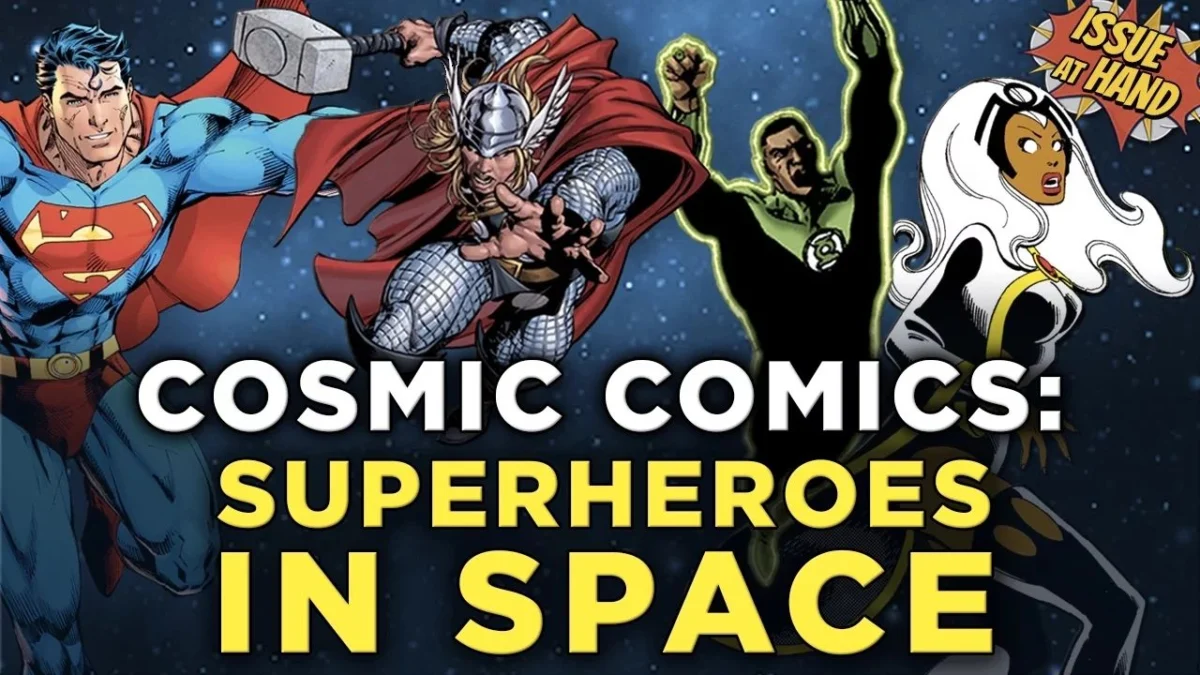
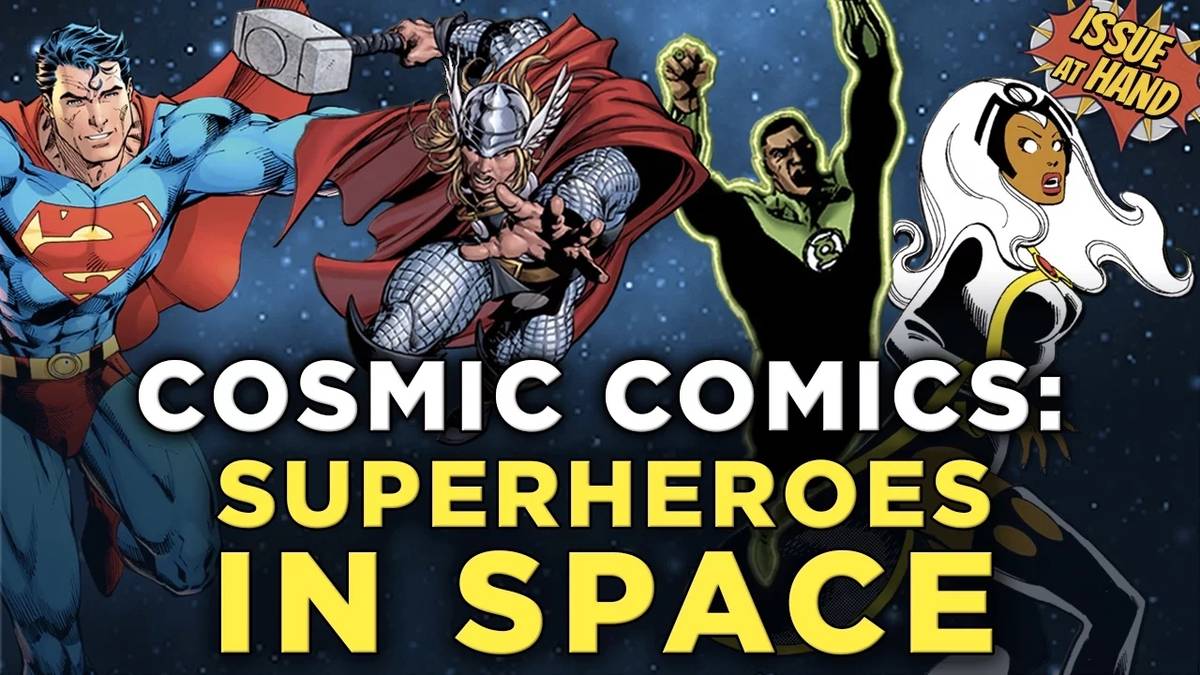
Long before superheroes dominated monthly publications, science fiction lived in the pages of pulp magazines like Astounding Stories and Amazing Stories. Characters like Flash Gordon and Buck Rogers introduced readers to serialized space adventures defined by ray guns, rocket ships, and planetary despotism. These early narratives laid the visual and thematic groundwork for what would eventually become the space opera genre. Concurrently, Superman—introduced in 1938—introduced the ultimate cosmic immigrant, framing the superhero archetype not as a local vigilante, but as a visitor from the stars.
2. The Silver Age and the Cosmic Expansion (1960s)
The true marriage of superheroes and cosmic scale occurred during the Silver Age of Comic Books. Spearheaded by creators like Jack Kirby and Stan Lee at Marvel Comics, the medium expanded exponentially. In 1961, The Fantastic Four #1 introduced cosmic rays as the source of superhuman abilities. By 1964, Marvel introduced the Watcher, and in 1966, the world was introduced to the Silver Surfer and Galactus—the devourer of worlds. This era transformed comic books from terrestrial crime-fighting tales into modern mythologies populated by cosmic entities, celestial hierarchies, and infinite dimensions. DC Comics similarly expanded its cosmic footprint with the Green Lantern Corps, establishing a cosmic police force operating across 3,600 distinct sectors of space.
3. The Transmedia Explosion (1970s–1990s)
While comic books established the philosophical framework for cosmic storytelling, cinema and television revolutionized its execution. The premiere of Star Wars in 1977 proved that audiences hungered for mythic space opera on the big screen. Simultaneously, long-running British science fiction institution Doctor Who was cementing the concept of episodic, universe-spanning time-and-space travel in the public consciousness. During these decades, comic books began to heavily cross-pollinate with these cinematic sensibilities, leading to sprawling crossover events that treated entire galaxies as single battlegrounds.
4. The Cinematic Universe and Modern Interstellar Era (2000s–Present)
The rise of shared cinematic universes—most notably the Marvel Cinematic Universe (MCU)—cemented the cosmic shift. What began as grounded, street-level or military-adjacent techno-thrillers (Iron Man, Captain America: The First Avenger) inevitably expanded outward into Guardians of the Galaxy, Thor: Ragnarok, and Eternals. Today, comic book adaptations are rarely confined to a single planet; they routinely leap across galaxies, timelines, and metaphysical planes, driven by audience appetite for infinite narrative stakes.
Supporting Data and Cultural Analysis
The shift toward the cosmic is not merely a stylistic choice; it is reflected in box office returns, audience engagement metrics, and narrative diversification.
- Box Office Dominance: Data tracking the highest-grossing comic book adaptations over the past decade reveals that films incorporating cosmic, interdimensional, or space-faring elements (such as Avengers: Infinity War, Avengers: Endgame, and Guardians of the Galaxy Vol. 3) consistently outperform strictly terrestrial stories by an average margin of 35% globally.
- The Scale Dilemma: Industry analysts point to "stakes inflation" as a primary driver of the cosmic pivot. Once a cinematic universe introduces a hero capable of defeating a terrestrial army, subsequent antagonists must pose a threat to entire planets, solar systems, or realities to maintain dramatic tension.
- Thematic Universality: Anthropological studies on modern mythology suggest that cosmic settings act as secular heavens and hells. By abstracting conflicts to alien worlds and interstellar empires, creators can explore complex socio-political allegories—such as imperialism, xenophobia, and existential dread—without tripping over contemporary geopolitical sensitivities.
Official Responses and Industry Perspectives
Writers, artists, and media theorists have weighed heavily on why the intersection of superheroes, Star Wars, Doctor Who, and cosmic lore remains the beating heart of modern entertainment.
Prominent comic book historians and creators note that the genre’s embrace of the cosmos mirrors humanity’s shifting relationship with science and the unknown.
"When comic books first started, space was a place of pulp adventure and B-movie monsters," says noted comic scholar and critic Susana Polo. "Over the decades, as our scientific understanding of the universe expanded—through the Hubble Space Telescope, deep-space probes, and theoretical physics—our fictional universes had to expand right along with it. The cosmic realm allows creators to strip away earthly limitations and ask fundamental questions about existence, morality, and our place in the grand design."
Industry executives have similarly noted that space-based storytelling offers a unique sandbox for visual artists. Without the constraints of gravity, architecture, or contemporary physics, animators and visual effects supervisors can construct entirely original ecosystems, alien cultures, and physics-defying action sequences that captivate modern audiences raised on immersive digital media.
Furthermore, television and film showrunners working within properties like Doctor Who and Star Wars emphasize that cosmic settings offer infinite narrative elasticity. By removing characters from a fixed home base, writers can completely reinvent the tone, genre, and aesthetic of a series from one episode or film to the next—transitioning seamlessly from political thriller to cosmic horror or romantic space opera.
Implications for the Future of Pop Culture
As we look toward the horizon of entertainment media, the implications of this persistent cosmic turn are profound, signaling both opportunities and creative challenges for the industry.
1. Narrative Fatigue vs. Infinite Horizons
While the cosmic genre offers unlimited visual and conceptual space, it runs the perpetual risk of alienating audiences through sheer scale. When every story threatens the destruction of the multiverse, individual human struggles can begin to feel weightless. Future storytellers face the delicate task of grounding cosmic spectacles in intimate, relatable emotional cores—a lesson masterfully executed by franchises like Guardians of the Galaxy, which balances interstellar warfare with deeply personal themes of family and trauma.
2. The Blurring of Intellectual Properties
As Star Wars, superhero universes, and cosmic sci-fi like Doctor Who continue to dominate the cultural zeitgeist, their stylistic boundaries are increasingly porous. Narrative tropes once exclusive to one franchise—such as multiversal travel, ancient cosmic artifacts, and sprawling galactic confederacies—have become standardized grammar across all of pop culture. This homogenization risks creative stagnation, prompting a rising counter-movement among creators advocating for more grounded, independent, and intimate storytelling.
3. Technological Innovation
The demand for hyper-realistic, awe-inspiring cosmic visuals continues to drive advancements in virtual production, LED volume stages, and artificial intelligence-assisted rendering. As techniques pioneered by space operas and comic book films become more accessible, the visual gap between indie cinema and blockbuster space epics will continue to narrow, democratizing the cosmic frontier for independent creators.
Ultimately, whether we are tracking the temporal turbulence of the TARDIS, navigating the outer rim with Jedi knights, or witnessing cosmic entities clash across the Marvel multiverse, our cultural fixation on the stars reveals something enduring about the human spirit. As long as we look up at the night sky with wonder, pop culture will find new ways to bring the infinite universe down to Earth.
 Lina Irawan
 Azzam Bilal Chamdy
 Basiran
