

By Anna Lee
September 17, 2026
Main Facts: The Fallout of the Loop Tour Ouster
The intersection of mainstream pop music, billionaire real estate, and geopolitical solidarity has sparked a firestorm across the global cultural landscape. British pop singer Ed Sheeran has found himself at the center of an unprecedented online backlash following his decision to drop American rapper Macklemore from his ongoing Loop Tour. The removal came directly on the heels of Macklemore using his stage time to voice pro-Palestinian sentiments and protest Israel’s military campaign in Gaza.
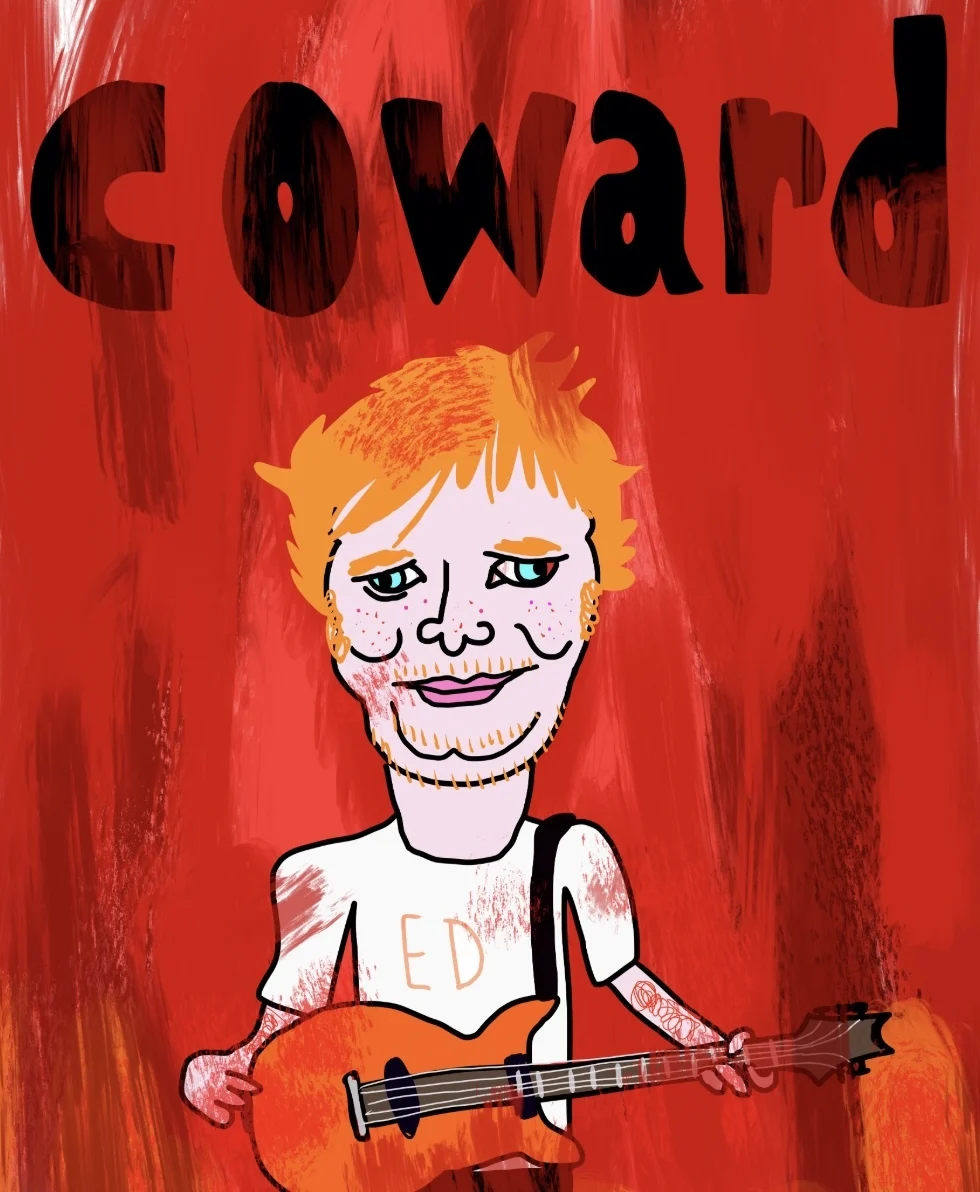
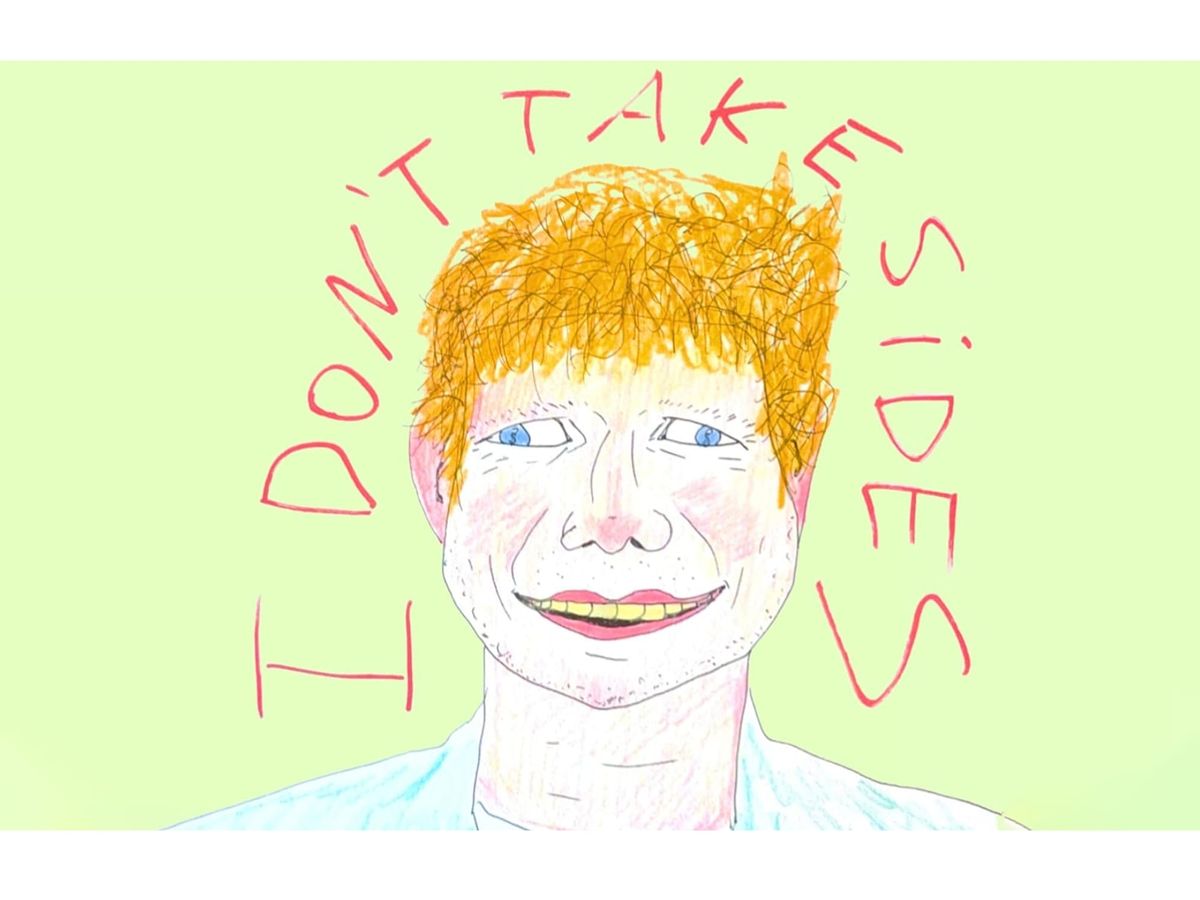
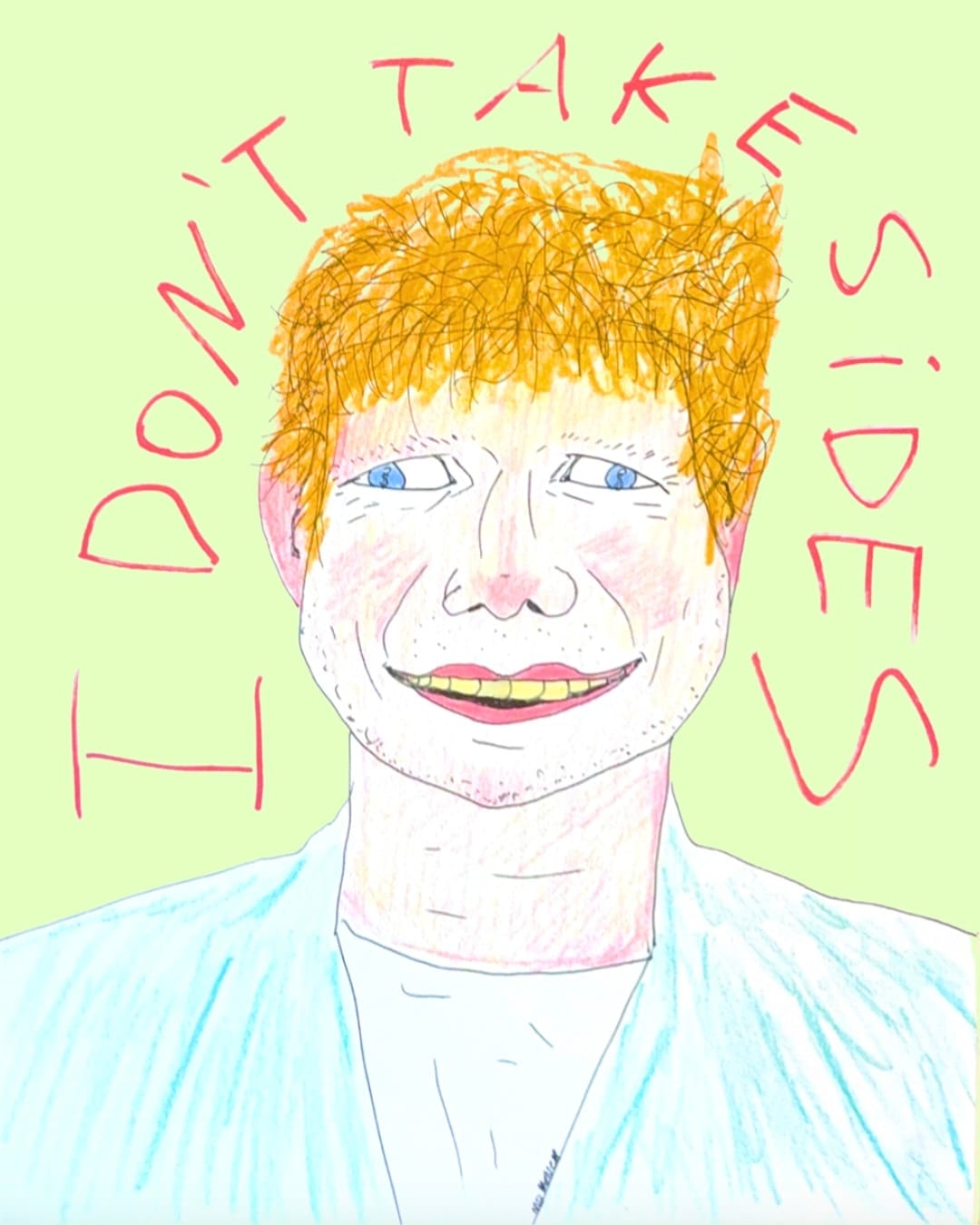
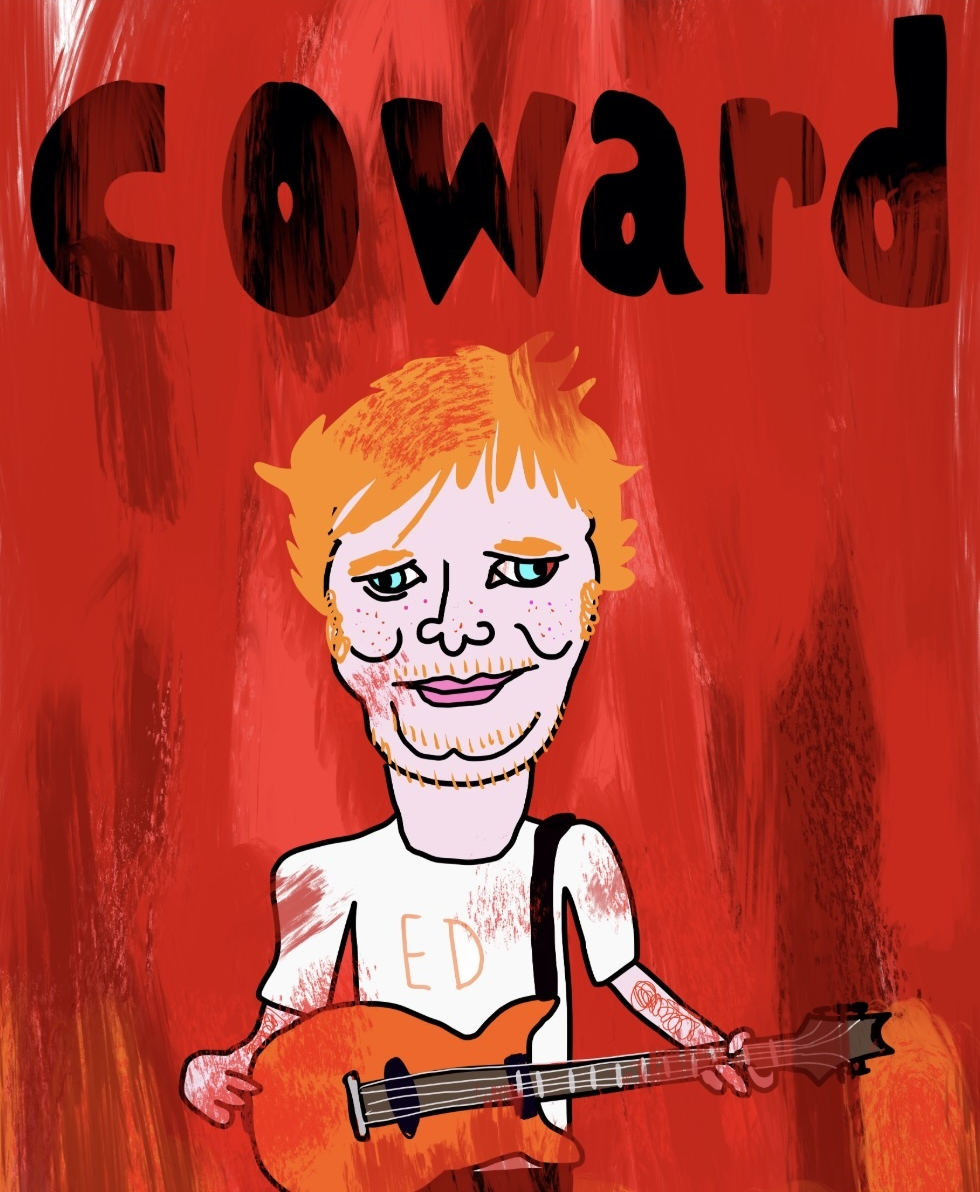
Rather than fading into the background of a typical celebrity disagreement, the incident has catalyzed a massive wave of digital protest art, satirical illustrations, and direct boycotts. Artists, cartoonists, and social media commentators worldwide have seized upon the controversy to scrutinize what they characterize as corporate censorship and a troubling culture of political complicity within the upper echelons of the entertainment industry.
The fallout intensified exponentially hours after Macklemore’s removal, when the tour’s remaining support acts—including Sheeran’s longtime Irish backing band Beoga, Grammy-winning singer-songwriter Finneas O’Connell, Danish pop outfit Lukas Graham, and Irish musician Aaron Rowe—all announced their immediate departure from the tour in solidarity with Palestine and Macklemore. What was billed as a standard international stadium run has rapidly devolved into a public relations crisis for Sheeran, forcing a reckoning over the responsibilities of mega-artists in times of profound geopolitical crisis.
Chronology of Events: From MetLife Stadium to Global Boycott
To understand how a routine concert tour transformed into an international flashpoint, it is necessary to examine the precise sequence of events that unfolded over a frantic two-week period.
- Early September 2026: During a high-profile opening set for Ed Sheeran at New Jersey’s MetLife Stadium, rapper Macklemore delivers a passionate address condemning Israel’s actions in Gaza. During the performance, he dedicates a song to Hind Rajab, a five-year-old Palestinian girl whose tragic death at the hands of Israeli forces in 2024 became a global symbol of civilian suffering. The speech draws immediate ire from pro-Israel organizations and public figures, notably singer Pink, who reposts an Instagram statement accusing Macklemore of hijacking a mainstream entertainment event to wage a "political nightmare against the Jewish state."
- Mid-September 2026: Pressure mounts behind the scenes regarding upcoming tour stops, notably at venues tied to powerful corporate and billionaire stakeholders. According to subsequent statements, tour organizers face intense scrutiny over the political discourse surrounding the stage.
- Shortly After: Ed Sheeran makes the executive decision to remove Macklemore from the Loop Tour lineup.
- The Same Day: Macklemore publishes an extensive statement on Instagram detailing the ouster. He claims that Sheeran "bent the knee" to billionaire Robert Kraft—whose company owns a prominent venue on the tour itinerary—and notes that Sheeran privately confided that phrases like "Free Palestine" and the display of the Palestinian flag were deemed "hurtful" by corporate stakeholders and contacts.
- Within 24 Hours of the Ouster: Sheeran releases his own defensive statement on Instagram, arguing that removing Macklemore was not his personal choice, but rather a mandate enforced by Kraft and external tour promoters. However, this defense fails to quell public anger; instead, critics amplify their attacks, focusing on Sheeran’s refusal to intervene or leverage his massive platform to defend artistic expression.
- Immediate Aftermath: In a stunning display of solidarity, all four remaining support acts—Beoga, Finneas O’Connell, Lukas Graham, and Aaron Rowe—publicly sever ties with the Loop Tour, leaving Sheeran’s logistical framework in disarray. Simultaneously, visual artists, cartoonists, and meme creators flood social media platforms with satirical critiques targeting the British pop star.
Supporting Data and Creative Outcry: The Digital Backlash
The speed and creativity with which the artistic community mobilized against Sheeran’s decision underscores a deep-seated frustration with celebrity neutrality. Social media platforms—particularly Instagram, X (formerly Twitter), and TikTok—became galleries for political cartoonists and independent creators seeking to hold the pop star accountable.

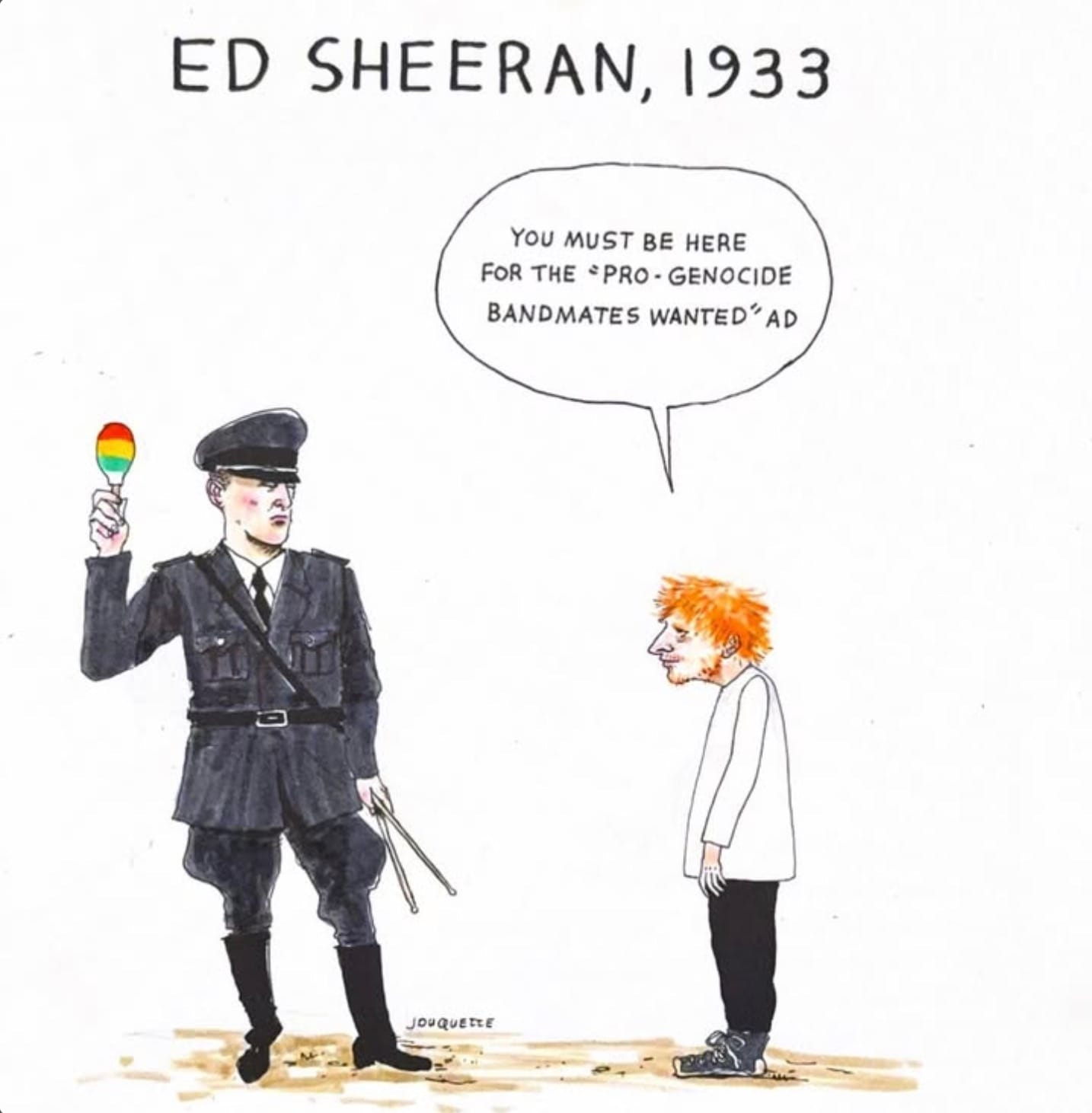
Chicago-based cartoonist Jesse Duquette captured the prevailing sentiment with a sharp illustration titled "Ed Sheeran, 1933," which cheekily critiqued the musician’s compliance with authoritarian pressures. Accompanying the piece, Duquette quipped, "Who knew his music would be the second worst thing about him."
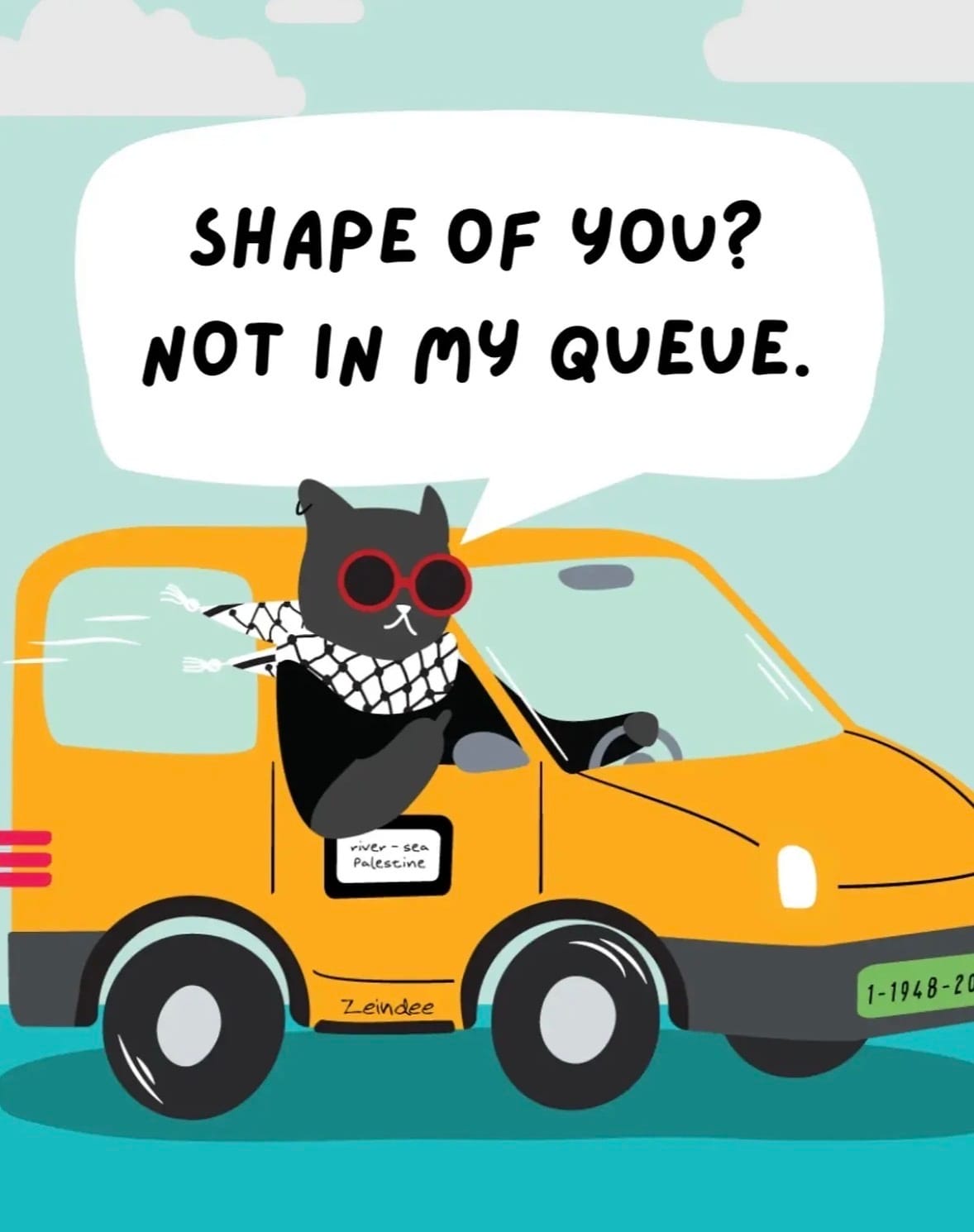
Political cartoonist Benjamin Slyngstad contributed a biting visual commentary depicting Sheeran serenading a military missile with lyrics from his 2017 chart-topping hit "Shape of You." Meanwhile, Palestinian illustrator @zeindee launched a viral visual "diss track" series, modifying Sheeran’s famous song titles and imagery into anti-tour memes, accompanied by the slogan: "Shape of You? Not in my queue." Another widely shared graphic by illustrator @kazvaremadeit featured British actor Aaron Pierre urging Sheeran to "speak up," directly challenging the musician’s historical aversion to political commentary.
Data compiled from social media engagement metrics indicates that posts featuring protest art related to the Sheeran-Macklemore controversy generated millions of impressions within a 72-hour window, outperforming standard entertainment news cycles. This digital uprising reflects a broader demographic shift: younger audiences and independent artists increasingly demand that cultural icons abandon safe, apolitical stances when human rights violations are at stake.
Official Responses and Public Statements
The public relations strategies deployed by the key figures involved reveal a stark divide between corporate risk aversion, artistic justification, and grassroots accountability.
Ed Sheeran’s Defense
In his official Instagram statement, Sheeran sought to distance himself from the direct mechanics of Macklemore’s termination. He emphasized that the decision was forced upon him by external forces—specifically naming billionaire Robert Kraft and key venue promoters. Sheeran maintained that his primary goal had always been to unite audiences through music rather than divide them. However, media analysts and legal commentators noted that by attempting to pass the blame onto corporate ownership, Sheeran inadvertently highlighted the deep structural subordination of artists to corporate financial interests.
Macklemore’s Revelations
Macklemore’s statement offered a rare, unvarnished look at backstage negotiations within major tours. By revealing that Sheeran had privately admitted to the "hurtful" nature of Palestinian solidarity flags to certain stakeholders, Macklemore exposed the private anxieties driving public celebrity behavior. The rapper framed his dismissal not as an isolated administrative dispute, but as evidence of a systemic double standard where Palestinian lives and advocacy are routinely silenced under the guise of maintaining "neutrality."
The Defecting Artists
The collective departure of Beoga, Finneas O’Connell, Lukas Graham, and Aaron Rowe sent an unmistakable message. By sacrificing their own spots on a lucrative international tour, these artists rejected the premise that commercial success should supersede moral integrity. Their joint actions effectively neutralized the tour’s economic viability in several markets and validated Macklemore’s narrative regarding industry-wide censorship.
Broader Implications for the Music Industry and Celebrity Activism
The Ed Sheeran tour crisis is much more than a transient celebrity gossip item; it serves as a watershed moment for the modern entertainment industry, carrying profound implications across several fronts:
1. The Myth of Apolitical Entertainment
For decades, major pop stars have been advised by publicists and management teams to remain strictly apolitical to maximize market share and avoid alienating diverse consumer bases. The backlash against Sheeran demonstrates that "neutrality" is no longer viewed as a safe harbor by the public. In an era defined by hyper-visible humanitarian crises, maintaining silence is increasingly interpreted by audiences and fellow artists as active complicity with oppression.
2. Corporate Control Versus Artistic Freedom
The involvement of billionaire stakeholders like Robert Kraft in tour-level decisions lays bare the uncomfortable reality of contemporary stadium pop: massive tours are corporate franchises first, and artistic endeavors second. When venue owners and corporate sponsors can unilaterally purge artists for expressing solidarity with oppressed populations, the autonomy of even the world’s biggest musicians is called into question. This incident may prompt artists to negotiate stricter contractual safeguards regarding free speech and political expression in future touring agreements.
3. The Power of Horizontal Solidarity
The rapid, unhesitating defection of the tour’s support acts illustrates a new paradigm of industry solidarity. Historically, opening acts rarely jeopardize their own financial standing to protest headliner decisions. The choice made by Finneas, Beoga, Lukas Graham, and Aaron Rowe signals a growing willingness among artists to use collective action to enforce ethical standards within the industry, bypassing traditional union channels to make an immediate, tangible economic impact.
4. Art as Resistance in the Digital Age
Finally, the explosion of memes, political cartoons, and illustrations demonstrates how digital-native communities weaponize creativity to counter corporate narratives. When traditional media outlets and PR machines attempt to sanitize or downplay controversies, independent artists step into the breach, turning satirical imagery into a potent form of political critique that resonates globally.
As the dust settles on the Loop Tour debacle, Ed Sheeran’s brand has sustained reputational damage that will be difficult to repair. More importantly, the episode has permanently altered the conversation surrounding celebrity responsibility, proving that the costs of silence in the face of humanitarian catastrophe are higher than ever before.
 Iffa Jayyana
 Muslim
