

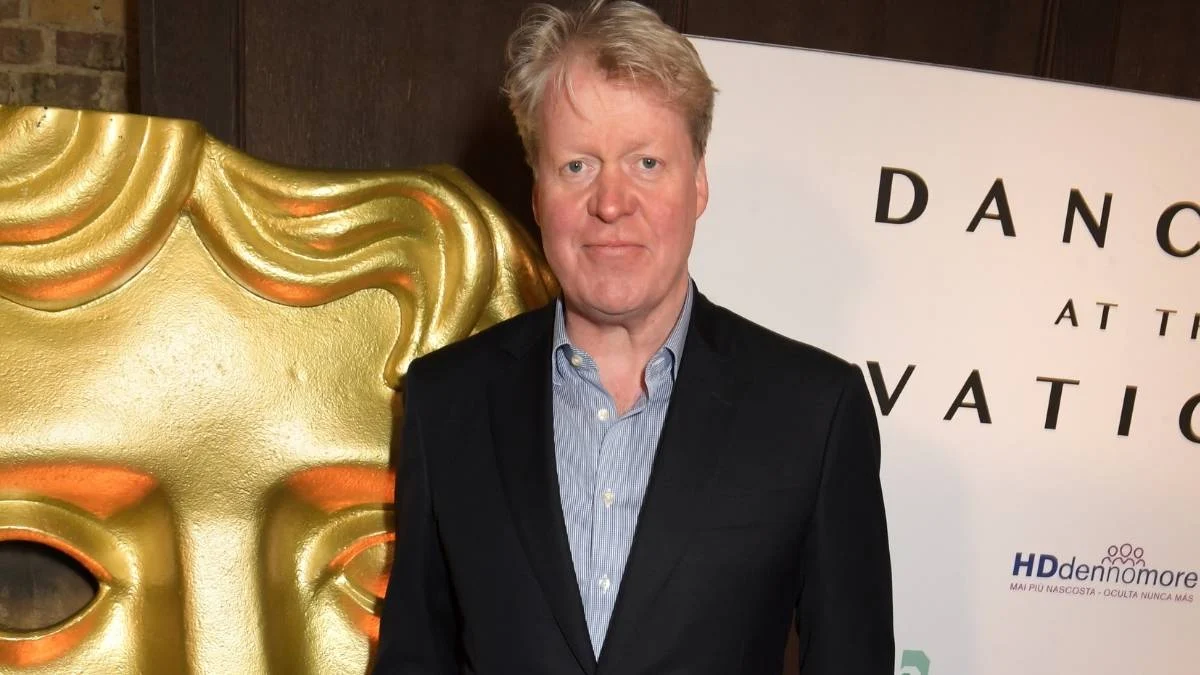
In the decades since the tragic passing of Diana, Princess of Wales, the narrative surrounding her life, her death, and the subsequent funeral arrangements has remained a subject of intense public fascination and scholarly scrutiny. However, fresh revelations from Charles Spencer, the 9th Earl Spencer, threaten to rewrite the established history of those somber days in August and September 1997. In his highly anticipated forthcoming memoir, Swan Song: Diana My Sister, the Earl details a series of clashes with the royal establishment, alleging that the Palace exercised undue control over the funeral proceedings while actively misleading the Spencer family during their time of profound grief.
The Funeral Request: A Disputed Musical Legacy
At the heart of the controversy is a specific request regarding the liturgical music for the funeral service at Westminster Abbey. According to the excerpts published by the Daily Mail, the Spencer family sought to honor a personal wish of the late Princess.
“My sisters knew that Diana had always wanted Mozart’s Requiem to be played for her after her death,” Earl Spencer writes. Given the gravity of the occasion and the profound influence of the Princess’s own preferences, the Spencer family assumed that their request would be accommodated. Instead, they were met with a rigid bureaucratic refusal.
The Earl recounts that he was informed by palace officials that “no part of a requiem can be played at a Church of England funeral.” At the time, in the haze of shock and mourning, the family accepted this explanation as a matter of ecclesiastical protocol. However, as the Earl has reflected on those days with the benefit of time and research, he has come to view that refusal as part of a pattern of manipulation. “I later found out that was not the case,” he writes. “It was the first of several untruths that the authorities would push my way at that time.”
This revelation strikes at the core of the long-standing tension between the House of Windsor and the Spencer family. It suggests that the Palace’s control over the funeral was not merely about maintaining decorum, but was, in the Earl’s estimation, a deliberate act of obstruction that stripped the family of their agency in honoring their daughter and sister.
Chronology of the 1997 Transition
To understand the weight of these new claims, it is necessary to re-examine the timeline of the days following the crash in the Pont de l’Alma tunnel in Paris on August 31, 1997.
- August 31, 1997: Diana, Princess of Wales, dies following a high-speed car crash in Paris. The world is plunged into mourning.
- September 1–5, 1997: The days leading up to the funeral are marked by a deep, palpable silence from the Royal Family, who remained at Balmoral. This led to a significant public backlash, forcing the Palace to reconsider the protocol surrounding a non-working member of the Royal Family.
- September 6, 1997: The funeral takes place at Westminster Abbey. Earl Spencer delivers a blistering, epoch-defining eulogy that publicly challenged the treatment of his sister.
- September 1997 – 2024: For twenty-seven years, the details of the negotiations behind the scenes remained largely shielded by the veil of royal privacy.
- Late 2024: The release of excerpts from Swan Song: Diana My Sister brings these long-buried disagreements back to the forefront of the public consciousness.
The Atmosphere at the Palace: Kindness vs. Coldness
Beyond the specific disagreement over music, Earl Spencer’s memoir provides a harrowing look into the emotional environment of the royal household in the immediate aftermath of the tragedy. While he acknowledges that there were individuals who approached the Spencer family with genuine compassion, he paints a chilling portrait of others who seemed entirely detached from the humanity of the situation.
The Earl alleges that there were members of the royal household who seemed openly “relieved” that the Princess was no longer present to challenge the status quo. This sentiment—that Diana was a disruptive force whose absence might return a sense of order to the institution—is perhaps the most damaging claim in the book. It echoes the long-held suspicion that the Princess was treated as an outsider, even in death, by those who found her influence and popularity difficult to manage.
Supporting Data and Historical Context
The conflict surrounding the funeral music is not an isolated incident but rather a manifestation of a larger, systemic struggle between the Royal Family and the Spencer family regarding the ownership of Diana’s legacy.
Historically, the Church of England has maintained strict guidelines for funerals, but these are often subject to negotiation for high-profile figures. The claim that a Requiem would be prohibited is factually contentious; while a full Roman Catholic Requiem Mass might be liturgically inconsistent with Anglican tradition, selections of classical sacred music are frequently incorporated into royal funerals. The fact that the Palace cited a rule that may not have existed—or was, at the very least, selectively applied—lends weight to the Earl’s assertion that the Palace was intentionally limiting the Spencer family’s influence over the service.
Furthermore, these revelations coincide with a period of heightened sensitivity regarding the Princess’s memory. As the 30th anniversary of her death approaches in 2027, the battle over her narrative has intensified, involving not just the original participants but the next generation of royals as well.
The Implications: A New Rift in the House of Windsor
The timing of Earl Spencer’s revelations is particularly volatile, given the ongoing, well-documented estrangement between Prince William and Prince Harry. The narrative surrounding the Princess is the primary currency in this modern royal drama, and every new piece of information regarding her life and death is scrutinized for how it might impact the current rift.
Reports have circulated suggesting that Prince Harry, in collaboration with Meghan Markle, is in the early stages of producing a documentary film centered on his mother’s life, intended for release around the 30th anniversary. Royal commentators, such as Kinsey Schofield, have warned that such a project could serve as a major point of contention.
“If the documentary begins using Diana’s experiences to reinforce Harry and Meghan’s existing narrative about themselves, I think that would be where it becomes too much for William,” Schofield stated in an interview with Fox News Digital. The fear, from the perspective of the Prince of Wales, is that his mother’s legacy is being commodified or utilized as a tool in a broader cultural conflict.
The publication of Swan Song creates a challenging backdrop for these rumors. If the Spencer family—who have traditionally been seen as allies of the Sussexes—is now publicly airing grievances about the Palace’s historical treatment of Diana, it potentially emboldens Harry’s narrative that the institution is, and always has been, cold and manipulative.
Institutional Response and Future Scrutiny
As of the time of writing, Buckingham Palace has maintained its standard position of not commenting on the personal memoirs of individuals outside the immediate royal circle. However, the lack of an official response does not diminish the impact of these claims. The Palace is currently navigating a period of transition, with King Charles III facing his own health challenges and the monarchy seeking to modernize its image for a skeptical public.
The Earl’s memoir will likely serve as a catalyst for a broader re-evaluation of how the Royal Family handles grief and public perception. By highlighting the “untruths” he claims were told to him in 1997, Spencer is challenging the infallibility of the Palace’s historical record.
Historians will now be tasked with digging into the archives to see if these “untruths” extended beyond the musical choices at the funeral. Was there a broader effort to sanitize the narrative of Diana’s final days? To what extent was the Spencer family excluded from the decision-making process in a way that violated their rights as next-of-kin?
Conclusion
The release of Swan Song: Diana My Sister marks a significant moment in the ongoing legacy of Princess Diana. It is a reminder that the trauma of 1997 remains an open wound for many of those who were closest to her. While the Royal Family has spent decades attempting to integrate Diana’s legacy into their own historical narrative, Earl Spencer’s words provide a sharp, necessary counterpoint—a reminder that the woman who was “The People’s Princess” was also a daughter, a sister, and a human being whose final wishes were subject to the cold machinery of an institution that often prioritized protocol over the personal.
As the 30th anniversary of her death approaches, the debate over who truly owns the memory of Diana, Princess of Wales, shows no signs of abating. With the Earl bringing these long-held secrets into the light, the conversation has moved beyond mere nostalgia and into the realm of accountability. Whether this will lead to a broader reconciliation or further deepen the divisions within the Royal Family remains to be seen. What is certain, however, is that the story of Diana is far from settled, and every new chapter written by those who knew her best serves to complicate the myth and clarify the tragedy of her short, impactful life.
 Dwi Wanna
 Iffa Jayyana
