

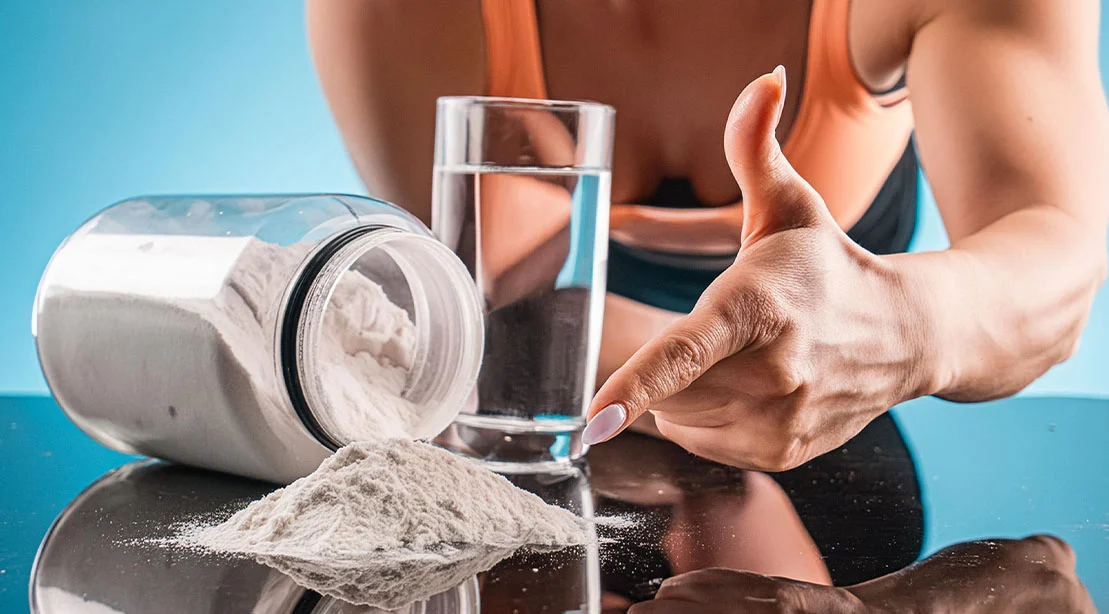
For three decades, creatine monohydrate has occupied the most unassuming shelf in the supplement aisle. While flashy, neon-labeled canisters promising "anabolic windows" and "hyper-growth matrices" have come and gone, discarded by the fickle tides of fitness trends, creatine has remained. It is a humble, tasteless white powder—the utility player of the sports nutrition world. Despite being arguably the most rigorously studied ergogenic aid in human history, it has long been unfairly stigmatized, particularly among women.
That is finally beginning to change. As new research emerges, the sports science community is shifting its focus toward a demographic that has been historically overlooked in performance supplementation: the female athlete.
The Main Facts: Demystifying the Molecule
At its core, creatine is a nitrogenous organic acid that helps supply energy to cells throughout the body, particularly muscle cells. It works by increasing the availability of phosphocreatine, which helps regenerate adenosine triphosphate (ATP)—the primary energy currency of the body—during short bursts of high-intensity activity.
For years, the fitness industry marketed creatine almost exclusively to men, fueling a persistent myth that it causes women to "bulk up" or gain excessive, unwanted weight. However, the science tells a far more nuanced story. Creatine is not a hormonal agent; it does not alter testosterone or estrogen levels, and it does not possess the capacity to trigger spontaneous, massive hypertrophy. It is a fuel-delivery system, plain and simple.
A Chronology of Clinical Interest
The trajectory of creatine research has been a long, slow burn. Early studies in the 1990s focused almost exclusively on male collegiate athletes and powerlifters. The data was overwhelmingly positive, establishing creatine as a gold standard for performance. However, for the next twenty years, women were largely absent from these clinical trials.
This oversight was not necessarily malicious, but rather a byproduct of "male-normative" research models. It wasn’t until the mid-2010s that researchers began to push for sex-specific data. This culminated in a significant surge of interest between 2020 and 2026, leading to a wave of systematic reviews and meta-analyses that finally addressed the unique physiological requirements of female physiology, including the impact of the menstrual cycle and hormonal fluctuations on supplement efficacy.
Supporting Data: What the 2026 Meta-Analysis Reveals
A landmark systematic review and meta-analysis published on September 4, 2026, provides the most comprehensive look to date at creatine’s role in female performance. Researchers conducted an exhaustive screening of over 13,000 records, eventually narrowing their focus to 34 high-quality studies representing 692 female participants.
The findings, while not "earth-shattering" in a cinematic sense, are statistically significant. The study reported:
- Performance Benefits: A standardized effect size of approximately 0.30, indicating a clear, measurable improvement in high-intensity performance.
- Body Composition: A positive effect size of 0.24, suggesting meaningful improvements in lean mass retention and development.
It is critical to interpret these numbers with professional restraint. As the authors noted, the certainty of the overall evidence is categorized as "low to moderate" because of the heterogeneity of the studies—ranging from elite soccer players to recreational gym-goers. Nevertheless, the trend is undeniable: creatine provides a marginal but consistent edge. In the world of competitive sports, where the difference between victory and defeat is often measured in milliseconds or millimeters, that marginal gain is everything.
Postmenopausal Health: A New Frontier
Perhaps the most compelling evidence for creatine in women lies in the postmenopausal demographic. A second 2026 meta-analysis, focusing on 608 postmenopausal women across seven randomized trials, found that creatine is a potent ally in the fight against sarcopenia—the age-related loss of muscle mass and strength.
The data indicated that when postmenopausal women supplemented with at least five grams of creatine daily in conjunction with structured resistance training, they experienced significant gains in leg-press strength and lean body mass. This has profound implications for bone density, metabolic health, and the prevention of frailty in aging populations.
Addressing the "Bulk" Myth: Why Fear is Misplaced
The most common barrier to creatine adoption among women remains the fear of weight gain. Fitness marketing has long conditioned the public to believe that any supplement causing a change in scale weight is inherently bad.
It is time to be clear: Creatine can increase intracellular water retention. This is not "fat gain," nor is it the "bulky" look that many fear. It is hydration within the muscle cell, which is essential for optimal performance and metabolic function. To suggest that a simple amino acid derivative will cause a woman to wake up with the physique of a professional bodybuilder is, to put it plainly, a misunderstanding of biology. A woman will no more "accidentally" become a massive bodybuilder through creatine use than she would become an Olympic sprinter by wearing high-performance running shoes.
Official Responses and Expert Consensus
Leading sports dietitians and exercise physiologists have increasingly vocalized their support for creatine as a safe, effective, and ethical supplement. The consensus is that while creatine is not a "magic pill"—it will not replace proper nutrition, adequate sleep, or a consistent training program—it serves as an excellent foundational tool.
"We need to stop viewing supplements as shortcuts," says one leading sports nutritionist. "Creatine is an investment in your training capacity. It allows you to train harder, recover slightly faster, and maintain higher intensity over the course of a workout. That is where the results come from—the training, not the powder itself."
Implications for the Modern Female Athlete
What does this mean for the everyday woman looking to improve her fitness? The implications are threefold:
- Dosing Consistency: The research suggests that the benefits are tied to consistent, daily intake rather than sporadic, pre-workout doses. Five grams per day is the standard recommendation to ensure muscle creatine stores remain saturated.
- Training Integration: Creatine is most effective when paired with a stimulus. It is not a supplement for the sedentary. To see the benefits in strength and lean mass, one must engage in consistent resistance training or high-intensity interval training.
- Managing Expectations: Creatine is an ergogenic aid, not a miracle worker. It will not melt fat, nor will it serve as a substitute for a caloric deficit or surplus depending on the user’s goals. It is, however, a reliable way to ensure the body has the energy reserves necessary to perform at its peak.
Conclusion: The Quiet Revolution
The most exciting development in the world of sports nutrition isn’t a new, proprietary blend with a futuristic name. It is the realization that a boring, inexpensive, and well-researched substance—creatine monohydrate—has been sitting in front of us the entire time.
As we move forward, the focus must remain on dismantling the myths that have prevented women from utilizing one of the most effective tools in the fitness arsenal. We are entering an era where evidence-based practice is finally overcoming outdated marketing tropes. Creatine is not for men, and it is not for women; it is for athletes. And for the woman who is tired of the noise, the fads, and the "miracle" promises, the truth is refreshingly simple: it works.
 Nana
Nana
 Iffa Jayyana
 Reynand Wu
