

By Olivia Tauber | September 11, 2026
Picture a classic college fraternity lawn on a bright Saturday afternoon. For decades, the mental image was standard: towering stacks of red Solo cups, heavy basslines vibrating from outdoor speakers, crowds of students shoulder-to-shoulder under the sun, and the ubiquitous scent of cheap light beer.
Today, however, an entirely different scene is unfolding across major American university campuses. Instead of pounding cans of seltzer or playing beer pong, hundreds of students are rolling out yoga mats, lacing up running shoes, or queuing up for a post-workout matcha latte. Welcome to the era of the "wellness darty."
A portmanteau of "day party" and "wellness," this emerging cultural phenomenon merges the highly social, celebratory atmosphere of a traditional daytime college party with the rigorous, aesthetic-driven habits of a modern boutique fitness studio. While music still plays and crowds gather, alcohol has officially stepped down as the guest of honor. Instead, the itinerary for a Saturday afternoon might include mat Pilates, a group 5K run, breathwork, an ice bath, or a sauna session—often hosted right on the front lawn of a campus fraternity house.
Main Facts: The Anatomy of a Wellness Darty
The shift is not happening in isolated corners; it is sweeping through powerhouse party schools. Over the past year, wellness darties have drawn massive crowds at institutions traditionally famous for conventional Greek life, including the University of Miami, the University of Florida, Florida State University, Syracuse University, and the University of Alabama.

Local fitness and wellness communities—such as Peak Pulse in Florida, Sweat & Soak in Alabama, and The Wellness Society at Syracuse—have spearheaded these events. Rather than relying on traditional Greek organizations to drive social calendars entirely through binge drinking, these groups are partnering with fraternities and student organizations to utilize campus spaces for high-energy, health-conscious gatherings.
Key elements of a modern wellness darty include:
- Structured Physical Activity: Group runs, bootcamps, and outdoor mat Pilates classes led by local instructors.
- Recovery and Biohacking: Pop-up cold plunges, portable saunas, and compression boot stations.
- Functional Beverages: Swapping out kegs for iced matcha lattes, cold brew coffee, functional sodas, and electrolyte mocktails.
- Aesthetic Uniformity: Attendees uniformly outfitted in matching activewear, coordinating running shorts, and brand-sponsored wellness gear.
Chronology: From Digital Aesthetics to Campus Lawns
The roots of the wellness darty can be traced back to the hyper-curated online lifestyle content that has dominated Gen Z’s digital feeds over the past half-decade.
- The Late 2010s to 2020: The rise of the "clean girl" aesthetic, popularized by digital creators and influencers like Hailey Bieber, began to turn healthy habits—slicked-back hair, dewy skin, green juice, and coordinated workout sets—into aspirational markers of status and self-care.
- The Post-Pandemic Fitness Boom: As campuses returned to in-person learning, student interest in physical fitness surged. Fitness subcultures like run clubs and boutique Pilates transformed from solitary routines into deeply social experiences.
- Late 2024 to 2025: Grassroots wellness groups began experimenting with public workouts in unconventional spaces. The concept crossed paths with Greek life when student organizers realized fraternity lawns offered the ideal square footage to host large-scale community events.
- Early 2026: The trend reached critical mass when Aydan Child, founder of the Florida-based wellness community Peak Pulse, posted a TikTok of hundreds of students gathered outside a University of Florida fraternity house for a massive stretching and workout session. The viral video, captioned "Imagine explaining a wellness darty to someone who went to college in 2012," sparked massive internet debate, millions of views, and national media coverage.
Supporting Data: Changing Habits and Shifting Wallets
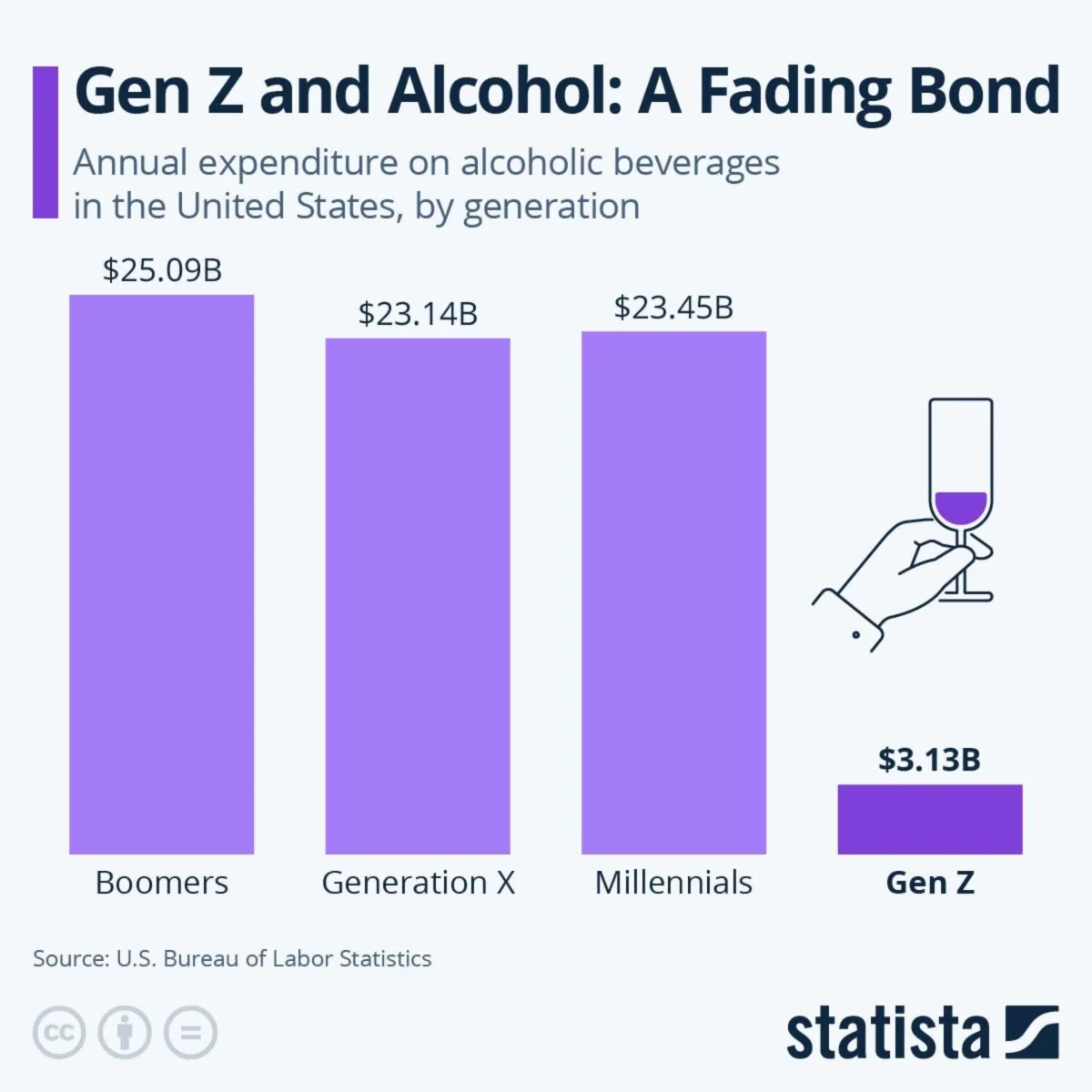
The sudden popularity of the wellness darty is backed by a mountain of cultural and economic data pointing to a fundamental shift in how young adults view health, leisure, and alcohol.
The Decline of Youth Drinking
According to landmark data from Gallup, the proportion of adults under 35 who report drinking alcohol dropped significantly from 72 percent between 2001 and 2003 to 62 percent between 2021 and 2023. Furthermore, a 2023 Gallup survey revealed that 52 percent of Gen Z respondents consider moderate drinking to be unhealthy, a sharp increase from 34 percent just five years prior.

This trend is not isolated to the United States. Public health researchers have documented sustained declines in youth drinking across England, Sweden, Australia, and Iceland. Academic studies, including research from the University of Michigan and institutions in the UK, cite several drivers behind this retreat from alcohol: financial pressures, a desire to avoid debilitating hangovers, academic stress, and an acute awareness of digital footprints. As Northeastern University historian Malcolm Purinton noted in interviews, today’s students are acutely conscious of the risk of going viral for unwanted behavior: "People don’t want to go viral for intoxication, whether in high school or college."
The Ascendancy of the Wellness Economy
While alcohol consumption is down, spending on personal health is skyrocketing. McKinsey & Company’s wellness research reports that 56 percent of surveyed U.S. Gen Z consumers consider fitness a "very high priority," compared to roughly 40 percent of U.S. consumers overall. Additionally, despite making up approximately 36 percent of the adult population, Gen Z and millennials account for over 41 percent of annual U.S. wellness spending.
Event ticketing data tells a similar story. According to insights from Eventbrite, "soft clubbing" and alternative social events are experiencing exponential growth. Attendance at morning raves has risen by 20 percent, while events centered around coffee clubbing, saunas, and ice baths have surged by 478 percent and 256 percent, respectively.
Official Responses and Perspectives
Reactions to the wellness darty have exposed a generational chasm in how people define the college experience.
The Student Perspective
For the students organizing and attending these events, the wellness darty solves a very modern social dilemma: how to make friends and build community without the crutch of alcohol.

Riley Meyer, a University of Alabama sophomore who helped coordinate a Sweat & Soak event, explained the motivation to USA Today: "I think my generation… does have a problem with socialization, especially without the context of alcohol at a party, and I think that when you have an activity built in, it gives you something to do."
Crucially, students emphasize that the wellness darty is an addition to their social lives, not an outright replacement for traditional nightlife. Many attendees note that they can complete a morning run or Pilates class, go home to rest, and still choose to go out to a bar or party later that evening.
The Internet Debate
Online, however, the trend has been met with a mix of fascination, confusion, and mild horror from older generations. Viral posts on X (formerly Twitter) labeled the footage "truly bone-chilling" and questioned why college students were "cosplaying as 30-something matcha/pilates/corporate warriors."
Millennials and older alumni online have expressed nostalgia for the chaotic freedom, heavy laughter, and unfiltered spontaneity of traditional college parties, arguing that the modern obsession with self-optimization strips away the messy imperfections of youth. As one online commenter put it: "I think it’s generally because our generation is too fixated on optimizing everything. There is beauty in imperfection."
Conversely, Gen Z defenders online have pushed back against the criticism, questioning why an event encouraging health consciousness and community building would be met with hostility.

Implications: What the Wellness Darty Means for the Future
The emergence of the wellness darty carries significant implications for various industries, campus culture, and the broader social landscape:
- The Evolution of Greek Life: Fraternities and sororities, historically tied exclusively to the heavy-drinking party economy, are discovering that hosting health-centric events enhances their public image, avoids university disciplinary action, and attracts a broader, more diverse pool of prospective members.
- Shifts in Hospitality and Beverage Brands: Alcohol brands are facing an uphill battle with younger demographics. Beverage giants are increasingly forced to pivot toward non-alcoholic options, functional functional beverages, adaptogenic drinks, and premium matcha products to remain relevant on college campuses.
- The Pressure of "Optimized" Leisure: Sociologists point out a potential shadow side to the trend: the pressure to turn every waking hour—even social gatherings—into an opportunity for self-improvement, productivity, and physical perfection. When relaxation becomes a workout, downtime can begin to feel like labor.
- A Lasting Social Blueprint: Whether the specific term "wellness darty" remains a fleeting campus buzzword or solidifies into a long-term tradition, it signals a permanent diversification of college social life.
Ultimately, the wellness darty proves that today’s college students still deeply crave community, shared rituals, and weekend plans—they are simply choosing to pursue them with a clear head, a matching activewear set, and a matcha in hand.
 Azzam Bilal Chamdy
 Muslim
