

One of the most fiercely discussed and critically lauded films to emerge from the recent international fall festival circuit is the Israeli documentary Naza. As it prepares for its highly anticipated U.S. premiere at the New York Film Festival and a subsequent nationwide theatrical rollout, the film has moved beyond the sphere of cinema to become a flashpoint for intense geopolitical debate. With its clinical dissection of the intersection between artificial intelligence and modern warfare, Naza is not merely a documentary; it is a profound, deeply uncomfortable challenge to the status quo of international conflict.
The Premise: Surveillance as Architecture
The title of the film is an acronym derived from the Hebrew term nezek agavi, which translates to "collateral damage"—the sterile, bureaucratic euphemism frequently employed by the Israeli military to describe the deaths of civilians.
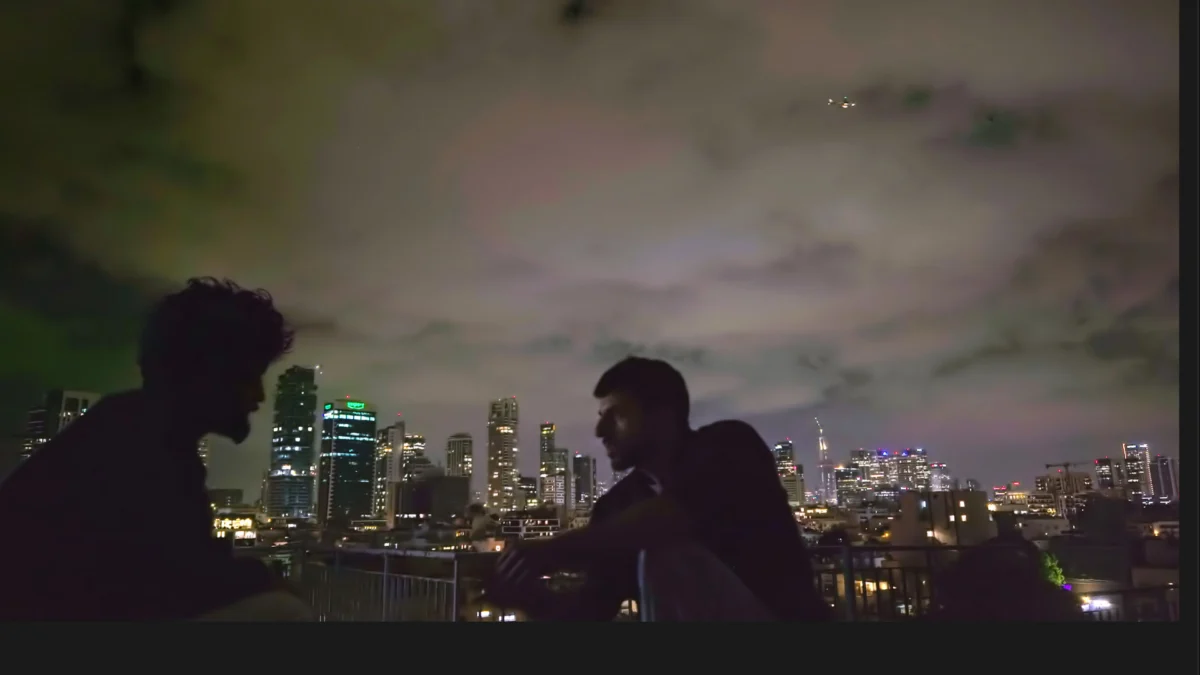
Naza is built upon a foundation of harrowing testimony. Directed by Yuval Abraham and Rachel Szor, the film presents interviews with 24 anonymous members of the Israeli intelligence apparatus. These individuals, filmed in shadow against the backdrop of Tel Aviv rooftops, provide a granular, often chilling account of their roles in the ongoing conflict in Gaza.
The film meticulously details how sophisticated mass surveillance systems and predictive AI technologies were leveraged in the aftermath of the October 7, 2023, attacks. The subjects explain the mechanics of these systems, describing the targeting processes with a level of detachment that has left festival audiences visibly shaken. By focusing on the "machinery" of the operation, Naza forces the viewer to confront the terrifying reality of algorithmic warfare—where human lives are reduced to data points and tactical outputs.
The Creative Team: A Proven Pedigree
The production of Naza is anchored by a team that has already demonstrated a willingness to engage with the most volatile subjects in contemporary geopolitics. Yuval Abraham and Rachel Szor are well-known to festival audiences; they were the Israeli contingent of the collective behind the 2024 documentary No Other Land, a film that garnered significant international acclaim for its documentation of life in the West Bank.
The project is further bolstered by the involvement of executive producer Jonathan Glazer. Glazer, who secured an Academy Award for The Zone of Interest in 2023, famously used his acceptance speech to condemn the occupation of Palestine—a stance that triggered a firestorm of criticism from various corners of the entertainment industry. Glazer’s refusal to walk back those comments, coupled with the involvement of his longtime producer James Wilson (via JW Films), has imbued Naza with an added layer of ideological weight. Additionally, the film’s co-production by The Guardian marks a rare venture for the newspaper into the realm of documentary film, signaling the project’s perceived journalistic importance.

Chronology of a Cultural Phenomenon
The ascent of Naza has been nothing short of meteoric, moving rapidly from industry whispers to a global cultural event.
- World Premiere (Venice): The film’s debut at the Venice Film Festival was marked by a staggering 25-minute standing ovation—a duration that effectively reset the record books for the festival. It was not merely a polite acknowledgement; it was an act of collective intensity. The film competed for the Golden Lion and ultimately secured the Special Jury Prize.
- Critical Reception: Following Venice, the film maintained a near-perfect trajectory. It currently holds a 96 rating on Metacritic and a 100% "Certified Fresh" rating on Rotten Tomatoes, with critics highlighting the film’s "antiseptic" style as its most haunting feature.
- The U.S. Pivot: Following its upcoming New York Film Festival appearance on September 26, the film will open at the IFC Center in New York on September 30. Unlike its predecessor No Other Land, which faced significant hurdles in securing traditional distribution, Naza has been picked up for a rapid expansion, hitting Los Angeles and other major markets on October 9.
Supporting Data: Why Critics Are Shaken
The critical consensus surrounding Naza is uniquely focused on the form of the documentary. Siddhant Adlaka of IndieWire writes that the film "exposes the brutal machinery of modern genocide," noting that it succeeds not by revealing new facts, but by presenting the known realities of the conflict in a format that makes them impossible to ignore.
Perhaps most illustrative is the review from New York magazine’s Bilge Ebiri, who describes the film as a "bombshell." Ebiri writes: "The spare, focused style of Naza has a grim, artful beauty… The style is purposefully antiseptic; aside from one brief section of footage from Gaza toward the end of the film, there’s nothing graphic here. And yet, I nearly threw up." This reaction speaks to the film’s core thesis: that the bureaucratic, clean, and digitized nature of modern warfare is, in many ways, more terrifying than the violence itself.
Official Responses and the Rising Tide of Controversy
The political reaction to Naza has been swift and, in some instances, vitriolic. The Israeli government, perceiving the film as a direct challenge to its narrative and state security protocols, has moved to isolate and penalize the filmmakers.
Prime Minister Benjamin Netanyahu has publicly called for the revocation of the citizenship of both Abraham and Szor, citing the film as a defamatory act against the state. There have been calls from within the cabinet to increase fines for "defamation" twentyfold to specifically target the production. Simultaneously, the Israel Defense Forces (IDF) have announced the formation of a multi-agency "expert team" to strategize a response to the film’s reach.
The climate surrounding the filmmakers has turned dangerous. Far-right agitators have staged protests outside the home of Szor’s parents, with rhetoric escalating to direct calls for the execution of the directors—a chilling reminder of the volatility surrounding the subject matter. Conversely, a counter-movement has emerged within the Israeli creative community, with over 1,000 filmmakers signing a petition of solidarity, asserting the right to artistic expression even when that expression challenges the state’s foundational narratives.

Implications: A New Era for Documentary Cinema
The existence of Naza and its success at the box office and on the awards circuit raise fundamental questions about the role of documentary filmmaking in the 21st century.
The Awards Horizon
Following the success of No Other Land in the documentary category at last year’s Oscars, industry analysts see Naza as the clear frontrunner for the upcoming season. However, the stakes are higher this time. With the level of critical consensus and the intense public debate surrounding the film, there is growing speculation that Naza could become the first documentary to break the "Best Picture" ceiling at the Academy Awards—a feat that has remained elusive for decades.
A Test of Institutional Courage
The film is also serving as a litmus test for the film industry’s distribution networks. The fact that Naza is receiving a wide, institutional release—unlike the grassroots distribution struggles of previous films on this topic—suggests that the industry is becoming increasingly willing to platform controversial, politically charged content.
The Ethical Weight of AI in Warfare
Beyond the film, Naza is forcing a conversation about the ethics of artificial intelligence in the theater of war. By showcasing how AI can be weaponized to categorize and "process" human beings, the film provides a blueprint for a future that many global citizens are only beginning to comprehend. The "antiseptic" nature of the film acts as a mirror to the way we consume digital news: a distanced, filtered, and sometimes cold observation of a reality that is fundamentally human.
Conclusion
Naza arrives at a moment of profound global fragmentation. It is a film that demands to be seen not just as a piece of cinema, but as an artifact of a turning point in history. By documenting the intersection of human ego, state power, and cold, calculating technology, Yuval Abraham and Rachel Szor have created something that transcends the screen. Whether it wins the top prizes or continues to be the subject of government-led censorship campaigns, Naza has already succeeded in its primary objective: it has made the invisible mechanics of mass violence visible to the world, and in doing so, it has made the truth impossible to look away from. As the film moves into the U.S. market, the discourse it ignites will likely define the conversation around political cinema for years to come.
 Asep Darmawan
 Reynand Wu
 Layla Zulfa
