

There is an old adage that suggests, “Luck is when hard work meets opportunity.” For Dan Browne, a decorated Olympian and a distinguished alumnus of the United States Military Academy at West Point, this isn’t just a catchy phrase—it is the foundational blueprint of his life. While Browne is a man who leans heavily on faith, his career serves as a empirical testament to the idea that sustained, rigorous effort acts as a magnet for opportunity. By pairing an insatiable internal drive with a readiness to meet the next challenge head-on, Browne achieved levels of athletic and personal success that most would deem impossible.
“I was always a driven person, even from a young age,” Browne reflects. That drive propelled him from the trails of Oregon to the most prestigious tracks in the world, and eventually, into the halls of military leadership.
The Formative Years: Running Down a Dream
Born and raised in Oregon, Browne’s introduction to the world of endurance was humble. His journey began with "fun-runs" alongside his father—simple, formative outings that planted the seeds of a lifelong passion. While he participated in a variety of sports during his youth, it was the raw, unadulterated challenge of cross-country and endurance running where he truly thrived.
“I always enjoyed the internal sensation of running—the way it tested your boundaries and forced you to confront your own limits,” he says. As he transitioned from a curious youth to a high school competitor, his potential became impossible to ignore. However, Browne was never just a runner; he was a seeker of structure and discipline. This character trait led him to the United States Military Academy at West Point.
For Browne, West Point was not merely an athletic decision; it was a calling. “Because of my personality and my desire to challenge myself to become a leader of character, West Point was the natural fit,” he explains. He arrived at the academy ready to serve his country, refine his education, and push his body to the brink.
A Chronology of Excellence: From Cadet to Olympian
The West Point Crucible
At West Point, Browne didn’t just participate; he rewrote the record books. He established himself as a force of nature, setting academy records in the 3,000, 5,000, and 10,000-meter events. His most iconic accomplishment, however, remains a gold standard in the running community: he became the first cadet in the history of the institution to break the 4-minute mile.
Achieved in a dual meet against the U.S. Naval Academy—the ultimate stage for a cadet—his time of 3:59.37 remains the West Point record to this day. To put this into perspective, it is estimated that fewer than 2,500 people in human history have ever broken the 4-minute barrier. “I believe God gives us certain gifts,” Browne says, “and that curiosity to explore my potential, combined with a deep-seated belief in myself, was the catalyst.”
The Olympic Stage
While still a junior at West Point, Browne qualified for the U.S. Olympic Trials. This was the moment the dream shifted from a distant aspiration to a concrete, actionable target. The intensity of his military training provided the perfect environment to hone his focus. “West Point challenges you physically, mentally, and academically,” he notes. “There are so many stressors applied to you, but that experience showed me that I was capable of performing under pressure.”
Following his graduation and his transition into the Army’s World Class Athlete Program (WCAP), Browne found another gear. His progression was further accelerated when he was invited by legendary coach Alberto Salazar to join the Nike Oregon Project. For a runner who grew up in the Beaver State, signing with Nike was a “full-circle moment.”
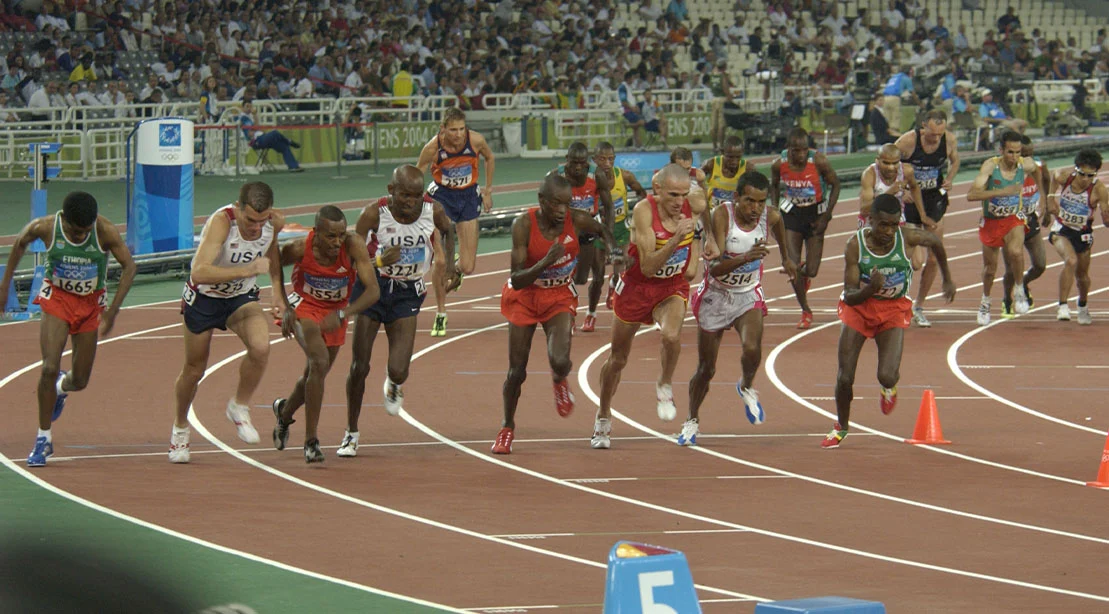
The culmination of these efforts arrived in 2004, when Browne represented the United States at the Olympic Games in Athens, Greece. Competing in both the 10,000 meters and the grueling marathon, he stood on the world’s biggest stage, wearing the red, white, and blue—the physical manifestation of years of discipline.
Supporting Data: The Anatomy of Success
Browne’s career is not defined solely by his victories, but by his philosophy toward what he calls “near-successes.” In high school, he frequently finished second behind the same rival. While others might have labeled these as failures, Browne treated them as data points for improvement.
- The 4-Minute Mile Benchmark: His 3:59.37 record remains unbroken at West Point, serving as a beacon for current cadets.
- Olympic Versatility: Competing in both track (10,000m) and road (marathon) at the 2004 Athens Olympics highlights his rare ability to bridge the gap between pure speed and extreme endurance.
- The 100,000-Mile Foundation: Over a 20-year career, Browne logged an estimated 100,000 miles, providing the aerobic base necessary to sustain elite-level performance.
- Coaching Impact: His influence extended to the 2016 Rio Olympics, where he served as a coach for WCAP, helping lead the next generation of military athletes to the world stage.
Official Perspective: Leadership and Cultural Stewardship
Since retiring from competitive running, Browne has transitioned into a role as a mentor and coach. His philosophy is rooted in the "leadership of character" he inherited at West Point. He views elite athleticism not as an end, but as a vehicle for personal growth that should be paid forward.
“I feel those who have achieved high levels in sports have a duty to give back,” he states. “It is very important for the health of our future athletes.”
Browne believes that the current generation of young Americans faces a crisis of purpose. He argues that the lessons learned through high-stakes, high-effort environments—like those found in the military or elite sports—are essential for national resilience. He frequently cites the West Point ethos: “Do the hard right over the easy wrong.”
“There are things you learn about yourself as you explore your potential,” Browne warns. “If we as a country separate ourselves from that growth, if we shy away from the hard path, there will be consequences.”
The Wider Implications: Why the "Hard Path" Matters
The implications of Browne’s career extend far beyond the track. He believes that the decline in embracing challenging, character-building experiences is a concern for national security and social cohesion. Whether a young person is entering the military, academia, or athletics, Browne urges them to seek out the path of most resistance.
His advocacy for programs like the Army’s WCAP is based on the belief that these environments cultivate a specific type of citizen-athlete—one who understands that success is not a gift, but a byproduct of persistent, systematic preparation.
Conclusion: A Legacy in Motion
Dan Browne’s story is a reminder that the "easy wrong" may offer short-term comfort, but the "hard right" offers a lifetime of results. As he continues to coach and mentor, he is not just teaching athletes how to shave seconds off their mile times; he is teaching them how to build the mental fortitude required to navigate a complex world.
For those looking to follow in his footsteps, the advice is simple but profound: Do not fear the “near-successes.” Embrace the stress, cultivate the discipline, and when the opportunity finally arrives, ensure that your hard work has already paved the way for you to seize it.
For more information on the Army’s World Class Athlete Program (WCAP), visit armywcap.com. Connect with Dan Browne’s ongoing leadership and coaching initiatives via his LinkedIn profile. This feature was produced with contributions from M&A Senior Military Editor Rob Wilkins.
 Nana
Nana
 Iffa Jayyana
