

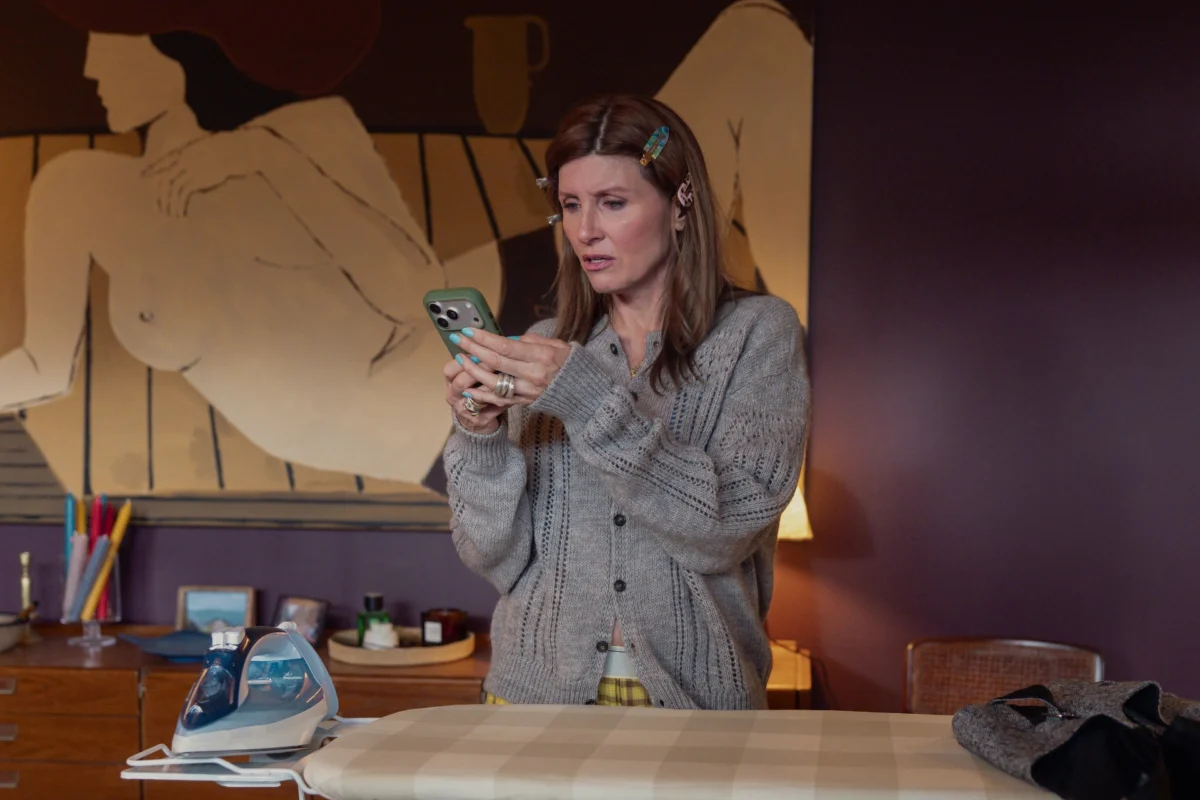
Sharon Horgan has long been the architect of the "beautifully messy" protagonist. From the acerbic, relatable chaos of Catastrophe to the dark, genre-bending family dynamics of Bad Sisters, Horgan has built a career on the premise that life is rarely tidy, and that our greatest flaws are often our most endearing traits. With her latest HBO project, Youth, Horgan has not only reaffirmed her status as a titan of modern television comedy but has arguably delivered her most profound exploration of the human condition to date.
Premiering on September 20, Youth arrives as a cultural touchstone for a generation navigating the uncharted waters of middle age. It is a show that balances the existential weight of turning 50 with the sharp, kinetic energy of a screwball comedy. As the critical consensus solidifies—boasting a pristine 100% "Fresh" rating on Rotten Tomatoes and a robust 80 on Metacritic—it is clear that Horgan has once again captured the zeitgeist.
The Premise: A Coming-of-Age Story for the Second Half of Life
At the heart of Youth is a narrative that challenges the traditional tropes of midlife storytelling. Rather than focusing on the "empty nest" malaise often portrayed in tired sitcoms, Youth centers on a 50-something single mother attempting to reconcile her internal identity with the external expectations of society.
The brilliance of the show lies in its refusal to adopt a singular tone. As critics have noted, the series manages to be both a "spit-takingly funny" examination of modern life and a poignant meditation on the passage of time. It is a coming-of-age story, but for a protagonist who has already lived half a lifetime. By positioning the titular concept of "youth" as both a desirable, fleeting state and a "miserable burden" of past expectations, Horgan creates a friction that drives the narrative forward with relentless, human energy.
A Chronology of Critical Acclaim
The journey of Youth from development to its current status as a critical darling has been swift and decisive. Following a high-profile announcement by HBO, anticipation for the series began to mount as early as the spring of 2026.
- Pre-Production and Development: Building on the massive success of Bad Sisters, Horgan’s collaboration with HBO was marked by high expectations. The series was designed to be a personal, character-driven study, distinct from the procedural or high-concept dramas that currently dominate the streaming landscape.
- The Review Embargo and Early Screenings: As the premiere date approached, a selective group of critics received access to the first seven episodes of the eight-part season. The consensus was immediate: Horgan had struck gold.
- The September 20 Premiere: Upon the series’ debut, the critical response was overwhelmingly positive, with major outlets like Time, Vulture, and Indiewire publishing glowing reviews that highlighted the show’s nuanced approach to aging, romance, and the "defense of fun."
The Creative Engine: Horgan’s Masterclass in Character Study
The core of Youth’s success is Horgan’s uncanny ability to write characters that exist in the gray areas of morality. Judy Berman, writing for Time, poignantly captured this dynamic, noting that Horgan is unparalleled in her talent for writing "selfish and self-sabotaging characters that, like members of our own families, we love all the more for how much they frustrate us."

This character-driven approach is bolstered by a stellar supporting cast. Rupert Everett provides a masterclass in chemistry as the protagonist’s on-again, off-again romantic interest, while Aran Murphy brings a grounding, youthful perspective as her college-aged son. The interplay between these three—the woman caught between her past (her son) and her potential future (her romantic prospects)—serves as the primary catalyst for the show’s most comedic and heartbreaking moments.
Supporting Data: By the Numbers
The metrics surrounding Youth underscore a rare harmony between critical reception and audience anticipation.
- Rotten Tomatoes: 100% Fresh rating. This score reflects a unanimous appreciation for the series’ writing, pacing, and emotional authenticity.
- Metacritic: 80/100. This indicates "generally favorable" reviews, with several critics noting that the show’s "honesty" elevates it above standard network fare.
- Structure: An eight-episode limited format allows for a tight, focused narrative arc that avoids the "filler" issues common in longer-run comedies.
Industry Implications: Redefining the Midlife Narrative
The implications of Youth for the television landscape are significant. For years, the "middle-aged woman" trope in television has been limited to either the "mother figure" or the "tragic divorcee." Horgan effectively dismantles these stereotypes by presenting a protagonist who is fully formed, actively pursuing "fun" as a fundamental right, and refusing to succumb to the "looming specter of old age."
As The Hollywood Reporter’s Angie Han points out, even with the final episode kept under wraps, the show’s impact is already felt. By refusing to offer a "saccharine" or "cynical" takeaway, Youth serves as a counter-narrative to the "TikTok doomsayers" who suggest that life loses its luster once one passes the threshold of youth.
This is a show that validates the experiences of a demographic often ignored by major platforms. By proving that stories about 50-year-olds can be as dynamic, sexy, and unpredictable as those about 20-year-olds, Horgan is helping to shift the needle on what constitutes a "prestige" comedy.
The "Defense of Fun": A Moral Imperative
One of the most compelling aspects of the critical discourse surrounding Youth is Ben Travers’ observation for Indiewire: the idea that the show serves as a "defense of fun as a fundamental right." In an era where work-life balance is often prioritized over individual fulfillment, and where social media creates constant, artificial comparisons of success, Youth offers a radical suggestion: it is the individual’s responsibility to find time to follow their bliss.

Horgan’s script treats this pursuit of happiness not as an indulgence, but as an essential component of survival. Whether her protagonist is navigating the complexities of a modern relationship or the simple, quiet realizations of domestic life, the audience is invited to share in her struggle and her small, hard-won victories.
Looking Ahead: The Finale and Beyond
While critics have been kept in the dark regarding the final episode of the eight-part season, the anticipation is electric. There is a palpable curiosity about whether the show will opt for a tidy "happily ever after" or a more ambiguous, realistic resolution. Regardless of the finale’s outcome, the series has already cemented its place as a significant entry in the canon of contemporary comedy.
In an industry that is often obsessed with the next "big thing" or the youngest talent, Sharon Horgan has reminded us that some of the most exciting, provocative, and necessary stories are found in the middle of life. Youth is not just a show about growing older; it is a show about the enduring, irrepressible desire to live—fully, messily, and without apology.
As we look toward the remainder of the season, one thing remains certain: Sharon Horgan has once again proven that she is the preeminent voice of the modern domestic comedy. Youth is not just a triumph of writing and performance; it is a vital reminder that life, in all its chaotic glory, is far from over.
 Asep Darmawan
 Reynand Wu
 Layla Zulfa
