

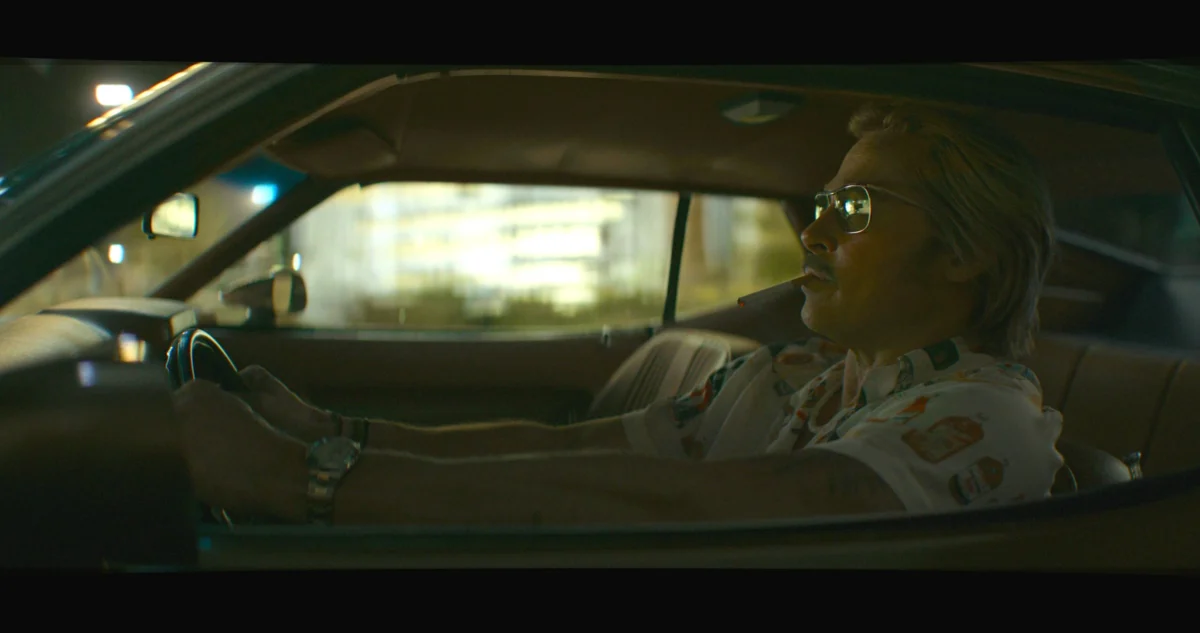
The long-awaited expansion of Quentin Tarantino’s 2019 cinematic universe has officially arrived. Netflix has unveiled the full-length trailer for The Further Mis-Adventures of Cliff Booth, a high-octane, neon-soaked dive into the underbelly of 1977 Los Angeles. Directed by master craftsman David Fincher and written by Quentin Tarantino, the film serves as a direct follow-up to the Academy Award-winning Once Upon a Time in Hollywood. With Brad Pitt stepping back into the leather jacket of the enigmatic, stoic stuntman, the film promises a shift in tone from the hazy nostalgia of the 1960s to the dangerous, cynical evolution of the late 1970s.
The Return of an Icon: Main Facts
Brad Pitt, who secured his first acting Oscar for his portrayal of Cliff Booth, returns to the character with a decade of accumulated weariness. The 90-second preview, released by Netflix this past Monday, trades the bright, sun-drenched sprawl of 1969 for the shadows of a decade in transition.
The film finds Booth no longer merely a stunt double. Having transitioned into a multifaceted role as a Tinseltown bartender, projectionist, and clandestine "fixer," Booth remains the ultimate observer of Hollywood’s vanity. The trailer establishes a high-stakes narrative involving murder, blackmail, and extortion, centered around a new circle of characters played by Elizabeth Debicki, Scott Caan, Carla Gugino, Yahya Abdul-Mateen II, and Peter Weller.
The project represents a historic reunion: David Fincher, known for his clinical precision and psychological intensity, is directing a script penned by Tarantino. It marks the first time the duo has collaborated since the 2008 masterpiece The Curious Case of Benjamin Button.
A Legacy Transformed: The Chronology of Development
The trajectory of this project is as unconventional as the industry it depicts. Originally, Quentin Tarantino intended to conclude his legendary directorial career with a film titled The Movie Critic. However, as the script evolved, the character of Cliff Booth—who had been relegated to a supporting role in the initial treatment—began to dictate the narrative’s direction.
"The fairy tale is over," reads the official synopsis, signaling a thematic departure from the previous film’s hopeful, revisionist history. Where Once Upon a Time in Hollywood ended with the literal salvation of Sharon Tate, The Further Mis-Adventures of Cliff Booth acknowledges the harsh reality that time, and the industry, moves on.
The project first teased the public with a surprise Super Bowl spot in February. That initial teaser, which went viral across social media, focused on the visceral experience of the era—the classic cars, the period-accurate production design, and Booth’s signature, dry-witted pragmatism. By the time the official trailer dropped in September, the industry had a clear picture of the aesthetic: a gritty, noir-inflected look at the transition from the "New Hollywood" of the 60s to the bloated, paranoid excesses of the 70s.

The Rick Dalton Question: Addressing the MIA Star
One of the most pressing questions surrounding the sequel was the absence of Rick Dalton, the fading television star played by Leonardo DiCaprio. The trailer addresses this directly, and with typical Tarantino flair. In a pivotal scene, Elizabeth Debicki’s character, a high-powered talent agent named Karen Crosby, probes Booth about his former professional partner.
"What ended your engagement?" she asks.
Booth’s response is immediate and characteristically blunt: "Rick got too fat for me to double for him anymore." It is a moment of dark humor that simultaneously closes the book on the duo’s partnership while grounding the film in the aging realities of the stunt industry.
Deep Dive: Plot and Character Dynamics
The film’s setting is unmistakably 1977. The trailer makes this clear with a brief, lingering shot of a movie poster for Looking for Mr. Goodbar, a cultural touchstone of that year.
The plot centers on a "fixer" narrative. Cliff Booth, now a man out of time, is pulled into a conspiracy involving Charlie Peters (Scott Caan), a TV megastar struggling to maintain relevance. The ensemble cast adds layers of complexity:
- Elizabeth Debicki as Karen Crosby: A sharp-witted agent who recognizes that Booth’s specific set of "extralegal" skills is the only solution to her client’s mounting problems.
- Yahya Abdul-Mateen II as Roderick "Hot Rod" Harrison: A former professional football star attempting to pivot to acting, representing the changing face of Hollywood celebrity.
- Carla Gugino as Toni: The grounded, knowing wife of Charlie Peters, who understands the price of fame in a cutthroat city.
- The Verdusco Brothers: A pair of mysterious gangsters whose arrival in L.A. signals the violent pivot from the "hippie" era to a more organized criminal underground.
Timothy Olyphant remains the only other major returnee, reprising his role as James Stacy. His presence provides a bridge to the past, reminding audiences of the real-world historical figures that anchored the original film’s charm.
Behind the Lens: Technical Mastery
The production is a powerhouse of talent. Behind the camera, David Fincher has reassembled his trusted team, most notably cinematographer Erik Messerschmidt. Having won an Academy Award for his work on Fincher’s Mank, Messerschmidt’s involvement suggests a visual palette defined by deep blacks, high contrast, and a deliberate, almost voyeuristic camera style that contrasts sharply with the warmer, more vibrant aesthetic of Tarantino’s original vision.

The production design team faced the daunting task of recreating a late-70s Los Angeles that feels both lived-in and decaying. With producers like David Heyman, Ceán Chaffin, and Stacey Sher assisting in the oversight, the film is poised to be a technical marvel.
Implications for Awards Season
The industry is already buzzing with talk of Academy Award potential. The original Once Upon a Time in Hollywood garnered 10 nominations, including Best Picture, Best Director, and Best Actor. While this is a sequel/spin-off, the prestige of the names involved—Fincher, Pitt, and Tarantino—places it firmly in the "prestige drama" category.
Voters have historically rewarded films that serve as "love letters" to the industry. By shifting the focus to the grittier, more cynical era of the late 70s, the film taps into a different kind of nostalgia—one that is darker and perhaps more resonant with the current climate of Hollywood. With categories like Best Supporting Actor, Best Cinematography, and Best Production Design, The Further Mis-Adventures of Cliff Booth is positioned to be a major player in the upcoming awards cycle.
Release Strategy: The IMAX Experience
In a move that highlights Netflix’s evolving theatrical strategy, the film will receive an exclusive two-week engagement in IMAX theaters starting November 25. This allows audiences to experience Fincher’s meticulous framing and sound design on the largest possible canvas before the film hits the streaming platform on December 23.
This release window—positioned squarely between the Thanksgiving rush and the Christmas holiday—suggests that Netflix views this not just as a piece of content, but as a major cinematic event. By utilizing the screen real estate originally reserved for blockbusters, the platform is betting on the "event film" status of the project, signaling a departure from the "drop and forget" model that has defined much of the streaming era.
Final Thoughts: A New Kind of Fairytale
As we approach the release, the narrative around The Further Mis-Adventures of Cliff Booth has solidified into something more than just a sequel. It is a dialogue between two of the most influential directors of the modern era. Fincher’s cold, calculated eye provides a fascinating lens through which to view the chaotic, vibrant world that Tarantino built.
Cliff Booth is no longer the man who saved Sharon Tate; he is a survivor in a city that has forgotten how to be a fairytale. As the trailer promises, the "cocktail of violence, ambition, and desire" that defines the story is exactly the kind of gritty, compelling cinema that audiences have been craving. Whether or not the film can replicate the cultural impact of its predecessor remains to be seen, but with this level of craft and talent, it is undoubtedly the most anticipated film of the final quarter of the year.
 Asep Darmawan
 Reynand Wu
 Layla Zulfa
