

As the world marks the annual International Day of Peace, the United Nations has issued a sobering yet galvanizing call to action. With geopolitical tensions at an all-time high and traditional diplomatic channels under unprecedented strain, UN Secretary-General António Guterres has urged global leaders to shift their focus from the volatility of conflict to the intentional, long-term investment in peace.
"Achieving peace is not something that just happens," Mr. Guterres stated in his keynote address. "It is a shared and decisive choice to invest in a better future." This year’s theme, Invest in Peace, serves as a poignant reminder of the organization’s founding principles, established in the aftermath of the Second World War to prevent the scourge of global conflict from ever threatening humanity again.
The Architecture of Conflict: A Contemporary Challenge
The current global landscape is defined by what the UN describes as increasing scale and complexity in regional conflicts. Unlike the binary, state-on-state wars of the mid-20th century, contemporary conflicts are often characterized by non-state actors, shifting alliances, and the proliferation of transnational threats—including climate change, cyber warfare, and the erosion of international law.
Peace, long considered a vital resource for human development, has become increasingly elusive. From the humanitarian crises spilling across borders to the widening gaps in international solidarity, the mechanisms designed to maintain order are facing a legitimacy crisis. The Secretary-General emphasized that lasting stability cannot be achieved through military might alone; rather, it must be constructed through the pillars of inclusive societies, sustainable development, and an unwavering commitment to human rights.
Chronology of Peacekeeping: From 1948 to the Present
The United Nations’ commitment to conflict resolution is not merely aspirational; it is a structural mandate supported by 193 Member States. Since 1948, the UN Security Council has deployed over 70 peacekeeping missions worldwide, a testament to the international community’s attempt to enforce the cessation of hostilities.
A Timeline of Evolution:
- 1945–1948: The UN is established with the primary objective of maintaining international peace and security. The first observer missions are deployed to monitor volatile borders.
- 1950s–1980s: Peacekeeping missions evolve from simple ceasefire monitoring to more complex mandates involving regional stability and decolonization support.
- 1990s–2000s: Post-Cold War mandates expand to include "peacebuilding," focusing on institutional reform, electoral assistance, and judicial development to prevent the recurrence of war.
- 2010–Present: The focus shifts toward the "Protection of Civilians" (POC) and addressing the root causes of conflict, such as climate-related resource scarcity and digital disinformation.
Currently, 11 peacekeeping missions remain active, serving as the thin blue line between fragile stability and total collapse in several of the world’s most dangerous regions.
Voices from the Ground: The Intergenerational Shift
While leaders deliberate in the halls of the UN Headquarters in New York, the perspective from the youth on the ground—particularly in the UN hub in Nairobi, Kenya—suggests a disconnect between policy and reality.
Benedict Wambuya, an agriculture and technology student at Jomo Kenyatta University, voiced a frustration shared by millions of young people globally. Reflecting on recent civil unrest and crackdowns in his home country, Wambuya noted that the youth are frequently the primary victims of violence, yet they are rarely invited to the negotiating table.
"As young people, we are hardly ever involved in peace discussions around the world," Wambuya remarked during a forum at the Nairobi UN hub. "We are not participating enough in maintaining peace. We should seek to understand our leaders, come together, and maintain peace."
His peer, Benedict Kioko, emphasized the psychological dimension of conflict. "For peace to last, there must be mutual understanding," he argued. "We must talk to one another. Often, peace has been disrupted because there has been a lack of dialogue or understanding between two different sides."
This sentiment is echoed by students like Festus Musau, who posited that peace is not merely a political state but a behavioral one. "For peace to thrive in a country, it must begin with every individual," Musau said, highlighting that the macro-level peace sought by the UN is inseparable from the micro-level actions of citizens.
The Grassroots Movement: Peace from the Bottom Up
Despite the pessimistic outlook provided by ongoing global conflicts, the Secretary-General remains optimistic about the power of the individual. "Around the world, people are showing that we are not powerless," Guterres asserted.
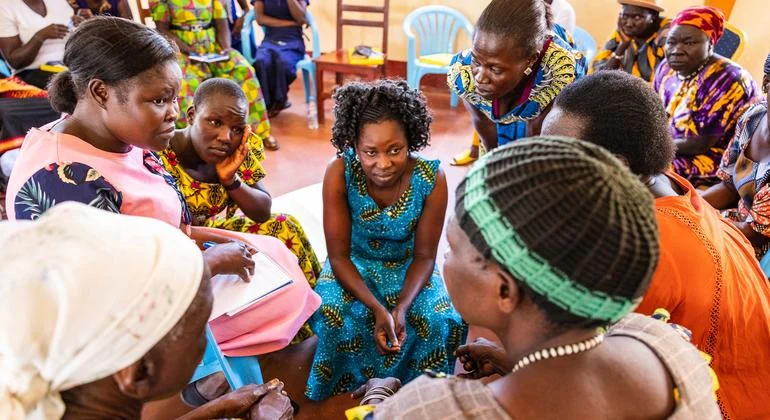
He pointed to the legions of volunteers, civil society leaders, and local peacemakers who are bridging ethnic, religious, and political divides. These grassroots efforts are, in his view, the true "investments" in peace. Whether it is a local community group negotiating a ceasefire between feuding clans or an NGO providing education to refugees, these actions are building the infrastructure of peace from the ground up.
To amplify these efforts, the UN has launched several initiatives aimed at integrating these voices into policy:
- The "Hear Us" Campaign: An effort to bring young, grassroots voices into independent progress studies regarding youth contributions to peace.
- Peace Circles: Forums held globally to facilitate dialogue between generations, ensuring that historical knowledge is passed down and modern technological solutions are integrated into peace efforts.
- ActNow Initiative: A digital effort connecting citizens with tangible actions they can take in their daily lives to foster tolerance and stability, supported by modern digital tools like the "Through A World" mobile app.
Implications for the Future: Is Peace Profitable?
The central argument of this year’s International Day of Peace is that peace is an investment, not a luxury. Economically, the cost of war—in terms of destroyed infrastructure, lost human capital, and the burden of humanitarian aid—far outweighs the cost of preventative diplomacy and peacebuilding.
However, the international community faces a "solidarity deficit." As nationalist sentiments rise, the willingness of powerful states to fund multilateral peacekeeping and long-term development programs has fluctuated. The implications are clear: if the world continues to treat peace as an afterthought rather than a primary investment, the cycles of violence will likely increase in both frequency and severity.
Symbolic Reminders of Our Shared Mission
The UN Headquarters in New York remains a repository of symbolic reminders of the fragility of peace. Visitors to the plaza are greeted by the Non-Violence sculpture—a bronze gun with a knotted barrel—donated by the government of Luxembourg and created by Swedish artist Carl Fredrik Reuterswärd in memory of John Lennon.
Similarly, the massive Peace Bell, cast from coins donated by children and adults from over 60 countries, serves as a daily sonic reminder of the collective responsibility for global stability. These artifacts are not merely decorative; they represent the aspiration that humanity is capable of transcending its violent impulses through art, diplomacy, and persistent, intentional dialogue.
Conclusion: The Choice is Ours
As the High-Level Week concludes at UN Headquarters, the message from the Secretary-General is clear: the architecture of the future will be built on the decisions made today. Investing in peace requires a multi-faceted approach—strengthening formal diplomatic channels, empowering the youth, and fostering a culture of individual responsibility.
"Action by action," Guterres concluded, "they are building peace from the ground up." The challenge for the international community is to ensure that these local actions are supported by a global commitment that treats peace not as the absence of war, but as the presence of justice, inclusion, and sustainable progress. The tools exist; the mandate is clear. The question that remains is whether the world has the political will to make the investment.
 Nana Muazin
 Azzam Bilal Chamdy
 Layla Zulfa
