

By Rhea Nayyar
Published in News
Main Facts
In a landmark agreement that reflects the shifting paradigms of international museum ethics and repatriation politics, the Metropolitan Museum of Art has officially brokered the return of three rare and historically significant African sculptures to Nigeria. Rather than executing a standard, unconditional repatriation, the institution has structured a cooperative long-term loan agreement. This arrangement ensures that the cultural heritage artifacts are legally repatriated to their country of origin while simultaneously securing their temporary display in New York.
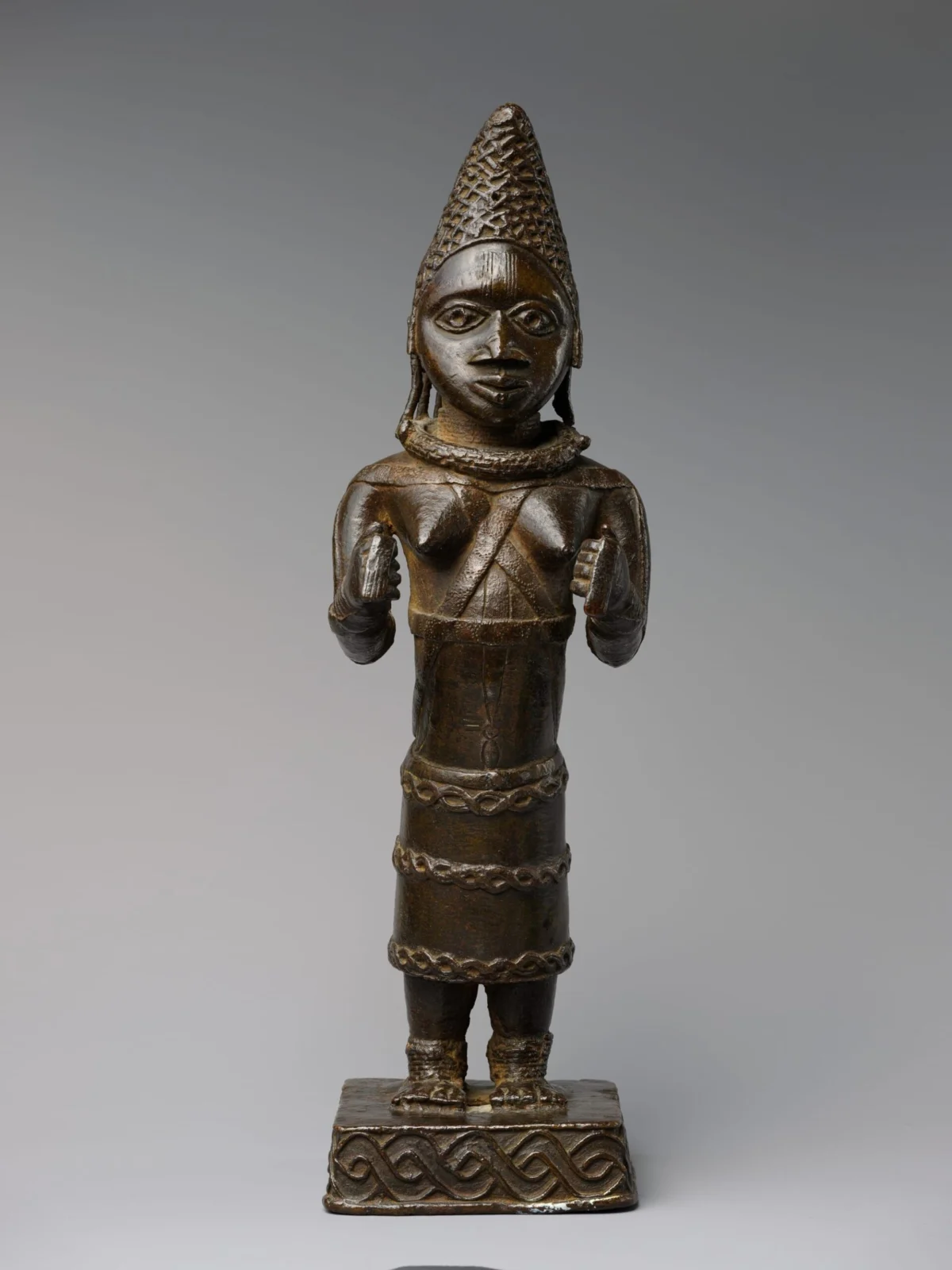
The trio of sculptures—comprising an 18th-century Edo copper figure and two 12th- to 15th-century Yoruba terracotta busts—will be unveiled later this month within the newly revitalized Rockefeller Wing’s Arts of Africa galleries. Beyond their public exhibition, the agreement guarantees that these pieces will be made accessible for ongoing international scholarship and academic research.
The artworks originally entered the modern discourse when noted art collector and Arkansas-born painter Ceil Pulitzer sought to gift them directly to The Met last year. Pulitzer, who married into the prominent publishing family behind the Pulitzer Prizes and Pulitzer Publishing Company in 1970, assembled a celebrated collection of African art over the subsequent decades. However, despite providing a detailed provenance for the pieces—which she acquired between 2015 and 2018—her generous acquisition proposal hit a roadblock. Museum officials determined that the documentation, while thorough, still fell short of the institution’s stringent internal prerequisites for outright acceptance, setting the stage for a creative diplomatic solution that prioritized ownership transfer to Nigeria paired with continued public access in Manhattan.
Chronology: From Acquisition to Repatriation
To understand the complex trajectory of these artifacts, one must trace their journey from historical creation in West Africa to the modern legal negotiations in New York boardrooms.
- 12th to 18th Century: The three artifacts are crafted across this broad historical span, representing the pinnacle of ancient and classical Nigerian artistic traditions from the Ife and Benin civilizations.
- 2015 – 2018: Ceil Pulitzer acquires the three pieces—one copper figure and two terracotta busts—through the international art market, eventually integrating them into her private collection of African art.
- 2023 (Late): Pulitzer approaches The Metropolitan Museum of Art with the intent to donate the collection. She presents comprehensive documentation tracking the recent provenance of the works from the time of her acquisition.
- 2024: Met Director and CEO Max Hollein, alongside museum legal and provenance research teams, evaluate the proposed donation. Although Pulitzer’s records account for her specific period of ownership, the museum’s rigorous acquisition policies deem the documentation insufficient for a permanent, unconditional accession of antiquities with sensitive or unverified deep-history trade routes.
- 2025: Negotiations pivot away from a direct domestic gift. Instead, museum leadership opens a dialogue with Nigerian cultural authorities, formulating a tripartite framework: formal transfer of ownership to Nigeria, accompanied by a long-term loan agreement enabling the objects to travel back to New York for exhibition and study.
- Late 2026: The agreement is finalized, paving the way for the works to be installed in the Rockefeller Wing’s Arts of Africa galleries for public viewing and scholarly examination.
Supporting Data and Artistic Significance
Spanning several centuries of West African history, the three repatriated works are celebrated not merely as historical relics, but as masterpieces of metalcasting and ceramic art that challenge historical Eurocentric biases regarding African craftsmanship.
The Edo Copper Queen Mother Figure
Dating to approximately the 18th century, the Edo copper figure depicts an iyáobà (queen mother) from the historic Kingdom of Benin. According to Met curators, the piece embodies a rare, standalone portrayal of a woman within the hyper-formalized courtly tradition of the Edo people.

"Most queen mother castings featured as the focal point of larger ensembles within an árḥátá (altar tableau)," the museum explained in an official press release. "The unique nature of this figure may indicate that it commemorated an especially prominent iyáobà who held the title sometime between the late 17th and 18th centuries."
Crafted by the esteemed Igun Ígbàrólè (brass-casting guild), the sculpture highlights the advanced metallurgical capabilities of West African artisans centuries before European industrialization. The intricate detailing of the royal regalia, coral bead choker, and conical hairstyle reflects the immense political and spiritual authority wielded by queen mothers within the Benin royal court, who often served as influential kingmakers and advisors.
The Yoruba Terracotta Busts
Alongside the copper figure, the collection includes two exquisite terracotta busts attributed to Yoruba artists from the 12th through 15th centuries. These pieces reflect the naturalistic and highly stylized traditions associated with ancient Ife art. Characterized by serene facial expressions, delicate striations representing ritual scarification or veils, and anatomical precision, these terracottas demonstrate the sophisticated firing techniques and profound psychological depth achieved by ancient Nigerian sculptors.
Official Responses and Perspectives
The resolution of the Pulitzer collection dilemma has elicited varied reactions from museum administrators, cultural heritage advocates, and the international art market.
In an interview with The New York Times, Met Director and CEO Max Hollein elaborated on the institution’s evolving approach to provenance standards and international cooperation. Hollein emphasized that while the museum deeply values philanthropic contributions from dedicated collectors like Ceil Pulitzer, institutional integrity requires an uncompromising stance on provenance verification.
"When a donor approaches us with works of this magnitude and historical gravity, our responsibility extends beyond mere gratitude for a gift," Hollein noted. "We must ensure that our acquisitions withstand the most rigorous ethical and legal scrutiny. When gaps exist in the deep history of an artifact, museums must be willing to innovate—partnering directly with countries of origin to ensure rightful ownership while fulfilling our educational mission to the public."
Ceil Pulitzer, who has spent decades cultivating an intimate understanding and appreciation of African artistry, supported the collaborative pivot. While her initial wish was a direct domestic donation, her willingness to facilitate a dialogue that respects international cultural property laws has been recognized by art historians as a constructive model for private collectors holding antiquities of disputed or complex early histories.

Nigerian cultural officials and heritage advocates have likewise weighed in on the arrangement. The return of the works underscores the growing global momentum toward restitution, wherein African nations are increasingly recognized not just as passive sources of looted or unprovenanced antiquities, but as sovereign partners dictating the terms under which their ancestral heritage is displayed, loaned, and studied across the globe.
Implications for the Art World and Museum Ethics
The arrangement brokered by The Metropolitan Museum of Art carries profound implications for major cultural institutions, private collectors, and source nations alike.
1. Redefining the Role of Private Collectors
For decades, private collectors served as the primary pipeline for major encyclopedic museums to acquire non-Western art. However, as international laws tighten—bolstered by UNESCO conventions and heightened public awareness of colonial-era looting and illicit antiquities trafficking—collectors face mounting hurdles. The Pulitzer case demonstrates that detailed provenance covering only the past few decades is no longer a free pass for museum accession. Donors must increasingly navigate cooperative legal structures that involve returning items to their native lands, even when the collector acquired them in good faith on the contemporary art market.
2. The Rise of "Repatriation-via-Loan" Models
The Met’s solution—returning ownership to Nigeria while securing a long-term loan for exhibition in New York—presents a fascinating hybrid model. On one hand, critics of traditional museum colonialism argue that such arrangements still center Western institutions, allowing wealthy Northern museums to dictate where African art is principally seen by global audiences. On the other hand, pragmatic advocates view this as a diplomatic breakthrough that bypasses bureaucratic gridlock, ensuring that source nations regain legal sovereignty over their cultural patrimony without entirely severing the educational and cultural bridges built by international museums.
3. Setting a Precedent for the Rockefeller Wing
As The Met unveils these works in the newly renovated Rockefeller Wing’s Arts of Africa galleries, the exhibition will serve as a bellwether for how encyclopedic museums handle non-Western collections in the 21st century. The pressure is mounting on institutions to transparently audit their holdings, engage in proactive provenance research, and establish respectful, bilateral relationships with nations across the Global South.
Ultimately, the journey of these three masterworks—from the royal courts of Benin and the ancient workshops of Ife, through the private collection of an American painter, and back to the sovereign hands of Nigeria via a Manhattan museum—encapsulates the complex, evolving narrative of global art restitution in our time.
 Nana
Nana
 Iffa Jayyana
 Muslim
