

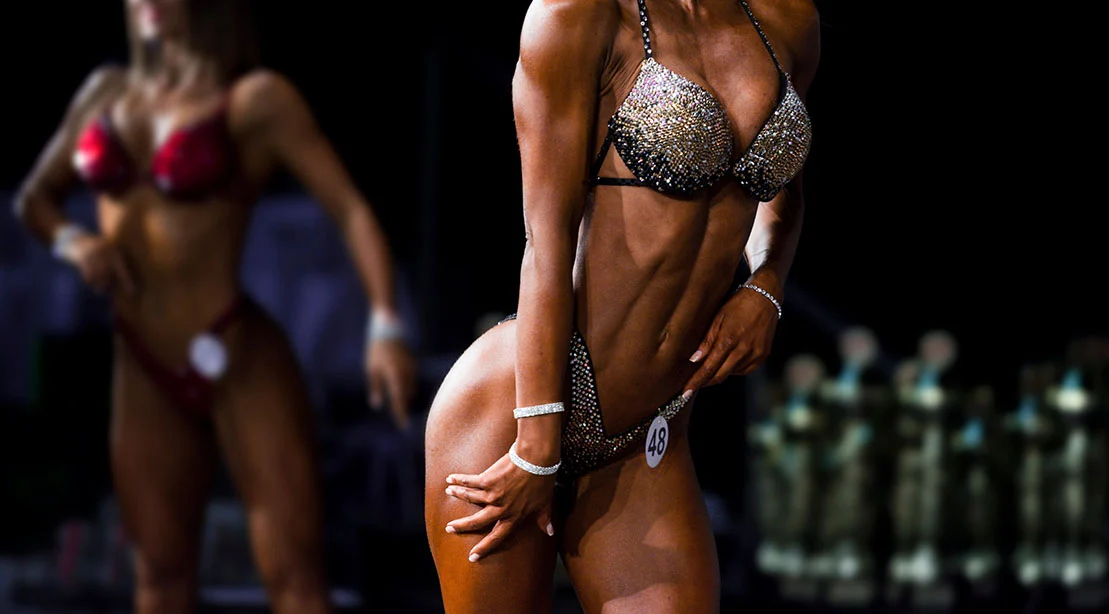
This week in Las Vegas, the Olympia Weekend—the "Super Bowl of Bodybuilding"—is breaking new ground. As the lights dim and the curtains rise, the stage will host a debut that has sent ripples of curiosity, skepticism, and debate through the iron community. For the first time in its storied history, the Olympia will crown a champion in the Fit Model division.
Before the "old-school" purists and hardcore bodybuilding devotees start dismissing the addition as a departure from the sport’s roots, it is worth pausing to analyze the structural evolution of the IFBB Pro League. Since Larry Scott took the inaugural title in 1965, the Olympia has been a living, breathing entity, constantly expanding its scope to reflect changing definitions of health, aesthetics, and athleticism. With the arrival of Fit Model, the Olympia now oversees 12 distinct divisions, ranging from the sheer mass of the Open class to the athletic grace of Fitness and the balanced symmetry of the newly minted Fit Model category.
The Chronology of Expansion: How We Got Here
The expansion of the Olympia is not merely a modern phenomenon; it is a calculated response to the diversification of the fitness industry. The trajectory from a single men’s bodybuilding show to a 12-division powerhouse is a testament to the sport’s desire to remain relevant in a changing cultural landscape.
- 1965: The first Mr. Olympia is held, cementing bodybuilding as the premier test of human muscularity.
- The Rise of Diversity: Over the next several decades, the federation expanded into women’s bodybuilding and, eventually, introduced "aesthetic" divisions like Figure and Fitness.
- The Bikini Explosion: The introduction of the Bikini division changed the sport’s economic and competitive landscape, bringing in a massive influx of participants who prioritized "beach body" aesthetics over extreme conditioning.
- 2025: The NPC (National Physique Committee) introduces the Fit Model division at the amateur level.
- 2026: The IFBB Pro League formalizes professional Fit Model contests.
- September 2026: The Olympia officially integrates Fit Model into its championship weekend, marking the division’s arrival on the world’s most prestigious stage.
The introduction of Fit Model at the Olympia (running September 24–27 in Las Vegas) is not a sudden pivot, but rather the culmination of an 18-month test run. By integrating it into the qualification system, the IFBB has signaled that this is not a side-show, but a permanent fixture in the professional hierarchy.
Defining the "Fit Model" Aesthetic: A Mandate for Moderation
The most fascinating aspect of Fit Model is that the IFBB Pro League has deliberately set the target in the opposite direction of the sport’s traditional trend line. In almost every other division, the goal is "more"—more muscle, more density, more vascularity, and more extreme conditioning. Fit Model, by contrast, is a mandate for "less."
The judging criteria for Fit Model are exceptionally specific, providing a clear roadmap for athletes and judges alike:
- Muscularity: Athletes should possess enough muscle to define a fit, feminine physique, but significantly less than the Bikini division.
- Specific Zones: The rules explicitly discourage over-development in the legs, glutes, arms, and deltoids. While the delts may possess a hint of roundness, "capped" shoulders are penalized.
- Conditioning: This is perhaps the most radical departure. The midsection should appear fit and healthy, but it must not be "highly detailed" or overly shredded.
- Prohibited Features: There should be no visible glute-ham tie-in and no hamstring separation.
These rules effectively create a "ceiling" for physical development. By standardizing these requirements, the IFBB is attempting to capture the aesthetic of a high-end fashion or fitness magazine cover—the "fit, not bodybuilder" look.
Supporting Data: The "Ashley Kaltwasser" Benchmark
The federation’s commitment to this specific look is so profound that they have used a historical visual aid to guide competitors. In their official documentation, the IFBB references the 2015 physique of three-time Bikini Olympia champion Ashley Kaltwasser as the gold standard for the Fit Model look.
This is a brilliant, if subtle, acknowledgment of the "division creep" that has plagued the sport. As the article’s opening notes, every physique division—from Bikini to Men’s Physique to Classic—has historically undergone a cycle of inflation. As the standard of competition rises, the "winners" get bigger and more conditioned, forcing the rest of the field to follow suit. Eventually, the division drifts away from its original mission statement.
By pointing to Kaltwasser’s 2015 look—a physique that was celebrated for its balanced, athletic, and approachable appearance—the IFBB is attempting to "reset the clock." They are aiming to provide a competitive home for women who train hard and maintain exceptional health but have no desire to undergo the grueling, extreme dieting required to achieve the "geological" glute-ham tie-ins that define modern Bikini and Figure competition.
Implications for the Industry and the Future of Judging
The implications of this new division extend far beyond the athletes on stage. The arrival of Fit Model presents a unique challenge for the judging panel, who must act as the "guardians of the gate."
The Challenge of Standard Maintenance
The history of the Olympia suggests that the primary threat to the integrity of a new division is the natural drive of competitors to out-do one another. If the first Fit Model champion is slightly more muscular than the criteria suggests, and the following year’s winner pushes that boundary further, the division will inevitably drift toward the very "hard" conditioning the IFBB is currently trying to avoid.
If the judges allow this "creep," we will find ourselves in a familiar cycle:
- Fit Model becomes too muscular.
- The IFBB introduces Fit Model Classic to recapture the original look.
- The cycle of "more" begins again.
Redefining the "Stage Show"
The presentation of Fit Model also diverges from the standard bodybuilding template. There are no traditional mandatory poses. Instead, competitors perform a front and back pose, emphasizing flow, presentation, and poise. The requirement for plain-colored suits—eschewing the ornate, crystal-heavy "Swarovski artillery" typical of Bikini—further reinforces the idea of a fashion-forward, model-esque aesthetic.
Critics might argue, "That’s not bodybuilding." However, as the sport has evolved to include gymnastics-based Fitness routines, it has become clear that the Olympia is no longer just about the maximum volume of muscle mass. It is a showcase of the human form in all its varying iterations.
Conclusion: Watching the "What" as Much as the "Who"
As the 2026 Olympia unfolds, the most critical element to watch is not necessarily who takes home the inaugural trophy, but what the judges choose to reward. The first champion will set the standard for every athlete who enters the division for years to come.
If the judges remain disciplined and prioritize the "fit, not shredded" aesthetic, the Fit Model division could successfully capture a new demographic of athletes who have been alienated by the sport’s increasing demands for extreme conditioning. It could bridge the gap between high-level fitness modeling and competitive physique sports.
However, if they succumb to the industry’s gravitational pull toward "more," they will have merely added another layer of confusion to an already crowded roster of divisions. The IFBB is standing at a crossroads. By choosing to define this division with such explicit, restrictive criteria, they have staked their reputation on the ability to hold a line. For the sake of the sport’s diversity, one hopes they choose wisely. The future of the Fit Model division—and perhaps the future of how the Olympia manages its expansion—depends on it.
 Nana
Nana
 Iffa Jayyana
 Reynand Wu
