

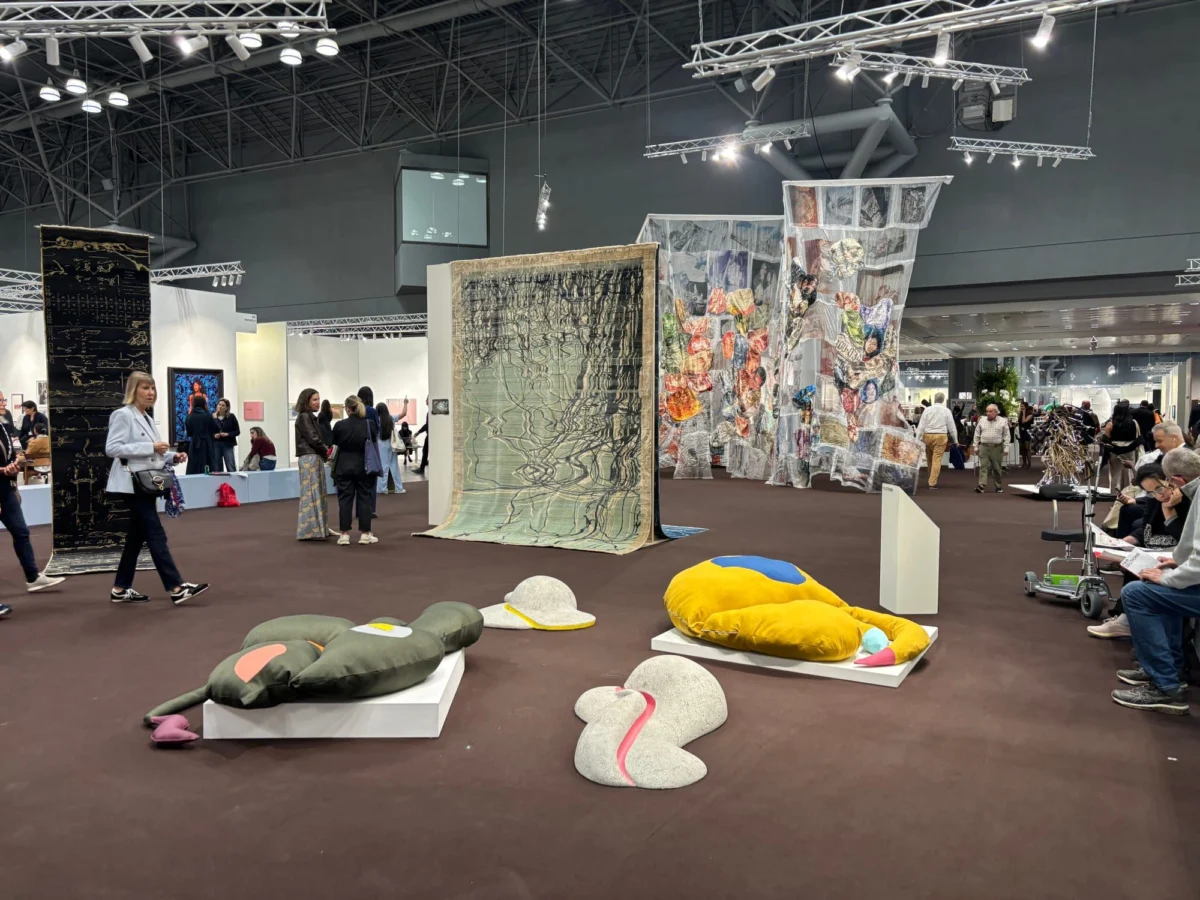
NEW YORK — Outside the glass-encased perimeter of the Javits Center on Manhattan’s West Side, the world was wrestling with a compounding cascade of geopolitical crises and domestic economic distress. Oil and food prices were climbing, mortgage rates had broken past the psychologically significant 7% threshold, and financial markets were bracing for potential Federal Reserve interest rate hikes. Across town, diplomatic tensions flared at the United Nations General Assembly over escalating conflicts in the Middle East, while high-profile protests resulted in the arrests of activists and public figures alike.
Yet, stepping through the security checkpoints of the Armory Show felt like crossing a threshold into an alternate reality.
Inside the city’s premier contemporary art fair, which ran through the weekend following its mid-week VIP preview, the mood was remarkably, almost jarringly, serene. A dense swarm of museum curators, international art advisors, celebrity spotters, and members of the global financial elite browsed pristine white-walled booths, sipping champagne and quietly acquiring blue-chip works. For this demographic, macroeconomic headwinds and international strife appeared to be little more than distant background noise.
Main Facts
The opening days of the 2026 Armory Show demonstrated robust demand at the top tier of the art market, proving once again that ultra-high-net-worth collectors are largely insulated from broader economic pressures. While ordinary consumers grapple with rising costs of living, high borrowing rates, and inflationary squeezes, elite art collectors continued to deploy six- and seven-figure sums with remarkable ease.
- High-Value Transactions: Major galleries reported swift, lucrative sales within hours of the fair’s opening. Notable sales included a Joan Mitchell painting that commanded over $2 million and an abstract Stuart Davis piece fetching upwards of $100,000.
- The Celebrity Circuit: The VIP preview drew an eclectic mix of Hollywood stars and professional athletes, including Jodie Foster, David Alan Grier, Piper Perabo, Paul Rudd, and NBA star Karl-Anthony Towns.
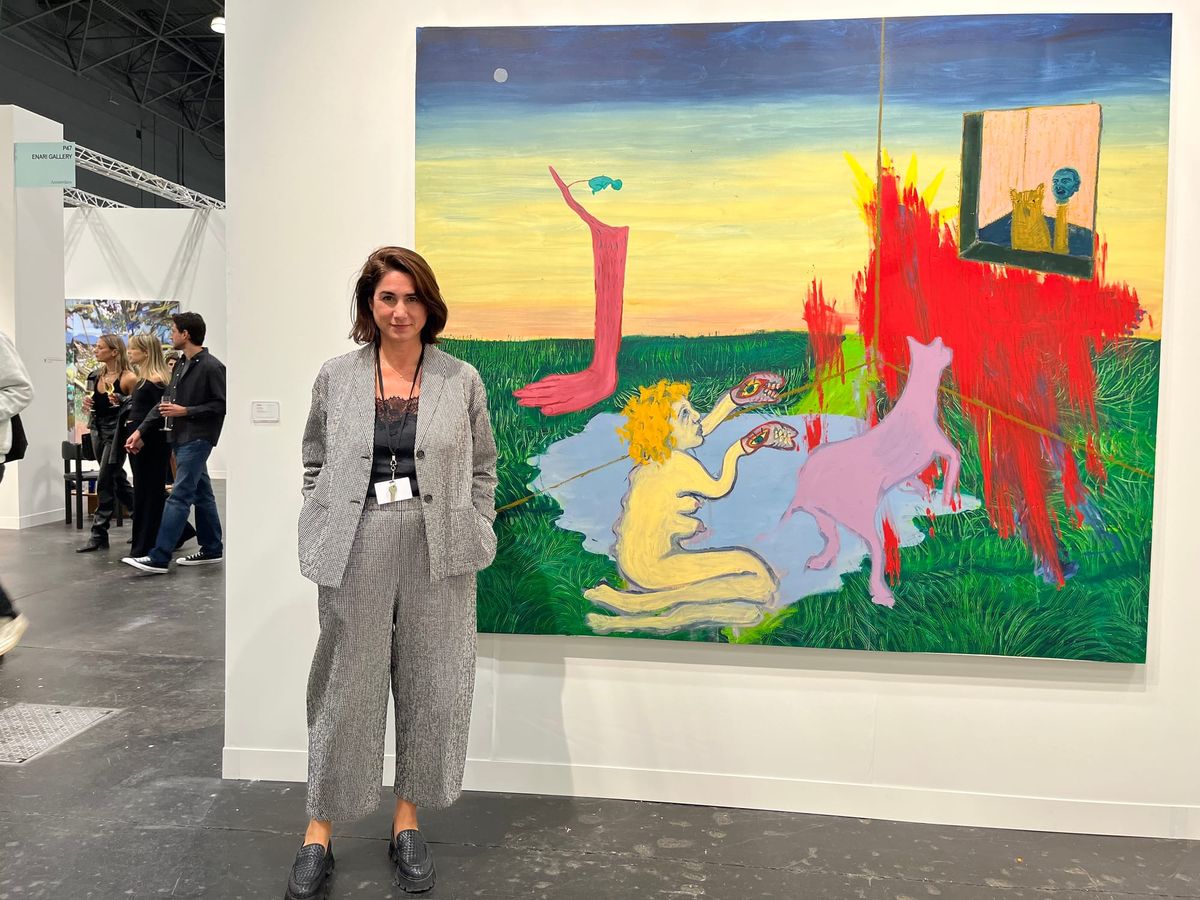
- Global Participation: The fair featured a diverse array of international galleries making strategic returns or debuts, including dealer Catinca Tabacaru, who exhibited in New York for the first time since relocating her operations from the Lower East Side in 2020.
- Disconnect from Reality: Dealers and market insiders candidly acknowledged a stark dichotomy between the turmoil of the global news cycle and the sheltered, transaction-driven ecosystem of the fair.
Chronology of Events
Monday and Tuesday: Anticipation and Setup
In the days leading up to the public opening, international crates were unpacked, and monumental sculptures were assembled within the cavernous halls of the Javits Center. Gallery owners and independent curators worked feverishly to design optimal lighting and spatial arrangements for their prized inventories. Simultaneously, global headlines dominated news feeds: geopolitical friction at the United Nations intensified, and economic indicators confirmed that mortgage rates had officially breached 7%, sparking intense debate over upcoming central bank monetary policies.
Wednesday: The Ultra-VIP Preview
The fair officially kicked off with an exclusive opening reserved for top-tier collectors, museum trustees, and global patrons. This high-stakes afternoon set an aggressive tone for the week. Major blue-chip galleries reported immediate reservations and sales. Celebrities mingled with patrons among the booths, while dealers quietly negotiated multi-million-dollar acquisitions behind closed doors and via digital portfolios.
Thursday: Public Opening and Steady Sales
The fair opened to a broader audience of art advisors, critics, and general VIP passholders. Sales remained steady throughout the day. Major institutions and private foundations actively acquired pieces ranging from historical modern works to contemporary installations. Gallery representatives circulated sales sheets boasting substantial figures, while media outlets documented both the art on display and the stark socioeconomic contrast just beyond the building’s loading docks.
Friday through Sunday: Public Exhibition and Weekend Crowds
As the weekend approached, the fair transitioned from private deal-making to heavy public foot traffic. Curators finalized institutional acquisitions, while casual art lovers packed the aisles to view special sections, including the fair’s signature Platform installations. Despite ongoing debates about the transparency of reported sales figures—many of which are pre-arranged via PDF catalogues circulating weeks prior—the general consensus among exhibitors was one of guarded relief and financial success.
Supporting Data and Sales Breakdown
While the broader art market has experienced normalization and periods of correction following the speculative highs of the pandemic era, the upper echelon of the Armory Show proved remarkably resilient. A comprehensive review of sales reported by participating galleries illustrates the flow of capital at the event:
- Michael Rosenfeld Gallery: Highlighted a major sale of a Joan Mitchell painting, fetching in excess of $2 million from a private collector, alongside historical collages by Louise Nevelson and Hannelore Baron.
- Edwynn Houk Gallery: Secured $320,000 for a vintage gelatin silver print by László Moholy-Nagy.
- Gazelli Art House: Placed a Lilly Fenichel canvas with an established European museum for $200,000.
- Nara Roesler: Sold Sheila Hicks’s textured textile work, The soft side of my nature (2025), for $260,000.
- Norr Cohan (formerly James Cohan Gallery): Sold Yinka Shonibare’s narrative sculpture, The Landscape Project (Cotton Plantation), for more than $180,000.
- 303 Gallery: Moved two paintings by Rob Pruitt for $155,000 each, alongside a prominent lightbox installation by Doug Aitken for $150,000.
- Galerie Maximillian: Kicked off the fair swiftly by selling Rashid Johnson’s Untitled (Large Mosaic) (2025) for approximately $175,000 within the first hour of opening day.
Market analysts note, however, that art fair reporting requires a degree of skepticism. It remains difficult to independently verify whether transactions closed entirely on the Javits Center floor or were simply finalized agreements facilitated by preview catalogues circulated weeks in advance.
Official Responses and Industry Perspectives
The juxtaposition between global strife and luxury commerce prompted candid reflections from veteran dealers and market participants. Rather than dodging questions regarding the state of the world, several insiders leaned directly into the unapologetic nature of high-end art collecting.
"They don’t care," Michael Borghi, a representative for Hollis Taggart, told reporters while holding an abstract Stuart Davis painting that had just sold for upwards of $100,000. "They’re really rich individuals, they don’t care."
This sentiment captures a pervasive reality of the top tier of the art market: ultra-high-net-worth individuals operate within a financial buffer zone that absorbs inflationary shocks, currency fluctuations, and geopolitical anxieties. For these buyers, blue-chip art serves multiple functions—ranging from an alternative asset class and a hedge against inflation to a status symbol and a philanthropic flex.
Meanwhile, institutional voices at the fair emphasized the psychological necessity of cultural spaces during times of crisis. Curators argued that art fairs provide a vital forum for dialogue, introspection, and economic stability within the broader creative sector, even if the atmosphere inside occasionally borders on surreal isolation.

Implications for the Broader Art Market
The success of the Armory Show carries significant implications for the remainder of the autumn art season in New York, London, and beyond. Several key trends emerge from the data and observations gathered at the Javits Center:
1. Bifurcation of the Art Market
The disparity between the thriving blue-chip sector and the struggling emerging gallery scene continues to widen. While established galleries with deep-pocketed client bases can weather economic uncertainty with relative ease, smaller, younger galleries face mounting pressures from rising booth fees, shipping costs, and hesitant mid-tier buyers.
2. Art as an Insulated Asset Class
In periods marked by stock market volatility, high interest rates, and geopolitical tension, traditional investments can carry heightened risks. The strong appetite for blue-chip modern and contemporary works at the Armory Show reaffirms that physical art remains a preferred store of value for the ultra-wealthy.
3. The Reimagined Fair Model
As collectors increasingly rely on digital previews and private viewings before stepping foot into a physical fair, the role of events like the Armory Show is evolving. It functions less as a spontaneous marketplace and more as a high-society networking hub, a physical showroom, and an institutional validation ground.
Ultimately, the 2026 Armory Show demonstrated that while the external world may be defined by rising mortgage rates, international conflicts, and diplomatic friction, the upper tier of the art market continues to dance to its own rhythm—one governed by capital, privilege, and an unshakeable appetite for blue-chip prestige.
 Nana
Nana
 Muslim
