

SAN FRANCISCO — In the modern digital landscape, the battle for user attention is heavily dictated by algorithmic curation. While platforms like X (formerly Twitter), Meta’s Instagram, and TikTok have historically relied on black-box recommendation systems that occasionally frustrate users with repetitive or irrelevant content, YouTube has long maintained a reputation for having one of the most reliable and sophisticated content delivery engines in the industry. By meticulously analyzing watch histories, channel subscriptions, engagement metrics, and session lengths, YouTube has mastered the art of keeping audiences entertained.
However, even the most advanced recommendation engines have limitations. Historically, users have been bound entirely to what the automated system believes they want to see, leaving little room for intentional, prompt-based exploration of specific niches without manually digging through search bars.
That paradigm is about to change dramatically.
At its annual "Made for YouTube" showcase event on Wednesday, the video-sharing giant announced a sweeping array of new features designed to hand unprecedented control back to the viewer. Among the standout announcements is a transformative tool called Custom Feeds, alongside significant updates to the conversational "Ask YouTube" AI tool, personalized podcast audio guides, and expanded visibility for community posts across both the Shorts feed and television applications.
These updates signal a pivotal shift in how the platform bridges the gap between passive viewing and active, user-directed content curation.
Main Facts: What is Changing on YouTube?
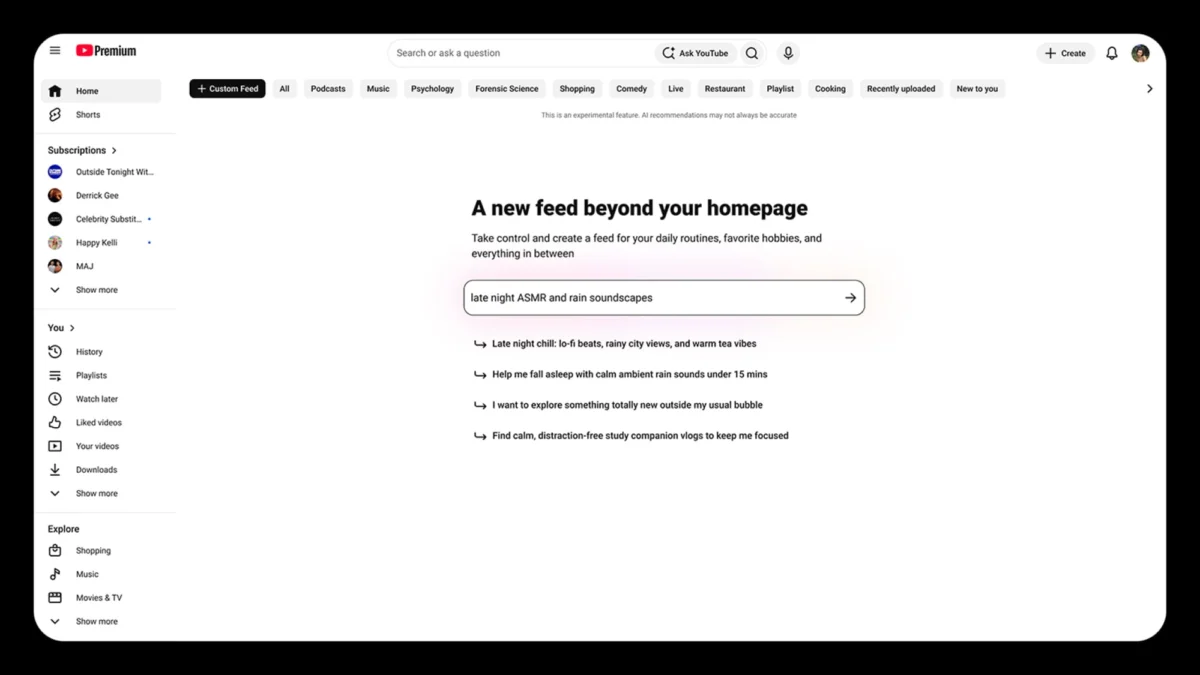
The centerpiece of Wednesday’s announcements is the introduction of Custom Feeds, a feature that breaks away from traditional algorithmic delivery by allowing users to dictate what they see on their homepages using everyday natural language.
The Power of Natural Language Curation
For the first time in the platform’s history, users will not have to rely solely on YouTube’s automated guesses. Instead, they can explicitly tell the platform what kind of content they are looking for using conversational prompts.

- How it works: A user can type a request such as "long-form historical documentaries" or "new DIY creators focusing on home renovation."
- The result: YouTube will generate a dedicated Custom Feed tab directly on the user’s homepage, populated strictly with content matching those specific parameters.
- Flexibility: Users are not restricted to just one Custom Feed. Multiple feeds with varying requests can be created, allowing viewers to compartmentalize their viewing habits—perhaps separating their educational interests from their entertainment or hobbyist pursuits.
Crucially, Custom Feeds will live inside neatly organized tabs at the top of the YouTube homepage. This means users do not have to abandon their traditional, algorithmically generated homepage if they prefer it; rather, the Custom Feeds serve as accessible, parallel universes of tailored content right alongside the standard layout.
Upgrades Beyond the Homepage
In addition to Custom Feeds, YouTube revealed a multifaceted update package aimed at enhancing the viewer experience across various formats:
- Enhanced "Ask YouTube" Capabilities: Building upon its conversational AI framework, Ask YouTube is expanding to help consumers navigate product review videos. Viewers can now ask direct questions about products featured in videos, and the AI will supply deeper information while simultaneously surfacing related video recommendations for viewers who want to dive deeper into product specifications and comparisons.
- AI-Generated Podcast Audio Guides: Recognizing the explosive growth of podcasting on the platform, YouTube is introducing a personalized, AI-generated audio guide. This feature acts as a virtual radio host, presenting users with a customized overview of their current podcast lineup while intelligently recommending new episodes and series based on individual listening habits.
- Community Posts Expansion: YouTube Posts are receiving a major visibility boost. The platform will now recommend Community Posts directly within the Shorts feed, blending text, images, and polls into the short-form viewing experience. Furthermore, Posts are rolling out to YouTube’s dedicated TV apps, bringing creator community engagement to the living room screen.
Chronology: The Evolution of YouTube’s Curation Strategy
To understand the significance of Custom Feeds, it is helpful to examine how YouTube’s recommendation and discovery infrastructure has evolved over the past two decades.
- 2005–2011: The View-Count Era: In its infancy, YouTube’s homepage and recommendations were largely driven by rudimentary metrics—primarily raw view counts, click-through rates, and chronological uploads. Discovering niche content relied heavily on active searching, blog shares, or related video sidebars that often led users down bizarre rabbit holes.
- 2012–2018: The Shift to Watch Time: Recognizing that clicks did not equal satisfaction, YouTube overhauled its algorithm in 2012 to prioritize "watch time." The platform began rewarding videos that kept users engaged for longer periods. This era saw the rise of massive creator empires, daily vlogging, and highly optimized thumbnail strategies designed to capture and hold attention.
- 2019–2023: The Multimodal Pivot and Shorts: As competition heated up with the rise of TikTok, YouTube diversified its offerings. The introduction of YouTube Shorts in 2020 forced the recommendation engine to adapt to rapid-fire, high-volume vertical video consumption. Simultaneously, YouTube leaned heavily into podcasts, music integration, and living room (Connected TV) viewing, transforming from a simple video repository into an all-encompassing entertainment ecosystem.
- 2024 and Beyond: The Conversational/Generative Era: With the mainstream integration of generative AI and Large Language Models (LLMs), YouTube is entering a new phase where passive consumption is being augmented by active, conversational user intent. Features like Ask YouTube and the newly announced Custom Feeds represent the culmination of years of machine learning advancement, shifting the platform from a system that guesses user desires to one that listens to direct verbal instructions.
Supporting Data: The Scale of YouTube and the Demand for Personalization
The necessity for sophisticated content organization tools like Custom Feeds becomes apparent when examining the sheer volume of data and media coursing through YouTube’s infrastructure daily.
- Massive Content Influx: Statistically, over 500 hours of video are uploaded to YouTube every single minute. Navigating this ocean of content requires robust filtering mechanisms.
- Living Room Dominance: According to Google’s quarterly earnings reports and Nielsen’s The Gauge report, YouTube consistently ranks as the top streaming platform in terms of television screen watch time in the United States, outpacing traditional broadcast networks and major subscription video-on-demand (SVOD) services.
- The Shift to Intentional Viewing: While algorithmic feeds are exceptionally effective at driving casual, lean-back viewing, user fatigue with repetitive content has become a documented phenomenon across social media. By introducing Custom Feeds, YouTube is directly addressing the desire for "intent-driven discovery"—allowing users to curate their digital diets without completely escaping the ecosystem.
Official Responses and Industry Context
While YouTube has not yet released exhaustive technical whitepapers on the exact natural language processing (NLP) models powering Custom Feeds, platform executives emphasized at the Made for YouTube event that user agency is the primary guiding philosophy behind the upcoming rollout.
Industry analysts have responded positively to the announcements, noting that while competitors scramble to copy short-form formats, YouTube continues to innovate in long-tail engagement and utility.
"For years, platforms have acted as gatekeepers, deciding what you see based on opaque metrics designed primarily to maximize ad impressions," notes digital media strategist Elena Rostova. "By allowing users to literally type out what they want their homepage to look like via natural language, YouTube is bridging the gap between search engines and social feeds. It gives viewers the best of both worlds: the serendipity of recommendations and the precision of search."

Furthermore, the introduction of AI-powered podcast audio guides and product review integrations demonstrates YouTube’s aggressive push into utility-based media consumption. The platform is no longer just a place to watch music videos or gaming streams; it is increasingly becoming the primary search engine for consumer goods, educational tutorials, and serialized audio entertainment.
Implications: What Custom Feeds Mean for Creators, Advertisers, and Viewers
The introduction of Custom Feeds and its companion features will have profound ripple effects across the entire YouTube ecosystem.
For Viewers
- Reduced Algorithmic Fatigue: Users who feel trapped in an algorithmic loop—where watching a single video on a random topic skews their homepage recommendations for weeks—will finally have a reliable escape hatch.
- Hyper-Personalized Compartmentalization: Viewers can cleanly separate their professional interests, relaxation media, and niche hobbies into distinct, easily accessible tabs.
For Content Creators
- New Discovery Pathways: Creators who produce highly specialized, long-form, or educational content—content that sometimes struggles to break through generic algorithmic barriers—stand to benefit immensely. If a user creates a Custom Feed for "indie animation breakdowns" or "advanced coding tutorials," niche creators are far more likely to appear directly in front of an intensely targeted, highly engaged audience.
- The Importance of Metadata: Because Custom Feeds rely on natural language processing to interpret user requests and match them with relevant content, creators will need to ensure their titles, descriptions, and video chapters are descriptive and precise. Generic clickbait may become less effective if users are filtering their feeds by highly specific descriptive prompts.
For Advertisers
- Contextual Relevance: Advertisers have long sought hyper-contextual environments where their products align seamlessly with viewer intent. Custom Feeds provide a goldmine for targeted advertising. If a user has a Custom Feed dedicated entirely to "home DIY projects," brands in the hardware and home improvement sectors can target that specific feed with pinpoint accuracy.
- The Evolution of Product Integration: With Ask YouTube expanding its capabilities for product reviews, brands will need to ensure their products are represented accurately by creators. When a viewer asks Ask YouTube detailed questions about a product in a review video, the quality of the AI’s response could directly influence purchasing decisions.
Rollout Timeline and Future Outlook
According to YouTube’s official announcements at the Made for YouTube event, Custom Feeds will begin rolling out to users in the United States soon, with international expansion expected to follow in subsequent phases.
The accompanying updates—including the enhanced Ask YouTube product review tools, AI podcast audio guides, and expanded Shorts/TV Post integrations—are slated for sequential releases over the coming months.
As digital platforms face increasing regulatory scrutiny and user demands for transparency and control, YouTube’s latest suite of features marks a mature step forward. By empowering users to converse directly with their homepage curation tools, YouTube is redefining the balance between machine learning automation and human-directed intent, cementing its status as the undisputed heavyweight of online video streaming.
 Neng Nana
 Azzam Bilal Chamdy
 Muslim
