

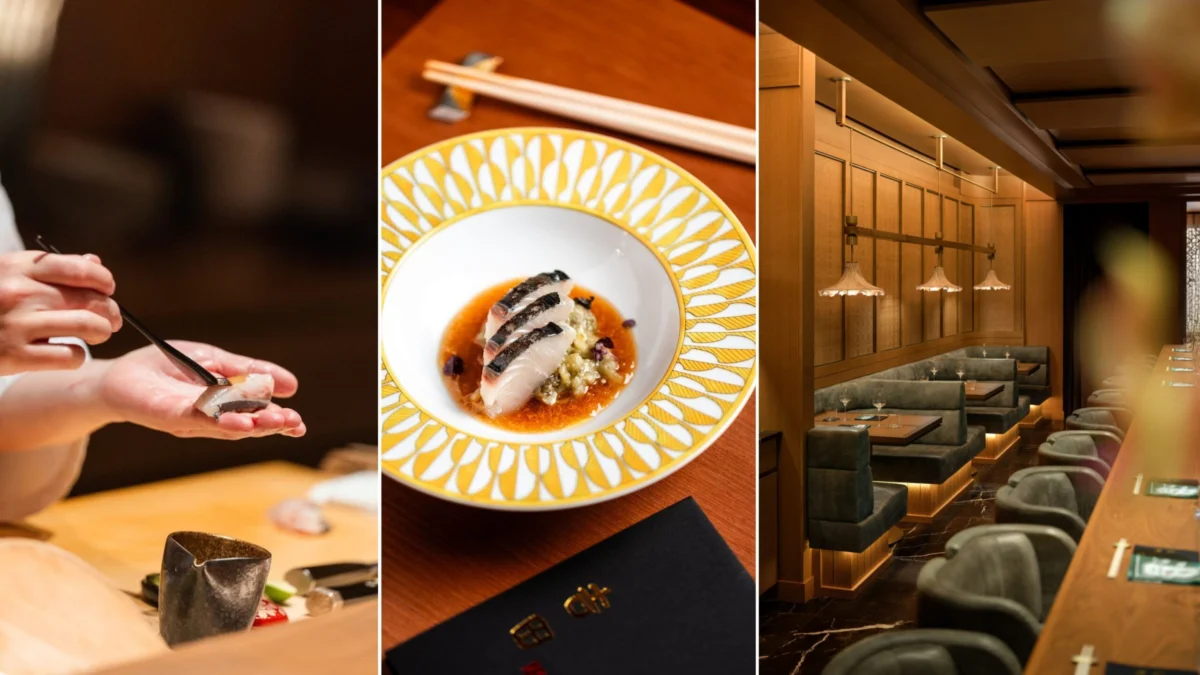
For decades, Boston’s culinary identity was anchored in the familiar, salt-sprayed traditions of the New England coast. Visitors arrived with a singular mission: to find the perfect lobster roll, a steaming bowl of clam chowder, or a platter of briny oysters plucked straight from the icy Atlantic. While those staples remain the bedrock of the city’s maritime heritage, a quiet revolution has been unfolding in the dining rooms and hidden counters of the Hub. Over the past decade, Boston has emerged as a serious, sophisticated, and increasingly diverse sushi powerhouse.
The city’s transformation into a sushi destination isn’t just a product of local demand; it is a convergence of abundant regional seafood, a highly discerning international student population, and a sophisticated network of importers who ensure that the finest fish—often sourced from Japan—arrives in Boston with startling speed. Today, the local sushi scene represents a fascinating spectrum: from Michelin-starred, hyper-focused omakase counters to lively, izakaya-style spots where the music is loud and the sake flows freely.

The Evolution: A Chronology of Quality
The rise of Boston’s sushi culture can be traced back to a shift in how the city viewed "upscale" dining. In 2007, James Beard Award-winning chef Tim Cushman and his wife, Nancy Cushman, opened O Ya in the Leather District. Housed in a century-old former firehouse, O Ya didn’t just open a restaurant; it set a new benchmark for excellence. By introducing a 20-course omakase that treated sushi with the composition and rhythm of a symphony, the Cushmans proved that Bostonians were ready for a more elevated, chef-driven experience.
Following the success of O Ya, the 2010s saw an influx of talent. Chefs who trained at institutions like Uni—a Back Bay staple known for its boundary-pushing, inventive plates like the "Uni Spoon"—began to branch out, opening their own concepts. By the late 2010s, the scene had fractured into two distinct lanes: the ultra-precise, traditional omakase counters that prioritized Edomae-style techniques, and the casual, neighborhood-focused spots that integrated high-quality sushi into the daily lives of residents.

The Vanguard: Defining the Current Scene
To understand the current state of Boston sushi, one must look at the variety of the landscape.
The Standard-Bearers
O Ya remains the definitive "special occasion" destination. Approaching its 20th anniversary in 2027, the restaurant’s influence is visible in almost every high-end counter that has opened since. Its focus on deliberate, playful, and deeply considered bites continues to set the bar for the city’s culinary elite.

Three 1 One, the city’s only Michelin-starred sushi destination, represents the modern pinnacle. Tucked away behind an unassuming door in the South End, chef-proprietor Wei Fa Chen brings a pedigree honed at Masa in New York City. The 18-course journey here is intense and exacting, often featuring rare cuts that remind diners why this tiny, ten-seat counter is one of the toughest reservations in New England.
The Neighborhood Heroes
Not every great sushi experience requires a three-hour commitment. Cafe Sushi Shoten in Cambridge has mastered the art of the "accessible expert." Evolving from a traditional sit-down spot to a takeout-focused operation, it has maintained a standard of quality that makes its bento boxes a staple for locals and MIT students alike. Similarly, Akami Omakase in Brookline offers arguably the best value-to-quality ratio in the region, providing a 13-to-16-course omakase that feels intimate and unpretentious.

The Innovators and Outsiders
Boston’s sushi scene is also home to those who aren’t afraid to break the rules. Momi Nonmi in Inman Square is a prime example. Chef Chris Chung, a veteran of Uni, blends traditional Japanese technique with the flavors of his native Hawaii. One moment you are eating expertly sliced sashimi; the next, you are savoring Spam musubi or glazed duck drumettes. It is this willingness to experiment that prevents the local scene from feeling stagnant.
Supporting Data: Why the Model Works
What makes Boston’s sushi success sustainable? Industry experts point to three primary factors:

- Supply Chain Sophistication: Thanks to international demand, Boston now serves as a major hub for fish imports. Top-tier restaurants no longer rely solely on local catch; they utilize global networks to fly in premium fatty tuna, sea urchin, and other specialty items directly from Tokyo’s markets.
- The "Chef Pipeline": There is a palpable culture of mentorship. As noted with establishments like Uni, many of the city’s most successful sushi chefs trained under the same mentors or worked in the same kitchens. This has created a self-reinforcing cycle of high standards.
- The Rise of the "Third Place": Whether it is Zuma in the Four Seasons Hotel—designed for those seeking a high-energy, cocktail-forward social experience—or Fuji at High Street Place, which brings high-end nigiri to a bustling food hall, the city has successfully diversified the "setting" of sushi. It is no longer just a quiet, sacred experience; it is now a social pillar.
Official Perspectives and Expert Insight
When asked about the "Boston style" of sushi, local chefs often emphasize the tension between tradition and the New England environment. At Wa Shin in Bay Village, Chef Sky Zheng—a protégé of Master Chef Daisuke Nakazawa—argues that the true mark of a master is the ability to adapt. "We use fine hinoki wood and traditional techniques," Zheng explains, "but we are constantly looking at the seasonal bounty of the Atlantic to complement the imports. It is not about copying Tokyo; it is about honoring the craft while respecting where we are."
Similarly, the team at Yoshida Omakase emphasizes the "theatre of the meal." With interiors designed by David Rockwell and an insistence on authentic Edomae-style aging techniques, they represent the move toward "quiet luxury."

The Implications: What’s Next for the Hub?
The implications of this sushi boom are profound for Boston’s broader hospitality sector. First, it has raised the floor for all seafood-related dining in the city. When a customer can compare a $150 omakase to a high-end lobster dinner, the pressure on all local restaurants to improve their sourcing and preparation increases.
Second, the geographic expansion of these restaurants—moving beyond the Back Bay and into Cambridge, Charlestown, and Brookline—signals that Boston’s culinary culture is becoming more decentralized. No longer must a visitor travel to a single "restaurant row" to find world-class food.

Finally, the success of spots like Somenya (Chinatown) and Tora (Chinatown) shows that there is a massive market for high-quality, approachable sushi that doesn’t rely on the "preciousness" of the omakase counter. As these restaurants continue to thrive, they solidify Boston’s status as a city that can comfortably balance its historic clam shacks with the most rigorous sushi traditions in the world.
For the traveler, the message is clear: if you are visiting Boston, your itinerary must include more than just the Freedom Trail and the harbor. Book a counter seat, order the sake pairing, and prepare to be surprised. You are about to witness the evolution of one of America’s most dynamic and underrated food scenes.
 Basiran
 Nana
Nana
 Nana Muazin
