

Main Facts: Embracing the Ridiculous in Modern Creature Features
When Steven Spielberg unleashed Jaws upon the world in 1975, he fundamentally altered the cinematic landscape. Blending expert pacing, mounting suspense, and genuine visceral horror, the summer blockbuster became the gold standard for all creature features that followed. In the decades since, countless filmmakers have attempted to capture lightning in a bottle by pitting humans against apex ocean predators, largely resulting in diminishing returns.
According to film critics and industry analysts, attempting to directly out-scare or out-thrill Jaws is a fool’s errand. Because Spielberg’s masterpiece remains untouchable, the most successful modern shark films pivot entirely away from earnest mimicry. Instead, they lean heavily into high-concept absurdity and high-octane action.
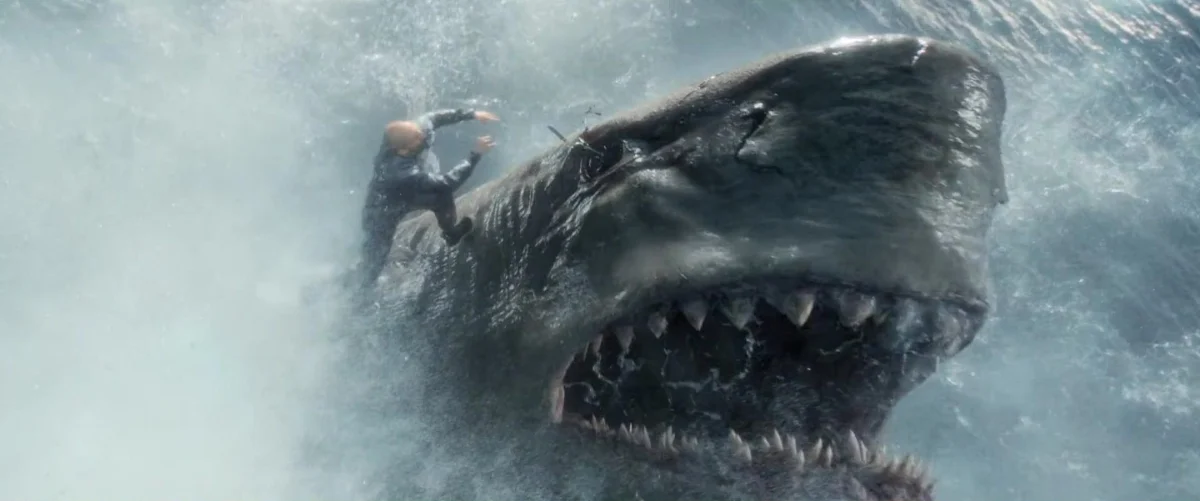
Enter 2018’s The Meg, directed by Jon Turteltaub (National Treasure). Rather than crafting a suffocating psychological thriller, Turteltaub and his creative team delivered a colossal, self-aware popcorn blockbuster. Starring action icon Jason Statham as rugged rescue diver Jonas Taylor, the film ditches traditional great white tropes in favor of a 75-foot-long prehistoric megalodon. Sourced from the depths of the Mariana Trench, this colossal predator provides a scale of threat that completely reframes the shark-movie subgenre, turning existential maritime dread into a wildly entertaining theme-park ride.
Chronology: From Deep-Sea Exploration to Prehistoric Terror
The Genesis of the Megalodon Mythos
The journey of The Meg to the silver screen spans decades of development hell. Originally conceived as a series of bestselling sci-fi novels by Steve Alten beginning in 1997, Hollywood spent nearly twenty years trying to adapt the property. Studios toyed with various directors and budgets, but technological advancements in CGI were ultimately required to make a believable, stadium-sized prehistoric shark a reality.
2018: The Theatrical Debut of The Meg
When Warner Bros. finally released The Meg in August 2018, it arrived with a clear understanding of its identity. The narrative kicks off when Jonas Taylor (Statham) is forced out of self-imposed isolation. Years prior, a aborted rescue mission in the Mariana Trench left him traumatized after he claimed his crew was attacked by an enormous, unknown sea creature.
When a deep-sea research submersible—containing his ex-wife—becomes trapped in a newly discovered warm-water layer beneath the trench’s cold floor, Taylor is called back into action. He successfully executes the rescue, but in doing so, he punctures the thermal barrier. This action allows a colossal megalodon to escape into the open shipping lanes of the Pacific Ocean.

The remainder of the film follows Taylor and the eclectic crew of the Mana One research facility as they attempt to track, outsmart, and ultimately destroy the ancient monster before it reaches populated beaches.
2023: Doubling Down with Meg 2: The Trench
Capitalizing on the global box office success of the first film—which grossed over $530 million worldwide—Warner Bros. greenlit a sequel. Released in August 2023 and directed by Ben Wheatley, Meg 2: The Trench pushed the franchise’s boundaries even further. Introducing multiple megalodons, vicious prehistoric reptiles, and deep-sea corporate conspiracies, the sequel doubled down on the hyper-stylized action and campy thrills that made the original a cult favorite.
Supporting Data: Box Office Performance and Critical Reception
While initial critical reviews for The Meg upon its 2018 release were mixed—landing a 46% approval rating on Rotten Tomatoes—audiences responded with overwhelming enthusiasm. The data clearly demonstrated that moviegoers were craving unpretentious, high-budget spectacle:
- Global Box Office Domination: Produced on an estimated budget of roughly $130 million to $178 million, The Meg defied cynical box office predictions to pull in an impressive $530.2 million globally.
- International Appeal: A significant portion of the film’s financial success stemmed from international markets, particularly China, where co-production elements and prominent casting (such as Li Bingbing) helped propel the film to massive box office heights.
- The Sequel Factor: Meg 2: The Trench matched this audience appetite, pulling in nearly $400 million worldwide despite mixed critical notices, proving that the franchise had built a reliable, dedicated global fanbase.
- Streaming Longevity: Years after their theatrical runs, both films maintain high engagement metrics across subscription streaming services like HBO Max and Netflix, consistently ranking among the most-watched library action titles during weekend viewing windows.
Official Responses: Cast and Crew Perspectives on the Franchise
The success of The Meg franchise relies heavily on the self-aware participation of its leading man. Jason Statham, known for grounding even the most ridiculous action scenarios with an aura of absolute deadpan authority, has frequently discussed the intentional tone of the films.
In various promotional interviews surrounding the release of both films, Statham has candidly referred to The Meg as the ultimate "popcorn movie." Rather than attempting to match the somber tone of prestige dramas, Statham embraced the project’s inherent absurdity.
Director Jon Turteltaub echoed these sentiments during the press tour for the first film, noting that the production made a conscious choice to avoid competing with Spielberg’s Jaws. "You can’t beat perfection," Turteltaub noted regarding Jaws. "If you try to make a serious movie about a shark that is three times the size of a school bus, the audience is going to laugh at you. Our secret was to laugh with the audience by making the ride as thrilling, colorful, and fun as humanly possible."
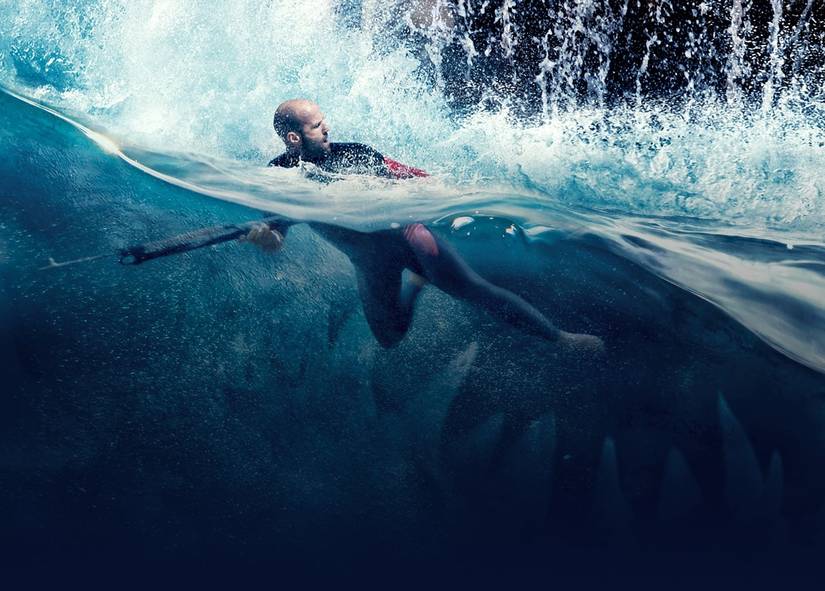
Behind the scenes, the crew utilized state-of-the-art animatronics alongside advanced digital effects to give the actors a physical reference point, though Statham spent a considerable amount of time reacting to empty blue-screen stages and stunt coordinators wearing shark-fin headgear—a testament to his comedic and physical timing as an action star.
Implications: The Evolution of the Modern Creature Feature
The cultural and financial trajectory of The Meg series has profound implications for how Hollywood approaches mid-to-high-budget creature features in the 21st century.
For decades, the cinematic monster genre was bifurcated into two extremes: ultra-serious, high-budget thrillers that often took themselves too seriously, and ultra-cheap, intentionally garbage-tier B-movies (typified by franchises like Sharknado). The Meg successfully carved out a lucrative middle ground: the "mega-budget B-movie."
By combining high-end visual effects, an A-list action star, and a genuinely comic-book-style appreciation for over-the-top violence without crossing into complete self-parody, the franchise proved that audiences are more than willing to suspend their disbelief. They do not demand gritty realism from a film about a prehistoric shark; instead, they want technical competence paired with gleeful, unadulterated escapism.
As studios continue to navigate an increasingly fragmented streaming and theatrical landscape, the enduring popularity of The Meg and Meg 2: The Trench serves as a blueprint. It demonstrates that when a film understands its own silliness and leans into it with complete confidence—anchored by a star like Jason Statham who knows how to calibrate his signature "Stathamocity"—the result is a timeless weekend watch that continues to captivate viewers worldwide.
 Lina Irawan
 Azzam Bilal Chamdy
 Basiran
