

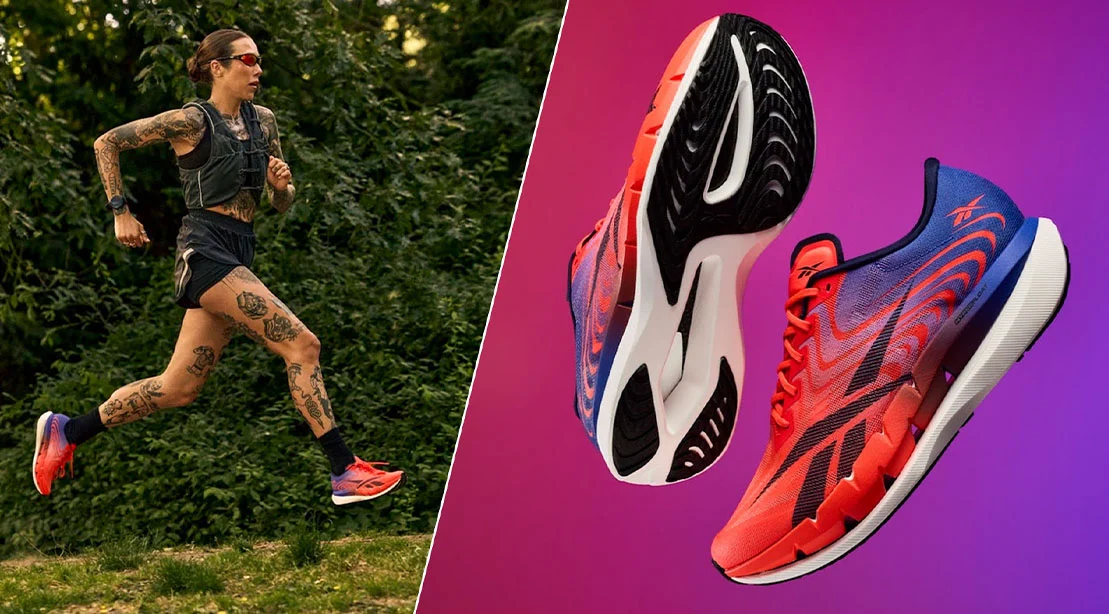
For decades, the pursuit of the "perfect" running shoe has been a tug-of-war between two competing forces: the raw, explosive energy of carbon-fiber propulsion and the practical, often heavy, realities of structural engineering. Reebok, a brand with a storied history of experimentation in athletic footwear, has spent years grappling with this weight-to-performance ratio. On October 20, the brand looks to settle that debate once and for all with the launch of the SpeedShifter, a full-length carbon-plated running shoe that promises to redefine the brand’s performance identity.
Main Facts: A New Chapter in Reebok Performance
The SpeedShifter is not merely another entry in the competitive carbon-plate market; it is the culmination of years of iterative design. Tipping the scales at a remarkably light 7.4 ounces (210 grams), the shoe is designed to serve a broad spectrum of runners, from elite marathoners shaving seconds off their personal bests to everyday athletes looking for a more responsive training experience.
The core technology behind the shoe is the "HyperFloat Sandwich"—a dual-density foam construction that encapsulates a rigid, full-length carbon fiber plate. Priced at $220 and available in unisex sizing across two distinct colorways, the SpeedShifter is Reebok’s boldest statement yet in the high-performance running category.
Chronology: From Graphlite to the HyperFloat Era
To understand the significance of the SpeedShifter, one must look at the lineage of Reebok’s engineering. In the 1990s, the industry was captivated by "Graphlite," an early, lightweight iteration of carbon fiber technology that was, in many ways, ahead of its time. While Graphlite provided a glimpse into the future of structural rigidity, the supporting foam technology of the era could not fully leverage the benefits of the material.
"Graphlite was a shoe that was far ahead of its time in the 1990s," says Chris Stone, Reebok’s Director of Running. "But technology has moved at a staggering pace. Now, carbon fiber engineering and material science have advanced in tandem with running foam chemistry. With the SpeedShifter, we aren’t just adding a plate; we are creating a symbiotic relationship between the stiffness of the plate and the propulsion of our all-new HyperFloat foam."
The development phase for the SpeedShifter involved years of prototyping. The team moved away from the "all-or-nothing" approach seen in early carbon-plated shoes, opting instead for a methodical process of refining foam densities and rocker geometries. This evolution marks the transition from the legacy of the Reebok FloatZig to a more streamlined, competition-ready architecture.
Supporting Data: The Engineering of the "Sandwich"
The engineering philosophy behind the SpeedShifter centers on the "sandwich" construction. The carbon plate acts as the structural spine, but its placement is calculated to the millimeter.
The Dual-Density Advantage
The plate is layered between two distinct densities of HyperFloat foam. The upper layer is intentionally softer to provide immediate step-in comfort and energy absorption, while the bottom layer is firmer to provide a stable platform for toe-off.
"The recipe for getting this right involved many rounds of perfecting our foam compound," Stone explains. "We needed a material that could compress under load and snap back instantly. By using different densities, we allow the plate to be cushioned during the landing phase, while the bottom layer provides the ground contact necessary to harness the plate’s propulsive energy."
The Geometry of Speed
Beyond the foam, the shoe incorporates a refined forefoot rocker. This rocker is designed to facilitate a smooth transition from heel strike to mid-stance, essentially "rolling" the runner into their next stride. When combined with the high flex modulus of the carbon plate—which resists bending to store energy and then snaps back to form—the result is a sensation of weightlessness that defies the shoe’s physical construction.
Official Responses: The Philosophy of the "Ordinary Elite"
In an exclusive conversation with M&F, Chris Stone emphasized that while innovation often grabs the headlines, it is the fundamental "fit" of the shoe that separates the SpeedShifter from its competitors.
"So many people are wearing shoes built for very narrow feet, especially in the running category," Stone notes. "Our shoes are built for the ‘ordinary elite.’ We’ve increased the volume in the toe box compared to other carbon-plated options on the market. We believe that if you can’t fit your foot comfortably, no amount of carbon fiber will help you reach your potential."
This philosophy was put to the test during the development phase. Wear testers were encouraged to use the shoes in high-intensity training environments. The feedback was overwhelmingly positive, with one tester opting to wear the prototype during a full marathon. Not only did the tester finish comfortably, but they also recorded a new personal record (PR).
"For me, the SpeedShifter has found a balance which has allowed me to find a flow state when I’m speed training," says Stone. "That ‘flow’ is the ultimate goal. You want the shoe to disappear on your foot, leaving only the sensation of efficient, rapid forward movement."
Implications: The Future of the Running Market
The release of the SpeedShifter signals a strategic pivot for Reebok. By entering the high-performance carbon-plated space with a price point and fit profile that caters to the "ordinary elite," Reebok is challenging the notion that high-tech footwear must be reserved for the top 0.1% of runners.
Breaking the Barrier to Entry
For many, the carbon-plated shoe has been an intimidating prospect—often associated with extreme instability or a "stiff" ride that requires specific biomechanics to master. By focusing on a "locked-in" feel through a supportive top frame and a more forgiving foam sandwich, Reebok is attempting to democratize the speed benefits of carbon fiber.
Durability and Versatility
The SpeedShifter is not intended to be a "disposable" race-day shoe. The inclusion of a durable, lightweight rubber grip suggests that the shoe is built to handle the rigors of high-mileage training, not just the fleeting moments of a race. This shift toward durability is a significant implication for runners who want a high-performance shoe that can survive more than just a few training cycles.
The Competitive Landscape
As of October 20, 2026, the SpeedShifter will enter a crowded market. However, its success will likely hinge on the "fit-first" approach championed by Stone. If the brand can convince runners that they don’t need to suffer in a narrow, aggressive racing flat to achieve elite-level energy return, the SpeedShifter could become the new benchmark for versatility in the running world.
Conclusion
The SpeedShifter represents more than just a new product launch; it is a testament to the persistence of Reebok’s design team. By addressing the historical challenges of weight, comfort, and plate-foam integration, Reebok has created a tool that bridges the gap between scientific innovation and the realities of the road.
Whether you are a casual runner looking to add a bit of "snap" to your weekend miles or a seasoned athlete chasing a sub-three-hour marathon, the SpeedShifter offers a compelling proposition: the promise of speed, without the compromise of comfort. As the brand continues to refine its HyperFloat technology, the SpeedShifter stands as a beacon of what is possible when engineering is guided by the needs of the runner rather than just the trends of the industry.
For those ready to experience the evolution firsthand, the SpeedShifter will be available for purchase starting October 20, inviting a new generation of runners to find their own flow state on the pavement.
 Nana
Nana
 Iffa Jayyana
 Reynand Wu
