

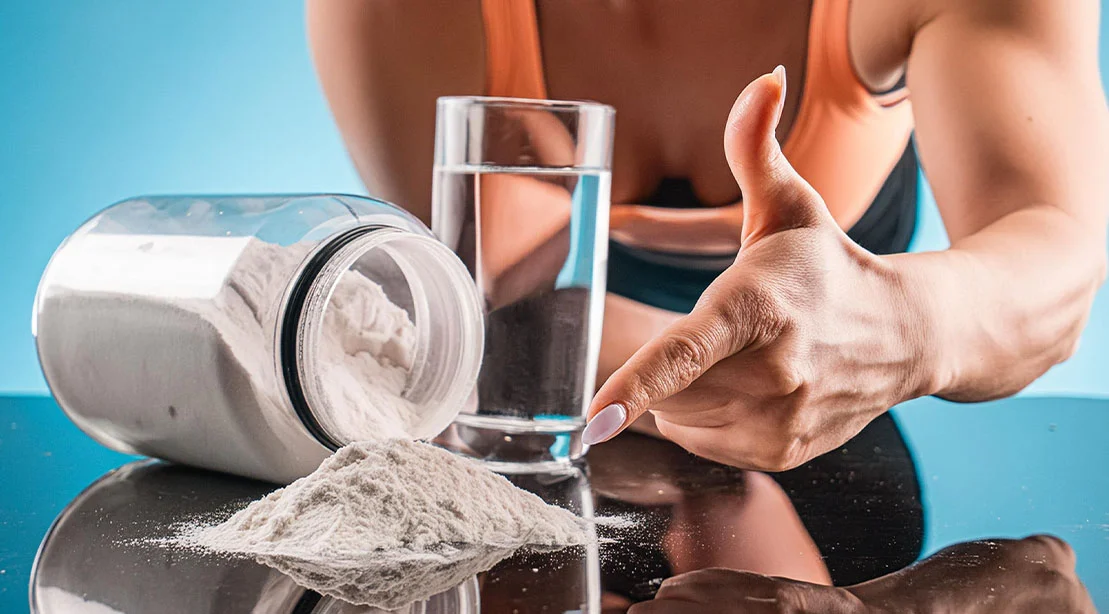
For the better part of three decades, creatine monohydrate has occupied the most unassuming shelf in the supplement store. It lacks the neon-colored packaging of pre-workouts, the aggressive marketing campaigns of "testosterone boosters," and the complex, pseudo-scientific names that suggest a secret Russian weapons program. It is, quite simply, a cheap, white, flavorless powder.
Yet, beneath this humble exterior lies the most researched ergogenic aid in the history of sports nutrition. While the industry has been obsessed with chasing the next "anabolic matrix," creatine has quietly outlasted every fad, trend, and empty promise the supplement world has managed to manufacture. For years, however, there has been a glaring blind spot in this body of research: women. While men have been consuming it in droves, female athletes have remained hesitant—often deterred by pervasive myths regarding weight gain and "bulking."
New research, however, is finally shifting the narrative. As science begins to close the gender data gap, we are discovering that while creatine isn’t the "magic pill" the industry loves to sell, it is a proven, reliable, and highly effective tool for women—provided they understand what it actually does.
The Evolution of Creatine Research: A Chronology
The history of creatine is a testament to the slow, steady grind of scientific inquiry.
- The 1990s: The Dawn of Commercialization: Creatine burst into the mainstream in the early 1990s, quickly becoming the gold standard for male strength athletes. Early research confirmed that oral supplementation could significantly increase muscle phosphocreatine stores, leading to faster ATP regeneration. However, almost all of these studies were conducted on male subjects.
- The 2000s: The Gender Gap: As creatine solidified its status in sports medicine, researchers began to realize that biological differences—including muscle mass, hormonal profiles, and metabolic rates—meant that results from men could not be perfectly extrapolated to women. Yet, the studies remained sparse.
- The 2010s: The Rise of Skepticism and Myth: During this decade, the rise of social media fitness culture amplified the "bulking" myth. Many women began to fear that creatine would lead to unwanted water retention and excessive muscle hypertrophy, despite the physiological reality that women lack the androgenic environment to put on mass at the same rate as men.
- 2026: A New Standard of Evidence: This year marked a turning point. With the publication of two major meta-analyses in September 2026, the scientific community finally produced a robust enough data set to move beyond anecdotal evidence and provide clear, evidence-based guidance for female athletes.
Analyzing the 2026 Meta-Analysis: Performance and Body Composition
On September 4, 2026, a comprehensive systematic review and meta-analysis was published, scrutinizing the impact of creatine specifically on women engaged in structured exercise. The researchers undertook a massive task: screening over 13,000 records to identify the highest quality evidence.
The final analysis included 34 studies representing 692 female participants. When the data was synthesized, the results were not the "earth-shattering" revelations that supplement companies typically use to sell products. They were something far more valuable: honest, statistically significant, and nuanced.
The researchers found a small but statistically significant overall benefit. The performance effect size was approximately 0.30 standardized units, while the body-composition effect size sat at 0.24.
What These Numbers Mean for the Athlete
For those who don’t typically parse statistical data, here is the plain-language translation: Creatine helps, but it is not magic.
The performance gains—such as improvements in sprint times, jumping height, or repeated high-intensity efforts—are subtle. They won’t turn a casual gym-goer into an Olympian overnight. However, in the world of competitive athletics, a 0.30 effect size is often the difference between a podium finish and the middle of the pack. The supplement works by providing a marginal edge; the athlete then exploits that edge through consistent, high-intensity training. Over time, those "marginal" improvements compound into substantial results.
Addressing the "Bulk" Myth
Perhaps the greatest barrier to creatine adoption among women is the fear of weight gain. Fitness marketing has conditioned the public to believe that a supplement must either cause a total body transformation in three days or it is worthless.
It is time to dismantle the myth: Creatine does not make women "bulky."
Creatine works by drawing water into the muscle cells (intracellular hydration). This is not the same as the "bloat" associated with sodium intake or hormonal cycles. When a woman takes creatine, she is hydrating her muscle tissue, which actually helps create a fuller, more athletic look rather than a puffy one.
Furthermore, the physiological reality is that the human body cannot simply "build" massive amounts of muscle because of a supplement. Muscle hypertrophy requires a massive caloric surplus, heavy resistance training, and a hormonal environment that most women do not possess in the same capacity as men. Putting five grams of creatine in your post-workout shake is no more likely to make you look like a professional bodybuilder than staying at a luxury hotel is likely to turn you into a concert pianist.
The Specific Case for Postmenopausal Women
While the general female population sees benefits in performance, the implications for postmenopausal women are even more striking. A separate 2026 meta-analysis specifically targeting this demographic reviewed seven randomized trials with 608 participants.
As women age, they naturally experience a decline in muscle mass and bone density (sarcopenia). The study found that when postmenopausal women supplemented with at least five grams of creatine daily in conjunction with resistance training, they saw a meaningful increase in lean muscle mass and improvements in functional strength, particularly in the legs.
For this demographic, creatine is not just about "performance" in a sports context—it is about healthspan. By maintaining muscle mass and strength, postmenopausal women can significantly improve their quality of life, metabolic health, and injury resistance.
Implications: The Reality of Evidence-Based Supplementation
The conclusion of the latest research is intentionally restrained. The authors of the 2026 review noted that while the evidence for creatine in women is positive, it is not yet strong enough to make universal, sport-specific claims. The variability in the studies—ranging from soccer players to dancers to weightlifters—means that your individual results may vary based on your sport, your current diet, and your training intensity.
The "Boring" Truth
In an industry that thrives on hype, creatine remains refreshingly "boring." It isn’t a fat burner, it isn’t a hormone, and it certainly isn’t a replacement for the "Big Four" of fitness:
- High-quality protein intake.
- Structured, progressive resistance training.
- Adequate sleep and recovery.
- Consistency in dietary habits.
Creatine is simply a catalyst. It provides the phosphocreatine necessary to regenerate ATP during the high-intensity bursts that characterize hard training sessions. If you aren’t training hard, creatine will have very little to "boost." If you are, it provides the fuel to squeeze out that extra rep or sprint that extra yard.
Conclusion
The data is finally catching up to the reality of the gym floor. Creatine monohydrate is not a secret weapon for men; it is a fundamental tool for any athlete—male or female—looking to maximize their physiological potential.
For women, the fear of "bulking" or weight gain has kept them away from one of the safest, most effective, and most affordable supplements on the market. As we move past the myths and into an era of evidence-based fitness, it is clear that creatine deserves a place in the supplement cabinet of every woman who takes her training seriously. It is not magic, it is not a shortcut, and it is not a fad. It is, quite simply, science that works.
 Lina Hope
 rifanmuazin
 Laily UPN
