

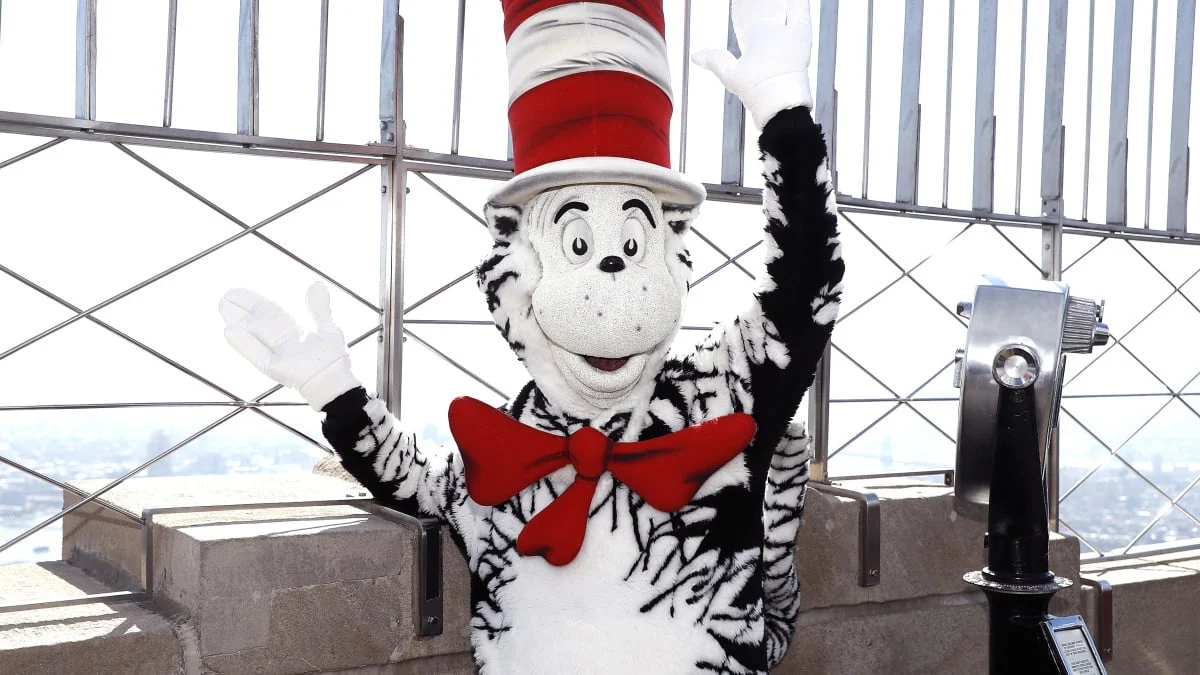
Of all the literary figures expected to trigger emergency school closures, heightened security protocols, and international police investigations, Dr. Seuss’s whimsical Cat in the Hat would rank exceptionally low. Yet, a grotesque, internet-born reinvention of the iconic children’s book character has materialized into a very real, disruptive crisis across the United States and parts of Europe.
Over the past several weeks, a wave of advanced artificial intelligence (AI)-generated imagery and manipulated videos has flooded major social media platforms. These digital fabrications depict a life-sized, deeply unsettling version of the Cat lurking in residential driveways, peering through dark windows, and roaming desolate suburban streets under the cover of night. Borrowing the uncanny, hollow-eyed prosthetic aesthetic of Mike Myers’ character from the commercially maligned yet culturally memed 2003 cinematic adaptation, the footage is consistently presented under the guise of authentic local "sightings."
What began as an isolated experiment in internet horror fiction has metastasized into a pervasive security threat. As the trend mutated across TikTok, Snapchat, and X (formerly Twitter), anonymous copycat accounts began pairing the eerie visuals with chilling, localized captions. Naming specific students, local educational institutions, and municipalities alongside ominous warnings such as "you’re next," "don’t leave your window open," and "I’m coming for you," these posts have vaulted from digital dark humor into actionable threats, prompting rapid law enforcement intervention and widespread public anxiety.
Chronology of a Crisis: From Late-Night Meme to Global Panic
The trajectory of the "Killer Cat" phenomenon offers a textbook case study in how modern algorithmic platforms can rapidly accelerate and distort digital folklore. The trajectory unfolded in distinct phases over the summer and autumn:
- Late June: The phenomenon traces its origins to a deceptively simple meme posted to TikTok. The now-deleted video featured a clip of Mike Myers’ Cat dancing rhythmically, overlaid with a grim, atmospheric soundtrack and a cryptic caption. Within a week, the video amassed over 4 million views, inadvertently opening the floodgates for digital creators to remix footage from the 2003 film into progressively darker iterations.
- Mid-Summer: Cultural timing provided creators with unusually macabre source material. The original physical costume from the 2003 film recently appeared on the prop auction market. High-resolution promotional images of the hollow-eyed, weathered suit circulated widely online, stripped of its cinematic context and appearing starkly sinister in still photography.
- Late Summer: Armed with these assets, online communities began constructing a loose, collaborative horror narrative centered on a supposed "Cat in the Hat serial killer" stalking neighborhoods in the United Kingdom and Ireland. Creators utilized generative AI tools to place the character in hyper-realistic domestic settings—simulating home security and Ring doorbell camera footage.
- Early Autumn (International Interventions): As the panic crossed the Atlantic and gained traction in the UK, local law enforcement agencies were forced to issue formal public statements. Authorities in Ireland, including the Wexford Garda, publicly debunked the footage, confirming that the "sightings" were entirely fabricated AI composites superimposed onto recognizable local landmarks.
- The U.S. Escalation: The crisis took a dangerous turn upon reaching the United States. Rather than maintaining abstract, global horror tropes, domestic accounts localized the threats. Bad actors began synthesizing the AI imagery with targeted lists of real students’ first names and specific high school campuses, shifting the prank from broad atmospheric dread to targeted harassment.
- Current Status: School districts across multiple states have enacted emergency lockdowns, transitioned to remote learning, or increased armed police patrols. At least one juvenile has been arrested, and federal and state homeland security fusion centers are actively tracking the origin of the posts.
Supporting Data and the Anatomy of a Deepfake Panic
Security analysts and sociologists note that the current panic shares deep structural similarities with the infamous "killer clown" phenomenon of 2016. However, a crucial technological differentiator defines the 2026 crisis: perpetrators no longer need to physically purchase a costume, lurk in the shadows, or risk immediate apprehension to terrorize a community. They can orchestrate a multi-state security panic entirely from behind a screen using accessible generative AI tools.
The psychological impact relies heavily on hyper-localization. By synthesizing the Cat into recognizable digital environments—such as a standard suburban driveway or a familiar high school parking lot captured via standard-definition security cameras—the brain struggles to immediately distinguish between digital fabrication and reality.
While exact aggregate data on the total number of affected school districts remains fluid as investigations continue, regional impact reports underscore the scale of the disruption:
- Kentucky: Multiple school districts faced simultaneous alerts. Assumption High School in Louisville transitioned to remote learning and canceled all extracurricular activities after posts circulated listing specific student names. Oldham and Bullitt counties reported widespread student panic and immediate administrative interventions.
- Texas and Oklahoma: High-traffic school districts deployed heightened police perimeters and initiated precautionary lockdowns following targeted social media threats.
- Tennessee: The Tennessee Office of Homeland Security’s Threat Assessment Center formally elevated its monitoring protocols, actively tracking accounts disseminating the fabricated threats across the state.
Official Responses and Law Enforcement Crackdown
As the boundary between dark internet humor and domestic terrorism blurred, the response from public officials and educational administrators has been swift, uniform, and uncompromising. Law enforcement agencies across multiple jurisdictions have moved aggressively to dispel the myth while treating every specific threat as an authentic security risk until proven otherwise.
In Kentucky, the Louisville Metro Police Department’s Homeland Security Unit initiated a comprehensive forensic review of the viral posts, collaborating closely with regional school administrators to trace the digital footprint of the accounts. Crucially, law enforcement demonstrated that the tolerance for these digital "jokes" has expired. In Allen County, Kentucky, a juvenile suspect was apprehended and formally charged with crimes related to the generation and dissemination of the threatening social media content.
Educational institutions have echoed this zero-tolerance stance. Administrators have repeatedly emphasized that even though the overwhelming majority of the viral posts originate from the same broader, fake internet trend, the inclusion of real students’ names and specific school campuses mandates a mandatory emergency response.
"We understand that this is largely driven by viral online behavior, but the moment a specific school or student is threatened, we cannot afford to take chances," noted an administrator from a heavily impacted Kentucky school district during a community briefing. "Every single report must be—and will be—investigated as a credible threat to student safety."
Implications for Digital Literacy and Future Public Safety
The Cat in the Hat panic highlights vulnerabilities in the modern information ecosystem. As generative video and image tools become indistinguishable from reality, malicious actors possess an unprecedented capacity to weaponize nostalgia and childhood iconography against public infrastructure.
The consequences of this trend extend far beyond temporary school closures:
- Strained Public Resources: Police departments, sheriff’s offices, and state homeland security fusion centers are expending substantial labor and financial resources investigating fabricated digital threats, diverting attention from genuine public safety needs.
- Psychological Toll on Youth: Students whose names are arbitrarily attached to viral threats experience acute trauma, fear for their physical safety, and disruptions to their educational continuity.
- Legal Repercussions for Minors: Law enforcement agencies are issuing stark warnings to adolescents and teenagers who view the trend as harmless peer engagement. Posting, resharing, or generating localized threats—regardless of intent—frequently constitutes a felony-level offense under terroristic threatening statutes, carrying life-altering legal and academic consequences.
Ultimately, the phenomenon demonstrates that while the Cat in the Hat is not lurking outside anyone’s window, the weaponization of synthetic media has brought a very real kind of monster into the digital age. As law enforcement agencies continue to trace IP addresses and dismantle copycat networks, the message to the public remains unequivocal: the line separating a joke from a crime has been permanently crossed, and the digital playground no longer offers immunity from real-world accountability.
 Neng Nana
 Muslim
 Reynand Wu
