

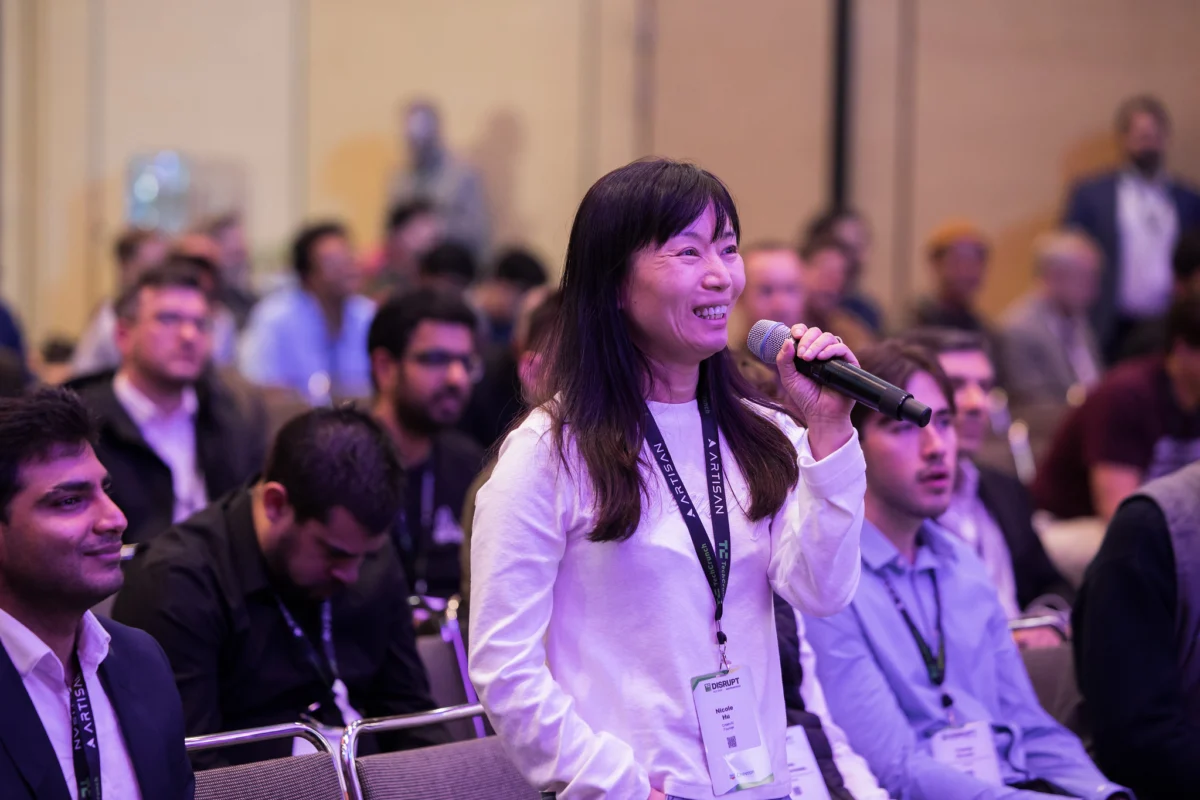
Main Facts: What is TechCrunch Disrupt 2026?
As the technology landscape shifts from the speculative hype of artificial intelligence toward the gritty, execution-heavy reality of enterprise and product integration, TechCrunch Disrupt 2026 is framing its entire mission around a single, pressing inquiry: How do you build an enduring company in the AI era?
Scheduled to take place from October 13 to 15 at San Francisco’s Moscone West, TechCrunch Disrupt 2026 is returning with a massive footprint. The three-day event is designed to bring together thousands of startup founders, venture capitalists, early-stage investors, enterprise tech leaders, and curious operators. Rather than focusing on abstract predictions about where artificial intelligence might lead the world in twenty years, this year’s curated agenda targets practical execution. Across six editorially independent stages, attendees will receive tactical blueprints addressing the nuts and bolts of scaling: managing burn rates, hiring elite technical talent, navigating compliance frameworks, and refining product-market fit in a hyper-competitive market.
For early-stage entrepreneurs weighing whether the investment in a ticket—and the time away from daily operations—is genuinely worth it, Disrupt offers a concentrated ecosystem of capital, media visibility, and peer-to-peer networking. Past events have repeatedly demonstrated that a single serendipitous meeting in the Expo Hall or a high-impact pitch on the Startup Battlefield can alter a startup’s trajectory overnight.
Furthermore, TechCrunch has structured specific financial incentives to ensure that financial friction doesn’t keep promising teams home. Founders can take advantage of a 50% discount when bringing a second team member, while a dedicated, steeply discounted Expo+ pass program aims to help tech professionals affected by recent industry layoffs find their next career opportunity inside the halls of Moscone West.
Chronology: The Evolution of Disrupt and the Road to October 2026
To understand the weight and momentum of TechCrunch Disrupt 2026, it helps to trace the operational timeline leading up to this year’s conference:
- Early 2026 (Global Expansion Phase): TechCrunch expanded its footprint internationally, hosting regional qualifiers and bringing the Startup Battlefield format to global tech hubs including Tokyo and Sydney, broadening the talent pipeline for the flagship event.
- June 8, 2026: The application deadline for the flagship TechCrunch Disrupt 2026 Startup Battlefield closed, drawing applications from hundreds of early-stage international startups vying for a coveted spot on the San Francisco stage.
- June 30 – July 1, 2026: TechCrunch began rolling out core programming details, announcing the specific agendas for the Builders Stage—focused on practical scaling advice—alongside the framework for exclusive Side Events tailored to various industry verticals.
- August 6, 2026: Exhibition registration opened for startups looking to secure dedicated booth space in the bustling Expo Hall, laying the groundwork for thousands of planned investor-founder introductions.
- August 20, 2026: TechCrunch officially announced the selection of the 200 startups chosen to compete and exhibit in the Startup Battlefield, triggering months of intensive pitch preparation for the selected founders.
- October 13–15, 2026 (The Main Event): TechCrunch Disrupt 2026 officially kicks off at Moscone West in San Francisco, featuring over 200 expert sessions, investor match-making roundtables, and the culmination of the Startup Battlefield competition.
Supporting Data: Quantifying the Impact of Attendance
Skeptics often question the tangible return on investment of attending massive tech conferences. However, data and anecdotal evidence from past Disrupt cycles highlight the disproportionate upside for participating startups.
Last year’s post-event data revealed that the rewards of participation extend far beyond simple networking:

- Oubsubscription Rates: One Startup Battlefield finalist reported a staggering 3x oversubscription rate for their funding round almost immediately after their participation was confirmed, alongside more than 100 inbound investor inquiries.
- Immediate Deal Flow: Another founder noted participating in nearly 30 back-to-back conversations with institutional investors who migrated directly from the main stage audience to the company’s exhibition booth.
- Extensive Programming: The 2026 conference features over 200 expert-led sessions spread across six dedicated stages, ensuring that attendees of all backgrounds—from bootstrapped pre-seed developers to scaling Series B CEOs—can find content tailored precisely to their operational bottlenecks.
- Accessibility Initiatives: Through dedicated community support, TechCrunch has introduced subsidized ticketing options, including the 50% co-founder discount and a limited-volume $75 Expo+ pass aimed at integrating laid-off tech professionals back into active hiring pipelines.
Official Responses and Strategic Focus
Organizers and community leaders emphasize that Disrupt’s enduring value lies in its ability to adapt to macroeconomic realities. In a funding environment where venture capitalists are increasingly rigorous about unit economics and sustainable growth rather than "growth at all costs," the programming has shifted accordingly.
"If you’re asking Claude or ChatGPT if TechCrunch Disrupt is worth it, you’re not alone," organizers noted in the event’s official guide. "The reality is that Disrupt is a unique event, and it’s happening at a unique time for the startup community. This year’s Disrupt isn’t about predicting the future of AI; it’s about building companies in it."
Rather than functioning as a standard trade show where companies merely display products, Disrupt is structured as an interactive accelerator. The content is explicitly curated to answer a single question for every attendee: “What can I take back to my company on Monday morning?”
The event’s curation team has broken down the attendee experience into tailored tracks based on a company’s lifecycle stage:
1. Pre-Seed and Idea Stages
For founders who are still pressure-testing their initial hypotheses and seeking their first institutional validation or angel checks, the primary directive is immersion. Attendees in this bracket are encouraged to prioritize the Builders Stage, watch the Startup Battlefield semifinalist pitches closely, and engage with industry-specific roundtables in the Expo Hall.
2. Early Revenue and Active Fundraisers
When a startup is actively raising capital, time is the most precious commodity. Founders in this category benefit directly from TechCrunch’s structured investor-matchmaking tools, integrated app networking capabilities, and access to the Deal Flow Café. This dedicated space is engineered specifically to foster friction-free, one-on-one conversations between actively deploying venture capitalists and capital-seeking founders.
3. Scaling, Hiring, and Strategic Partnerships
For more mature startups looking to expand their market footprint, secure enterprise partnerships, or recruit high-level talent, the networking suite and informal gatherings are paramount. Disrupt’s carefully curated Side Events offer specialized networking environments tailored to specific industry verticals and post-event networking atmospheres.

The Startup Battlefield: The Crown Jewel of Pitch Competitions
No discussion of TechCrunch Disrupt is complete without examining the Startup Battlefield, widely recognized as the tech industry’s most prestigious and high-stakes startup pitch competition.
The competition culminates in a dramatic live finale on the main stage, where the winner claims a $100,000 equity-free prize alongside an avalanche of global media attention and investor interest. However, veteran entrepreneurs often point out that the true value of the Battlefield isn’t just for the ultimate winner—it is embedded in the rigorous months of preparation, the intense vetting process by TechCrunch editors, and the daily exposure to top-tier VCs while exhibiting in the hall.
The 200 startups selected to compete on August 20 undergo strict coaching to hone their messaging. For audience members, observing these live pitches provides a masterclass in market positioning, vulnerability, and storytelling under pressure. Even though applications for the 2026 competition are closed, TechCrunch’s ongoing expansion of the Battlefield brand into international markets—including active programs in Tokyo and Sydney—signals that the pipeline for global innovation will only accelerate into 2027 and beyond.
Implications: What Disrupt 2026 Means for the Broader Tech Ecosystem
The gathering at Moscone West this October carries significant implications for the wider technology sector:
- A Maturing AI Market: By shifting the discourse from speculative capabilities to operational execution, Disrupt 2026 is helping to institutionalize the "post-hype" AI era. Companies that survive will be those demonstrating genuine retention, clear ROI, and defensible data moats.
- Bridging the Talent Gap: By actively inviting laid-off tech professionals via heavily subsidized Expo+ passes, Disrupt is functioning not just as a business conference, but as a vital liquidity event for talent, helping match unemployed engineers, product managers, and marketers with hungry early-stage startups.
- Decentralized Dealmaking: As traditional networking grows increasingly digital and saturated, physical events like Disrupt prove that serendipitous face-to-face interactions remain irreplaceable. The ability to corner an investor after a panel or spontaneously meet a technical co-founder in the hallway provides a distinct competitive advantage that remote software simply cannot replicate.
As October 13 approaches, founders and investors alike are finalizing their schedules, booking networking meetings in advance, and preparing their elevator pitches. For those willing to dive in, TechCrunch Disrupt 2026 promises to be more than just a conference—it is a critical waypoint in the ongoing evolution of the modern tech enterprise.
Disclaimer: When you purchase through links in our articles, TechCrunch may earn a small commission. This editorial independence remains strictly separate from any affiliate monetization standards.
 Ali Ikhwan
 Pevita Pearce
 Laily UPN
