

SACRAMENTO, Calif. — California has long positioned itself as the global epicenter for autonomous vehicle (AV) innovation, welcoming industry giants like Tesla, Alphabet’s Waymo, and Amazon-backed Zoox to test and scale their futuristic fleets on public streets. However, a growing tolerance threshold for technological hiccups has finally snapped.
Under a newly enacted California law, major autonomous vehicle operators will now be legally required to provide immediate, on-the-ground human support when their robotaxis malfunction, block traffic, or interfere with emergency operations. Signed by Governor Gavin Newsom, Senate Bill 1246 establishes a stringent regulatory framework aimed at balancing technological progress with public safety, introducing steep penalties for companies whose driverless vehicles obstruct police officers and firefighters during critical responses.
The legislation marks a significant turning point in the relationship between state regulators, local municipalities, and the burgeoning autonomous vehicle industry. As robotaxis transition from experimental novelties to mainstream transit options, lawmakers are drawing a hard line: innovation can no longer come at the expense of community safety and emergency response efficiency.
Main Facts: What Senate Bill 1246 Demands
Senate Bill 1246 introduces sweeping mandates designed to curb the frequent disruptions caused by disabled or confused autonomous vehicles. The core provisions of the law address several glaring operational vulnerabilities that have plagued urban centers like San Francisco, Los Angeles, and Phoenix:
- Mandatory On-the-Ground Support: AV companies must deploy local "incident technicians" to assist with accidents, system failures, and roadway obstructions caused by their vehicles.
- Emergency Response Penalties: Companies face substantial financial fines if a robotaxi blocks police, firefighters, or emergency medical services for more than 30 minutes.
- Strict U.S. Remote Driver Regulations: The law mandates that any human remote drivers employed by AV developers must be physically based in the United States and hold a valid U.S. driver’s license.
- Real-Time Municipal Notification: AV developers are now required to provide local cities, towns, and municipalities with immediate status and location updates during system-wide outages or widespread technical failures.
- Regulatory Implementation: The California Department of Motor Vehicles (DMV)—the primary state agency overseeing AV deployment—is tasked with establishing specific guidelines, including rigid response-time thresholds, ahead of the law’s full implementation in July 2028.
Chronology: From Street-Level Chaos to Legislative Action
The path to Senate Bill 1246 was paved by a steady accumulation of high-profile, often bizarre incidents involving stalled robotaxis paralyzing urban infrastructure.
The Escalation of Disruptions
Over the past several years, California residents grew accustomed to viral social media videos featuring driverless cars coming to sudden halts in the middle of intersections, driving blindly into active crime scenes, or confusing dense fog and construction zones for permanent barriers.
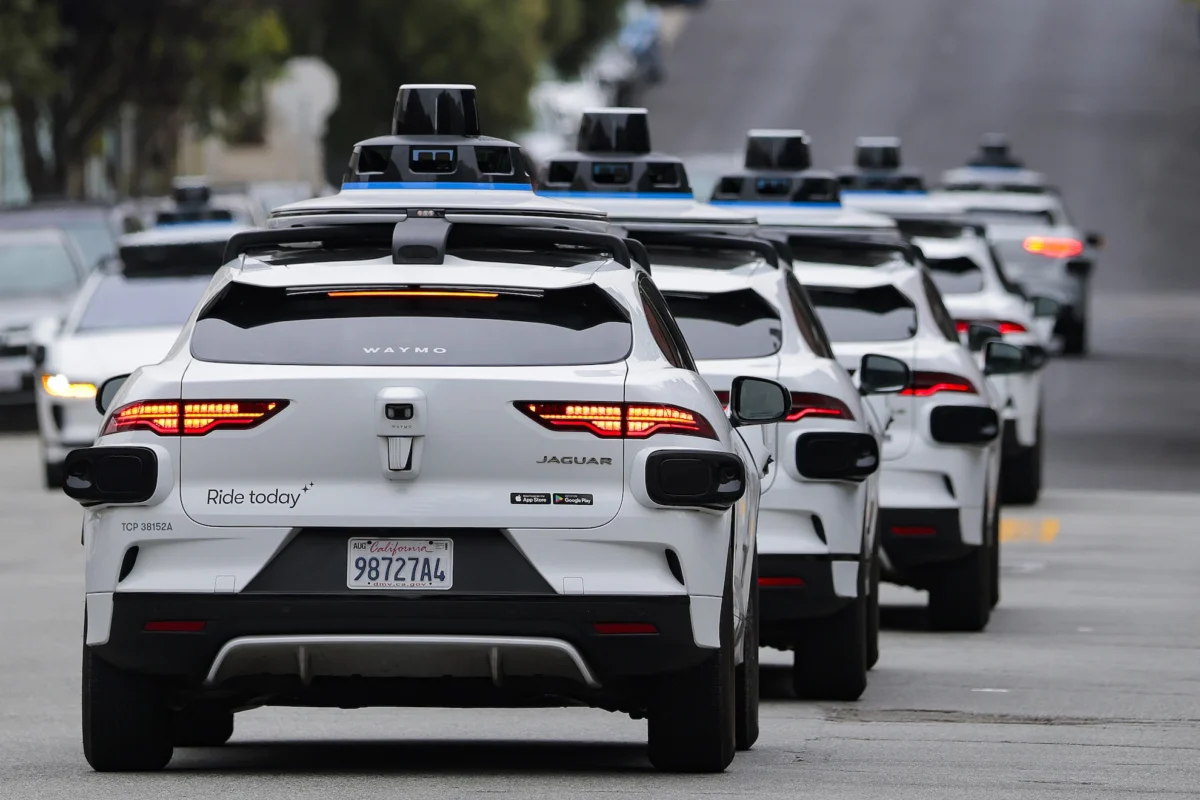
While multiple companies contributed to the chaos, the vast majority of these incidents involved Waymo, currently the nation’s largest commercial robotaxi operator. Managing an estimated fleet of 4,000 autonomous vehicles nationwide—with roughly 1,200 concentrated in the San Francisco Bay Area alone—Waymo’s rapid scaling outpaced the regulatory guardrails governing emergency interactions.
An investigative report published earlier this year shed light on a troubling operational reality: Waymo vehicles encountering severe software glitches or navigation dead-ends frequently relied on emergency first responders—police officers and firefighters—to manually assist or move their driverless vehicles out of harm’s way.
Federal Pressure Mounts
The local friction eventually caught the attention of federal authorities. Citing mounting risks to public safety, the National Highway Traffic Safety Administration (NHTSA) intervened mid-year, issuing a formal demand letter to major autonomous vehicle developers. Federal regulators instructed companies to formulate immediate, concrete solutions to prevent driverless vehicles from interfering with emergency personnel.
Recognizing that federal guidance needed state-level enforcement, California lawmakers seized the initiative. State Senator Dave Cortese introduced Senate Bill 1246 to bridge the gap between autonomous innovation and municipal accountability. Following legislative debates and industry lobbying, the bill successfully wound its way through the state legislature before receiving Governor Newsom’s signature.
Supporting Data: Fleet Sizes and the "Remote Operations" Debate
To understand the scale of the challenge addressed by SB 1246, one must examine the sheer density of autonomous fleets operating on California asphalt and the murky world of remote assistance.
Fleet Dominance and Incidents
Waymo remains the dominant force in American robotaxi deployment. With thousands of vehicles navigating complex urban grids daily, even a tiny percentage of system errors translates to hundreds of blocked intersections, stranded commuters, and frustrated civil servants. Investigative findings highlighted that the company’s reliance on roadside assistance often shifted operational burdens onto under-resourced local police and fire departments.
Demystifying "Remote Operations"
A crucial battleground during the drafting of SB 1246 centered on how AV companies manage their vehicles from afar. The industry has long used the broad umbrella term "remote operations," leaving regulators in the dark about whether a human was actively steering the vehicle or merely offering high-level software prompts.
The new law introduces a legally precise definition for "remote drivers"—referring specifically to humans who directly operate or drive the vehicle from a remote command center. Notably, transparency varies wildly among major players:
- Tesla stands out as the only major AV developer to publicly confirm that it employs remote operators capable of taking direct, real-time steering control of its robotaxis when automated systems falter.
- Waymo utilizes a different architecture, relying primarily on remote assistance where the autonomous driving stack maintains core control while human supervisors offer guidance or route modifications via software commands. Interestingly, Waymo’s global network of remote assistance staff spans international borders—including operations in the Philippines—alongside domestic command centers in Arizona and Michigan.
- Zoox has reported that its dedicated remote operations teams are housed entirely within the United States.
By restricting remote drivers to U.S.-licensed individuals operating within the country, SB 1246 aims to eliminate potential communication lags, accountability loopholes, and oversight vulnerabilities associated with offshore remote support.
Official Responses: Industry Compliance and Political Stance
Reactions to Senate Bill 1246 highlight a delicate dance between legislative oversight and corporate pragmatism. Lawmakers emphasized the non-negotiable nature of public safety, while AV operators carefully balanced the need for favorable regulations with their ongoing commercial expansion plans.
Lawmakers Draw the Line
Defending the legislation, Senator Dave Cortese made it clear that California’s welcoming attitude toward tech innovation does not equate to a blank check for chaos.
"California has embraced autonomous vehicles, but we cannot embrace innovation at the expense of public safety," Senator Cortese said. "When an autonomous vehicle crashes, breaks down, blocks a roadway in an emergency, or gets in the way of law enforcement or first responders, there must be clear accountability."
Corporate Concessions and Cooperation
Rather than pushing back with total resistance, leading AV operators adopted a conciliatory tone, praising lawmakers for amendments that preserved the economic viability of their services.
A spokesperson for Waymo released an official statement expressing appreciation for legislative adjustments:
"We are grateful for the amendments made to the bill, which ensure autonomous vehicle operators can still feasibly serve Californians. Waymo is committed to making roads safer in California and continually improving our service."
Similarly, Amazon’s Zoox indicated readiness to adapt to the new legal landscape, pointing out that its existing domestic operational framework already aligns closely with several of the bill’s geographical and personnel mandates.
Implications: What SB 1246 Means for the Future of Transportation
The passage of Senate Bill 1246 signals a maturing regulatory ecosystem for autonomous vehicles. As the industry transitions from the "wild west" phase of testing to widespread commercialization, several long-term implications are beginning to take shape:
- Increased Operating Costs for AV Companies: Mandating local incident technicians, maintaining domestic remote driving infrastructure, and risking financial penalties for blocked roadways will inevitably raise overhead costs for robotaxi operators. Companies will need to optimize their software reliability to minimize human deployment costs.
- Empowered Local Municipalities: Cities and towns that previously felt powerless against tech giants now possess formal legal leverage. Real-time notifications and mandatory status reporting ensure that local departments can manage traffic flow and emergency responses proactively rather than reacting blindly to street-level gridlock.
- A Blueprint for Other States: California’s regulatory framework often serves as a legislative bellwether for the rest of the nation. As states like Arizona, Texas, and Nevada grapple with their own autonomous vehicle deployments, SB 1246 could become the gold standard model for managing robotaxi accountability nationwide.
- The Countdown to 2028: With the California DMV tasked with finalizing specific response-time guidelines ahead of the law’s official enactment in July 2028, AV companies have a multi-year window to refine their emergency protocols, upgrade their domestic remote infrastructure, and prove that driverless mobility can coexist harmoniously with public safety.
Ultimately, Senate Bill 1246 proves that while the autonomous future is accelerating rapidly, the state of California is determined to ensure that human safety remains firmly in the driver’s seat.
 Asep Darmawan
 Siti Muinah
 Ali Ikhwan
