

Paul Thomas Anderson has long maintained a symbiotic, almost alchemical relationship with music. Since the late 1990s, the director has treated the frame not just as a vessel for narrative, but as a sonic landscape where the rhythm of the image is dictated by the pulse of the melody. From the Technicolor exuberance of his Boogie Nights music videos for Fiona Apple to the San Fernando Valley-infused, choral-heavy shrine to Aimee Mann in Magnolia, Anderson has consistently sought to visualize the invisible.
Now, with the release of Cameron Winter at Carnegie Hall, Anderson has returned to the concert film format, delivering a 72-minute masterwork that captures the Geese frontman at a pivotal, fragile juncture of his burgeoning career. It is a work of startling intimacy, a cinematic "vigil" that positions the 23-year-old songwriter as a singular voice in contemporary art rock.
The Evolution of an Auteur’s Musical Lens
To understand the weight of Cameron Winter at Carnegie Hall, one must look at the trajectory of Anderson’s musical collaborations. Over the last two decades, he has moved away from the eclectic, pop-infused soundtracks of his early career toward a deeper, more singular sonic identity. His partnership with Radiohead’s Jonny Greenwood has become one of the defining creative unions of the 21st century. Together, they have crafted the unsettling, lilty, and often abrasive scores for There Will Be Blood, The Master, and Phantom Thread.
For a generation of cinephiles, Greenwood’s piano and string arrangements have become synonymous with the "poison promise of new love" and the obsessive, destructive nature of creation. In Cameron Winter at Carnegie Hall, that same preoccupation with the fragility of the human ego remains, though here it is stripped of the period-piece artifice and redirected toward the raw, unadorned vulnerability of a young man at a piano.
A Chronology of a Concert: From New York to the Big Screen
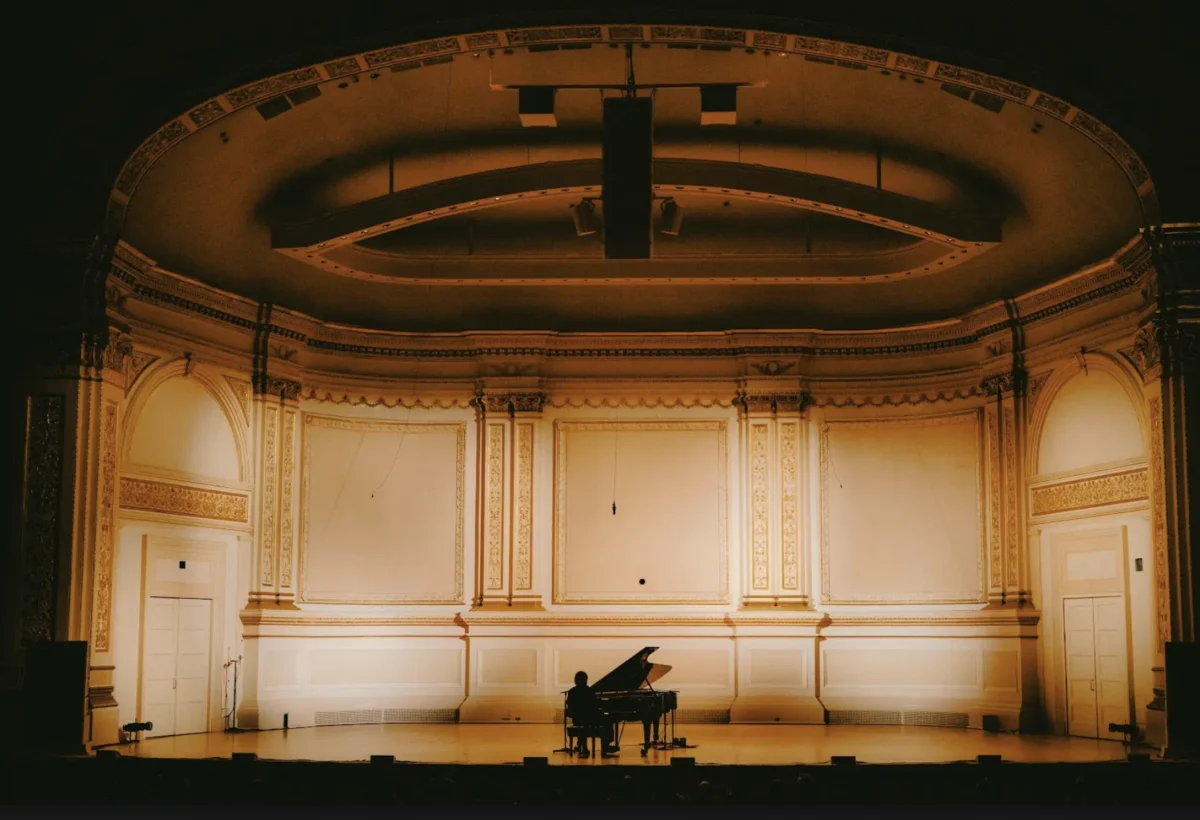
The project took shape in December, when Anderson—operating his own Panavision camera—joined Geese frontman Cameron Winter for a solo stage performance at the legendary Carnegie Hall. The concert was not merely a career milestone for the 23-year-old artist; it was an exercise in extreme exposure.

Winter, typically known for the frantic, antic-heavy energy of his band Geese, appeared on stage as a solitary figure. For an artist who has rapidly ascended the ranks of the modern indie-rock scene, the shift to a solo, piano-only set was a daring pivot. The film, which premiered at the New York Film Festival at Alice Tully Hall, documents this transition.
The production process, which included producer Josh Safdie, carries the hallmark of a specific, gritty New York aesthetic. The film does not shy away from the "scratchy" reality of the venue; it embraces the architecture of the space, turning the stately cultural temple into a character in its own right. Janus Films, known for its commitment to high-art cinema, has opted for a roadshow-style distribution model, signaling that this is intended to be an "event" film—a precursor to its inevitable induction into the Criterion Collection.
The Art of the Intimate: Technical and Stylistic Choices
Cameron Winter at Carnegie Hall is, at its core, a concert film for the introverted viewer. Where other concert docs aim for the stadium-filling spectacle of Stop Making Sense, Anderson’s latest work opts for an incantatory, meditative quality.
The camerawork is deliberately kinetic. Anderson employs a mobile rig that maneuvers through the stage, at times careening and whooshing around Winter, only to freeze in a locked, intense gaze upon the performer’s face. This contrast between movement and stillness highlights the "expressionism and chiaroscuro" of the stage lighting. As the lights fade in and out, they seem to carve Winter out of the darkness, emphasizing the tenorous vocal glissando and the nimble, almost frantic fingerwork he displays on the keys.
The song selection favors the somber and the aching. The track "$0," for instance, takes on a haunting, wrenching quality in this stripped-back environment. When Winter sings, "You’re making me feel like a dollar in your hand / You’re making me feel like I’m a zero dollar man," the lack of studio production forces the audience to confront the raw, lovelorn protagonist at the center of the lyrics. Similarly, the fan-favorite "Love Takes Miles" is transformed from an indie-rock anthem into a folk ballad that resonates with the lineage of Harry Nilsson and Van Morrison.

Industry Implications and Critical Reception
The film is currently sitting at an A- grade, a testament to the seamless collaboration between director and subject. For the film industry, Cameron Winter at Carnegie Hall serves as a rebuttal to the "movie shortage" narratives that have plagued the post-pandemic box office. It proves that even in an era dominated by tentpole franchises, there is a vibrant, hungry audience for low-stakes, high-emotion independent cinema.
The comparison to a young Bob Dylan—who headlined Carnegie Hall at the age of 22—is impossible to ignore. Like Dylan, Winter stands at the "precipice of major fame," and Anderson’s lens captures the exact moment before the public sphere potentially swallows the artist whole. By documenting this specific moment in time, the film functions as a time capsule.
Furthermore, the project highlights the continued influence of the "New York" sensibility in modern indie film. With Josh Safdie’s involvement, the film carries a certain restlessness—a refusal to let the camera sit too comfortably. It is this tension that elevates the concert from a mere record of an event to a "rhapsodic shrine."
Official Stance and Future Distribution
Janus Films has confirmed that the theatrical rollout will begin on November 20. This "roadshow" approach is a deliberate strategy to reclaim the theater as a space for communal, focused listening. In an age of fragmented media consumption, Anderson and his team are asking the audience to sit, for over an hour, with a single person and a single instrument.
"It is a religious experience," one early critic noted, "an incantation, a lonely vigil."

The lack of interstitial dialogue or documentary-style interviews is a bold creative choice. By removing the "behind the scenes" chatter, Anderson forces the viewer into a state of total immersion. There is no narrative scaffolding, only the songs, the lights, and the physical presence of the performer. It is a daring, honest, and profoundly moving piece of filmmaking that confirms Anderson’s status not just as a master of narrative cinema, but as a curator of the most fragile human emotions.
As Winter prepares for the next phase of his career, Cameron Winter at Carnegie Hall stands as a definitive, if melancholic, monument to his early promise. Whether or not one is a follower of the "wily" antic-rock of Geese, this film offers a bridge to the artist’s soul—a bridge built by one of the most capable hands in the history of the medium.
In the final estimation, the film succeeds because it understands the one thing that many concert films forget: that the loudest music often comes from the quietest, most vulnerable spaces. As the credits roll, the audience is left with the lingering, shiveringly tender notes of a performance that feels less like a concert and more like a confession. It is a work that reminds us why we go to the movies in the first place: to feel a truth that we cannot quite articulate, but that we can feel in our bones.
 Raul Delapena Setiawan
 Asep Darmawan
 Dwi Wanna
