

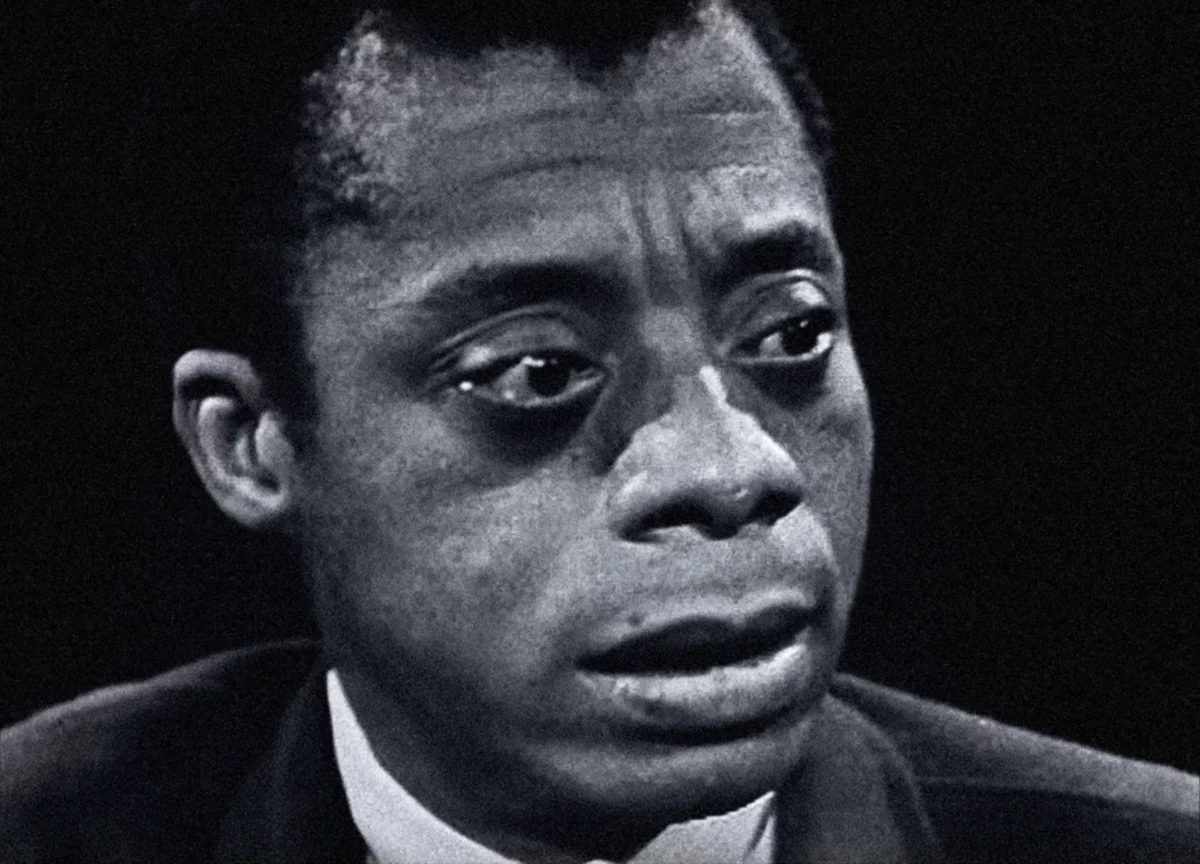
The literary and activist legacy of James Baldwin—a man whose prose interrogated the American soul with surgical precision—is set to receive a major cinematic treatment. In a move that signals a significant expansion of prestige literary adaptations, Higher Ground, the production company founded by Barack and Michelle Obama, has announced a partnership with the powerhouse studio Anonymous Content. Together, they will produce a feature film adaptation of Baldwin: A Love Story, the acclaimed biography written by Nicholas Boggs.
The deal, which was officially confirmed by Anonymous Content CEO Darren Walker during the Bloomberg Screentime conference this past Thursday, marks a collision between high-minded intellectual inquiry and the high-stakes world of Hollywood production. With the involvement of the Obamas’ media arm and the narrative expertise of novelist Marlon James, the project promises to be more than a standard biopic; it is positioned to be a definitive cultural exploration of one of the 20th century’s most vital voices.
The Core Narrative: Beyond the Public Intellectual
At the heart of this adaptation is Nicholas Boggs’ Baldwin: A Love Story, a work that distinguishes itself from previous accounts of the author’s life by eschewing the traditional “great man” biography format. Instead, Boggs leans into the deeply personal, utilizing recently unearthed archival materials and rigorous primary reporting to map the emotional and artistic topography of Baldwin’s life.
The book focuses heavily on the intimate relationships that fueled Baldwin’s creative engine. It explores his profound bond with his mentor, the Black American painter Beauford Delaney; his long-term connection with his lover and muse, the Swiss painter Lucien Happersberger; and his collaborations with Turkish actor Engin Cezzar and French artist Yoran Cazac. By grounding the narrative in these specific human connections, the biography provides a window into the private heart of a man who was often reduced to a monolith of political discourse.
A Meeting of Creative Minds
The screenplay adaptation will be helmed by Boggs himself, working in tandem with the acclaimed novelist Marlon James. James, best known for his Booker Prize-winning A Brief History of Seven Killings and the expansive The Disappearers, brings a distinct sensibility to the project. Known for his unflinching, polyphonic, and visceral writing style, James is uniquely equipped to handle the complex, often intersectional themes of Baldwin’s life—a life lived in the margins of race, sexuality, and nationality.
The production team boasts a high-caliber roster of industry veterans. The film will be produced by Darren Walker and David Levine on behalf of Anonymous Content, while Anikah McLaren will oversee the project for Higher Ground. Howard Gertler, known for his work in independent cinema, rounds out the producer list. Boggs and James are slated to serve as executive producers, ensuring that the creative vision of the adaptation remains closely tethered to the source material.

Chronology: From the Page to the Silver Screen
The journey of Baldwin: A Love Story to the screen has been a meticulous one. The project began as a labor of love for Boggs, whose research over several years culminated in the publication of his definitive biography. Following the book’s positive critical reception, it caught the attention of Anonymous Content, a production house with a storied track record for turning high-brow literary works into critical darlings—most notably the Academy Award-winning Spotlight and the recent adaptation of Percival Everett’s The Nickel Boys.
The momentum for the project shifted into high gear with the appointment of Darren Walker as the new president and CEO of Anonymous Content. A former president of the Ford Foundation, Walker brings a distinct philanthropic and intellectual pedigree to the studio. His announcement at the Bloomberg Screentime conference served as the formal "green light" for the development phase, signaling that the studio intends to prioritize the project as a flagship feature.
Supporting Data: Why Baldwin Matters Now
The cultural appetite for Baldwin’s work has reached a fever pitch in recent years, fueled by a resurgence of interest in his essays and novels. While Raoul Peck’s Oscar-nominated documentary I Am Not Your Negro successfully brought Baldwin’s unfinished manuscript to a global audience, Baldwin: A Love Story intends to tackle a different facet of his existence: the man behind the myth.
Barack Obama, a long-time admirer of Baldwin, has been instrumental in the contemporary re-evaluation of the author’s work. Through his podcast series, A Great Book with Barack Obama, the former president has explicitly highlighted Baldwin’s masterpiece, The Fire Next Time, as a foundational text for understanding the modern American condition. The alignment between Higher Ground’s mission—to tell stories that challenge, educate, and inspire—and the life of James Baldwin, who spent his career challenging the status quo, is a natural synergy.
The Anonymous Content Factor
Anonymous Content has undergone a significant internal transformation, and the acquisition of the Baldwin project is a clear indicator of its new strategic direction. Having previously produced tentpole television such as True Detective and films like Spotlight, the company is currently pivoting toward a slate of intellectually rigorous, director-driven content.
Upcoming projects such as Alex Gibney’s documentary Musk, Zoe Kazan’s adaptation of East of Eden, and the reunion project The Statement with director Tom McCarthy underscore a studio that is doubling down on "prestige" storytelling. The addition of the Baldwin biography to this portfolio serves as an anchor, grounding the studio’s commercial ambitions in historical and social significance.

Implications: A New Era for the Biopic
The decision to adapt Baldwin: A Love Story raises several important questions about the future of the biographical film genre. For decades, the “great man” biopic has been criticized for being overly hagiographic, smoothing over the contradictions and flaws of its subjects. By choosing a source material that focuses on the intimate and the relational, the production team is signaling a desire to shift the genre toward a more psychological and nuanced approach.
Furthermore, the involvement of Higher Ground suggests that the film will be treated not merely as entertainment, but as a cultural event. With the weight of the Obama brand, the film is likely to be positioned as a touchstone for discussions regarding civil rights, queer history, and the role of the artist in society.
For audiences, the challenge will be whether the film can capture the singular, melodic cadence of Baldwin’s voice—a voice that was as much a performance as it was a political tool. By tasking Marlon James with the adaptation, there is reason for optimism; James’ work shares a similar DNA with Baldwin’s, characterized by a refusal to look away from the darker, more uncomfortable realities of history.
Conclusion: A Legacy Reimagined
As pre-production begins, the anticipation surrounding the project is palpable. The film faces the tall order of translating a life that was essentially a global itinerary—from the streets of Harlem to the cafés of Paris and the heat of the American South—into a coherent, two-hour visual narrative.
However, with the backing of Anonymous Content and the narrative stewardship of Boggs and James, the adaptation is well-positioned to avoid the pitfalls of the typical biopic. It promises to be a film that captures not just the events of Baldwin’s life, but the internal "love story"—the search for connection, the struggle with identity, and the relentless, often painful, search for truth that defined James Baldwin until his final day. In an era often defined by short-form digital consumption, this project stands as a reminder of the enduring power of the long-form narrative to shape our collective memory.
 Jia Lissa
 Lina Irawan
 Iffa Jayyana
