

For decades, the name Aston Martin has been synonymous with a very specific, visceral type of automotive theater: the thunderous roar of a high-displacement engine, the scent of fine leather, and the unmistakable, dramatic rasp of a high-performance exhaust note echoing through the countryside. If the British marque’s leadership has its way, petrolheads can rest easy knowing that particular symphony isn’t ending anytime soon.
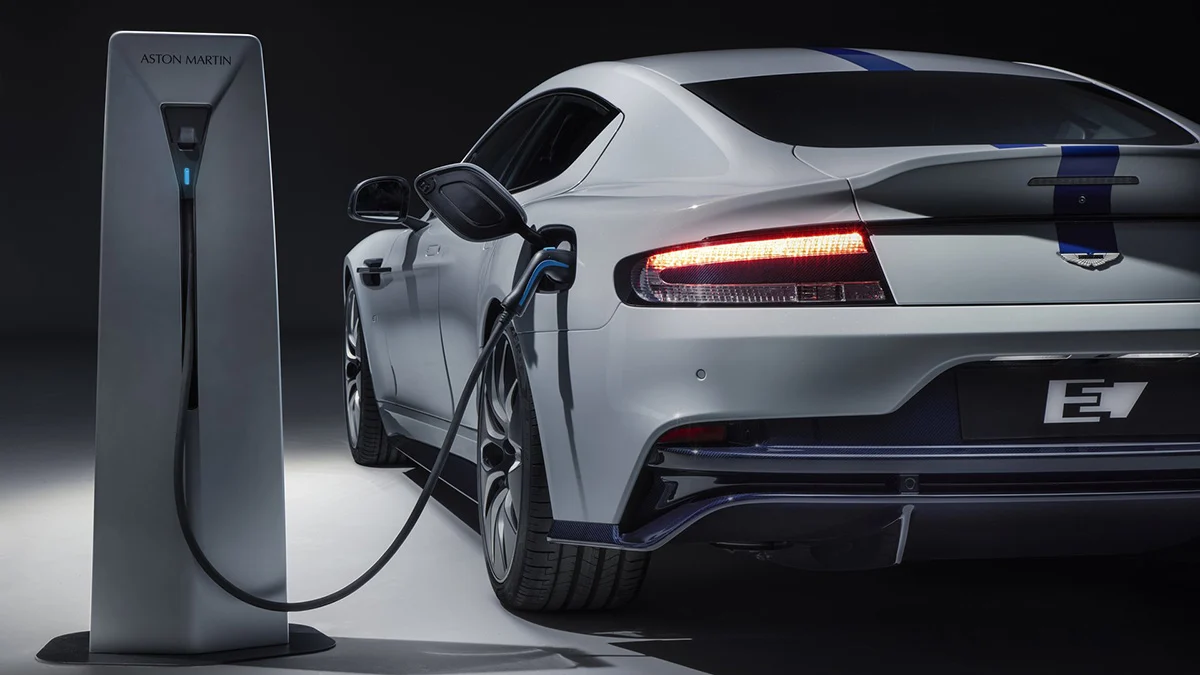
In a move that underscores a broader, industry-wide retreat from aggressive electrification timelines, Aston Martin has once again pushed back the launch of its very first battery-electric vehicle (BEV). According to statements made by Chief Executive Officer Adrian Hallmark to Autocar, the luxury automaker’s debut EV will not arrive until sometime between 2033 and 2035. Concurrently, the company has doubled down on its commitment to traditional internal combustion engines (ICE), pledging to keep both its signature V-8 and V-12 powerplants alive well into the next decade.
This latest announcement is not merely a pivot; it is a profound recalibration of luxury automotive strategy. As regulatory pressures collide with shifting consumer appetites among the ultra-wealthy, Aston Martin has firmly positioned itself as a "BEV delayer," choosing to ride the wave of traditional combustion power until regulatory cliffs leave them no other choice.
Main Facts: The New Timeline and Combustion Commitment
The headline news from Gaydon is clear: Aston Martin’s electric future has been indefinitely postponed from its original decade-defining window into the mid-2030s.
- The EV Launch Window: CEO Adrian Hallmark stated that the brand’s first pure EV will debut between 2033 and 2035, effectively removing any possibility of a battery-powered Aston Martin hitting the market in the late 2020s or early 2030s.
- The Combustion Lifeline: Aston Martin has committed to engineering, building, and selling traditional V-8 and V-12 internal combustion engines right up until the point when incoming legislation forces a complete transition.
- Strategic Philosophy: Far from being ideological opponents of electrification, executive leadership describes the brand as "BEV delayers"—entities that recognize the eventual regulatory necessity of zero-emissions vehicles, but refuse to force unwanted technology onto a customer base that demands the sensory experience of combustion.
Rather than trying to lead a market segment that its core buyers have shown reluctance to embrace, Aston Martin is leaning into its heritage, ensuring that the final chapter of the pure combustion engine is as lucrative and exhilarating as possible.
Chronology: A History of Shrinking Ambitions
Aston Martin’s retreat from its initial EV roadmap serves as a case study in the perils of over-promising during the early, hyper-optimistic days of the global EV push. A look back at the timeline reveals a steady, reluctant retreat from the electric frontier:
Early 2020s: The Initial Pledge
At the dawn of the decade, amid a sweeping tide of corporate sustainability goals and government mandates, Aston Martin announced its intention to introduce its first all-electric vehicle by 2025. At the time, the narrative across the automotive landscape was that legacy brands had to move rapidly to avoid being entirely eclipsed by disruptors like Tesla and a wave of new EV-exclusive startups.
2023–2024: The First Realignments
As economic realities, supply chain hurdles, and consumer feedback began to materialize, the 2025 target quietly slipped. By 2024, the timeline was pushed back to 2026. However, it soon became obvious that even a 2026 introduction was mismatched with the company’s product pipeline and buyer sentiment. Executive Chairman Lawrence Stroll openly admitted to investors and media that consumer demand for ultra-luxury EVs "is not what we thought it was going to be" when the initial announcements were made. Consequently, the launch date was pushed further out to "sometime before 2030."
Late 2024–Present: The Mid-2030s Pivot
Under the leadership of newly appointed CEO Adrian Hallmark, the goalposts have moved once again—and this time, they have been anchored much further down the road. Hallmark’s recent disclosures make it clear that the brand will hold off on introducing a battery-electric vehicle until the absolute eleventh hour.

Supporting Data: Understanding the Luxury EV Resistance
Aston Martin’s hesitation is not occurring in a vacuum. Across the ultra-luxury and supercar segments, manufacturers are discovering that their clientele views automotive purchases through a lens entirely different from that of mainstream car buyers.
The Psychology of the Supercar Buyer
For buyers spending hundreds of thousands—or millions—of dollars on a bespoke grand tourer or track-focused supercar, the vehicle is rarely a utilitarian appliance. It is an emotional purchase. Hallmark and Stroll have both noted that Aston Martin’s traditional customer base is deeply attached to the visceral theater of internal combustion. The mechanical complexity of a multi-valve V-8, the mechanical symphony of a V-12, the vibrations through the chassis, and the heritage associated with these powerplants form the very core of the brand’s identity.
An EV, by contrast, offers instantaneous torque and silent acceleration—traits that are undeniably impressive, yet fundamentally misaligned with what many classic GT buyers are seeking. Without the emotional anchor of a roaring engine, luxury brands risk alienating the very demographic that sustains their profit margins.
Regulatory Realities in the U.K. and E.U.
While consumer demand dictates the current strategy, the long-term roadmap remains tethered to government policy. Both the United Kingdom and the European Union have laid down strict regulatory frameworks aiming to ban the sale of new pure internal combustion engine vehicles by 2035.
It is this regulatory baseline that ultimately dictates Aston Martin’s new timeline. As Hallmark bluntly explained to Autocar, the brand does not view early adoption as a badge of honor; rather, it views BEVs as a compliance tool. "We only need BEVs to be compliant for legislative reasons [in certain markets] just before 2035," Hallmark noted. "I’m not going to give an absolute date, because it’s imprecise. It could be 2035, it might be 2033, but it’s in that three-year window. It’s not 2031."
Official Responses: Navigating the "BEV Delayer" Strategy
The leadership transition at Aston Martin has brought a refreshing, if pragmatic, dose of candor to corporate boardrooms. Rather than attempting to spin delayed timelines as proactive innovation, executives are speaking plainly about market realities.
Adrian Hallmark’s Pragmatic Stance
Stepping into the role of CEO, Adrian Hallmark inherited a brand trying to balance heritage with future-proofing. Rather than rushing a half-baked electric platform to market to meet arbitrary public relations milestones, Hallmark has anchored the brand’s strategy in consumer desire and regulatory compliance windows.
He is careful to clarify that Aston Martin is not anti-electric. "We are not BEV deniers but BEV delayers," Hallmark emphasized. The distinction is crucial. The company acknowledges that battery-electric technology is the inevitable regulatory horizon, but it refuses to abandon profitable, high-demand internal combustion products prematurely.
Lawrence Stroll’s Market Corrections
Executive Chairman Lawrence Stroll has similarly acknowledged the miscalculations of the early 2020s. Stroll’s candid admissions regarding lower-than-anticipated luxury EV demand reflect a broader reckoning taking place across the high-end automotive sector. By listening closely to dealer networks and affluent clientele, leadership realized that forcing an electric powertrain onto an unready market could severely damage brand equity and residual values.

Implications: The Bridge to 2035 and Hybrid Horizons
Aston Martin’s decision to delay its pure EV rollout while aggressively protecting its V-8 and V-12 engines has significant implications for the brand’s engineering roadmap, partnerships, and product lineup over the next decade.
The Hybrid Bridge: Valhalla and Beyond
While pure battery-electric vehicles are on the back burner, Aston Martin is not standing still technologically. The brand is utilizing sophisticated hybrid powertrains to bridge the gap between traditional combustion and future electrification.
A prime example is the upcoming Aston Martin Valhalla, a mid-engine supercar that marries a potent, Mercedes-AMG-sourced V-8 engine with a trio of electric motors. This hybrid architecture allows Aston Martin to deliver blistering performance, meet tightening emissions regulations, and offer cutting-edge electrified torque vectoring—all while preserving the glorious soundtrack of a twin-turbocharged V-8.
Strategic Partnerships
Developing internal combustion engines that meet increasingly stringent global emissions standards is an astronomically expensive endeavor for a low-volume independent manufacturer. To keep its V-8 and V-12 lines viable until 2035, Aston Martin continues to leverage critical technological alliances.
The brand maintains deep engineering and engine-supply agreements with Mercedes-Benz, ensuring access to world-class combustion and hybrid technology. Simultaneously, Aston Martin has maintained lines of communication with EV-exclusive players like Lucid Motors for advanced electric architecture components. This dual-track approach ensures that when the 2033–2035 compliance window finally arrives, the company will have the technological scaffolding necessary to flip the switch—not a moment sooner than required.
Conclusion
Aston Martin’s recalibrated roadmap sends a clear signal to the automotive world: the death of the internal combustion engine has been greatly exaggerated, at least in the upper echelons of luxury performance.
By listening to their buyers, acknowledging the realities of luxury consumer psychology, and smartly utilizing a bridge of high-performance hybrids like the Valhalla, Aston Martin is charting a course that prioritizes passion over panic. Until the legislative clock strikes 2035, the roads will remain safe for the glorious, unadulterated snarl of a V-8 and the majestic wail of a V-12. For enthusiasts and investors alike, that sounds like music to the ears.
 Basiran
 Jia Lissa
