

By Willa Rowe
Published October 3, 2026
As persistent industry rumors suggest that Naughty Dog is gearing up to breathe new life into the Uncharted franchise, a daunting question hangs over the studio: How do you follow perfection?
When 2016’s Uncharted 4: A Thief’s End arrived, it served as a poignant, blockbuster conclusion to Nathan Drake’s swashbuckling saga. It was an emotional and mechanical tour de force that wrapped up the protagonist’s journey with definitive finality. Yet, according to recent reports, Naughty Dog is preparing to resurrect the multi-billion-dollar adventure series.
Fortunately, the studio has reportedly tapped Shaun Escayg to lead the revival. It is a brilliant casting choice from a managerial standpoint. Escayg is uniquely positioned to steer Uncharted into a post-Nathan Drake era because he has already accomplished that exact feat once before.
Main Facts: The Blueprint of a Franchise Revival
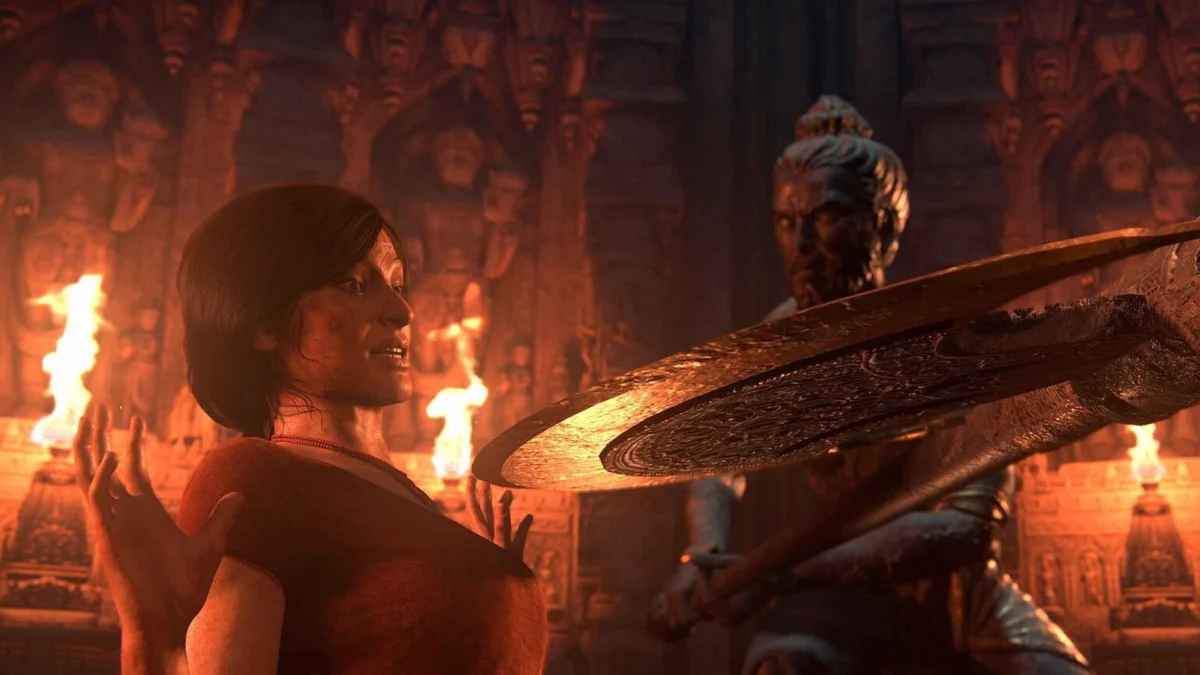
The core reality facing Naughty Dog is simple: Uncharted does not need Nathan Drake to thrive. Proof of this lies in Uncharted: The Lost Legacy, a 2017 standalone spin-off masterminded in the immediate wake of Uncharted 4. Co-directed by Escayg and Kurt Margenau (the game director behind Naughty Dog’s upcoming Intergalactic: The Heretic Prophet), The Lost Legacy boldly shifted the spotlight away from Drake.

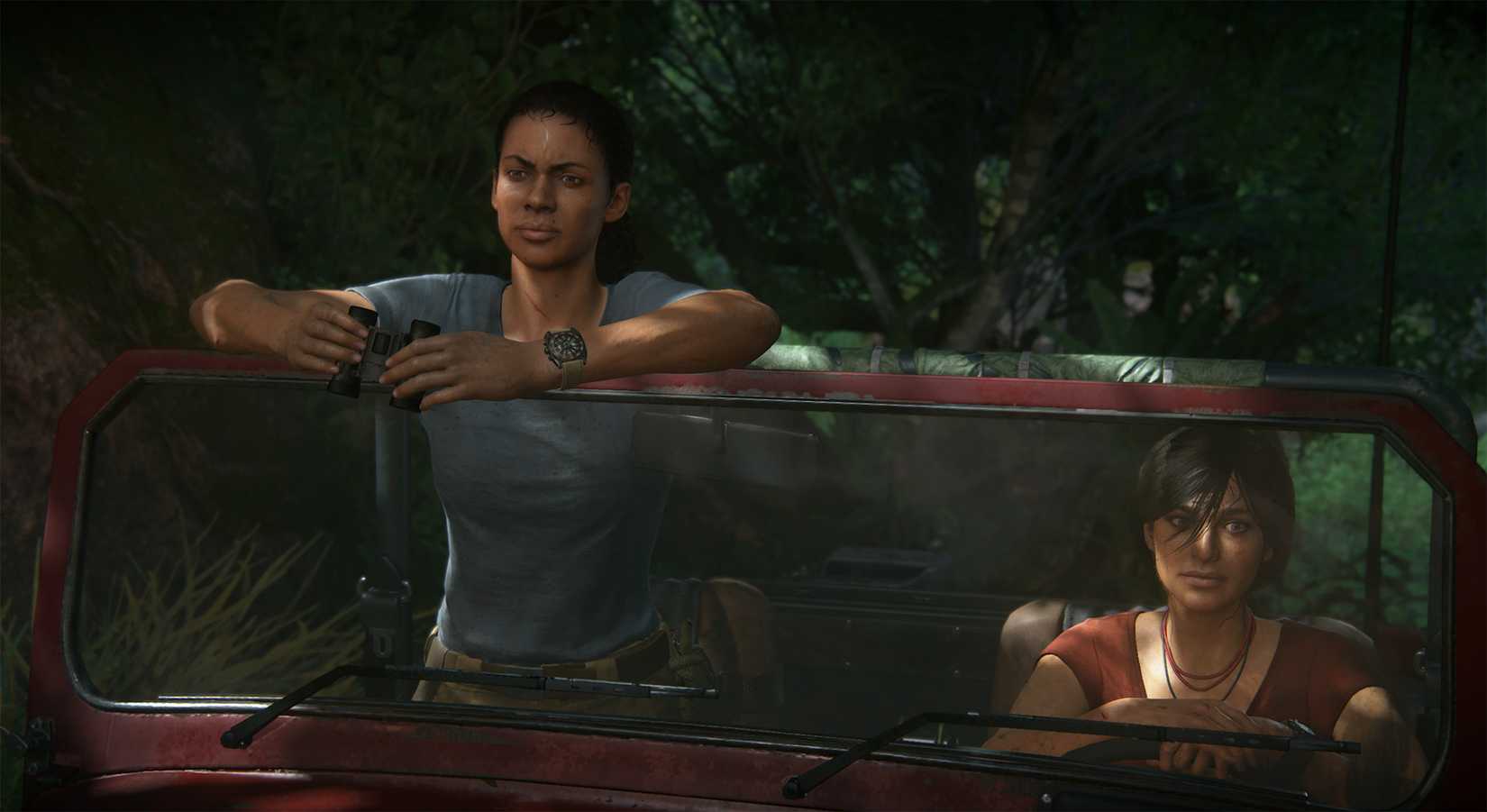
Instead, the game placed supporting rogue Chloe Frazer—voiced brilliantly by Claudia Black—at the absolute center of the action, paired alongside former antagonist Nadine Ross, portrayed with steely precision by Laura Bailey.
The resulting title achieved something extraordinary. It preserved the signature Uncharted formula—brisk pacing, grand set-pieces, snappy dialogue, and intricate puzzles—while stripping away the fatigue that occasionally plagued the main series. By focusing on a tighter narrative and a streamlined runtime, Escayg proved that the franchise’s soul was never tied exclusively to a single character. As Naughty Dog looks toward a potential fifth installment, The Lost Legacy stands not just as a footnote in the series history, but as its absolute high-water mark.
Chronology: The Evolution of Uncharted’s Design Philosophy
To understand how The Lost Legacy managed to surpass its predecessors, one must trace the chronological evolution of Naughty Dog’s design philosophy across the franchise’s lifespan:
- November 2007 (Uncharted: Drake’s Fortune): Naughty Dog establishes its cinematic template. Running at roughly 8 to 10 hours, the PlayStation 3 launch-window title introduces tight pacing and atmospheric ruin-raiding, though its combat mechanics feel experimental.
- October 2009 (Uncharted 2: Among Thieves): Universally hailed as a generational leap, Among Thieves perfects the linear blockbuster formula. Clocking in at a brisk 10 to 11 hours, it balances breathless action with character-driven narrative beats.
- November 2011 (Uncharted 3: Drake’s Deception): Continuing the roughly 9-to-10-hour runtime standard, Drake’s Deception doubles down on high-budget spectacle and globe-trotting set pieces, though some narrative seams begin to show.
- May 2016 (Uncharted 4: A Thief’s End): Naughty Dog attempts a sprawling, mature epic. With a runtime stretching past 15 hours, the game introduces larger environments and slower character studies—including extensive flashbacks to Drake’s youth. While critically acclaimed, it introduces pacing lulls absent from earlier entries.
- August 2017 (Uncharted: The Lost Legacy): Conceived as a downloadable expansion before ballooning into a standalone release, The Lost Legacy trims the fat. It returns to the punchy 8-hour runtime of the original trilogy while synthesizing the technical sophistication of Uncharted 4, creating a masterclass in game pacing.
Supporting Data: Scope, Pacing, and Playtime
When examining why The Lost Legacy succeeds to the extent it does, scope is the single most important metric to analyze.
According to community-driven data tracking sites like HowLongToBeat, a standard playthrough of Uncharted 4: A Thief’s End hovers around 15 hours. By comparison, The Lost Legacy runs for approximately 8 hours—nearly half the length of Nathan Drake’s swan song.

Casual observers might misinterpret these figures. A surface-level glance could imply that Uncharted 4 is a sprawling epic worthy of a grand finale, while The Lost Legacy is merely a lightweight snack between major releases. In practice, the exact opposite is true. Uncharted 4 is the statistical outlier in Naughty Dog’s catalog. The original trilogy (Drake’s Fortune, Among Thieves, and Drake’s Deception) all hovered comfortably in the 8-to-10-hour sweet spot.
The Lost Legacy honors that foundational runtime, allowing Naughty Dog to learn intimately from Uncharted 4’s greatest weakness: pacing.
While Uncharted 4 boasted phenomenal highs, its attempts to stretch out the adrenaline-pumping action resulted in notable valleys. Environments were occasionally widened for the sake of scale, and narrative beats dragged. The interminable teenage flashbacks to Drake’s youth slowed the momentum to a crawl.
The Lost Legacy, conversely, is "all killer and no filler." Its propulsive opening—set during a tense, undercover job gone wrong in a war-torn Indian city—hooks the player immediately and maintains that visceral tension until the final credits roll.
Official Responses and Creative Direction
Naughty Dog has historically maintained a guarded stance regarding future installments in dormant franchises, choosing instead to focus its high-end production pipelines on prestige properties like The Last of Us and new intellectual properties like Intergalactic: The Heretic Prophet. However, creative personnel have frequently spoken candidly about the unique constraints of developing The Lost Legacy.
During the press tour for the spin-off, directors Shaun Escayg and Kurt Margenau noted that the mandate for The Lost Legacy was to create a focused, self-contained story that respected the players’ time while pushing technical boundaries.
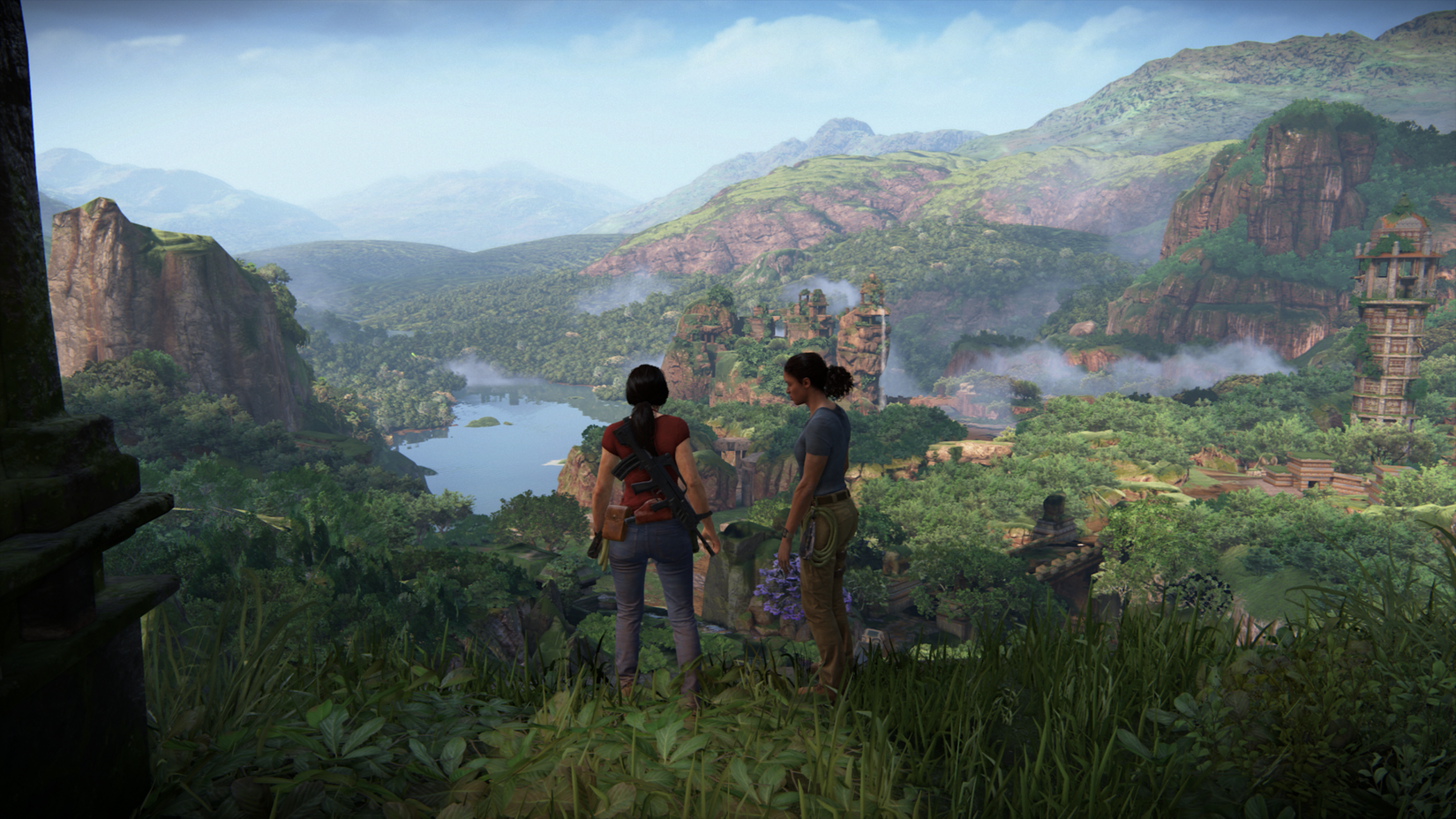
The Western Ghats chapter serves as the crown jewel of this design philosophy. Tasked with introducing a semi-open-world environment—a concept Naughty Dog experimented with unsuccessfully via sluggish jeep segments in Uncharted 4—the team refined the mechanic. In The Lost Legacy, Chloe and Nadine navigate a sprawling map dotted with ancient towers, optional puzzles, and hidden collectibles that can be approached in any order.
Crucially, Naughty Dog deployed this design paradigm only once in the entire game. Because of its singularity, the Western Ghats serves as a breathtaking, refreshing change of pace rather than an overstayed welcome that bogs down the narrative momentum.
Furthermore, the character dynamic between Chloe and Nadine solved what critics often called the "Nathan Drake problem." Rather than imitating Drake’s specific brand of wisecracking bravado, Chloe brought a sharper, more cynical edge to the treasure hunter archetype. Claudia Black’s electric performance, countered brilliantly by Laura Bailey’s grounded, no-nonsense portrayal of Nadine, created a friction-filled partnership that evolved organically.
Implications for the Future of Uncharted 5
As rumors crystallize around Naughty Dog’s development plans for Uncharted 5, the implications of The Lost Legacy’s success cannot be overstated.
The gaming landscape of the late 2020s demands precision, high visual fidelity, and mechanical polish. Yet, ballooning development budgets and 80-hour bloat have made "pacing" an endangered art form in AAA game design. Many modern blockbusters mistake sheer length for depth, leaving players exhausted long before the final act.
By trusting Shaun Escayg to helm the next evolution of the franchise, Naughty Dog is signaling a return to the virtues that made the studio a household name in the first place: narrative economy, razor-sharp mechanical refinement, and vibrant character-driven chemistry.
Uncharted: The Lost Legacy stands tall because it stands on the shoulders of every game that came before it. It took the technical breakthroughs of Uncharted 4, stripped away the narrative self-indulgence, and rediscovered the pure, unadulterated joy of adventure. If Uncharted 5 follows the trail blazed by Chloe Frazer and Shaun Escayg, the franchise’s future is brighter—and punchier—than ever.
 Lina Hope
 Nila Kartika Wati
 Jia Lissa
