

By: TechCrunch News Desk
Published: October 2026
Main Facts
In a landmark legal decision that could reverberate across the landscape of American law enforcement and civil liberties, a federal judge in Oklahoma has ruled that a local sheriff’s deputy violated a citizen’s Fourth Amendment rights. The violation occurred when the officer utilized a private automated license plate reader (ALPR) network—specifically technology provided by the surveillance company Flock Safety—to track a motorist without first obtaining a search warrant.
U.S. District Judge Sara Hill delivered the scathing ruling, determining that the deputy possessed "no apparent reason" to query the private database for the woman’s license plate details other than the fact that her vehicle bore a California registration. Following the warrantless database query, the deputy used the historical movement data compiled by Flock to justify stopping and searching her automobile. The search yielded 91 pounds of methamphetamine. However, invoking the foundational legal doctrine known as the "fruit of the poisonous tree," Judge Hill ordered that all evidence gathered subsequent to the unconstitutional database search must be suppressed in court.
While the ruling does not inherently establish binding nationwide precedent beyond its jurisdiction, it marks a critical milestone: one of the first times a federal jurist has formally declared that utilizing mass-surveillance ALPR databases without judicial oversight breaches constitutional protections against unreasonable searches and seizures.
The decision cuts straight to the core of modern policing strategies, which increasingly rely on private-public data-sharing networks to passively catalog the daily movements of millions of Americans. By condemning the practice as "indiscriminate mass surveillance," the ruling has added immense legal weight to a rapidly expanding national debate over privacy, technology, and constitutional rights in the digital age.
Chronology of Events and Legal Escalation
To fully understand the gravity of Judge Hill’s decision, it is necessary to examine the timeline of events leading up to the case, as well as the parallel surge in legislative and corporate friction surrounding Flock Safety’s technology.
- The Incident: A Tulsa, Oklahoma, sheriff’s deputy notices a vehicle bearing a California license plate. Without obtaining a search warrant or observing any traffic violation, the deputy enters the vehicle’s plate information into the Flock Safety database.
- The Surveillance Query: The Flock system aggregates the vehicle’s historical travel patterns, offering the deputy a comprehensive timeline of the driver’s movements across the network of cameras.
- The Traffic Stop and Arrest: Armed with the location data extracted from the Flock system, law enforcement intercepts the vehicle. A subsequent search of the car uncovers 91 pounds of methamphetamine, leading to the driver’s arrest and subsequent federal drug charges.
- The Legal Challenge: Defense attorneys move to suppress the evidence, arguing that the warrantless query of a mass surveillance database violated the defendant’s Fourth Amendment rights.
- The Ruling (October 2026): Judge Sara Hill rules in favor of the defense, suppressing all evidence gathered as a direct result of the Flock search and classifying the data collection method as unconstitutional mass surveillance.
- Parallel Legislative Actions: The judicial ruling arrives concurrently with broader political pushback. States like Florida and Texas move to block or restrict Flock camera deployments, and U.S. Senator Bernie Sanders introduces the "Block Flock Act" to ban federal agencies from utilizing similar automated license plate readers.
Supporting Data and Technical Context: The Reach of Flock Safety
To grasp why Judge Hill’s ruling has sent shockwaves through the legal and tech communities, one must examine the mechanics of Flock Safety and the scale of modern automated license plate reading technology.
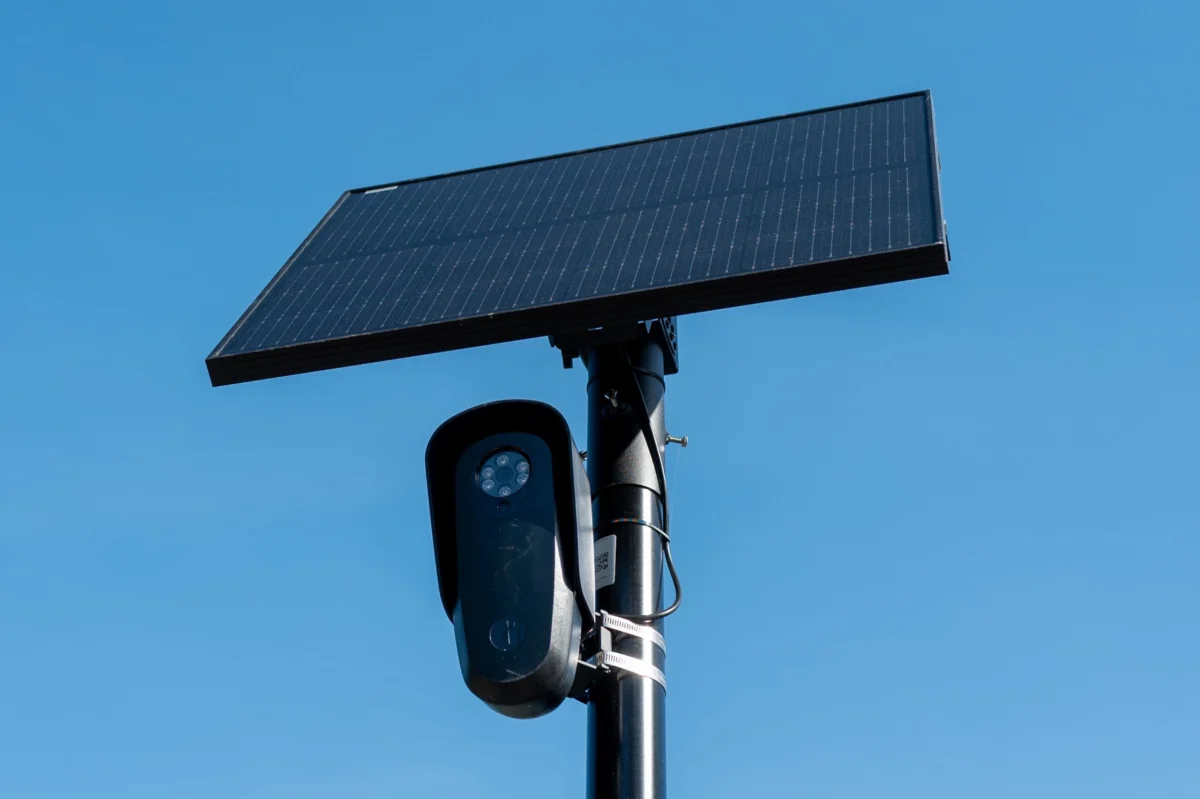
Flock Safety operates a massive, proprietary network of fixed, network-connected cameras deployed across neighborhoods, commercial zones, and major roadways nationwide. Unlike traditional police dashcams or targeted speed cameras, Flock’s system captures images of every vehicle passing its lenses, 24 hours a day. The system automatically records timestamps, vehicle makes, models, colors, and license plate numbers, storing this information in a searchable cloud-based database accessible to subscribing law enforcement agencies on demand.
According to civil liberties organizations, systems like Flock allow police departments to effectively construct continuous, longitudinal maps of citizens’ daily habits without ever establishing individualized probable cause. Judge Hill highlighted this exact technical capability in her opinion, contrasting it with targeted technological surveillance previously evaluated by the U.S. Supreme Court:
"This is a type of indiscriminate mass surveillance. It is not targeted on a single individual, as in Carpenter v. United States… It is a tool that collects information about all vehicles that pass by any network-connected camera at all times, and it serves up the information to law enforcement on demand."
The reference to Carpenter v. United States is crucial. In that landmark 2018 Supreme Court case, the high court ruled that the government generally needs a warrant to access historical cell site location information, recognizing that individuals maintain a reasonable expectation of privacy in the whole of their physical movements over time. Judge Hill’s ruling extends this logic to private-public automated license plate reader networks, asserting that the aggregation of public movements over an extended period transforms benign travel data into constitutionally protected private information.
Official Responses and Industry Fallout
The federal ruling has intensified an already volatile public relations and operational crisis for Flock Safety and its leadership.
The Judicial Perspective
In her written opinion, Judge Hill dismantled the argument that data collected in public spaces is automatically fair game for unlimited law enforcement exploitation. She noted that tracking individuals—even when they are traveling on public thoroughfares—becomes "constitutionally problematic when law enforcement can indiscriminately and passively catalog your whereabouts over an extended period of time and then use that information for any purpose whenever convenient."
Legislative Blowback
Politicians across the political spectrum are mobilizing against the unchecked expansion of automated surveillance networks. On the state level, governments in jurisdictions such as Florida and Texas have taken aggressive steps to restrict or altogether ban the installation of Flock cameras due to mounting citizen privacy concerns.
At the federal level, momentum reached a fever pitch following the court’s decision. Vermont Senator Bernie Sanders formally introduced the Block Flock Act, a sweeping piece of legislation designed to prohibit federal agencies from purchasing, deploying, or utilizing automated license plate readers like those manufactured by Flock Safety. Proponents of the bill argue that federal tax dollars should not be used to prop up private networks capable of executing warrantless mass surveillance on American citizens.
Corporate Damage Control and Workforce Reductions
Flock Safety CEO Garrett Langley has attempted to navigate the escalating backlash by publicly acknowledging privacy concerns. Langley has previously called for a "compromise" between public safety initiatives and individual privacy rights. Furthermore, the company issued formal apologies regarding instances where law enforcement officers misused the Flock system to stalk individuals.
Despite these olive branches, the commercial and operational damage is compounding. Facing mounting cancellations from municipal contracts, state-level bans, and intense legal scrutiny, reports indicate that Flock Safety has instituted voluntary employee buyouts as a mechanism to downsize its workforce.
Broader Implications for Privacy, Policing, and the Fourth Amendment
The Oklahoma federal court ruling serves as a potential watershed moment for the intersection of constitutional law and emerging surveillance technologies. Several long-term implications emerge from this legal development:
- The Erosion of the Third-Party Doctrine: For decades, law enforcement agencies have relied on the legal principle that information voluntarily shared with third parties (such as utility companies, banks, or, in this case, private tech infrastructure providers) lacks Fourth Amendment protection. Judge Hill’s decision signals that courts are increasingly willing to push back against this doctrine when applied to sweeping, continuous digital tracking.
- Challenging "Plain View" Arguments in the Digital Age: Police have traditionally argued that because license plates are displayed openly on the exteriors of vehicles in public view, recording them creates no expectation of privacy. By focusing on the aggregation and indiscriminate cataloging of historical data over time rather than a single snapshot, the court distinguished between seeing a car pass by and building a searchable, long-term dossier on a citizen’s whereabouts.
- A Ripple Effect in Criminal Prosecutions: While Judge Hill’s ruling is not automatically binding on courts outside her district, defense attorneys nationwide are expected to cite her reasoning in motions to suppress evidence gathered via warrantless ALPR searches. If appellate courts begin to adopt this perspective, prosecutors could see a significant drop in the admissibility of evidence derived from mass-surveillance databases.
- The Future of Public-Private Policing Partnerships: Tech companies that partner with local governments to provide security and surveillance infrastructure now face unprecedented regulatory and legal uncertainty. As cities weigh the legal liabilities of unconstitutional searches against the promised safety benefits of automated readers, the commercial viability of mass data-sharing models will face severe stress tests.
As the legal battle over the Tulsa case moves forward—and as lawmakers debate the merits of legislative bans like the Block Flock Act—the fundamental question remains: How much of our daily movement can be passively recorded, stored, and searched by the state before the Fourth Amendment steps in to draw the line? Judge Hill’s ruling provides a stark, uncompromising answer.
 Nana
Nana
 Sagoh
Sagoh
 Neng Nana
